Run-and-Gun Turkey Tactics on Public Land
Few things are as frustrating as trying to pinpoint a hot gobbler on vast expanses of Mississippi public land, only to have him clam up or drift away before you can even get close. You’ve likely spent hours scouting, only to find the birds aren’t where you expected, or the sheer size of the WMA makes it feel impossible to cover effectively. This comprehensive guide is here to equip you with the "run-and-gun" turkey tactics that can turn those frustrating hunts into successful harvests, giving you the confidence to adapt and find birds even in the most challenging public land scenarios.
Understanding the Run-and-Gun Philosophy for Mississippi Public Land
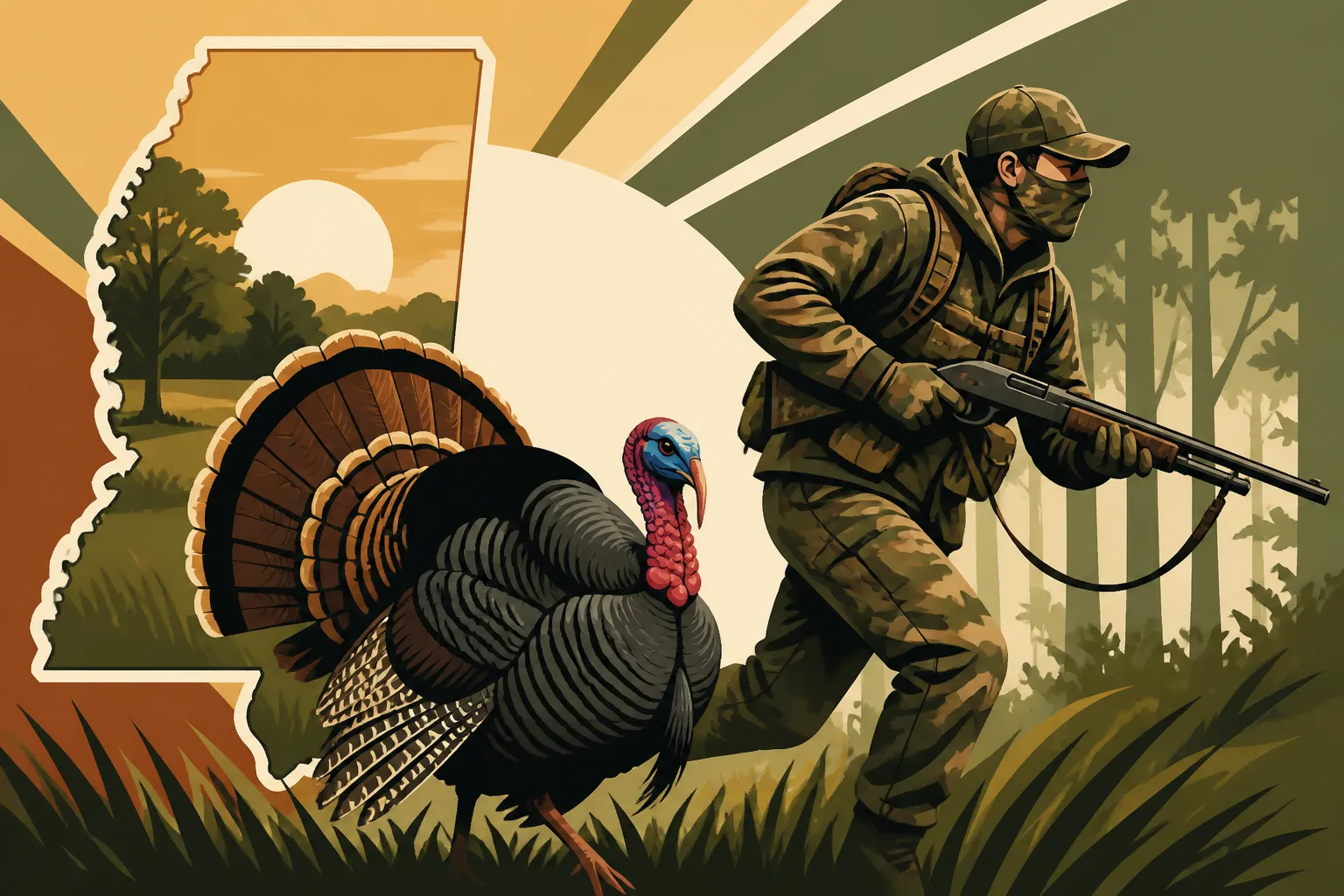
Turkey hunting on public land in Mississippi, especially on larger Wildlife Management Areas (WMAs) or National Forests, presents a unique set of challenges that can often leave even seasoned hunters scratching their heads. Unlike private tracts where bird patterns might be more predictable and pressure contained, public lands demand a different approach. This is where the run-and-gun philosophy truly shines, transforming your hunt from a waiting game into an active, strategic pursuit.
Why Traditional Setup Hunting Fails on Public Land
Think about it: how many times have you set up diligently in what you thought was a perfect spot, only for the woods to remain silent, or a gobbler to sound off a quarter-mile away, seemingly headed in the opposite direction? On smaller, private parcels, traditional ambush hunting — finding a roost tree, setting up before daylight, and waiting — can be incredibly effective. Birds often use the same travel corridors, roost in familiar trees, and have somewhat predictable routines because they face less pressure and have consistent food sources.
However, public lands are a different beast entirely. You might have limited time for pre-season scouting, meaning you're working with less intel on specific bird movements. The sheer acreage of places like Delta National Forest or Homochitto National Forest means birds have endless options, making their patterns far less rigid. Add in the increased hunting pressure, and those gobblers become incredibly wary, often moving constantly to avoid detection. A static setup might work if you're lucky enough to be directly in a bird's path, but the odds are often stacked against you. You simply can't cover enough ground or react quickly enough to shifting bird locations with a purely sit-and-wait approach.
The Core Principles of Run-and-Gun
The run-and-gun method is essentially about aggressive, mobile hunting. It's an active search-and-destroy mission for gobblers that aren't going to walk right to you. The fundamental principle is covering significant ground, often silently, while actively using calls to locate and engage birds. When a gobbler responds, your next move is swift and calculated: close the distance, set up quickly, and work him into range.
This isn't about aimlessly wandering through the woods. It's about efficiency, adaptability, and resilience. You're constantly evaluating the terrain, listening for distant gobbles, and making quick decisions on how to approach. If a bird won't commit or shuts up, you don't linger for hours hoping he'll change his mind. You relocate, pressing on to find the next vocal gobbler. This method demands a blend of patience and aggression, knowing when to hold tight and when to move. It’s a physical style of hunting, but it dramatically increases your chances of encountering multiple birds throughout the day, especially when the spring turkeys in Mississippi are being particularly elusive.
Essential Gear for Mobile Turkey Hunting
To effectively execute a run-and-gun strategy, your gear needs to be streamlined and efficient. Forget the heavy backpacks and elaborate setups you might use for deer hunting. You want to be light and agile, ready to move at a moment's notice.
A lightweight turkey vest is paramount, allowing you to carry your essentials without being burdened. This includes a small assortment of calls: a mouth call or two, a slate call, and maybe a small box call for loud, attention-grabbing yelps. Don't overpack; focus on calls you're proficient with. Binoculars are incredibly helpful for scanning distant fields or clear-cuts, and a small, foldable seat or pad will save your backside during quick setups. Most importantly, a reliable GPS device or a robust mapping application like GoHunt or the MDWFP app on your smartphone is non-negotiable. These tools help you navigate vast public lands, mark bird locations, track your movement, and avoid getting lost, especially when you're pushing deep into unfamiliar territory. Think of it as your mobile command center, vital for keeping tabs on your position and the terrain around you.
Pre-Season Scouting and Digital Reconnaissance
While run-and-gun emphasizes mobility during the hunt, effective pre-season scouting, both digital and physical, is the bedrock of success. You can’t just show up and expect to randomly bump into gobblers, especially on sprawling public lands. Knowing the lay of the land, identifying key turkey habitat, and understanding potential travel routes will make your run-and-gun efforts far more productive.
Mapping the Terrain for Travel Routes
Before you even step foot in the woods, spend significant time poring over maps, particularly topographical maps and satellite imagery available through apps like GoHunt or the MDWFP app. Look for features that turkeys naturally use for travel or that funnel their movement. Ridgelines, logging roads (both active and overgrown), old fire lanes, and creek bottoms are prime candidates. These are often easier for you to traverse quietly, and turkeys often utilize them as well.
Imagine a situation where you're looking at a map of a large WMA. You might see a series of parallel ridges with dense timber between them. A logging road running along the top of one ridge, or a creek snaking through the bottom, could be your primary travel corridor. These features allow you to cover ground efficiently and discreetly. Mark these potential routes on your mapping app. It also helps to identify clear-cuts or pine plantations in varying stages of growth, as these areas often hold different densities of birds and offer different hunting challenges. Understanding these elements beforehand is crucial for Scouting Mississippi Public Land Before Season effectively.
Identifying Potential Roosting and Feeding Areas
Once you have your travel routes mapped out, zoom in and identify key habitat types. Turkeys typically roost in mature, large-limbed trees, often near water sources or on prominent ridges that offer good visibility. Look for clusters of tall hardwoods – especially oaks and cypress – along creek banks, river bottoms, or on higher ground within a generally flat area. Mark these potential roosting areas on your map.
Feeding areas are equally important. Turkeys are constantly foraging, so look for open fields, agricultural plots on the edges of public land, natural clearings, and areas with abundant mast crops like acorns or wild berries. In the Delta, this might mean the edges of soybean or cornfields adjacent to national forest land. In the Hills Unit, it could be oak flats after a good acorn crop. Knowing where birds are likely to feed helps you predict their morning movements after they fly down from the roost. Consider this crucial information for understanding Where Mississippi Gobblers Roost.
Locating Water Sources and Strutting Zones
Water sources are vital for all wildlife, including turkeys. Even if it's just a small spring, seep, or stagnant slough, these spots can act as natural gathering points, especially during dry spells. Turkeys will also frequent edges of ponds and creeks. Mark any perennial water sources on your map, as birds often pass through or linger near them.
Strutting zones are where gobblers display for hens. These are typically open, relatively flat areas that offer good visibility for the tom to show off. Logging decks, old abandoned fields, wide sections of logging roads, or sparse timber stands with a clear understory are prime strutting real estate. While you might not find specific "strutting logs" on public land like you would on a meticulously managed private lease, identifying these open areas gives you a better idea of where a gobbler might attempt to gather his harem once he's on the ground. When reviewing satellite imagery with your GoHunt app, pay close attention to any small openings or clearings within the timber, especially those connected by easy travel routes. These areas are magnetic for turkeys looking to strut their stuff.
On-the-Ground Tactics: Covering Ground and Calling Aggressively
Once opening day arrives, your pre-season digital scouting shifts to real-time execution. The run-and-gun strategy truly comes alive as you move through the timber, constantly evaluating, listening, and engaging. This isn't just about walking; it's about smart movement and strategic calling to provoke a response.
The Art of Silent Movement and Listening
The first rule of run-and-gun is to move quietly. This doesn't mean tiptoeing at a snail's pace, but rather moving with purpose and stealth. Use natural terrain features like ridges, creek bottoms, or the edges of dense thickets to mask your movement. Walk slowly, lifting your feet rather than dragging them, and avoid snapping twigs or rustling leaves unnecessarily. Stop frequently – every 50 to 100 yards is a good rhythm – and listen intently.
During these stops, cup your hands behind your ears to amplify distant sounds, and scan your surroundings. Listen for everything: a distant gobble, the subtle cluck of a hen, the wing beats of a bird flying down from the roost, or even the distinct thump of a turkey drumming. The woods of Mississippi, particularly on a calm spring morning, can reveal a surprising amount of information if you're patient enough to listen. Sometimes, a distant gobble will come in faintly, almost like an echo, but it’s enough to tell you a bird is in the area. Your ability to detect these subtle cues while moving efficiently is what sets a successful run-and-gun hunter apart.
Aggressive Calling Strategies
The "gun" in run-and-gun often refers to your shotgun, but it also implies an aggressive calling approach. You're not waiting for birds to gobble on their own; you're trying to make them gobble. Start with loud, attention-grabbing calls: sharp cuts, excited yelps, or even a shock gobble if you have a locator call. This isn't the time for soft, seductive hen talk, at least not yet. You want to elicit a response from any gobbler in the vicinity, letting him know a "hen" is on the move.
Vary your calls and volume. A loud, sharp cut with a mouth call followed by a few excited yelps from a slate can sound like a hen that's ready to breed. After a series of calls, wait a few minutes, scanning the woods. If no response, move another 50-100 yards and repeat. Don't be afraid to experiment with different types of calls – box, slate, or mouth calls – to mimic different hens. Sometimes a gobbler will respond to one type of call that he ignores with another. The goal is to cover ground and get a gobbler to announce his presence, giving you a direction to move.
Reading a Gobbler's Response and Making a Move
Once you get a response, the real chess match begins. The gobbler's call can tell you a lot. Is it a loud, immediate, confident gobble, or a soft, distant, hesitant one? Is he moving as he gobbles, or sounding off from the same spot? A strong, repeated gobble indicates an interested bird, giving you a clear bearing. A distant or faint gobble means you need to close the distance more aggressively.
Your next move needs to be swift and tactical. If the bird is close (say, less than 200 yards) and seems interested, you’ll want to get set up quickly and prepare for his arrival. If he's farther out, or if his gobble is weak, you need to advance rapidly but stealthily, using terrain features to your advantage. Try to cut the distance in half, then stop and call again. The goal is to get within 100-150 yards before making your final setup. When you get a gobbler to respond, especially one still on the roost in the early morning, this quick decision-making is key to Calling a Mississippi Gobbler Off the Roost before he flies down and moves away. Remember, on public land, time is often of the essence before another hunter or a curious hen gets to him first.
Setting Up Quickly and Effectively
Getting a gobbler to respond is only half the battle. The next critical step in run-and-gun turkey hunting is being able to set up rapidly and efficiently in a spot that gives you the best chance of drawing the bird into range. This isn't always about perfection, but about practicality and maximizing your immediate advantage.
The "Sweet Spot" Setup
When that gobbler sounds off, your mind needs to quickly assess the situation and identify your "sweet spot." This is the location where you want the bird to appear, and where you have the best chance to take a clean shot. Ideally, your sweet spot offers several key elements: good back cover to break up your silhouette, a clear view of the area where you expect the bird to approach, and clear shooting lanes within your effective range.
For example, if a gobbler is across a small clearing, you want to set up on your side, tucked into some thick brush or against a large tree. Make sure you can see the entire opening and that there are no small saplings or low branches obstructing your view or your shot path. Often, the ideal setup involves positioning yourself so the gobbler has to come into your space to see the "hen" he's hearing. This means anticipating his line of approach. Don't set up on the very edge of a ridge if the bird is coming up the other side; instead, drop back a few yards to force him to top the ridge, giving you a better view. This quick, tactical thinking is essential for success, whether you're leaning against a single tree or tucked into a small clump of pines.
Decoy Usage in Run-and-Gun Scenarios
Decoys can be incredibly effective in run-and-gun hunting, but they need to be lightweight and quick to deploy. Forget hauling a full flock of fakes. For this aggressive style, a single hen decoy, or perhaps a hen and a jake, is often all you need. The idea is to give the gobbler something visual to focus on once he gets close, taking his attention away from your subtle movements.
Placement is critical. If you're using a single hen, set her up 15-20 yards in front of your position, facing away from you, as if she's casually feeding. This encourages the gobbler to circle in front of her, often putting him broadside or slightly quartering away, creating a perfect shot opportunity. If you're using a jake decoy with a hen, position the jake slightly behind the hen, mimicking a young bird challenging the boss tom. Remember, the goal is for the gobbler to commit to the decoy, not to you. Fast deployment and retrieval are key; you can’t waste precious minutes wrestling with decoys when a bird is hot on his way. For more specific advice, check out Decoy Placement for Pressured Mississippi Birds.
Patience and Knowing When to Reset
Once you're set up and calling, patience becomes your new best friend. You've done the work to locate and position yourself, now you need to let the scenario unfold. Call sparingly at first, maybe a few soft yelps or clucks, letting the gobbler believe he's closing in on a real hen. If he's responsive and getting closer, temper your calling. If he hangs up, sounding off repeatedly from the same spot, a bit more aggressive calling might be needed to entice him the last few yards.
However, there's a fine line between patience and stubbornness. If a gobbler hangs up out of range for an extended period (say, 15-20 minutes) and refuses to budge, or if he suddenly goes silent, it might be time to reset. He might have a real hen with him, or he might have simply lost interest. Don't waste an hour on a bird that's clearly not coming. Silently pack up your minimal gear, reassess his last known location and direction, and either try to circle around him for a new setup or continue your run-and-gun journey to find another bird. Learning when to cut your losses and move on is a crucial skill for maximizing your time on Mississippi's public lands.
Adapting to Mississippi's Public Land Challenges
Mississippi's public lands offer incredible turkey hunting opportunities, but they come with their own unique set of challenges that can make the run-and-gun strategy even more critical. From navigating hunter pressure to dealing with varied terrain and unpredictable weather, successful mobile hunting means constantly adapting.
Navigating Pressure and Other Hunters
Let's be real, public land hunting on opening weekend or during peak season can feel like a war zone. You're not just hunting turkeys; you're also often contending with other hunters. This increased Hunting Pressure on Mississippi Public Land significantly impacts gobbler behavior, making them warier and less likely to respond to standard calling.
To counter this, think strategically. If you can, hunt mid-week when crowds are thinner. If that's not an option, consider going deeper into WMAs than most hunters are willing to walk. Many hunters stick to easy-access roads and trails. By venturing a mile or two (or more!) off the beaten path, you increase your chances of finding less-pressured birds. Use your mapping app, like GoHunt, to identify remote corners or overlooked access points that might require a bit more effort to reach. You might also encounter other hunters. Always practice extreme caution, use blaze orange when walking in and out (if regulations require it or you deem it safe), and identify yourself verbally if you suspect another hunter is nearby. Ethical conduct and safety are paramount.
Dealing with Varying Terrain and Cover
Mississippi's public lands boast a diverse landscape, from the sprawling, flat bottomland hardwoods of the Delta National Forest to the rolling hills and pine plantations of the Homochitto National Forest. Each terrain type demands a slightly different approach to your run-and-gun tactics.
In the Delta, you'll be navigating sloughs, dense cane thickets, and vast expanses of timber. Here, your movement might be slower, focusing on old logging roads, elevated ridges, or natural funnels between low-lying areas. Calling can be trickier, as sound doesn't carry as far in the dense, humid air. You might need to be more aggressive and closer to birds to elicit a response. For example, if you're working a Delta field edge, knowing how to position yourself can be the difference between success and failure; read up on Turkey Tactics for Delta Field Edges. In the Hills or Piney Woods regions, you might be climbing steeper inclines and traversing mixed pine and hardwood stands. Sound carries better on these open ridges, allowing you to locate birds from further away. Your setups might involve positioning yourself against a large oak on a ridge line, as discussed in Setting Up Against a Big Oak, to gain an elevation advantage and better visibility. The key is to recognize the terrain you're in and adjust your movement, calling, and setup accordingly.
Weather Considerations for Mobile Hunting
The weather in Mississippi during spring turkey season can be wildly unpredictable, swinging from warm and sunny to cold and rainy in a matter of hours. These changes significantly impact turkey behavior and your run-and-gun strategy.
On warm, clear mornings, gobblers tend to be vocal and active, making them easier to locate. However, as the day heats up, or during periods of bright sunshine, gobbling activity can decrease. On these days, focus on early morning gobbling and then shift your attention to finding birds near water sources or in shaded areas during the midday lull. If you encounter a cold front, gobblers might become more hesitant to sound off, and their daily routines can be thrown off. You might need to work harder to get a response, using more aggressive locator calls or spending more time glassing open areas where they might be feeding quietly. Rain is often a double-edged sword: light drizzle can sometimes make birds more vocal, but heavy downpours typically shut down gobbling entirely. Knowing When Mississippi Gobblers Go Quiet in May due to weather or other factors can help you adjust your expectations and strategies. Always be prepared for changing conditions, carrying rain gear, extra layers, and hydrating properly, especially when you're covering a lot of ground.
Post-Hunt Analysis and Improvement
The hunt doesn't truly end when you punch your tag or pack out empty-handed. Every single trip into the turkey woods, especially when employing run-and-gun tactics on public land, is an invaluable learning experience. Taking the time to reflect and analyze your efforts is crucial for honing your skills and improving your success rate for future seasons.
Learning from Each Encounter
After each hunt, whether it resulted in a harvested bird or not, take some time to mentally (or even physically) retrace your steps. Where did you hear birds? What kind of calls did they respond to? Where did they seem to hang up? What was the terrain like in that area? Did you make a quick setup, or did you fumble around? Did your decoy placement work as intended?
If you were using a mapping app like GoHunt, look at your track log. Did you cover ground efficiently? Were there areas you should have pushed into more deeply? Did you bypass potential hotspots that, in hindsight, looked promising? Make notes, either mental or written, about what worked and what didn't. Perhaps a specific calling sequence consistently got responses, or a particular type of terrain seemed to hold birds. Conversely, if a gobbler consistently went silent after you made a move, try to understand why. Was it too aggressive? Did he see you? Learning from these real-world scenarios is far more impactful than just reading about tactics in a book.
Refining Your Calling and Setup Techniques
Consistent practice makes perfect, and that applies just as much to turkey hunting as it does to anything else. In the off-season, spend time practicing your calls. Work on consistency with your slate, developing different hen vocalizations. Master a few mouth calls, ensuring you can make sharp cuts, clear yelps, and soft clucks without sounding like a dying cat. The more realistic and varied your calling, the better your chances of luring in a wary gobbler on public land.
Beyond calling, practice quick setups. Grab your vest, a small seat, and a decoy. Go into your backyard or a nearby woodlot and time yourself getting into a comfortable, concealed position with clear shooting lanes. The more fluid and natural this process becomes, the less "bustle" you'll create in the woods when you're trying to set up on a hot bird. Imagine being able to drop to a knee, get against a tree, and have your gun up and ready in under 30 seconds. That kind of efficiency can make all the difference when a gobbler is closing fast.
Continuous Scouting and Adaptation
Public lands are dynamic. Timber operations change, food sources vary year to year, and hunting pressure fluctuates. What was a productive area last season might be a quiet clear-cut this year. This means that your scouting, both digital and physical, should be a continuous process, not just a one-time pre-season event.
Keep an eye on public land updates from the MDWFP. Use your mapping apps throughout the year to note changes in habitat, new logging roads, or recent prescribed burns. Even in the fall, while deer hunting, pay attention to turkey sign like tracks, droppings, and strut marks. The more current information you have on the public lands you hunt, the better equipped you'll be to adapt your run-and-gun strategy. Remember, the birds aren't static, and neither should your approach be. Continuous learning and adaptation are the hallmarks of a truly successful run-and-gun turkey hunter in Mississippi's challenging public lands.
| Call Type | Primary Use | Example Scenario |
|---|---|---|
| Locator Calls | Shock gobbling, owl hoots, crow calls | Early morning to pinpoint roosted birds, or midday to provoke a response. |
| Loud Yelps/Cuts | Aggressive, attention-grabbing | To get a distant gobbler to respond and show interest. |
| Soft Tree Yelps | First light from a roosted hen | To make a nearby gobbler gobble on the roost. |
| Clucks and Purrs | Contentment, close-range engagement | To reassure a hung-up bird, or when a bird is very close. |
| Aggressive Cuts | Challenging another hen, or "come hither" | To pull a hesitant gobbler the last few yards into range. |
| Gobbles | Challenging another tom (risky but effective) | When a gobbler is henned up or won't commit. |
Disclaimer
Hunting is an inherently dangerous activity. This guide provides general information and recommendations. Always consult the most current Mississippi Department of Wildlife, Fisheries, and Parks (MDWFP) regulations, secure appropriate licenses and permits, and adhere to all local, state, and federal laws. Prioritize safety, hunt ethically, and respect wildlife and the environment.