Loess Bluff Ridgeline Public Access
If you've spent any time hunting Mississippi, you know the frustration of crowded public land. Everyone flocks to the usual spots – the Delta bottomlands for ducks and big bucks, or the deep Piney Woods for deer. But there's a hidden gem, a truly unique landscape that offers incredible hunting opportunities if you're willing to work for it: the Loess Bluffs. This guide is going to walk you through exactly how to find and effectively hunt these challenging yet rewarding ridgelines on public land, helping you uncover spots many other hunters overlook.
Understanding Mississippi's Loess Bluffs
Before you can hunt the Loess Bluffs, you've got to understand what makes them tick. This isn't your typical flat Delta ground or the gently rolling hills of the Piney Woods. This is a land shaped by ancient winds and the Mississippi River, creating a distinct and often rugged hunting environment.
What Makes the Loess Bluffs Unique?
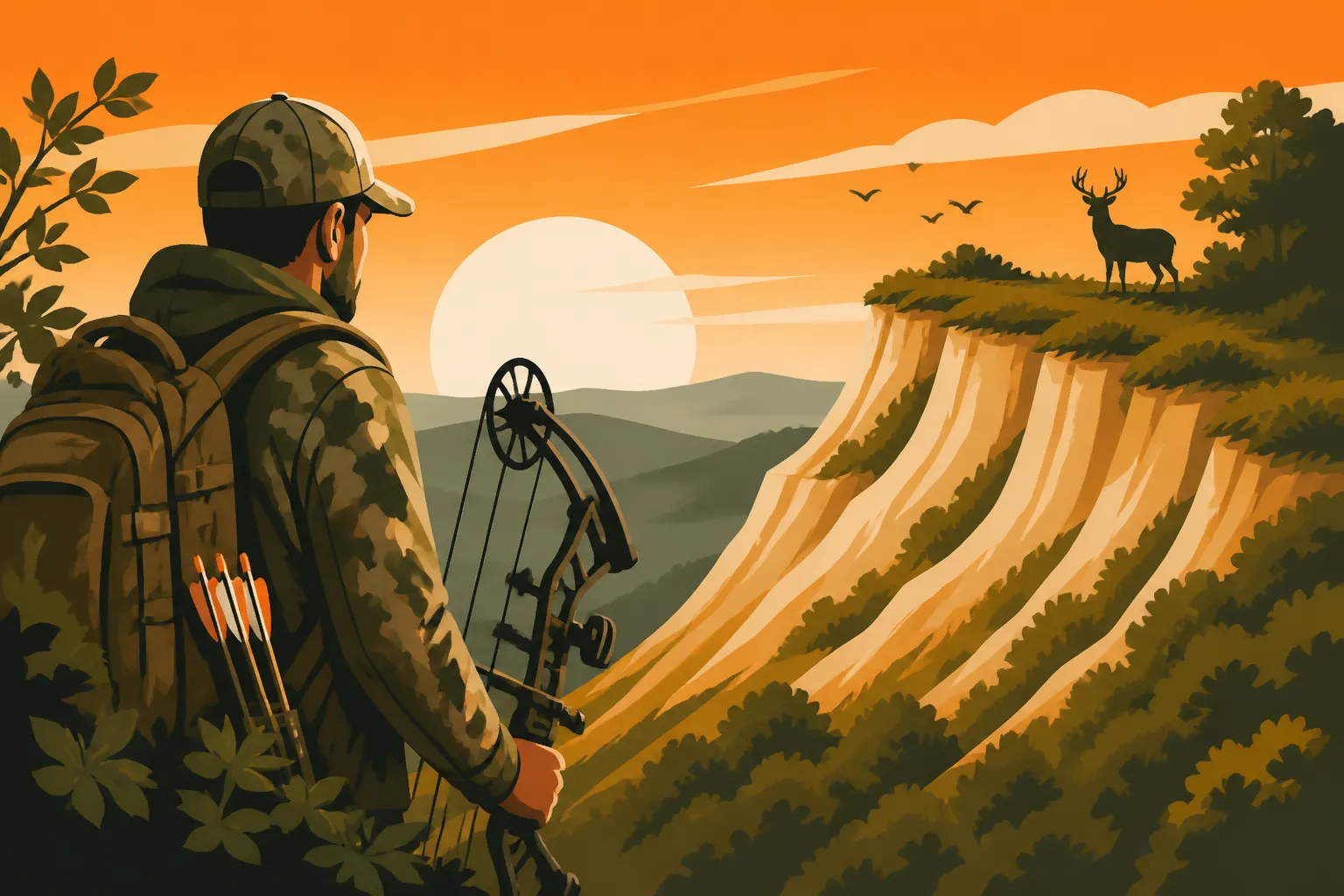
The Loess Bluffs are a truly geological marvel, and their formation directly impacts the hunting experience. Imagine towering, steep hills composed of fine, wind-blown silt – that's loess. Over millennia, erosion has carved these bluffs into a maze of sharp ridges, deep ravines, and fertile bottoms. The soil here is incredibly rich, which supports a vibrant and diverse ecosystem. You'll find mature hardwood timber – oaks, hickories, poplars – creating a dense canopy that shades the forest floor. Below that, a rich understory of dogwoods, ironwoods, and various shrubs provides excellent cover and browse.
This unique topography is a stark contrast to other parts of Mississippi. In the Delta, you're dealing with flat, wet bottomland with cypress swamps and sloughs. In the Piney Woods, it's often more open pine plantations with scattered hardwoods. The Loess Bluffs offer something in between, but with an emphasis on dramatic elevation changes. This terrain dictates everything from how deer move, where turkeys roost and feed, and even where small game can thrive. It creates natural funnels and bedding areas that are entirely different from what you'd find elsewhere, making it a puzzle that can be incredibly rewarding to solve.
Key Counties and Regions for Loess Bluffs
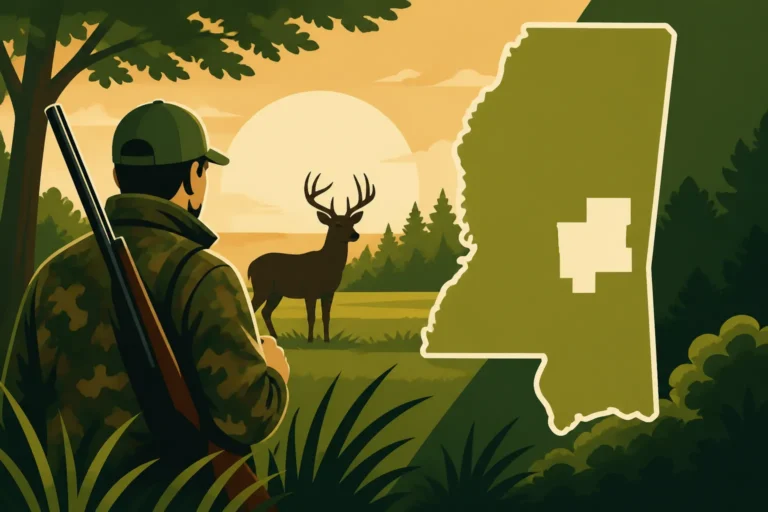
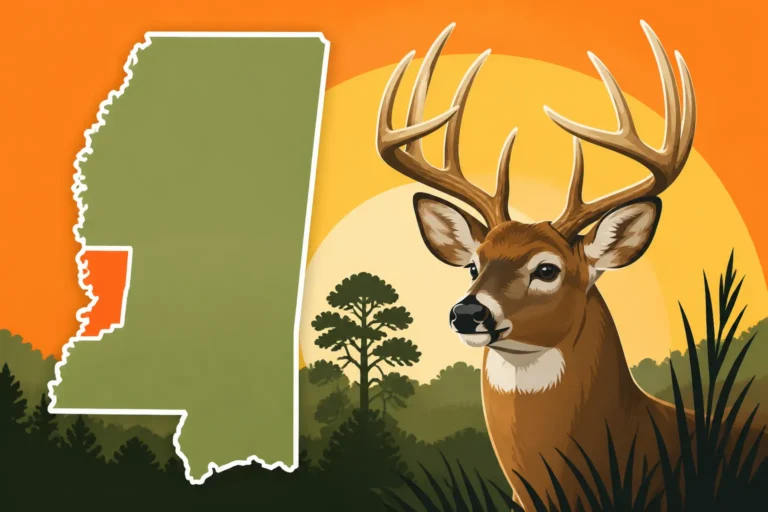
The Loess Bluffs form a distinctive band running north to south along the eastern edge of the Mississippi Delta. If you're looking to hunt this unique landscape, you'll want to focus your efforts in counties like Claiborne, Jefferson, Adams, Wilkinson, and Warren, to name a few of the prime spots. These counties boast some of the most pronounced loess formations and, crucially, contain significant tracts of public land.
You'll notice that the bluffs act as a transition zone. To their west, the land flattens out into the vast agricultural fields and river bottoms of the Delta Unit. To their east, the terrain generally transitions into the more rolling hills and mixed forests of the Hills Unit. This transitional nature means you might encounter game that exhibits traits from both adjacent ecosystems. When looking at maps, keep an eye out for these abrupt topographical changes; those are your key indicators you're in Loess Bluff country. While it often falls under the general umbrella of the Mississippi's Four Deer Management Units, understanding this specific micro-habitat within those units is critical for success.
Identifying Public Access Points on Loess Bluffs
Finding public access in the Loess Bluffs isn't always as straightforward as walking into a WMA in the flatter regions. This terrain can hide access points, and some of the best spots require a bit of legwork and good mapping skills.
Navigating National Forests in the Loess Region
One of your best bets for public hunting in the Loess Bluffs is the national forest system. The Homochitto National Forest Hunting is a prime example of a large, accessible area that encompasses significant portions of the Loess Bluffs. Within these national forests, you'll find a network of forest service roads, some well-maintained, others barely more than two-track trails. Many of these roads offer excellent walk-in access to the bluffs.
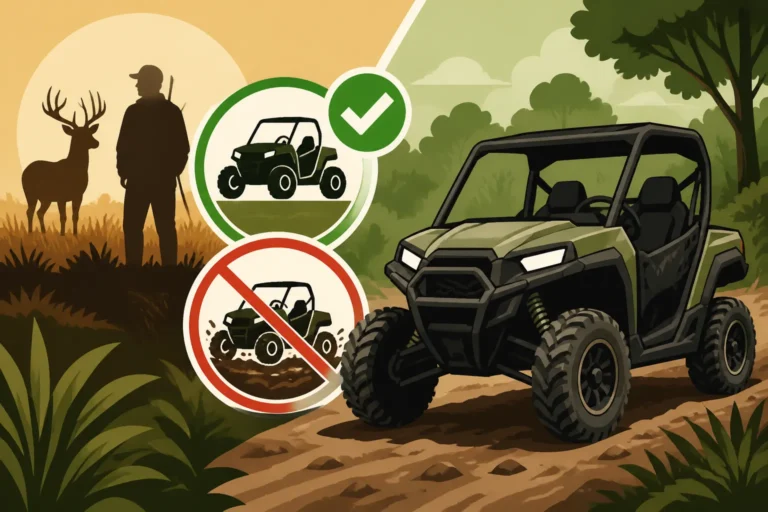
The trick is knowing where the boundaries are and where the walk-in only zones begin. This is where modern mapping applications like onX Hunt become absolutely invaluable. You can overlay property lines, topo maps, and satellite imagery to precisely pinpoint public land boundaries, identify potential parking areas, and plan your entry routes. Don't assume every dirt road is open to vehicles; always check local regulations for vehicle access. Also, remember that national forest regulations can sometimes differ from those on state-run WMAs, so always consult the MDWFP official guide for the specific area you plan to hunt.
Wildlife Management Areas and State Parks
While national forests are a staple, some state-managed Wildlife Management Areas (WMAs) and even certain State Parks can offer access to Loess Bluff terrain. For instance, areas like Copiah County Wildlife Management Area or Caston Creek Wildlife Management Area might contain sections with bluff-like characteristics, though perhaps not as dramatic as the core Loess Bluff counties. These WMAs are typically managed intensively for various game species, often featuring specific habitat improvement projects.
Hunting WMAs usually requires a WMA permit in addition to your Mississippi Resident Sportsman's License or appropriate non-resident license. Pay close attention to WMA-specific rules regarding check-in/check-out procedures, special quota hunts, weapon restrictions, and open hunting dates. Some WMAs might have designated areas for different types of hunting, or even periods of closure for prescribed burns or habitat work. Always check the MDWFP website or the kiosk at the WMA entrance for the most current regulations. It's also worth noting that State Parks may have very limited hunting opportunities, often through special draw hunts, so research these thoroughly if you're considering them.
Reading Topographic Maps and Aerial Imagery
This is where your scouting truly begins, even before you set foot on the ground. For hunting the Loess Bluffs, a good mapping application like onX Hunt or GoHunt is your best friend. Start by zooming in on areas of public land within the bluff counties. What you're looking for on a topographic map are those tight contour lines indicating steep elevation changes.
Focus on identifying ridgelines, especially where they broaden out slightly to form a "bench" or where they meet to form a "saddle." Saddles are natural travel corridors for deer and other game as they move from one ridge system to another without dropping all the way into a ravine. Look for drainages or creeks running through the bluffs; these often have game trails running alongside them. On aerial imagery, look for changes in canopy cover that might indicate thicker bedding areas on steep slopes or areas of mature timber where turkeys might roost. Old logging roads or faint trails that ascend the bluffs can be excellent entry routes and places to find Scrape Lines Along a Logging Road. Understanding Reading Aerial Photos for Hills Unit Deer is paramount here, as the subtle changes on the ground become obvious from above. Mark potential stand sites, funnels, and escape routes, helping you formulate a game plan long before opening day.
Hunting Strategies for Loess Bluff Ridgelines
Hunting the Loess Bluffs requires specific strategies that account for the unique terrain and how game uses it. Forget your flatland tactics; this is a different beast altogether.
Deer Hunting the Ridgelines
Whitetail deer in the Loess Bluffs are masters of their environment. They use the elevation to their advantage, often bedding on steep slopes where they can hear and smell intruders approaching from below, and see anything coming from above. The ridgelines themselves serve as primary travel corridors, especially during the rut. Bucks will cruise these high points searching for does, using saddles and benches as natural pinch points.
When deer hunting, focus your efforts on these saddles and benches. A stand placed on a saddle overlooking a steep ravine can be incredibly effective, especially if it connects two bedding areas or a bedding area to a food source in a bottomland. Still-Hunting Hills Unit Ridgelines can also be a productive tactic, moving slowly and deliberately along the contours, pausing frequently to glass and listen. Pay extreme attention to wind and thermals. In this broken country, thermals can be a killer, constantly shifting as the sun warms or cools different slopes. Early mornings, thermals will typically rise, pulling your scent uphill. In the evenings, they'll fall, pushing your scent downhill. Understanding these micro-thermal shifts is crucial for stand placement and approach routes. Look for rubs and scrapes along the ridge tops, indicating active travel.
Turkey Tactics in Loess Bluff Country
Wild turkeys thrive in the mature hardwoods and broken terrain of the Loess Bluffs. These birds love to roost in tall trees along the highest ridgelines, giving them a commanding view and a good launch point for the morning fly down. When planning your turkey hunt, try to locate these roost sites during the evening before or very early morning.
Roost Hunting Mississippi Gobblers in the bluffs means getting into position quietly and early, often before first light, setting up below or parallel to a ridge where you expect birds to be. Use the terrain to your advantage when calling. A gobbler on an adjacent ridge might be more inclined to come investigate if he can't immediately pinpoint your exact location, forcing him to move over a saddle or across a drainage. Run-and-gun tactics can also work well, allowing you to cover a lot of ground, listen for distant gobbles, and quickly set up when you get a response. Be prepared for birds to hang up on opposing ridges or use the steep ravines to their advantage. Patience and careful scouting for fresh tracks and droppings in potential feeding areas (like oak flats on a bench) are key.
Small Game and Hog Hunting Opportunities
While deer and turkey often steal the spotlight, the Loess Bluffs offer fantastic opportunities for small game and feral hogs. Squirrels are abundant in the mature hardwood timber, especially when acorns are plentiful. Look for hickory groves along the bluff tops or oak flats in the bottoms. How early season squirrels give themselves away by their chattering and rustling in the leaves can be a major advantage.
Feral hogs are unfortunately also a common presence in the Loess Bluffs. They absolutely love the dense cover provided by the deep ravines and thick undergrowth. These areas provide excellent bedding and escape routes. Hunting hogs in this terrain can be challenging but rewarding. Strategies include still-hunting along creek bottoms, setting up near water sources, or participating in organized Running Dogs on Mississippi Feral Hogs hunts, which can be particularly effective in pushing hogs out of their thick lairs. Shot placement on a feral hog is critical due to their tough hide and bone structure. Always be prepared for a tough recovery in this broken country if you make a marginal shot.
Practical Considerations and Safety
Hunting the Loess Bluffs isn't for the faint of heart. It demands a different level of preparation and awareness than hunting flatter, more open terrain.
Physical Demands and Navigation Challenges
Let's be real: hunting the Loess Bluffs is a workout. You'll be climbing steep grades, descending into deep ravines, and navigating through dense undergrowth. Good physical conditioning is paramount. Invest in comfortable, supportive hiking boots with excellent ankle support and traction – slippery leaf litter on a 45-degree slope is no joke. Trekking poles can be a lifesaver, especially when you're loaded down with gear or dragging a harvested animal out of a ravine.
Navigation is another huge challenge. The maze of ridges and ravines can be disorienting, and it's surprisingly easy to get turned around, even with a good sense of direction. Cell service can be spotty to non-existent in the deep bottoms. A reliable GPS unit, or a smartphone app like onX Hunt with downloaded offline maps, is an absolute necessity. Always carry a compass and a physical map as a backup. Before you head out, communicate your hunting plan and expected return time with someone reliable. Don't underestimate how quickly you can get lost if you stray off your planned path.
Respecting the Land and Other Hunters
Like any public land, practicing good etiquette and respecting the rules is essential. Always ensure you have your Scouting Mississippi Public Land Before Season done thoroughly, not just for game sign but for access and rules. Familiarize yourself with all WMA or national forest regulations, including those concerning Treestand Rules on Mississippi Public Land and Trail Camera Rules on Mississippi Public Land. Leave no trace: pack out everything you pack in, and perhaps even a little extra.
You might encounter other hunters, especially on opening days or during peak rut. While the rugged nature of the bluffs tends to thin out the crowds compared to flatter, more accessible areas, Hunting Pressure on Mississippi Public Land is still a reality. If you do encounter other hunters, be respectful, give them space, and consider having a brief, friendly chat to avoid interfering with each other's hunts. Often, the willingness to walk an extra mile or navigate a particularly steep ravine will put you in ground that others simply walk past, increasing your chances of a successful and solitary hunt.
| Consideration | Loess Bluffs Challenges | Mitigating Strategies |
|---|---|---|
| Terrain | Steep slopes, deep ravines, slippery leaf litter | Excellent boots, trekking poles, physical conditioning |
| Navigation | Disorienting landscape, limited cell service, easy to get lost | GPS with offline maps (onX Hunt), physical map/compass, share hunt plan |
| Game Recovery | Dragging animals up/down steep grades, dense cover | Hunt with a partner, pack frame, rope, plan extraction route beforehand |
| Thermals/Wind | Constantly shifting air currents with elevation changes | Vigilant scent control, strategic stand placement, careful approach routes |
| Hunter Pressure | Fewer hunters than flat WMAs, but popular spots can still be crowded | Go deeper, scout harder, target less accessible areas |
| Weather | Rain makes slopes extremely slick; cold can be amplified in wind-swept areas | Quality rain gear, layered clothing, understand weather impact on terrain |
| Wildlife Encounters | Potential for venomous snakes (cottonmouths/rattlesnakes) in warmer months, hogs | Watch footing, carry snake bite kit, know hog behavior |
| Permits & Rules | National Forest vs. WMA rules, specific regulations for each area | Double-check MDWFP regulations, WMA permits, stay updated on closures |
Disclaimer
This article is for general informational purposes only and does not constitute professional advice. Laws, prices and regulations vary by location and change over time. Consult a qualified professional for guidance on your specific situation.