Best Mississippi Ground for Public Land Deer
Finding good public land to deer hunt in Mississippi can feel like searching for a needle in a haystack, especially when you're up against heavy pressure and limited access. It's frustrating to drive hours only to find every promising spot already taken, or to spend days scouting only to realize the "public" land is more challenging than advertised. This guide is here to cut through the noise, helping you identify some of Mississippi's prime public land options for deer and equip you with the knowledge to make your next hunt a success.
Understanding Mississippi's Public Hunting Landscape
Mississippi offers a diverse tapestry of public lands, each with its own character, challenges, and rewards when it comes to deer hunting. It's not a one-size-fits-all situation, and understanding the nuances of these areas is the first step to choosing the right spot for your style of hunting. From the vast, sprawling national forests to the intensely managed wildlife management areas and the often-overlooked river bottoms, there's a place for every dedicated public land hunter.
National Forests: The Big Timber Option
When we talk about public land deer hunting in Mississippi, the National Forests often come to mind first. These are truly massive tracts of land, offering a sense of wilderness that can be hard to find elsewhere. We're talking about places like Delta National Forest, Homochitto National Forest, and Bienville National Forest. They represent significant opportunities for deer hunters willing to put in the effort.
These forests are generally characterized by large expanses of timber, varied terrain, and typically less direct human manipulation compared to smaller, managed areas. The sheer size means you can often get away from the crowds if you're willing to walk a bit further or navigate tougher terrain. However, that remoteness also brings challenges, such as finding reliable access points, navigating without cell service, and simply covering enough ground to locate deer. The deer here often behave differently than those on private, intensely managed lands, making it a true test of your hunting skills.
Wildlife Management Areas WMAs: Managed Opportunities
Mississippi's Wildlife Management Areas, or WMAs, are managed specifically for wildlife and public recreation. These areas, overseen by the Mississippi Department of Wildlife, Fisheries, and Parks (MDWFP), offer a different hunting experience than the National Forests. You'll find a wide variety of habitats, from flooded timber and cypress swamps to upland pine forests and agricultural fields, often within the same WMA.
WMAs are typically smaller than National Forests but are often managed more intensely for deer, sometimes including food plots, controlled burns, and specific timber thinning designed to improve habitat. The rules and regulations can be more stringent and localized for each WMA, often including special permit requirements, specific hunting dates that differ from statewide seasons, and unique antler restrictions. Mississippi WMA Permit Requirement is crucial to understand before you head out. This management often leads to higher deer densities in some areas, but it also means they can experience significant hunting pressure, especially on opening days or during peak rut periods.
Batture Lands and River Bottoms: Hidden Gems
For those truly looking for adventure and willing to navigate unique challenges, Mississippi's batture lands and river bottoms along the Mississippi River can offer some incredible, yet demanding, public land deer hunting. These are the areas between the levee and the river itself, subject to seasonal flooding and often densely vegetated with thick canebrakes, willows, and bottomland hardwoods.
Hunting these areas requires a completely different mindset and set of tactics. Access can be difficult, sometimes requiring a boat or a long, arduous hike. The terrain is often muddy, wet, and unforgiving, and the deer sign can be incredibly subtle or, conversely, overwhelming after floodwaters recede. While the deer density might not always be as high as some WMAs, the potential for encountering a mature, untouched buck in these rugged environments is a draw for many seasoned public land hunters. These areas often experience less human pressure due to their difficulty, making them a true hidden gem for those willing to put in the work.
Top Public Lands for Deer Hunting in Mississippi
Now, let's get into some specific areas that consistently offer good opportunities for public land deer hunting in our state. Each has its own distinct characteristics, so understanding what makes them unique will help you decide which one aligns best with your hunting style and expectations.
Delta National Forest & Surrounding WMAs
If you're dreaming of big, mature Delta bucks, then the Delta National Forest is an undeniable contender. It's truly a unique landscape, being the only bottomland hardwood national forest in the United States. This means miles upon miles of towering oaks, cypress sloughs, and a rich, fertile soil that grows big deer. Deer here often have ample food sources and cover, allowing them to reach older age classes. The terrain is generally flat, but it's often wet, and thick canebrakes and briar patches can make travel challenging.
The deer in Delta National Forest, and the surrounding WMAs like Sunflower WMA and Mahannah WMA, are primarily bottomland residents. They use sloughs as travel corridors, thickets for bedding, and the abundant hardwoods for acorns during fall. Understanding Where Delta National Forest Bucks Bed is key to success here. You'll need to focus on identifying subtle elevation changes, natural funnels between sloughs, and areas with heavy browse or old-growth mast trees. These areas can see significant pressure, so getting away from easy access points is paramount. Hunting Pressure on Mississippi Public Land can be intense, so look for those overlooked pockets.
Homochitto National Forest & Loess Bluffs
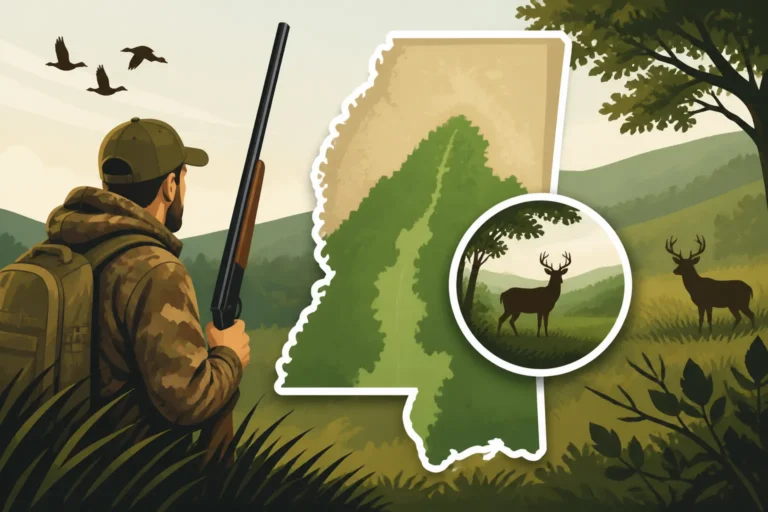
Moving south and east, Homochitto National Forest offers a completely different landscape: rolling hills, deep ravines, and mixed pine-hardwood forests, characteristic of the Loess Bluffs region. This forest provides a more classic upland hunting experience, with deer often using ridge tops, saddles, and creek bottoms as travel routes. The varied topography can be physically demanding, but it also provides excellent opportunities for glassing and identifying natural funnels and pinch points.
Hunting the Homochitto requires a good understanding of terrain features. Deer will often bed on lee sides of ridges, seeking shelter from the wind, and travel along contours or through saddles connecting different drainages. Reading a Ridge for Hills Unit Deer is a critical skill here. You'll also find plenty of mast crops like oaks and beech trees, providing important food sources. Scouting, both physically and with mapping tools like onX Hunt, is essential to locate these prime spots before the season. The deer here might not consistently grow to the massive body sizes seen in the Delta, but Homochitto offers a healthy population of robust, challenging bucks.
Bienville National Forest & Piney Woods
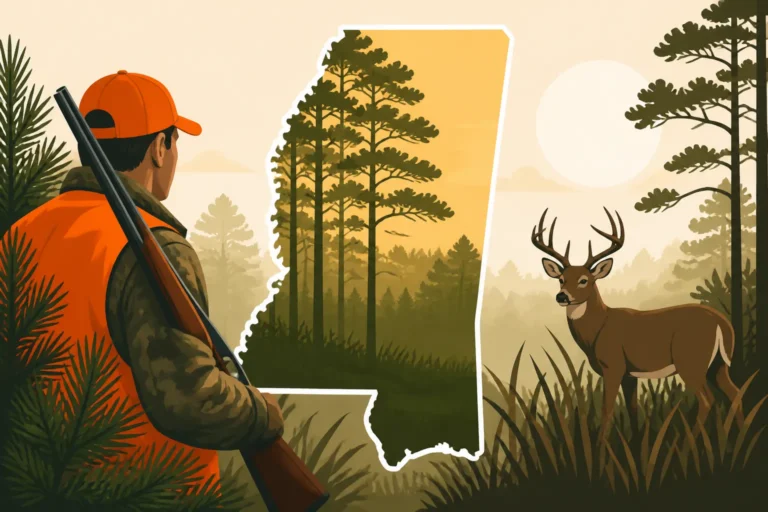
In the central part of the state, Bienville National Forest, often called the "Red Hills" due to its distinctive soil, offers extensive pine timberlands mixed with hardwood bottoms. This region is characteristic of Mississippi's "Piney Woods." Deer here adapt to a habitat dominated by pines, utilizing the edges of clear-cuts, young pine plantations, and the scattered hardwood drains for food and cover.
Hunting Bienville means adjusting your strategy to the pine ecosystem. Deer might browse on young pine shoots, feed on acorns in the hardwood bottoms, or seek cover in dense thickets of young pines. Focus on areas where pine stands meet hardwood drains, or along the edges of regeneration areas. These transitional zones are deer magnets. Also, don't overlook areas that have recently undergone prescribed burns; these can stimulate new, nutritious growth that deer will flock to. While Bienville might not be known for producing Boone and Crockett monsters, it offers consistent opportunities for healthy deer in a beautiful, classic Mississippi pine forest setting.
Strategies for Success on Public Land
Hunting public land successfully in Mississippi isn't just about showing up; it's about preparation, adaptability, and a willingness to work harder than the next hunter. With deer season pressures and the vastness of these areas, a solid strategy is your best friend.
Thorough Pre-Season Scouting
You simply cannot overstate the importance of pre-season scouting, especially on public land. Relying on luck or last year's knowledge will often lead to frustration. Start with digital tools. Applications like onX Hunt and GoHunt allow you to pore over aerial photos, identify potential bedding areas, travel corridors, food sources, and access points from your couch. Look for pinch points, saddles, water sources, and changes in vegetation. This digital recon helps you narrow down spots for boots-on-the-ground scouting.
Once you have a few promising locations, get out there. Walk the woods, look for old rubs, scrapes, tracks, and droppings. Identify fresh sign and understand how deer are using the landscape. Pay close attention to subtle terrain features that might funnel deer movement. Check out areas where other hunters might overlook, or where the terrain makes access slightly more difficult. Scouting Mississippi Public Land Before Season is your ticket to finding those hidden pockets of activity. Using the MDWFP app, even Using the MDWFP App Without Cell Service, can also provide valuable insights into property boundaries and specific WMA rules while you're in the field.
Adapting to Pressure and Season Phases
Public land hunting often means dealing with other hunters. Deer quickly learn to avoid high-pressure areas, especially during opening weekends. This means your tactics need to evolve throughout the season. Early season, deer might stick to predictable patterns, but once the guns start booming, they become much more nocturnal and wary.
During heavy pressure times, consider going deeper into the woods, crossing a creek, or navigating a thicket that most hunters avoid. These harder-to-reach spots often hold deer that have been pushed out of more accessible areas. As the season progresses towards the rut, deer behavior shifts, and bucks become more active in daylight, covering more ground in search of does. Focus on travel corridors between bedding and feeding areas. In late season, look for overlooked food sources like remaining acorns, green browse, or agricultural fields bordering public land. Late-Season Food Sources for Mississippi Whitetails can be a game-changer when everything else is scarce.
Essential Gear and Mindset
Successful public land hunting requires more than just a rifle and good camouflage. Your gear needs to be reliable and suited for the demanding environment. A comfortable, high-quality pack is essential for carrying your essentials and, hopefully, a deer quartered out. A good pair of waterproof boots is non-negotiable in many Mississippi public lands, especially in the Delta or river bottoms. Portable stands or ground blinds are invaluable for setting up in optimal locations that might be far from established access points. Don't forget a quality game cart for extraction; it can save your back and make a long drag manageable.
Beyond the physical gear, a strong mental game is crucial. Public land hunting is often a grind. It requires patience, persistence, and the willingness to learn from every sit, successful or not. You might walk miles and see nothing for days, but that one moment when a mature buck steps out makes it all worthwhile. Embrace the challenge, stay positive, and always be thinking about your next move.
Navigating Regulations and Access
Understanding the rules and how to access public land legally and ethically is paramount. Ignorance of regulations can quickly turn a great hunting trip into a frustrating or even legally troublesome one.
Understanding Unit-Specific Rules
Mississippi is divided into four main deer management units, and each unit, as well as individual WMAs within those units, can have specific rules that supersede the general statewide regulations. For instance, antler restrictions vary significantly between the Delta Unit and the Hills Unit. Mississippi Deer Season Structure Explained provides a great overview, but always double-check the specific WMA rules if you're hunting one.
This means you need to consult the MDWFP outdoor digest or their website for the most current regulations for the specific area you plan to hunt. Pay close attention to opening and closing dates, legal weapons, bag limits, and any special permit requirements. For example, some WMAs require a daily sign-in or specific youth hunting weekends. Knowing these details prevents accidental violations and ensures a smooth hunting experience. Also, be aware of CWD zones; Mississippi's Chronic Wasting Disease Zones can have mandatory testing requirements or carcass movement restrictions that you need to follow.
Accessing and Staying Legal
Gaining legal access to public land isn't always as simple as pulling off the highway. Many public lands have designated parking areas, and some forest roads might be gated or restricted to ATVs only. Always know the Vehicle Rules on Mississippi Public Land for the area you're hunting. You might need to walk in much further than you'd prefer, but that often leads to less pressured areas.
Also, be diligent about identifying property lines, especially when public land abuts private property. Using a GPS mapping app like onX Hunt with landowner boundaries can be invaluable to ensure you don't accidentally trespass. Treestand Rules on Mississippi Public Land and ground blind regulations are also important; some areas require stands to be removed daily, while others allow them to be left for the season with proper tagging. Always ensure your license and any required permits are current and easily accessible.
Disclaimer
This article is for general informational purposes only and does not constitute professional advice. Laws, prices and regulations vary by location and change over time. Consult a qualified professional for guidance on your specific situation.