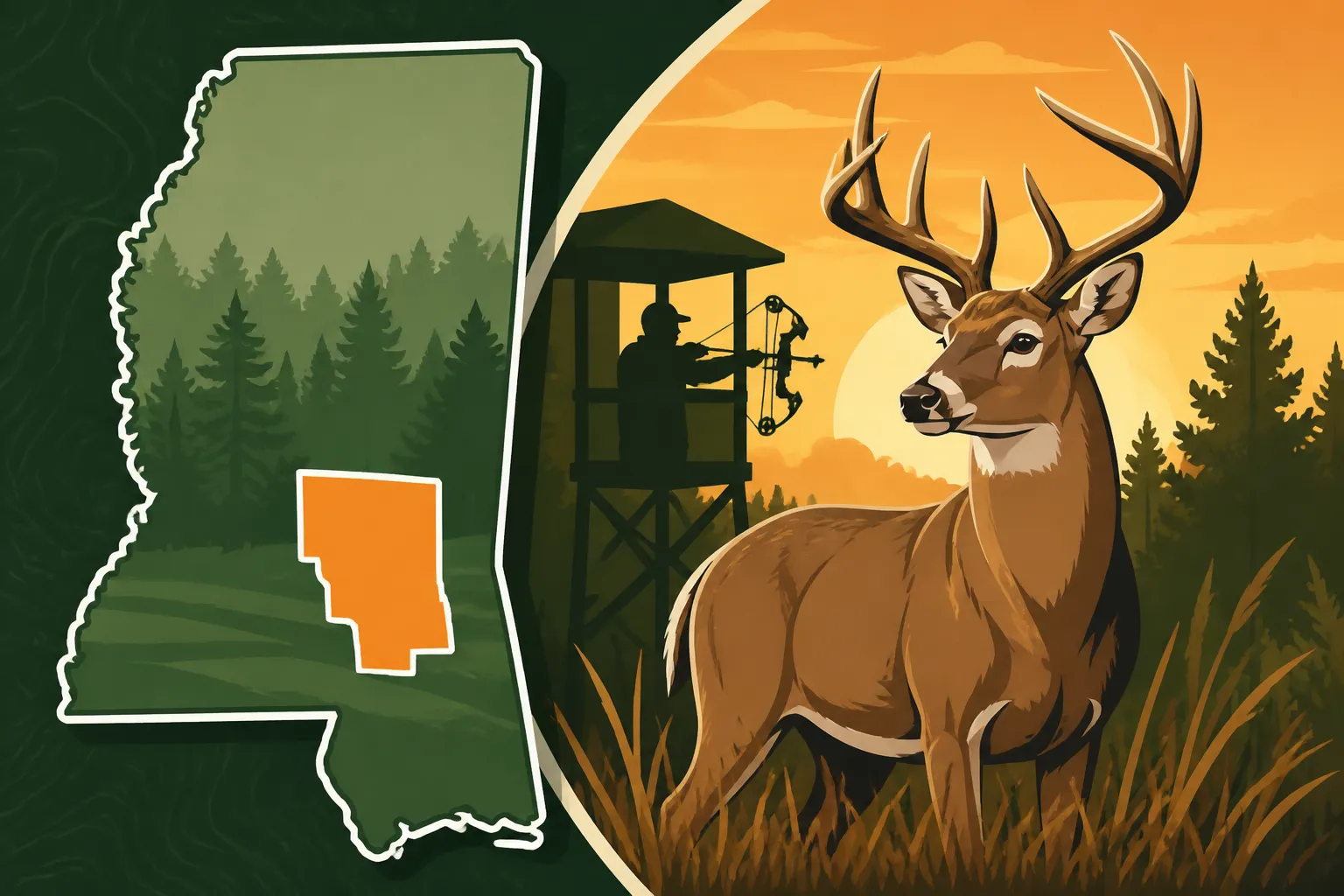
Lamar County Public Land for Deer
Finding good public land for deer hunting in Mississippi can feel like trying to solve a puzzle with half the pieces missing, especially when you're looking at a specific county like Lamar. It's easy to get frustrated sifting through general information, wondering where the actual opportunities are and how to make the most of them. This guide is here to cut through the confusion, offering a deep dive into deer hunting on public land within Lamar County, helping you pinpoint promising areas and develop effective strategies for a successful hunt.
The Lay of the Land: Public Hunting in Lamar County
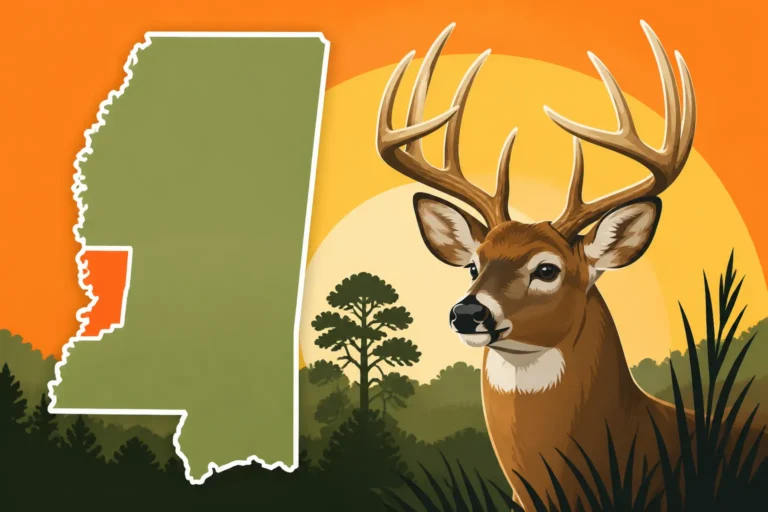
Lamar County, situated in the Piney Woods region of Mississippi, offers a different kind of public land hunting experience compared to the vast bottomlands of the Delta. Here, you'll find more rolling hills, mixed pine-hardwood forests, and landscapes shaped by commercial timber operations alongside protected natural areas. Understanding these characteristics is crucial for any deer hunter hoping to tag a buck or doe on public ground. It's not always about finding huge, untouched wilderness; sometimes, it's about spotting those overlooked pockets and understanding how deer use the available cover and food sources within a more managed forest environment.
Identifying Available Public Tracts
When you start looking at a map of Lamar County, you'll quickly see that much of the public hunting opportunity revolves around the DeSoto National Forest. This isn't one monolithic block of land, but rather a patchwork of federal ground interspersed with private holdings. This can make navigating access a bit tricky, but with the right tools and a little homework, it's entirely manageable. Don't assume every green patch on a generic map is huntable; federal lands often have their own specific regulations that overlay state-wide rules. You'll need to differentiate between designated Wildlife Management Areas (WMAs) which often have stricter rules and specific quotas, and general national forest lands that typically follow broader state regulations. Knowing the distinction is your first step to staying legal and maximizing your chances.
Often, hunters get frustrated because they drive past "No Hunting" signs on private property, thinking it applies to everything. This is where detailed mapping applications become invaluable. Tools like onX Hunt can be a game-changer, overlaying property boundaries and land ownership data directly onto your GPS. This allows you to clearly see where public land begins and ends, preventing accidental trespass and helping you identify hidden access points. It’s also crucial to remember that even within public lands, there can be smaller, designated areas like campgrounds or recreational sites where hunting is prohibited for safety reasons. Always cross-reference with the latest regulations from the Mississippi Department of Wildlife, Fisheries, and Parks (MDWFP) for any specific unit or area you plan to hunt.
General Characteristics of Lamar County Deer Habitat
The deer habitat in Lamar County, primarily within the DeSoto National Forest portions, is a classic example of the Piney Woods biome. This means a mix of pine plantations, often managed for timber production, interspersed with hardwood drains, creek bottoms, and some areas of older growth. Deer thrive in these diverse environments, utilizing the dense cover of young pine thickets for bedding and security, while feeding in the more open hardwood areas on acorns and other mast crops. Clear-cuts, especially those that are a few years old, can be magnets for deer due to the lush regrowth of browse plants.
The terrain here is generally rolling, with subtle elevation changes that can create natural funnels and pinch points. Unlike the dramatic bluffs of the Loess Hills or the flat expanses of the Delta, Lamar County's topography requires hunters to pay close attention to contour lines and how deer will naturally navigate the landscape. Water sources, often in the form of small creeks, intermittent streams, and beaver ponds, are also critical, especially during warmer periods of the season. Deer will follow these water features, using them as travel corridors and for hydration. Understanding these habitat nuances, from the thickest pine regeneration to the mature oak stands, is key to predicting deer movement and setting up effective ambush points. You'll find that deer often move between these different habitat types throughout the day, bedding in the thick stuff and moving to more open areas to feed, particularly during low-light hours.
Detailed Look at Key Public Hunting Areas
When we talk about public land deer hunting in Lamar County, the conversation invariably circles back to the DeSoto National Forest. This expansive federal forest provides the bulk of the opportunities in this region, offering a diverse landscape for hunters willing to put in the legwork. It's not a small backyard woodlot; it's a serious piece of ground that demands respect and a well-thought-out plan.
DeSoto National Forest: Focus on Lamar County Segments
The DeSoto National Forest is a significant chunk of land, spreading across several counties in south Mississippi, and a good portion of it lies within Lamar County. This means you’re looking at thousands of acres of huntable public land, primarily managed for timber, wildlife, and recreation. For deer hunters, this translates to a mosaic of habitat types created by various timber operations: recently thinned pine stands, mature pine plantations, regenerating clear-cuts, and the ever-important hardwood bottoms along creeks and rivers. Deer absolutely love these edges and transitions.
The beauty of hunting a national forest is the sheer amount of space. You can often walk for miles without encountering another hunter if you're willing to venture away from main roads and popular access points. However, this also means the deer can be spread out, and finding consistent patterns requires diligent scouting. Focus your efforts on identifying areas where different habitat types meet: a young pine thicket bordering a mature hardwood bottom, or a clear-cut that's grown up with browse plants adjacent to a creek. These transition zones are highways for deer moving between bedding and feeding areas. Pay close attention to subtle terrain features like slight ridges or benches that might not look significant on a flat map but can act as natural travel corridors. For a deep dive into specific hunting methods on forest land, check out Still-Hunting Hills Unit Ridges, as many of those principles apply well to the rolling terrain you'll find here.
Understanding Specific Unit Rules and Access
While the DeSoto National Forest falls under general state hunting regulations for deer, it's absolutely vital to be aware of any specific forest-level rules or WMA overlays that might apply to certain sections within Lamar County. While the entire DeSoto isn't a WMA, specific portions might be managed more intensively or have unique restrictions. Always check the current MDWFP hunting guide for the most up-to-date information regarding season dates, bag limits, and specific regulations for the DeSoto National Forest in Lamar County. This is not the place to guess! A simple search on the MDWFP website or a call to a local game warden can save you a lot of headache and potential fines.
For example, while the state may have a general bag limit for antlerless deer, some areas within the National Forest might have specific guidelines for antlered buck requirements. You'll need to understand the nuances, such as whether a buck needs a certain spread or number of points to be legal. Hills and Southeast Unit Antler Restriction Rules covers general principles that can be helpful. Additionally, access rules can vary. Some forest roads might be open to vehicles year-round, while others are gated and only open seasonally or to foot traffic. Knowing these access points, and being willing to hike into more remote areas, is often the key to finding less-pressured deer. Always look for parking areas, designated trailheads, or old logging roads that might provide foot access deep into the woods. Using an application like onX Hunt can reveal these smaller roads and trails that aren't on typical road maps, helping you plan your entry and exit routes effectively.
Strategies for Success on Lamar County Public Deer Land
Hunting public land in Mississippi, especially for deer, demands a different approach than private land. It often means dealing with more pressure, thicker cover, and deer that are more wary. But with the right strategies, you can absolutely find success in Lamar County. It's about being smarter, working harder, and having a plan.
Scouting and E-Scouting Like a Pro
Effective scouting is the bedrock of successful public land hunting. You can't just show up on opening day and expect to find deer consistently. This process starts long before you ever set foot in the woods, using modern tools to maximize your time. E-scouting, or electronic scouting, is your best friend here. Grab your laptop or tablet and open up a mapping application like onX Hunt. Look for key features that deer rely on:
- Thick Cover: Identify dense pine plantations, regenerating clear-cuts (2-5 years old are prime), or creek bottom thickets. These are likely bedding areas.
- Food Sources: Locate mature hardwood stands for acorns, agricultural fields (if adjacent to public land), or areas with diverse browse. Deer will travel from cover to food.
- Water: Creeks, small ponds, and low-lying wet areas are crucial, especially in warmer months.
- Topography: Look for saddles, ridges, points, and benches that create natural travel corridors. Even subtle terrain changes can funnel deer movement.
Once you've identified potential hotspots on your map, it's time for boots-on-the-ground scouting. Visit these areas in the off-season or just before the season opens (check regulations for scouting periods). Look for fresh deer sign: rubs, scrapes, tracks, and droppings. Pay attention to trails connecting bedding and feeding areas. Remember, deer on public land are often nocturnal, so morning and evening hunts around these transition zones are critical. If you find a good area, remember where to hang a camera on a logging road to monitor activity without disturbing it too much.
Pressure Management and Finding Unpressured Deer
Public land often comes with public pressure. On popular hunting days, especially opening weekend, certain areas can feel like a convention. Deer, being intelligent creatures, will quickly adapt to this pressure. They'll become more nocturnal, utilize the densest cover, and avoid common travel routes. Your job is to think like a pressured deer and find where they go.
One of the most effective strategies is to walk further. Most hunters don't venture more than a quarter-mile from their vehicle. If you're willing to hike a mile or two, especially through tougher terrain, you dramatically increase your chances of finding unpressured deer. Look for natural barriers that deter other hunters, such as swamps, steep ravines, or dense thickets. These "no-go" zones for others can be sanctuaries for deer. Consider using a ground blind on Mississippi public land tucked into thick cover, allowing you to be concealed in areas where a treestand might be too exposed or difficult to set up. Another tactic is to hunt mid-week instead of weekends, or during less popular times of the season. Remember that deer drives with three or four hunters can move deer around, so being aware of other hunter activity can help you predict where deer might be pushed.
Gear Considerations for Piney Woods Hunting
Hunting the Piney Woods of Lamar County requires specific gear that can withstand the environment and help you succeed. It’s not just about your rifle or bow; it’s about being prepared for long walks, diverse weather, and thick cover.
Footwear: Durable, waterproof boots are non-negotiable. You'll be crossing creeks, navigating muddy trails, and walking through dew-covered grass. Comfort is also key for those long hikes.
Clothing: Layering is essential due to fluctuating Mississippi temperatures. Blaze orange is a requirement during gun seasons, so make sure you understand How Much Blaze Orange Mississippi Requires. Camouflage that blends with pine, oak, and mixed undergrowth will serve you well.
Navigation: A reliable GPS unit or a mapping app like onX Hunt on your phone (with downloaded offline maps!) is critical. Cell service can be spotty in the National Forest, so don't rely solely on live connections. A compass and paper map are excellent backups.
Treestand/Ground Blind: Lightweight, portable treestands or ground blinds are ideal for public land, allowing you to be mobile and set up in new areas as needed. Ensure you know Treestand Rules on Mississippi Public Land and Ground Blind Rules on Mississippi WMAs.
Scent Control: Deer on public land are extra sensitive to human scent. Use scent-reducing sprays, wash clothes in scent-free detergent, and pay attention to wind direction.
Backpack: A comfortable daypack for carrying water, snacks, calls, emergency supplies, and a field dressing kit is vital. You might be far from your vehicle, so be self-sufficient.
Navigating Regulations and Ethical Considerations
Hunting is a privilege, and with that privilege comes the responsibility to know and follow all regulations, as well as uphold ethical standards. This is especially true on public land, where your actions can impact the experience of others and the health of the deer herd.
Key Season Dates and Bag Limits
Understanding the complex Mississippi deer season structure is paramount. Lamar County falls primarily within the Southeast Deer Management Unit for many regulations, though it's always critical to confirm. Generally, Mississippi's deer season is divided into archery, primitive weapons (muzzleloader), and gun seasons, and these dates can vary slightly year to year. Make sure you check the current MDWFP hunting guide for the exact Mississippi Southeast Unit Archery Dates and Mississippi Gun Season Dates by Unit that apply to Lamar County.
Bag limits are also strictly enforced. Mississippi typically allows hunters to harvest a certain number of antlered bucks and antlerless deer per season, but these limits can also vary by unit and type of weapon. For instance, the Southeast Unit might have different antler restrictions or antlerless days compared to other regions. It's not uncommon for hunters to get caught up in the excitement and overlook these critical details. Always confirm the specific daily and seasonal bag limits for antlered and antlerless deer in Lamar County before you head out. Don't rely on information from last year or another county. This includes understanding Mississippi Statewide Deer Bag Limit and any local variations.
| Season Type | Typical Dates (Check MDWFP Annually) | Key Rules & Considerations |
|---|---|---|
| Archery Season | Mid-October to Mid-February | Longest season, allows crossbows (with specific rules like Crossbow Rules During Mississippi Archery Season), requires diligent scouting. |
| Youth Gun Weekend | Early November (Specific Weekend) | Special opportunity for young hunters, usually with expanded bag limits. Check Mississippi Youth Gun Weekend Dates. |
| Primitive Weapons | Mid-November to Early December | Muzzleloaders and certain archaic weapons. Often falls before general gun season, offering less pressure. |
| Gun Season | Mid-November to Late January | Most popular, highest pressure. Blaze orange is mandatory. |
Note: Dates are illustrative and vary annually. Always consult the official MDWFP hunting guide.
Respecting the Resource and Other Hunters
Hunting public land isn't just about bagging an animal; it's about sharing a finite resource responsibly. This means practicing ethical hunting and being considerate of your fellow outdoors enthusiasts.
- Leave No Trace: Pack out everything you pack in. This includes trash, spent casings, and any flagging tape you might use for marking trails. Public lands are for everyone, and litter detracts from the experience.
- Respect Boundaries: As mentioned, knowing public vs. private land boundaries is critical. Tools like onX Hunt are excellent, but always double-check physical markers. If you're Retrieving Game From Private Land in Mississippi, you must obtain permission first, even if the animal you shot is legally yours.
- Minimize Pressure: Try to avoid walking directly to your stand on established deer trails, especially if you know other hunters are in the area. Take circuitous routes, use creek beds if safe, and try to enter and exit quietly. The less disturbance you create, the better for everyone.
- Courtesy: If you encounter another hunter, a simple nod or friendly greeting is usually sufficient. Don't walk into someone else's active hunt, and if you see a vehicle parked at a popular spot, consider moving to a different area to spread out the pressure. Remember, everyone is out there to enjoy the woods.
- Reporting Harvests: Adhering to Mississippi Deer Reporting Requirements is crucial for wildlife management. This data helps the MDWFP make informed decisions about future seasons and bag limits. It's a small task that has a big impact on the future of deer hunting in our state.
By embracing these regulations and ethical considerations, you contribute to a positive hunting culture and help ensure that Lamar County's public lands remain a valuable resource for future generations of Mississippi hunters. Happy hunting, and stay safe out there!
Disclaimer
This article is for general informational purposes only and does not constitute professional advice. Laws, prices and regulations vary by location and change over time. Consult a qualified professional for guidance on your specific situation.