Predator Hunting in Mississippi
The constant pressure of predators on game populations and livestock can be a real headache for hunters and landowners alike across Mississippi. You invest time and money into managing your deer herd or protecting your turkeys, only to feel like coyotes and bobcats are undoing all your hard work. This comprehensive guide is designed to arm you with the knowledge and tactics needed to effectively pursue and manage these elusive animals, bringing balance back to your hunting grounds and providing thrilling hunting opportunities.
Understanding Mississippi's Predator Landscape
Mississippi is a state rich in wildlife, and that includes a healthy, often thriving, population of predators. While they play a vital role in the ecosystem, their numbers can, at times, become unbalanced, leading to significant impacts on other game species and even agricultural interests. Understanding who these predators are and why their management is crucial is the first step in successful hunting.
The Primary Predator Species in Mississippi
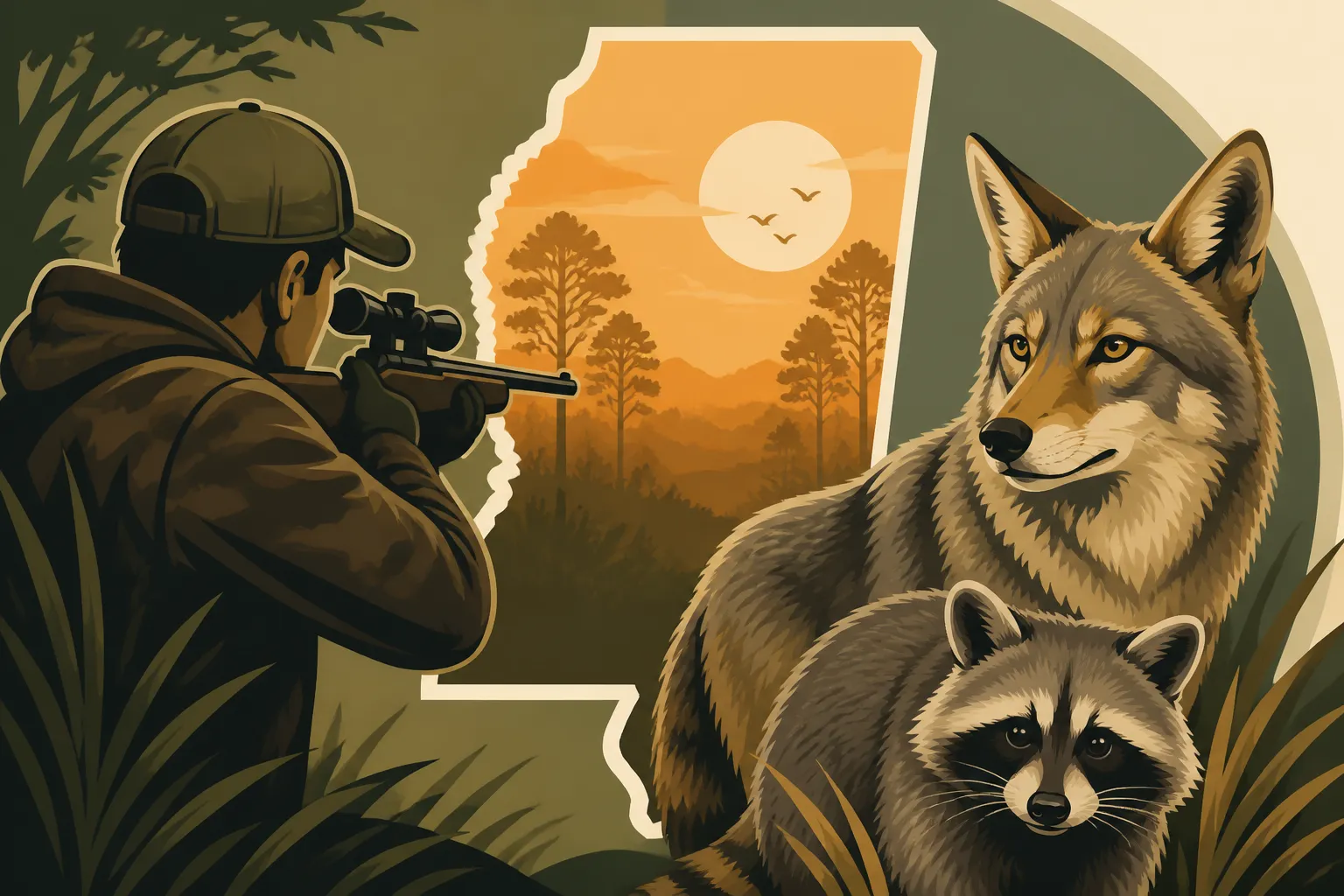
When we talk about predator hunting in Mississippi, a few key species immediately come to mind. The most prominent, and often the most challenging, is the coyote. These highly adaptable canines have expanded their range dramatically across the state over the last several decades, inhabiting everything from dense Delta bottomlands to suburban fringes. They are opportunistic hunters, preying on fawns, turkeys, small game, and even livestock. Their intelligence and wariness make them a true test for any hunter.
Another significant predator, though often more elusive, is the bobcat. Found throughout Mississippi, bobcats are primarily ambush predators, focusing on rabbits, squirrels, and small birds, but they will certainly take advantage of an easy meal like a young deer or turkey if the opportunity arises. They’re masters of concealment, preferring dense cover, and their nocturnal habits mean encountering them during daylight hours can be a rare treat. While less numerous than coyotes, their presence is felt in many areas. Then, of course, there are feral hogs, which aren't predators in the traditional sense, but their destructive rooting habits and direct predation on fawns and turkey nests make them a serious threat to game populations, often warranting similar management strategies. We'll touch on them where relevant, as their year-round open season makes them a consistent target for many.
Why Predator Management Matters
The impact of unchecked predator populations can be devastating for other wildlife, especially during critical periods like fawning and nesting seasons. Imagine the frustration of seeing healthy does in the spring, only to have a significant portion of their fawns disappear due to coyote predation. This directly affects your future deer herd quality and quantity. Similarly, turkey poults are incredibly vulnerable to coyotes, bobcats, and even raccoons and opossums, which can decimate a hatch.
For landowners, the concerns can extend beyond game animals. Coyotes are notorious for preying on calves, lambs, and poultry, creating economic hardships for farmers and ranchers. Effective predator management isn't about eradication; it's about maintaining a healthy balance. It's about reducing pressure on vulnerable game species, allowing them to thrive, and protecting agricultural investments. It’s a crucial tool in a holistic wildlife management plan, and when done responsibly, it benefits the entire ecosystem.
Legalities and Regulations for Predator Hunting
Before you even think about heading into the woods, it's absolutely paramount to understand the specific rules and regulations surrounding predator hunting in Mississippi. Unlike deer or turkey, predators often have different, sometimes more liberal, regulations, but ignorance of the law is never an excuse. Always double-check the current Mississippi Department of Wildlife, Fisheries, and Parks (MDWFP) hunting guide for the latest updates.
Season Dates and Bag Limits
This is where predator hunting often differs significantly from traditional game species. For most common predators like coyotes and bobcats, Mississippi generally has a year-round, open season with no daily or seasonal bag limits on private land. This is a huge advantage for hunters and landowners looking to make an impact, allowing you to hunt when the opportunity arises, rather than being restricted to specific windows. On public lands, however, the rules can be more restrictive. Wildlife Management Areas (WMAs) often have specific dates and regulations for predator hunting, sometimes limiting it to concurrent deer seasons or specific times. It's essential to check the WMA-specific rules before planning a hunt, as they can vary greatly. For example, some WMAs might only allow predator hunting during daylight hours with archery or shotguns, while others might permit rifles during gun season.
Feral hogs also fall into this year-round, no-limit category on private land, given their classification as a nuisance animal. On public lands, similar to coyotes, specific WMA rules apply, sometimes limiting hog hunting to certain weapons or seasons. This makes them a fantastic target for opportunistic hunters whenever you're afield for other game.
Night Hunting Rules and Equipment
Mississippi does allow Night Hunting Rules for Mississippi Coyotes, which opens up a whole new world of opportunity for predator hunters, as many of these animals are primarily nocturnal. However, there are strict rules you need to follow. On private land, you can use artificial lights, night vision, and thermal imaging equipment to hunt coyotes and hogs. This is a game-changer, especially for coyotes, which are much more active under the cover of darkness. The use of suppressors is also legal in Mississippi, which can be a significant advantage for night hunting, reducing disturbance to neighbors and preventing hearing damage.
However, hunting predators at night on public lands is generally prohibited unless specifically stated for a particular WMA or wildlife refuge. Always confirm these regulations with the MDWFP before planning a night hunt on public ground. Additionally, ensure you have landowner permission if hunting private land at night, and be mindful of local ordinances, especially near populated areas. Being a responsible hunter means not just following the letter of the law, but also being a good neighbor.
Licensing Requirements
To hunt predators in Mississippi, you'll generally need a valid Mississippi hunting license. For residents, this typically means a Resident Sportsman's License or an All-Game License. Non-residents will need a Nonresident All-Game License or a specific Nonresident Predator/Furbearer license if available. While there are no specific tags for coyotes or bobcats, possessing a valid license for general hunting activities is a prerequisite.
For specific situations, like hunting during a managed deer hunt on a WMA, you might need additional WMA permits or tags, even if your primary goal is predators. Always assume you need the proper licensing for the time of year and location you intend to hunt. You can purchase licenses conveniently through the MDWFP website or licensed vendors. It’s always best to have your license and necessary permits on your person, whether physically or digitally on your phone, to avoid any issues with game wardens. For more details on what you might need, check out Mississippi Hunting Licenses and What They Cost.
Essential Gear for Mississippi Predator Hunters
Success in predator hunting, much like any other pursuit, often comes down to having the right tools for the job. From mimicking the distress calls of prey to seeing in the dark, modern gear can significantly boost your chances of calling in and harvesting a wary coyote or bobcat.
Calls and Decoys
This is arguably the most critical category for predator hunting. The goal is to convincingly imitate prey animals in distress, drawing predators in close enough for a shot.
Electronic Calls: These are incredibly versatile and popular, especially for coyotes. Brands like Foxpro, Primos, and Lucky Duck offer a vast library of sounds, from rabbit distress to fawn bleats, bird distress, and even pup howls. The ability to control volume, change sounds quickly, and place the call away from your position (upwind) is a huge advantage. You can set the call 30-50 yards from your setup, creating a diversion that draws the predator's attention away from you. A good electronic call can mimic a wide range of prey, making it effective throughout the year.
Mouth Calls: For a more hands-on approach, mouth calls offer excellent portability and a primal satisfaction. Open-reed calls, closed-reed calls, and howler calls are all common. Mastering a few different distress sounds (e.g., cottontail, jackrabbit) can be incredibly effective, particularly in areas where predators might be call-shy to electronic sounds. Howlers are excellent for locating coyotes and provoking a response, allowing you to pinpoint their general location before moving in for a setup.
Decoys: Visual stimulants can be game-changers, especially for coyotes that often hang up at a distance. A simple motion decoy, like a rabbit-fur spinner or a small feathered flapper, placed near your electronic call, can draw a predator's eye and hold its attention. The visual stimulus can often seal the deal, encouraging a cautious coyote to commit those last few critical yards. For bobcats, a small bird decoy or a mouse-like flapper can sometimes peak their curiosity, though they are generally less susceptible to decoys than coyotes.
Firearms and Ammunition
Choosing the right firearm and ammunition is crucial for clean, ethical harvests.
Rifles: For coyotes, centerfire rifles are the go-to choice. Calibers like .223 Remington, .22-250 Remington, and .204 Ruger are incredibly popular due to their flat trajectories, high velocities, and devastating terminal performance on small to medium-sized predators. These calibers minimize pelt damage, which can be a consideration if you plan to save the hide. When hunting at night, these calibers provide the reach and precision needed for distant shots. For heavier hogs, or if you expect a mixed bag, a .308 Winchester or 6.5 Creedmoor offers more knockdown power. Ensure your rifle is sighted in accurately, and practice shooting from various field positions.
Shotguns: A 12-gauge or 20-gauge shotgun loaded with buckshot (e.g., #4 buck) or heavy turkey loads (e.g., 3-inch #4 or #5 shot) can be incredibly effective for close-range predator hunting, especially in thick cover. This is a common choice for hunters running dogs, or those set up in dense areas where a predator might pop up unexpectedly close. Shotguns are also excellent for bobcats, which often come in silently and quickly. The wide pattern offers a margin of error that a rifle doesn't, though range is severely limited.
Ammunition: Beyond caliber, bullet choice matters. For coyotes, many hunters prefer V-Max or Ballistic Tip style bullets, which are designed for rapid expansion and energy transfer, ensuring a quick kill. For bobcats, similar bullets are effective, though some prefer a slightly less destructive option if pelt preservation is a high priority.
Optics and Lights
Being able to see your target, especially in low light or darkness, is critical.
Binoculars: A good pair of 8x or 10x binoculars is invaluable for scanning the landscape and spotting incoming predators, particularly in wide-open country. Look for models with good low-light performance.
Night Vision and Thermal Optics: These technologies have revolutionized night hunting. Night vision (NV) amplifies ambient light, allowing you to see in near darkness. Thermal imaging, however, detects heat signatures, making it possible to spot a coyote or hog in complete darkness, through light fog, or even in thick brush where it would be invisible to the naked eye or NV. Devices like those from Pulsar and ATN offer fantastic capabilities. While a significant investment, the advantage they provide for Night Hunting Rules for Mississippi Coyotes is unparalleled. You can use a thermal monocular for scanning and spotting, and then transition to a night vision scope or a thermal scope mounted on your rifle for the shot.
Hunting Lights: If thermal or NV is out of your budget, a good quality red or green LED hunting light mounted on your rifle can be very effective for night hunting coyotes and hogs. Many predators are less spooked by red or green light than white light, allowing you to illuminate them for a shot. Choose a light with adjustable brightness and a focused beam for longer ranges.
Top Predator Hunting Methods in Mississippi
Just like deer or turkey hunting, predator hunting has its own unique set of strategies and tactics. The key to consistent success lies in understanding these methods and adapting them to the specific species you're pursuing and the terrain you're hunting.
Calling and Stand Hunting
This is arguably the most popular and effective method for coyotes and often productive for bobcats. The basic premise is to set up in a strategic location, deploy calls and decoys, and wait for a predator to come into range.
Choosing a Stand Location: The setup is critical. You want to choose a spot that gives you a good vantage point, covers your scent, and offers multiple shooting lanes. Look for areas where different habitat types converge – a field edge bordering a pine plantation, a point of woods jutting into a pasture, or a break in a creek bottom. Always consider the wind direction; predators have an incredible sense of smell, so you want the wind blowing from your position towards the area you expect the predator to approach from, carrying your scent away from them. Use natural cover to break up your silhouette. A quality rangefinder is invaluable to mentally mark distances to potential shooting lanes before the action starts.
Calling Sequences: This is where the art comes in. Start with a relatively quiet series of distress calls, perhaps a few soft rabbit squeals, to gauge interest without immediately alerting distant animals. If nothing responds, gradually increase volume and intensity. Mix in different sounds – a cottontail distress, then a bird in distress, or even some coyote vocalizations like pup howls or challenge howls to pique curiosity or aggression. A good hunting app, like those often provided with GoHunt memberships, can give you access to a library of sounds and information on effective calling sequences. Wait times can vary; some coyotes come charging in within minutes, others might take 20-30 minutes to cautiously approach. A typical stand lasts 30-45 minutes. Be patient, remain absolutely still, and scan constantly.
Working the Decoy: Position your motion decoy near your e-caller, slightly away from your shooting lanes. The decoy provides a visual target, drawing the predator's attention away from your hidden position. A coyote might focus intensely on a wiggling rabbit decoy, allowing you a moment to steady your shot. This can be especially useful for those cautious animals that want to circle downwind; the decoy keeps their focus forward.
Still Hunting and Tracking
While calling is active, still hunting is a more subtle, stealthy approach, particularly effective for bobcats or in areas with thick cover.
Silent Movement: Still hunting involves moving very slowly through suitable habitat, pausing frequently to scan and listen. Think of it as hunting at a snail's pace, taking one or two steps, then stopping for several minutes to observe. This allows you to pick up subtle movements, the flick of an ear, or the slight rustle of leaves that might indicate a predator. Focus on areas with good cover, like dense brush, creek bottoms, and thickets, especially where prey animals like rabbits and squirrels are abundant. This method requires immense patience and sharp observational skills.
Reading Sign: Tracking can be a component of still hunting. Learning to identify and follow fresh tracks – coyote, bobcat, or hog – can lead you directly to their recent activity areas. Look for scat, disturbed ground, and game trails that show regular use. In the fertile soils of the Delta or the soft pine needles of the Piney Woods, fresh tracks can be quite obvious. Understanding Reading a Delta Mud for Fresh Deer Movement can also help you identify predator tracks in the same areas. Pay attention to changes in terrain or cover that might indicate a bedding area or a travel corridor. This method is often more about encountering a predator unexpectedly as you move through its territory rather than actively drawing it in.
Running Dogs for Predators
For some hunters, particularly in certain regions of Mississippi, running dogs is a traditional and highly effective way to hunt predators, especially coyotes and feral hogs.
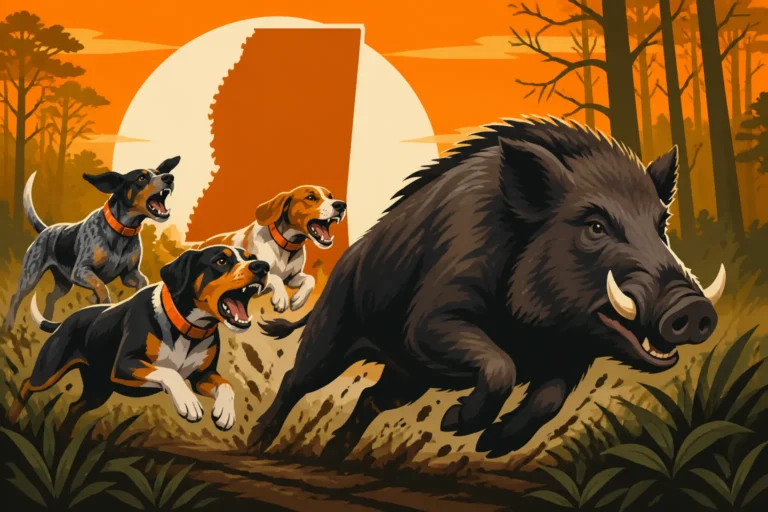
The Pack and the Pursuit: This method involves releasing trained hounds, often Walker, Redbone, or Black-and-Tan Coonhounds, to track and tree or bay predators. The dogs' incredible sense of smell and endurance allow them to cover vast amounts of ground and follow scent trails that humans would never detect. Once the dogs strike a scent, the chase is on, often accompanied by the exciting music of the hounds in full cry. Hunters follow the dogs using GPS collars, driving roads, or on foot, to get into a position for a shot when the predator is treed or cornered. This is a very active, often high-energy form of hunting.
Ethical Considerations and Teamwork: Running dogs requires a significant investment in trained dogs, equipment, and often a team of hunters. Communication and safety are paramount, especially when pursuing animals like hogs that can be dangerous. Respect for private property is also crucial, as dogs can cover many miles. Always ensure you have permission to cross property lines if your dogs might range onto land you don't own. This method is also highly effective for Running Dogs on Mississippi Feral Hogs, offering a thrilling pursuit and effective population control.
Strategic Locations for Predator Hunting in Mississippi
Mississippi offers a diverse range of habitats, each with its own unique challenges and opportunities for predator hunters. Understanding where predators thrive and how they use the landscape is key to choosing your hunting grounds.
Farm Country and Ag Edges
Mississippi's vast agricultural lands, particularly in the Delta and Black Prairie regions, are prime territory for coyotes. These areas offer an abundant food source, from rodents and rabbits that live in field edges to fawns and even livestock.
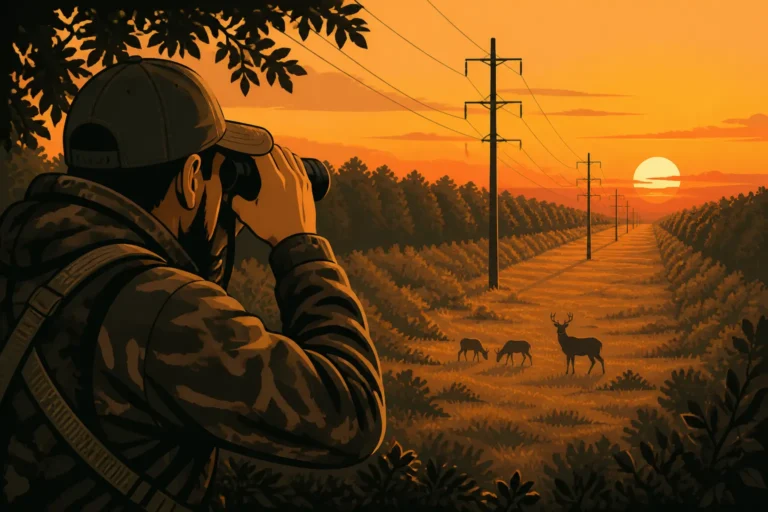
Edge Habitat is Key: Coyotes frequently travel and hunt along the edges where fields meet timber, fencerows, or creek bottoms. These transition zones provide cover for ambush, easy travel lanes, and access to both field prey and woodland game. Setting up along these edges, especially in areas with standing crops like corn or soybeans, can be highly productive. A good strategy is to use the elevated position of a power line right-of-way or a slight rise in the terrain to get a better vantage point over a field. Consider hunting on the downwind side of a cut cornfield or soybean field, as coyotes will often patrol these areas for leftover grains and rodents. This approach is particularly effective for Coyote Calling in Mississippi Farm Country.
Focus on Funnels and Crossings: Look for natural funnels where predators are likely to concentrate their movement. This could be a narrow strip of timber connecting two larger wood blocks, a drainage ditch running through a field, or a cattle crossing. These pinch points are excellent places to set up calls and wait. Permission from landowners is, of course, absolutely essential when hunting private agricultural land. Building relationships with farmers can open up incredible hunting opportunities, as they are often eager for help managing coyotes and hogs that impact their crops and livestock.
Pine Plantations and Clear-Cuts
In central and southern Mississippi, pine plantations and the patchwork of clear-cuts they create offer distinct predator hunting environments. These areas, particularly in national forests like Bienville and DeSoto, hold healthy populations of coyotes and bobcats.
Thick Cover and Food Sources: Young pine plantations, especially those 2-10 years old, provide incredibly dense cover for predators to hide, den, and ambush prey. Rabbits, rodents, and deer fawns thrive in the browse and security offered by the thick growth, which in turn attracts predators. Clear-cuts also offer excellent hunting, particularly along their edges where they meet mature timber. Predators will use the mature timber for bedding and travel, venturing into the clear-cuts to hunt.
Strategic Calling in Timber: When hunting these areas, positioning your call strategically is vital due to the limited visibility. Instead of trying to see across vast distances, focus on calling predators out of thickets or across small clearings. Use louder, more aggressive calls if visibility is limited, as the sound won't travel as far. For Predator Calling Mississippi Pine Plantations, try to set up on a logging road or a high spot that offers a little more visibility into the dense cover. Bobcat sightings are more common in these areas than in open farm country, as they prefer the dense cover.
Bottomland Hardwoods and River Systems
The extensive bottomland hardwood forests, particularly in the Mississippi Delta and along major river systems like the Mississippi, Yazoo, and Pascagoula, are classic big timber country. This habitat is also home to a significant predator population.
Cover and Water Access: These areas are characterized by vast stretches of mature hardwoods, sloughs, oxbow lakes, and dense undergrowth. Predators, especially coyotes and bobcats, thrive here due to the abundance of cover, water, and diverse prey species. Deer, turkeys, squirrels, and rabbits are plentiful, providing a consistent food source. Predators will often use the banks of sloughs and dry creek beds as travel corridors.
Hunting Flooded Timber and High Ground: During periods of flooding, predators will concentrate on higher ground, making these areas productive. Look for small islands of high ground, logging roads, or natural ridges within the bottomlands. When calling in these areas, remember that sound can be muffled by the dense canopy and understory, so adjust your call volume accordingly. Scouting for tracks and sign along these travel corridors can give you a major advantage. Understanding Hunting Delta Unit Bottomland Deer can provide insights into deer movement, which predators will also follow.
Dealing with Common Predator Hunting Challenges
Predator hunting in Mississippi isn't always easy. These animals are smart, adaptable, and often operate in challenging environments. Understanding and anticipating these hurdles can make the difference between a frustrating outing and a successful one.
Weather and Wind Considerations
Mississippi's weather can be unpredictable, and temperature, precipitation, and especially wind, play huge roles in predator behavior and hunting success.
Wind is Your Enemy (and Friend): Wind is perhaps the single most critical factor. Predators rely heavily on their sense of smell, so always try to keep the wind blowing your scent away from where you expect them to approach. A shifting wind can completely ruin a setup. On very windy days, it's often best to find a location that offers some natural windbreak, like a depression, a thick line of trees, or the leeward side of a ridge. Wind also carries sound, so on calm days, softer calls might be all you need, while on blustery days, you'll need to increase your call volume significantly to be heard. GoHunt often provides detailed weather overlays on their mapping apps, which can be invaluable for planning your approach and stand location based on real-time wind data.
Temperature and Precipitation: Extreme temperatures can affect predator activity. On scorching summer days, coyotes and bobcats might be more nocturnal, resting during the heat of the day. Extremely cold days can make them more active as they seek food to maintain energy. Rain can wash away scent, making tracking difficult, but a light drizzle can also mask your sounds and movements, potentially giving you an advantage. After a heavy rain, coyotes might be more likely to travel logging roads or trails, as the wet ground makes silent travel easier. Be prepared for all conditions, dress appropriately, and remember that patient observation is always key.
Dealing with Educated Predators
Mississippi predators, especially coyotes, can become incredibly "educated" or call-shy, particularly in areas that see a lot of hunting pressure. They've heard it all before, or they've had negative experiences, making them wary of common calls.
Varying Your Approach: The biggest mistake hunters make is using the same calls and sequences repeatedly in the same areas. If you've hunted a spot several times without success, change it up. Try different distress calls – if rabbit distress isn't working, switch to bird distress, fawn bleats, or even a rodent squeak. Change your calling sequence; instead of continuous calling, try longer silent periods interspersed with short bursts of sound. Sometimes, using minimal or even no calling, relying on stealthy still hunting, can work better on pressured animals.
Coyote Vocalizations: Instead of just distress calls, incorporate more coyote vocalizations. Challenge howls, lone howls, or pup distress calls can sometimes elicit a response from educated coyotes who might ignore typical prey calls. A challenge howl might bring in a territorial male looking to run off an intruder. Understanding Rattling Volume in Thick Cover can teach you how to adjust sound levels for different situations, which applies to predator calling too. Always remember to play the wind, as these educated animals are much more likely to circle downwind to scent-check the situation before committing.
Access and Landowner Relations
Finding consistent access to good predator hunting grounds is often one of the biggest challenges, especially for those who don't own large tracts of land.
Public Lands: Mississippi has a good amount of public land, including National Forests and Wildlife Management Areas (WMAs). While regulations might be more restrictive than on private land (e.g., specific season dates, no night hunting), these areas offer valuable opportunities. Always check the specific rules for the WMA or National Forest you plan to hunt. Scouting Mississippi Public Land Before Season is crucial, as is using tools like the MDWFP app or onX Hunt to identify boundaries and potential hunting spots. Expect more hunting pressure on public lands, especially during deer and turkey season.
Private Land Permission: Gaining permission to hunt private land is often the best route for consistent predator hunting, especially if you want to night hunt or hunt year-round. Start by respectfully asking landowners in areas you've scouted. Offer to help them with predator control, explaining how it benefits their deer and turkey populations, or helps protect their livestock. Be polite, dress appropriately, and be clear about your intentions. Leaving a calling card with your contact information can also be helpful. Always respect their property, leave gates as you found them, and report back on your efforts. A good relationship with a landowner can open up years of hunting opportunities. For more advice, check out Getting Private Land Permission in Mississippi.
| Predator Species | Primary Habitat | Best Hunting Method | Season & Bag Limit (Private Land) | Key Gear Recommendation |
|---|---|---|---|---|
| Coyote | Farm Edges, Pine Plantations, Bottomlands | Calling & Stand Hunting, Running Dogs | Year-round, No Limit | Electronic Call, Thermal Optics, .223 Rifle |
| Bobcat | Dense Cover, Pine Plantations, Swampy Areas | Still Hunting, Calling (subtler) | Year-round, No Limit | High-Quality Binoculars, Shotgun/Small Caliber Rifle |
| Feral Hog | Bottomland Hardwoods, Ag Fields, Swamps | Night Hunting, Trapping, Running Dogs | Year-round, No Limit | Thermal Optics, AR-style Rifle, Bait Sites |
Processing and Utilizing Your Harvest
So, you've successfully called in and harvested a predator. Now what? The process of handling your animal after the shot is just as important as the hunt itself. For many, predator hunting is about control, but for those interested, there's also the opportunity to utilize the animal's hide.
Skinning and Tanning Basics
If you're interested in preserving the hide of a coyote or bobcat, prompt and proper skinning is essential. The sooner you skin the animal after the kill, the easier it will be, and the better the quality of the hide. Carry a sharp knife, a game bag (for pelts, not meat), and some heavy-duty gloves.
Field Skinning vs. Full Skinning: For coyotes and bobcats, you'll generally "case skin" them, meaning the hide is peeled off like a sock, leaving a tube shape. This is ideal for fur buyers and taxidermists. Make cuts from one heel up the inside of the leg to the vent, and then from the other heel up to the vent. Then, make a cut from the vent down the underside of the tail, freeing it from the bone. Carefully work the hide free from the body, using your knife sparingly to separate membranes, pulling as much as possible. Keep the hide as clean as possible.
Preparing for the Tannery: Once skinned, the hide needs to be fleshed (removing all meat and fat) and then either salted heavily or frozen immediately. If salting, lay the hide flat, flesh side up, and apply a generous layer of non-iodized salt, working it into every crease. Allow it to "sweat" for a day, then scrape off the wet salt and reapply fresh, dry salt. Repeat this process for several days until the hide is stiff and dry. If freezing, roll the fleshed hide up and place it in a plastic bag, then freeze solid until you can get it to a reputable fur buyer or tannery. This ensures the hide remains in good condition for future use, whether for a rug, a wall hanging, or other craft projects.
Disposal and Ethical Considerations
If you're not planning to keep the hide, proper disposal of the carcass is an important ethical and practical consideration. Leaving carcasses in visible, easily accessible areas, especially near roads or populated areas, is disrespectful and can draw unwanted attention or scavengers.
Responsible Disposal: The best practice for disposal is to take the carcass to a remote area, well off established trails and roads, and place it in a location where it can naturally decompose without becoming a nuisance. Avoid disposing of carcasses near water sources or in active food plot areas. Burying the carcass, if feasible, is another good option. Always be mindful of local regulations regarding carcass disposal, especially if hunting near residential areas. The goal is to leave no trace that detracts from the experience of other outdoors enthusiasts or creates issues for landowners.
Ethical Considerations and Conservation
Predator hunting, like all hunting, comes with a responsibility to operate ethically and to understand your role in broader conservation efforts. It's not just about pulling the trigger; it's about making informed, respectful choices.
Respecting Land and Wildlife
As hunters, we are stewards of the land and its wildlife. This means extending respect not only to the game we pursue but also to the land itself and to other people who enjoy the outdoors.
Fair Chase and Clean Kills: Always strive for a quick, humane kill. This means knowing your weapon and its limitations, practicing regularly, and only taking shots within your effective range. Avoid shooting at running animals or taking questionable shots that could result in a wounded animal. Fair chase principles dictate that we don't take undue advantage of an animal, which for predators means no harassing or unethical pursuit.
Leave No Trace: When hunting on public or private land, follow the "Leave No Trace" principles. Pack out everything you pack in, including spent shell casings, empty food wrappers, and any other trash. If you're using a ground blind, remove it at the end of your hunt. Respect property boundaries, signage, and established rules. Your actions reflect on the entire hunting community, so be an ambassador for ethical conduct.
The Role of Predators in the Ecosystem
While predator hunting focuses on reducing localized populations, it’s important to remember that predators play a vital and necessary role in a healthy ecosystem. They help control prey populations, remove sick or weak animals, and contribute to biodiversity.
Ecological Balance: Coyotes, for example, are highly efficient hunters that often target the most readily available prey. Their presence can keep rodent populations in check, preventing potential damage to crops or disease spread. Bobcats contribute to the health of squirrel and rabbit populations by culling less fit individuals. Our goal as hunters is not to eliminate these species, but to manage their numbers where they become locally overabundant or are causing significant harm to other game species or agricultural interests. We are part of the ecosystem, and our management efforts contribute to its overall health. Understanding Mississippi Coyote Range and Density and Mississippi Predator Impact on Fawn Recruitment helps us make informed decisions about when and where predator management is most beneficial, contributing to a balanced and thriving natural world for all.
Disclaimer
Please note: Hunting regulations can change. It is the responsibility of each hunter to consult the most current Mississippi Department of Wildlife, Fisheries, and Parks (MDWFP) regulations before engaging in any hunting activities. This guide is for informational purposes only and does not supersede official state regulations.