Perry County Public Land Access
Finding quality public land to hunt in Mississippi can sometimes feel like trying to solve a puzzle with half the pieces missing, especially in counties like Perry that might not immediately jump out on a map as having vast swaths of readily accessible acreage. Many hunters get frustrated with dense private holdings or seemingly impenetrable tracts, but don't worry—this guide is here to walk you through the opportunities for public land access in Perry County, shedding light on where to go, what to expect, and how to make the most of your hunting adventures there.
Understanding Perry County's Public Land Landscape
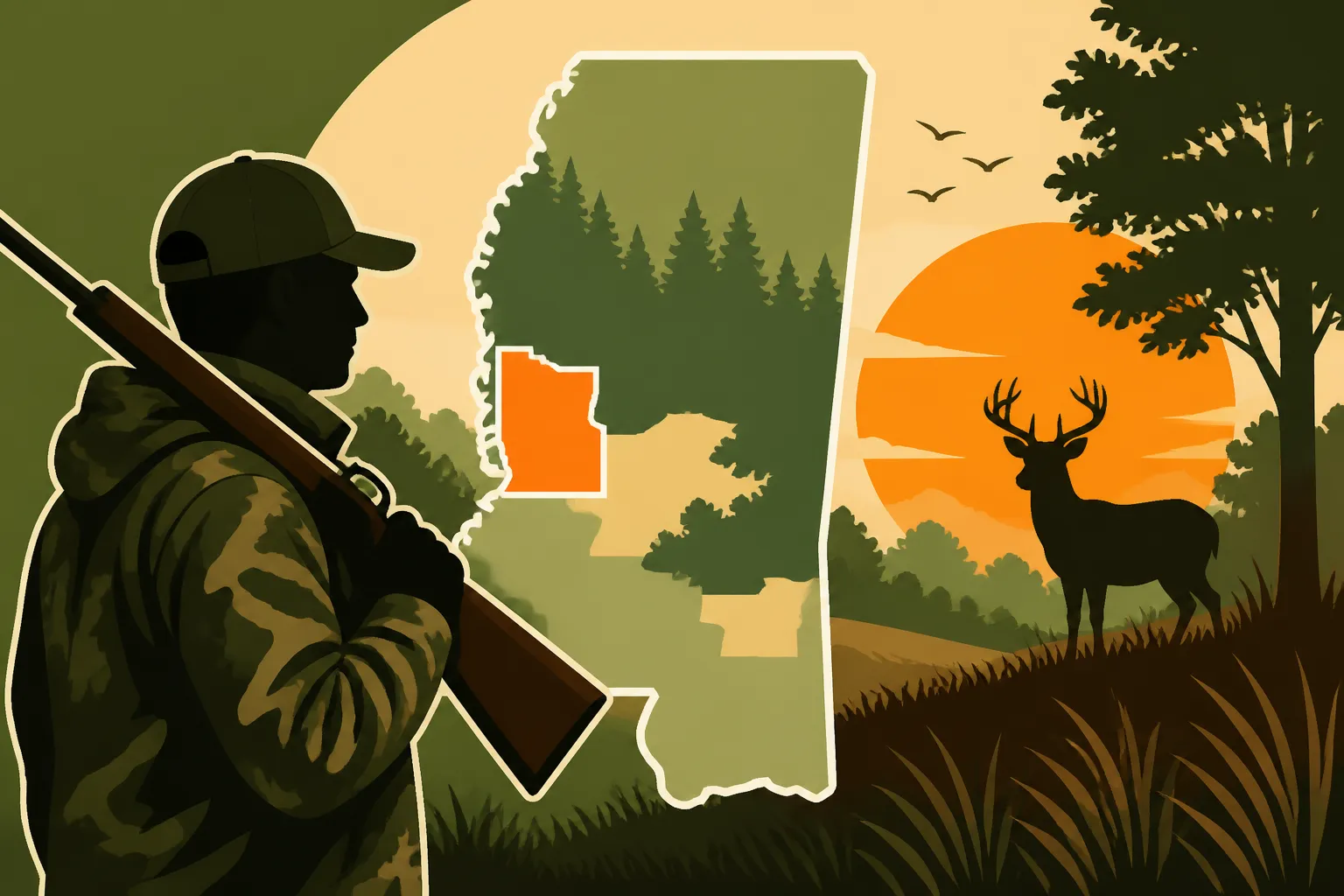
Perry County, nestled in the heart of Mississippi's Piney Woods region, offers a distinct public land hunting experience compared to the bottomland hardwoods of the Delta or the rolling hills of north Mississippi. It's a landscape dominated by longleaf pine, interspersed with hardwood drains, cypress sloughs, and managed timberlands. Understanding these characteristics is key to unlocking successful hunts here.
National Forests and Their Role in Perry County
The most significant public land resource in Perry County, and indeed much of this region, is the DeSoto National Forest. This isn't just a patch of woods; it’s a vast, managed ecosystem that provides incredible opportunities for deer, turkey, hog, and small game hunting. When you're looking at a map of Perry County, you'll see large sections marked as part of the DeSoto. This national forest land is generally open for public hunting with a valid Mississippi hunting license and any required stamps.
What makes the DeSoto National Forest special in Perry County is its characteristic Piney Woods habitat. You’ll find vast stands of pine, often managed with prescribed burns to promote new growth and maintain a healthy forest floor. While this might seem uniform, don't let it fool you. The deer, turkeys, and hogs know exactly where the hidden pockets of oaks, the dense regenerating clearcuts, and the quiet creek bottoms are. Learning to read this landscape is a crucial skill for hunting here. DeSoto National Forest Hunting is a great resource if you're looking to dive deeper into general hunting within this expansive forest.
State-Managed Areas and Their Overlap
While the DeSoto National Forest forms the backbone of public land in Perry County, it’s important to understand how state-managed areas, particularly Wildlife Management Areas (WMAs), might overlap or connect. Some sections within the National Forest might be designated as a WMA, which means additional, often stricter, regulations apply. For instance, you might need a specific WMA permit on top of your state hunting license, and rules regarding weapons, scouting, or entry/exit times could differ.
It's absolutely vital to check the Mississippi Department of Wildlife, Fisheries, and Parks (MDWFP) website or their official app for the most current information regarding specific units within Perry County. The Piney Woods region might not have as many standalone WMAs as other parts of the state, but understanding these distinctions prevents unwanted surprises. Being clear on the difference between general National Forest land and specific WMA rules will save you a headache and ensure you're hunting legally and ethically. Mississippi Wildlife Management Areas provides an excellent overview of the state's broader WMA system.
Navigating Different Public Land Types and Rules
The challenge for many hunters in Mississippi, especially non-residents or those new to a specific area, is deciphering the layered regulations that apply to different public land types. National Forests are federally managed, but hunting within them falls under state regulations, which can then be further refined by WMA-specific rules if applicable. This multi-layered approach means due diligence is critical.
For example, a hunter might find excellent deer sign in a particular area of the DeSoto National Forest in Perry County, only to discover it's part of a small WMA unit that has specific antler restrictions or limited hunting days. These details are often found in annual hunting digests published by the MDWFP. You'll also want to be aware of the general Mississippi Hunting Licenses and What They Cost, as well as any specific requirements like the federal duck stamp for waterfowl or a turkey stamp for spring gobblers. Always carry proof of your licenses and permits; having them easily accessible on your phone via the MDWFP app is a huge convenience.
Key Public Hunting Opportunities in Perry County
Perry County offers a diverse array of hunting opportunities, driven by its unique Piney Woods ecosystem. Hunters can pursue white-tailed deer, Eastern wild turkeys, the ever-present feral hogs, and a variety of small game. Knowing what to expect from each of these pursuits in this particular landscape is crucial.
Deer Hunting in Perry County's Piney Woods
Deer hunting in Perry County's public lands, particularly within the DeSoto National Forest, requires a slightly different approach than hunting in, say, the Delta. Here, you're looking at a landscape dominated by pine plantations of varying ages, often interspersed with drains and creek bottoms that hold mature hardwoods. These hardwood areas are the key, offering acorns and other browse that deer depend on, especially during the colder months.
Deer in the Piney Woods tend to be more spread out, and their travel corridors might not be as obvious as a well-worn trail along a levee. Look for subtle deer trails crossing firebreaks, transitioning from dense pine thickets into more open areas, or leading to isolated oak flats. Old logging roads, pipeline cuts, and utility easements can also be prime spots for travel and feeding. Don't overlook the dense new growth in recent clear-cuts, which provides excellent bedding cover and browse. Scouting here is paramount, as detailed in DeSoto Forest Piney Woods Deer Ground. Success often comes from covering ground and identifying these smaller, often overlooked pockets of prime habitat.
Turkey Hunting the Piney Woods
Spring turkey hunting in Perry County's public lands offers a rewarding challenge. The rolling terrain and mixed pine-hardwood forests provide excellent habitat for Eastern wild turkeys. Gobblers here can be just as cagey as anywhere else, but the landscape presents unique opportunities. You'll often find birds roosting along creek bottoms or on ridges with mature pines, then pitching down into more open pine stands or hardwood drains to feed.
Successful turkey hunting in the Piney Woods involves a lot of walking, listening, and strategic setups. Using locator calls (owl hoots, crow calls) to find gobblers on the roost at dawn is a time-tested tactic. Once you've located a bird, understanding the terrain and how to cut off its approach without being seen is critical. The sparse understory in some mature pine stands can make it difficult to get close undetected, so patience and careful movement are essential. Remember to review Mississippi Spring Turkey Season Rules before heading out.
Pursuing Feral Hogs and Small Game
Feral hogs are abundant throughout Mississippi, and Perry County's public lands are no exception. These destructive animals can be hunted year-round on public land, often without a bag limit, providing a thrilling challenge and helping the ecosystem. Hogs thrive in the dense cover of pine plantations and along the wetter creek bottoms. Look for their rooting activity, wallows, and rubs on trees, especially near water sources.
Hunting hogs can range from opportunistic encounters while deer or turkey hunting to dedicated pursuit with dogs or night hunting with thermal optics on private land (check regulations carefully for public land night hunting). The constant presence of hogs means there's always an opportunity to fill the freezer, and their numbers are a concern for land managers, making every harvested hog a contribution to wildlife management. For more specific tactics, refer to Hunting Mississippi's Year-Round Feral Hogs.
Small game hunting, particularly for squirrels and rabbits, is also popular in Perry County. The hardwood bottoms and mixed pine-hardwood stands are excellent for squirrels, while brushy fencerows and regenerating clearcuts provide prime rabbit habitat. These hunts are a fantastic way to introduce new hunters to the outdoors or to enjoy a low-pressure day afield.
Perry County Public Land Hunting Opportunities Summary
| Game Species | Primary Habitat | Common Tactics | Season Length | Notes |
|---|---|---|---|---|
| White-tailed Deer | Hardwood drains, pine thickets, clearcuts | Still-hunting, stand hunting, scouting for browse | Varies by unit/WMA | Focus on food sources & cover transitions |
| Wild Turkey | Mature pine ridges, creek bottoms, open timber | Locator calls, calling setups, run-and-gun | Spring | Patience is key in open pine stands |
| Feral Hog | Dense thickets, creek beds, rooting areas | Opportunistic, still-hunting, dog drives (check rules) | Year-round | No bag limits on public land, highly destructive |
| Squirrel | Mature hardwoods, mixed pine-hardwoods | Still-hunting, walking, using small caliber rifles | Fall/Winter | Excellent for beginners |
| Rabbit | Brushy areas, fencerows, regenerating clearcuts | Walking thickets, running beagles | Fall/Winter | Good cold-weather activity |
Strategies for Finding and Utilizing Perry County Public Land
It's one thing to know what public land is there, and quite another to effectively find and hunt it. Perry County’s public access often requires a bit more effort than simply pulling off the highway, but that effort usually translates into less crowded hunting and better opportunities.
Harnessing Mapping Tools for Public Access
Modern mapping applications have revolutionized public land hunting, and they are absolutely invaluable in Perry County. Tools like onX Hunt or GoHunt (or even the MDWFP's own interactive maps) allow you to view public and private land boundaries with incredible accuracy. This is critical in areas where public and private parcels are intertwined. Before you even leave the house, you can identify:
- Public access points: Where are the roads, fire breaks, or trails that lead into public land?
- Property lines: Knowing precisely where public land ends and private land begins prevents accidental trespassing, which is a serious offense. Finding Mississippi Property Lines goes into more detail on this.
- Terrain features: Identify creek drainages, ridge lines, pine thickets, and potential food sources (if satellite imagery is clear enough to distinguish mature hardwoods).
- Topography: Understand elevation changes, even subtle ones, which can influence deer movement and stand placement.
Spend time pouring over these maps, identifying remote corners of the DeSoto National Forest that might see less pressure. Look for areas away from main roads or popular access points. Sometimes, a half-mile walk through dense woods is all it takes to find a spot that other hunters overlook. Remember, cell service can be spotty, so ensure you download offline maps for your chosen hunting area using onX Hunt or similar apps. Using the MDWFP App Without Cell Service is a great article for making sure you're prepared.
Pre-Season Scouting and Planning
There is simply no substitute for boots-on-the-ground scouting. While maps are a fantastic starting point, they can't tell you where the freshest deer rubs are, if a specific oak flat is dropping acorns, or where a group of turkeys is routinely roosting. Scouting Mississippi Public Land Before Season is a must-read for anyone looking to maximize their scouting efforts.
In Perry County's Piney Woods, focus your scouting on:
- Food sources: Identify mast-producing trees (oaks, persimmons), clear-cuts with new browse, and any planted food plots if you're on a WMA that permits them.
- Cover: Look for dense pine thickets, regenerating clearcuts, or creek bottoms with thick undergrowth that offer bedding and security.
- Water: Creeks, sloughs, and even temporary puddles can draw game, especially hogs.
- Sign: Fresh tracks, rubs, scrapes, droppings, and turkey scratching. Pay attention to how game is using the terrain—are they following old logging roads, crossing saddles, or sticking to specific drains?
Take notes, drop pins on your mapping app, and even set up trail cameras where allowed (check WMA rules carefully on camera placement and retrieval). The more time you spend understanding the specific piece of public land you intend to hunt, the higher your chances of success.
Adapting Tactics to Piney Woods Habitat
Hunting in Perry County's Piney Woods requires tactical flexibility. Given the sometimes open nature of mature pine stands, or the dense, tangled regrowth in younger plantations, traditional tactics might need adjustment.
- Still-Hunting and Spot-and-Stalk: This method can be very effective, especially for deer and hogs. Move slowly, using the topography and vegetation for cover, constantly scanning ahead. The rustle of pine needles can be noisy, so pick your steps carefully, especially on dry days.
- Stand Hunting: Treestands and ground blinds are effective, but placement is crucial. Treestand Rules on Mississippi Public Land must be adhered to. Look for pinch points, funnels along creek bottoms, or edges where different habitat types meet. Position your stand to take advantage of prevailing winds, as scent control is always important. Consider hunting transition areas between bedding cover and feeding areas.
- Calling: For turkeys, mastery of calls is essential. For deer, rattling and grunting can work, particularly during the rut, but the density of pine forests might limit how far your calls carry. Adapt your calling volume to the cover.
- Scent Control: Even in vast forests, deer and hogs have incredible noses. Pay attention to wind direction, use scent-eliminating sprays, and store hunting clothes properly.
Common Challenges and Best Practices for Perry County Hunters
Hunting public land is an incredible privilege, but it often comes with a unique set of challenges. Being aware of these and preparing for them can make your Perry County hunt much more enjoyable and successful.
Managing Hunting Pressure and Finding Solitude
One of the biggest realities of public land hunting anywhere is dealing with other hunters. Perry County is no exception. Opening weekends, especially for gun deer season, can see higher concentrations of hunters. However, the vastness of the DeSoto National Forest often means that if you're willing to walk a little further than most, you can find solitude.
- Walk Deeper: As a general rule, many hunters stick close to roads and easy access points. The further you are willing to walk—even a half-mile or a mile—the less pressure you're likely to encounter. This is where onX Hunt's ability to measure distances is a lifesaver.
- Hunt Mid-Week: If your schedule allows, hunting on weekdays significantly reduces competition compared to weekends.
- Target Less Obvious Areas: Don't just look for the "perfect" spot. Sometimes, the less obvious, harder-to-reach pockets of timber or brush can hold game that has been pushed out of higher-pressure areas. Finding Ground Others Walk Past is a principle that applies strongly here.
- Respect Others: Remember that everyone is out there to enjoy the outdoors. Be courteous, give other hunters space, and if you see someone already set up, find another spot.
Navigating Boundary Lines and Ethical Hunting
Staying on public land is not just a matter of legality; it's a matter of ethics and maintaining a positive image for all hunters. With mapping apps, there's less excuse than ever to trespass.
- Use Your Tools: As mentioned, use onX Hunt or similar apps to clearly identify property lines. Double-check these boundaries when you arrive in the field.
- Look for Markers: While not always present on all public land boundaries, sometimes you'll find painted trees, signs, or fences. Respect these indicators.
- Know the Law: Familiarize yourself with Mississippi's specific trespass laws. It’s your responsibility to know where you are.
Safety and Preparedness in the Woods
The Piney Woods, while beautiful, can also be unforgiving if you're not prepared. Safety should always be your top priority.
- Blaze Orange: Always wear the required amount of blaze orange during gun seasons for deer and other applicable hunts. This is a non-negotiable safety measure. Mississippi Blaze Orange Requirements outlines exactly what's needed.
- Navigation: Even with a GPS or phone app, carry a compass and a physical map as a backup, and know how to use them. Learn to navigate by terrain features like creeks and roads. Tell someone where you're going and when you expect to return.
- First Aid: Carry a basic first aid kit, and know how to use it for common injuries like cuts, scrapes, or snake bites.
- Water and Snacks: Dehydration can set in quickly, even on cooler days if you're walking a lot. Always carry more water than you think you'll need, along with some high-energy snacks.
- Weather Awareness: Check the forecast before you go and dress in layers. Be prepared for sudden changes in weather, especially rain or temperature drops.
- Hunting Buddy: If possible, hunt with a partner, especially when exploring new or remote areas. Safety in numbers is always a good idea.
Hunting public land in Perry County offers rewarding experiences for those willing to put in the effort. By understanding the unique habitat, utilizing modern mapping tools, putting in your scouting time, and prioritizing safety, you can unlock some fantastic hunting opportunities in Mississippi's beautiful Piney Woods.
Disclaimer
This article is for general informational purposes only and does not constitute professional advice. Laws, prices and regulations vary by location and change over time. Consult a qualified professional for guidance on your specific situation.