DeSoto Forest Piney Woods Deer Ground
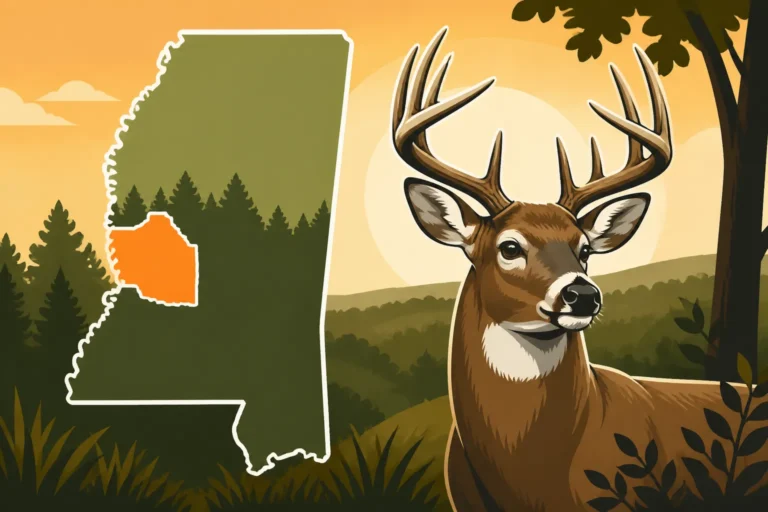
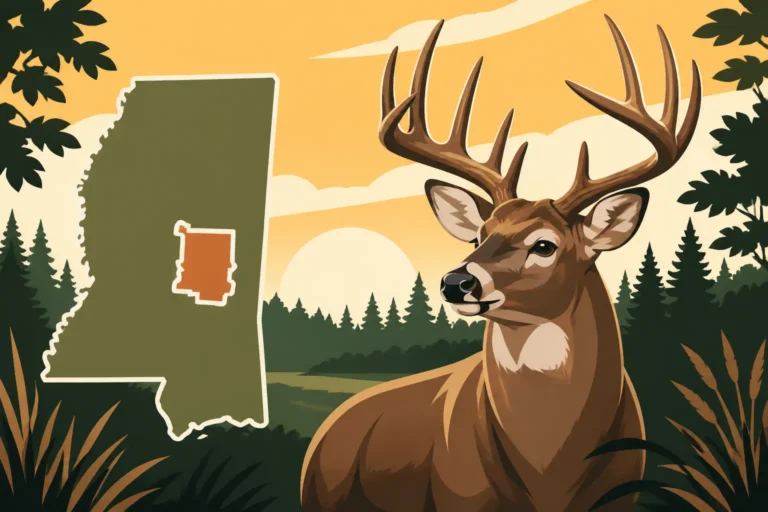
Hunting deer in Mississippi often conjures images of thick Delta bottomlands or rolling Hills unit hardwoods, but for many of us, finding productive public land means looking beyond the obvious. DeSoto National Forest offers a unique, challenging, yet incredibly rewarding experience in its sprawling Piney Woods, a stark contrast to other popular hunting grounds. This guide is here to help you navigate this distinct habitat, understand deer behavior within it, and equip you with the tactics and tools to succeed.
Understanding the DeSoto National Forest Habitat
DeSoto National Forest stretches across a significant portion of South Mississippi, characterized by its dominant pine ecosystems—mostly longleaf and loblolly pine, interspersed with pockets of hardwoods in creek bottoms and drains. This isn't the dense, swampy Delta, and it requires a completely different mindset and approach to deer hunting. The open, often park-like stands of mature pine, shaped by frequent prescribed burns, create a unique environment that deer have adapted to master.
The Unique Character of Piney Woods
Imagine walking through relatively open woods, with a sparse understory carpeted by pine needles and grasses. That's the typical feel of the Piney Woods. Unlike the dense cover of bottomland swamps where deer might hide in impenetrable thickets, here, visibility can be surprisingly good. However, this also means deer are more visually aware and often travel through terrain that offers less concealment than you might expect. The key is understanding how they utilize the subtle elevation changes, natural thickets, and scattered hardwood draws for both bedding and feeding. You might see a buck ghosting through what looks like open woods, relying on shadows and his keen senses to avoid detection.
The topography here isn't flat like the Delta either; you'll encounter gently rolling hills, deep ravines carved by seasonal creeks, and broad, flat ridges. These features, though less dramatic than those in the Hills Unit, create natural travel corridors and bedding areas that deer will consistently use. Hunting the Piney Woods Region gives a broader overview, but in DeSoto, these characteristics are particularly pronounced and define the hunting experience.
Deer Behavior in Piney Woods
Deer in the Piney Woods, particularly mature bucks, become masters of stealth and using the terrain to their advantage. Their food sources are diverse and often seasonal. While acorns from scattered oaks in creek bottoms or isolated hardwood hammocks are a major draw, especially in the fall, deer also rely heavily on forbs and tender new growth that emerges after prescribed fires. During the spring and summer, they’ll browse on a variety of woody plants and succulent vegetation.
Bedding areas are often found in thicker stands of younger pines, dense brushy pockets, or on the leeward sides of ridges, where they can catch a thermal scent and have a good view. These spots might not look like much to the untrained eye, but deer will gravitate towards them for security. Expect deer to move significantly during low light, transitioning from bedding areas to feeding grounds. Understanding their daily patterns, especially in relation to these distinct habitat features, is crucial. They are often less concentrated than in agricultural areas, meaning you might have to cover more ground to find consistent sign.
Impact of Prescribed Burns
Prescribed burning is a critical management tool in DeSoto National Forest, shaping the landscape and directly influencing deer behavior. These controlled fires clear out dense underbrush, reduce fuel loads, and stimulate new, nutritious growth. For deer, this means a flush of tender, palatable forbs and grasses that become highly attractive food sources. After a burn, you'll often find deer grazing on the fresh green shoots in areas that might have been barren just weeks before.
However, a fresh burn can also temporarily displace deer, pushing them into unburned areas where cover is still present. Over time, as the vegetation recovers, these burned sections become prime feeding grounds. Keeping track of the burn schedule, if possible, can give you a significant advantage. Using tools like onX Hunt often shows recent burn scars, which can direct your scouting efforts. Learning to "read" the stage of regrowth after a fire will tell you whether an area is a current hotspot for feeding or still a bit too open for daytime deer activity. This dynamic environment means deer movements can change throughout the season based on these habitat cycles.
Key Tactics for Deer Hunting in the Piney Woods
Hunting the DeSoto Piney Woods requires a different approach than sitting over a food plot or keying in on specific agricultural fields. It's often about covering ground, understanding subtle terrain features, and being patient. The deer here are wild and often pressured, making consistent scouting and adaptive tactics essential for success.
Scouting for Sign in Open Timber
Scouting in the Piney Woods isn't about finding massive concentrations of rubs and scrapes like you might in a dense hardwood bottom. Instead, you'll often find more dispersed, subtle sign. Look for primary trails along creek bottoms, subtle ridge lines, or the edges where pine stands meet small hardwood drains. Rubs may be smaller, on young pines or saplings, and scrapes might be less numerous but still indicative of a buck's travel route. You need to key in on smaller details.
Start by studying aerial maps, perhaps with GoHunt as a reference, to identify areas with a mix of habitat types: older pines adjacent to thicker younger growth, or where a clear-cut has regrown into dense cover, providing bedding. Focus on transition lines—where a burn unit meets unburned timber, or where a pine ridge drops into a hardwood bottom. Look for consistent tracks in sandy creek beds or damp spots. Remember, deer will often cross the most open terrain in low light, so don't dismiss an area just because it looks "too open." Identifying these subtle funnels and pinch points where deer are forced to travel along a narrow path can be highly productive. Scouting Mississippi Public Land Before Season emphasizes the importance of year-round observation.
Stand Placement Strategies
With the relatively open nature of much of the Piney Woods, traditional stand placement needs some finesse. Rather than relying on dense cover directly around your stand, focus on setting up where you have good visibility into a travel corridor while using background clutter to break up your silhouette. Think about those subtle funnels: a narrow strip of hardwoods between two pine blocks, a creek crossing, or a saddle on a gently rolling ridge.
Ground blinds can be extremely effective, especially if you can brush them in naturally against a thicket or an old logging road berm. They offer concealment in areas where large trees for treestands are scarce or where deer are used to looking up. If using a treestand, choose a tree on the edge of a thicker patch or at a junction of different timber types, rather than in the middle of a sparse pine stand. Pay close attention to wind direction, as the swirling winds in creek bottoms can be tricky. Consider entry and exit routes that minimize disturbance, crucial on public land where deer are highly sensitive to pressure. For more on specific stand types, check out Treestand Rules on Mississippi Public Land and Using a Ground Blind on Mississippi Public Land.
Still-Hunting and Stalking Approaches
Given the quiet, pine-needle covered ground and often open sightlines, still-hunting or stalking can be incredibly effective in DeSoto's Piney Woods. This isn't a sit-and-wait game if you don't find a prime ambush spot. Move slowly, taking one or two steps, then stopping for several minutes to scan the woods in every direction. Use binoculars constantly to pick apart shadows and identify parts of deer. The sound of pine needles underfoot is typically quiet, allowing for silent movement, especially after a recent rain.
Focus on moving into the wind or with a slight crosswind, paying close attention to terrain that might funnel deer movement. Creek bottoms, the edges of thickets, and the backside of ridges are prime areas to move through. This active style of hunting requires patience and keen observation, but it allows you to cover more ground and react to what the deer are doing on any given day. It’s a rewarding way to hunt the expansive Piney Woods, feeling more like a true hunter traversing the landscape.
Navigating DeSoto National Forest: Tools and Access
Hunting large tracts of public land like DeSoto National Forest can feel daunting. Knowing how to efficiently navigate, locate public access, and understand the various management areas is paramount to a successful and stress-free hunt. Modern tools have made this much easier than it used to be.
Mapping and GPS Essentials
A reliable mapping application is your best friend when hunting DeSoto. With miles of forest roads, old logging trails, and varying public/private land boundaries, getting lost or inadvertently trespassing is a real concern. Mobile apps like onX Hunt are invaluable for their detailed satellite imagery, showing logging cuts, creek drainages, and most importantly, property lines. You can download maps for offline use, which is critical as cell service can be spotty in many parts of the forest. Using the MDWFP App Without Cell Service provides similar advice for the state app.
Beyond just showing your location, these tools allow you to mark potential stand sites, scouted sign, parking areas, and exit routes. You can measure distances, check topography, and analyze habitat types before you even set foot in the woods. A handheld GPS unit can also serve as a reliable backup, ensuring you always know where you are, especially in dense fog or after dark when tracking a deer. Never head into DeSoto's vast timber without a solid navigation plan.
Finding Remote Access Points
DeSoto National Forest has numerous access points, from well-maintained forest roads to overgrown two-tracks. The trick is often finding the less obvious ones. The main roads can see a lot of traffic, especially during peak seasons, meaning the deer closest to these areas are often more wary. Study your maps for smaller, unnamed dirt roads or old logging spurs that might lead you deeper into the forest, away from the crowds. Many of these roads are gated, but you can still park respectfully and walk in.
Consider areas where public land abuts private property but there’s still public access, as these often create travel corridors for deer moving between cover and food sources. Parking further away and committing to a longer walk can pay huge dividends in finding less-pressured deer. Be mindful of vehicle rules on forest roads; some are restricted seasonally or permanently. ATV Rules on Mississippi Forest Roads will give you specific guidance on where and when you can use off-road vehicles. Always leave enough time to hike back to your vehicle, especially if you're pulling a deer out of a remote spot.
Understanding Management Areas within DeSoto
While DeSoto National Forest is largely open to public hunting, it's crucial to remember that certain sections might be designated as Wildlife Management Areas (WMAs) or other special management zones. These areas often have specific, sometimes more restrictive, regulations regarding seasons, bag limits, weapons, and even daily entry/exit requirements. For example, a WMA within the forest might have different antler restrictions or require specific permits beyond your standard Mississippi Hunting Licenses and What They Cost.
Always check the MDWFP regulations for the specific county and management area you plan to hunt within DeSoto. The MDWFP website and app are excellent resources for this, providing detailed maps and rulebooks. Don't assume that national forest rules apply uniformly everywhere. A quick call to the local forest service office or MDWFP regional office can also clarify any uncertainties. It's much better to be safe and informed than to risk a citation.
Regulations and Best Practices for DeSoto Deer Hunting
Hunting in DeSoto National Forest, while offering a sense of freedom, still requires adherence to Mississippi's comprehensive hunting regulations. Being informed ensures a legal and ethical hunt for everyone.
General Mississippi Deer Regulations
When hunting deer in DeSoto, you'll fall under the statewide Mississippi Deer Season Structure Explained and specific rules for either the Southeast or Hills management unit, depending on which part of DeSoto you're in. Most of DeSoto National Forest is located within the Southeast Unit, which often means slightly different season dates and antler restrictions compared to the Delta. For instance, the Southeast Unit usually has a minimum antler restriction requiring a buck to have at least four points on one side or an inside spread of at least ten inches. Always double-check the current year's regulations on the MDWFP website.
Your Mississippi Deer Bag Limit Rules will also apply, typically allowing a certain number of antlered and antlerless deer per season. Remember, even on public land, you must tag and report your harvest according to state law. This often involves using the MDWFP app or website. Being familiar with these general rules is the first step to a responsible hunt.
WMA-Specific Rules and Requirements
As mentioned earlier, some portions of DeSoto National Forest are managed as Wildlife Management Areas (WMAs). If you plan to hunt within one of these WMA sections, you'll likely need a WMA permit in addition to your regular hunting license. These permits are usually inexpensive but mandatory. WMAs also frequently have unique season dates, bag limits, and often more stringent rules regarding vehicle access, camping, and even the types of stands you can use.
It's not uncommon for WMAs to implement special youth hunts or quota hunts, which require an application and draw. Ignoring WMA-specific rules can lead to fines and loss of hunting privileges. Always verify if the specific area you're targeting falls within a WMA and thoroughly read the individual WMA regulations before heading out. The MDWFP website has a dedicated section for each WMA, providing detailed maps and rule pamphlets. Finding a Mississippi WMA Near You can help you locate these areas and their associated rules.
Hunter Ethics and Safety
Beyond the written regulations, practicing good hunter ethics and prioritizing safety are paramount in DeSoto. Public land can see a lot of hunters, especially during opening weekends. Always wear sufficient blaze orange, as mandated by Mississippi Blaze Orange Requirements, even when archery hunting during gun season. Being visible to other hunters is crucial.
Respect other hunters by not crowding their areas, keeping noise to a minimum, and being mindful of your shot direction. If you see another hunter, a friendly wave or quiet acknowledgment goes a long way. Always practice safe firearm handling, be certain of your target and what is beyond it, and never shoot across a public road. Pack out everything you pack in—leave no trace. This preserves the quality of the hunting experience for everyone and maintains the wild character of DeSoto National Forest for generations to come.
Piney Woods Deer Hunting: Key Differences at a Glance
| Feature | Piney Woods (DeSoto NF) | Delta Unit Bottomland | Hills Unit Mixed Hardwood |
|---|---|---|---|
| Dominant Cover | Longleaf/Loblolly Pine, sparse understory, clear-cuts | Dense bottomland hardwoods, cypress/tupelo swamps | Mixed hardwoods, pine plantations, rolling terrain |
| Food Sources | Forbs after burns, acorns (sparse), pine mast, browse | Abundant acorns, agricultural crops (corn, soybeans) | Acorns, persimmons, agricultural edges, browse |
| Deer Density | Moderate to lower, often dispersed | High, concentrated around food sources | Moderate to high, influenced by habitat diversity |
| Terrain | Gently rolling hills, broad ridges, creek drains | Flat, prone to flooding, sloughs and bayous | Rolling to steep hills, deep draws, creek bottoms |
| Scouting Sign | Subtle trails, small rubs on saplings, dispersed sign | Heavy trails, large rubs, numerous scrapes | Distinct trails on ridges/draws, moderate rubs/scrapes |
| Hunting Style | Still-hunting, patient stand hunting, covering ground | Stand hunting over food/funnels, some still-hunting | Still-hunting, stand hunting saddles/ridges |
| Visibility | Often good in open timber, challenging in thickets | Limited in thick cover, open in timber breaks | Varies by cover, often good along ridges, limited in draws |
| Antler Regs | Southeast Unit (4 pts on 1 side OR 10" spread) | Delta Unit (12" inside spread OR 15" main beam) | Hills Unit (10" inside spread OR 13" main beam) |
Disclaimer
This article is for general informational purposes only and does not constitute professional advice. Laws, prices and regulations vary by location and change over time. Consult a qualified professional for guidance on your specific situation.