Hunting the Late-March Turkey Opener
The late-March turkey opener in Mississippi can be a real head-scratcher. Those early season gobblers, fresh off the roost, might seem like an easy target, but by the time the actual opener rolls around, especially on public lands, they've often heard it all and seen it all. This guide is going to dive deep into how to adapt your strategy to find success when the pressure is on and birds are feeling the early season jitters, and how to stay ahead of the game during this often challenging but rewarding time.
Understanding the Late-March Gobbler Mindset
By late March, especially after the statewide opener, Mississippi's wild turkeys have already been subjected to some level of hunting pressure. This isn't the untouched paradise of the pre-season scouting trips. The birds, particularly mature gobblers, become more cautious, more reclusive, and frankly, a good bit smarter. They've likely heard a few too many bad calls, seen decoys that didn't quite look right, and generally had their routines disrupted.
Post-Peak Rut Behavior
While the peak of the breeding season, often referred to as the "rut," can vary slightly across Mississippi's different regions, late March often finds us past the absolute peak. This means the intense, all-consuming drive for gobblers to breed every available hen might have mellowed just a touch. Hens are starting to spend more time on their nests, which can make gobblers feel a bit lonely and more responsive to calls, but it can also make them less willing to travel long distances for an unknown "hen." They're not chasing every yelp like they might have a week or two earlier. They're more discerning, and often more interested in finding a real hen than running headlong into a setup.
This shift in behavior means you might not hear as much aggressive gobbling from the roost as you did earlier in the month, or even during the scouting phase. Instead, you'll often find gobblers that are "henned up" or quietly moving through the woods, occasionally letting out a gobble to keep tabs on their flock or announce their presence. You're trying to appeal to a more selective suitor, one who isn't just reacting to every sound but is looking for something genuinely appealing. Understanding this subtle change in their daily routine is crucial.
Pressure from Early Hunters
Let's be honest, everyone's excited for the turkey opener. This means that prime hunting spots, especially on public lands or easily accessible private tracts, often get hit hard. Those initial days of the season see a lot of hunters out there, calling aggressively, trying every trick in the book. By late March, many gobblers have heard a symphony of calls, both good and bad, and seen more orange vests than they care to remember. This pressure makes them extremely wary.
They might "shock gobble" at a loud noise but refuse to come closer, or they might gobble on the roost but pitch down away from your setup the moment they hit the ground. You're dealing with birds that have developed a healthy dose of suspicion. This is where patience, subtlety, and persistence really pay off. You can't just mimic what everyone else is doing; you need to offer something different, something that sounds incredibly natural and non-threatening. Often, the quieter, more patient hunter who slips into overlooked areas is the one who finds success when the initial wave of hunters has passed.
Scouting Strategies for the Late Opener
Effective scouting is paramount, especially when targeting late-March gobblers that have grown accustomed to human presence. You can't just rely on historical knowledge; you need fresh intel on current bird movements and patterns. Gone are the days of just blindly walking into the woods hoping to hear a gobble; now you need a surgical approach.
Locating Roost Trees
Even pressured birds have to roost somewhere, and knowing those locations gives you a massive advantage. In late March, gobblers might shift their roosting locations slightly to avoid perceived threats or to be closer to hens that are starting to nest in specific areas. During the week leading up to the opener, or even during the first few days if you can spare the time, head out before sunrise and listen intently. Use topography to your advantage, finding high points or clearings where sound travels well. Pay attention to the types of trees they favor – often tall pines or large hardwoods that offer good visibility and protection.
Once you pinpoint a roost, resist the urge to approach too closely. Mark it on your map (digital tools like GoHunt are fantastic for this), then back out quietly. The goal is to get in position silently the next morning, well before light, without alerting the birds. You'll want to choose an entry route that uses natural cover and wind direction to your advantage. Remember, these birds are not just listening for calls; they're listening for you walking through the woods. Knowing where they intend to fly down is half the battle when trying to set up on a gobbler still on the limb. Getting into a good position early is crucial, especially when you're Hunting the Statewide Turkey Opener in March.
Identifying Feeding and Strutting Areas
Beyond the roost, understanding where gobblers spend their days is critical. In late March, with hens on nests, gobblers will still be moving between feeding areas, water sources, and strut zones. Look for fresh turkey sign: tracks, droppings, and strut marks (wing drag marks in soft dirt). Focus on field edges, open timber patches, or even logging roads where they might be strutting to attract the few un-nested hens left or even just showing off for other gobblers.
Food sources can also be a key attractor. Think about what's available naturally – insects, early green-ups, or even leftover agricultural grains if you're hunting near farm country. While calling can pull a bird off a strut, being set up where he wants to be in the first place significantly increases your chances. A mapping app can help you identify these transition zones and open areas. If you can locate a regular strutting zone that offers good cover for your setup, you're golden. This kind of careful observation of bird patterns is essential for Turkey Tactics for Delta Field Edges or anywhere else pressured birds roam.
Calling Tactics for Pressured Birds
When dealing with late-March gobblers that have already run the gauntlet of early season hunters, your calling strategy needs to be subtle, natural, and incredibly patient. Aggressive, loud calling often does more harm than good, as these birds have likely been spooked by it already.
Soft Calls and Purrs
Think quiet confidence, not screaming desperation. Instead of loud yelps and cutts right off the bat, start with soft tree yelps, clucks, and purrs. These are non-threatening, natural sounds that tell a gobbler there might be a hen nearby, but she's not overtly advertising for attention. A soft, contented hen often piques a gobbler's curiosity more than a frantic one.
Imagine a scenario: you're set up an hour after daylight, and you've heard a distant gobble but can't get him to commit. Instead of hammering him with aggressive calls, try a few soft clucks, followed by a series of contented purrs. Mix in some light scratching in the leaves. This painting of a picture, creating the illusion of a relaxed hen going about her business, can often be the trigger that draws a wary tom in. He might circle, he might take his sweet time, but those subtle sounds can often convince him that it's safe to investigate. Many successful hunters agree that mastering the soft stuff is key to drawing in a bird that's heard every loud call in the book.
Deciphering Gobbler Responses
Every gobble tells a story, and in late March, you need to be a master interpreter. Is he gobbling enthusiastically from the roost, but then shutting down on the ground? He's likely henned up. Is he gobbling at your calls but staying put or moving away? He's probably wary and might have a real hen with him. Is he silent but still in the area? He might be sneaking in. You're not just calling; you're having a conversation.
If a gobbler sounds like he's hanging up, try to read his body language (if you can see him) or his cadence. A bird that's "strutting and spitting" often gives off a different vibe than one just gobbling to locate. Vary your calls. If clucks aren't working, try a short series of yelps, then go silent. Patience is your best friend here. Sometimes, the best call is no call at all. Let him wonder where that subtle sound came from. Give him time to process and to make a decision on his own terms. Often, a brief silence after a soft series of calls will be exactly what coaxes a hesitant bird the rest of the way. When a bird is acting tough, knowing how to Grunt Calls in Mature Mississippi Timber for deer can even teach you a thing or two about subtle vocalizations.
Decoy Setups for Reluctant Toms
Decoys can be a game-changer or a complete bust, especially with pressured late-March gobblers. The key is to use them strategically, ensuring they look natural and provide the visual reassurance a wary tom needs without presenting an obvious threat.
Single Hen Setup
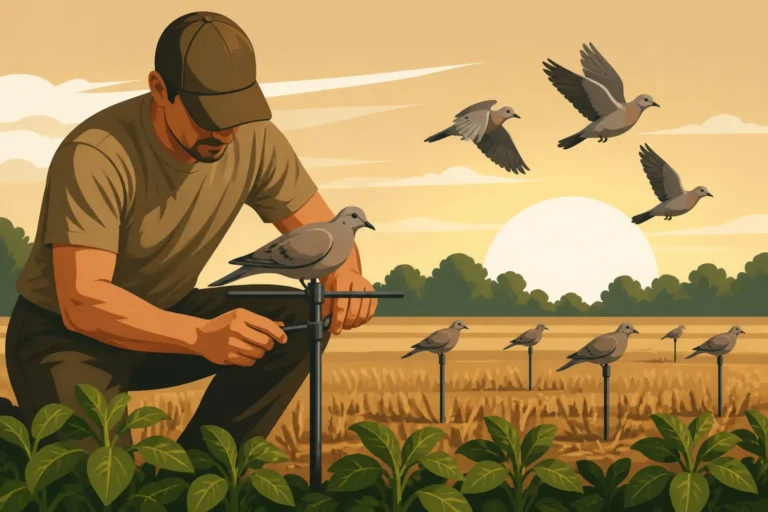
For many experienced hunters, a single hen decoy is the go-to in late March. It's less intimidating than a full-strut gobbler or multiple hens, and it portrays a natural, unthreatening scene. Position your hen decoy in an open spot where it's easily visible to an approaching gobbler, but still within your shooting lane. Angle her slightly towards you, as if she's slowly walking in your direction. This subtle body language can be incredibly effective.
Consider using a submissive or feeding hen pose. A hen with her head down, feeding, or a slightly breeding-receptive pose, can be incredibly alluring to a gobbler still looking for a mate. Avoid overly aggressive or erect hen poses unless you're trying to provoke a fight with another hen, which isn't usually the goal when trying to lure a gobbler. Remember, the goal is to make the gobbler feel comfortable enough to approach. A single, content hen often achieves this much better than a whole flock of aggressive-looking plastic birds. This setup is often perfect for a Decoy Placement for Pressured Mississippi Birds.
Strutter or Jake Decoy Placement
While a single hen is often the safest bet, there are times when a strutter or jake decoy can be devastatingly effective. This is particularly true if you encounter a gobbler that's "hung up" and needs a visual challenge to commit. The key is timing and placement. If you know there are aggressive gobblers in the area, or if you're dealing with satellite gobblers that are easily provoked, a jake or strutter can seal the deal.
Place the jake or strutter decoy 10-15 yards in front of your shooting position, angled so that the gobbler will approach it, giving you a broadside or slightly quartering-away shot. Position it as if the jake or strutter is looking towards your calling position, drawing the approaching tom's attention away from your blind. The aiming point should always be the base of the neck where the turkey's vitals are, but a gobbler focusing on a rival will often present you with that perfect shot. Just be aware that a strutter can sometimes intimidate a less dominant gobbler, so read the mood of the birds in your area carefully before deploying. Many hunters find success placing a strutter decoy around a Green Field Planted for Deer to appeal to gobblers showing off.
| Decoy Type | Best for Late March | Pros | Cons | Optimal Placement |
|---|---|---|---|---|
| Single Hen | Yes | Non-threatening, natural, high success | Can be ignored by heavily henned birds | Open area, 15-20 yds from hunter |
| Feeding Hen | Yes | Shows contentment, inviting | May not provoke aggressive gobblers | Visible but subtle |
| Breeding Hen | Yes | Highly alluring | Can be overly provocative for some situations | Near the expected approach path |
| Jake Decoy | Situational | Provokes dominant gobblers, less risky | Can intimidate timid birds | 10-15 yds from hunter, facing calls |
| Strutter Decoy | Situational | Highly aggressive, challenges dominance | Can scare off smaller gobblers/jakes | 10-15 yds from hunter, facing calls |
Gear and Logistics for Spring Success
Having the right gear and a solid logistical plan can make or break your late-March turkey hunt, especially when you're facing unpredictable weather and wary birds. Being prepared for anything that Mother Nature or a smart gobbler throws at you is key.
Camouflage Considerations
Mississippi's diverse spring landscape means your camo needs to be versatile. In late March, the hardwoods are just starting to bud, while pine forests might be a bit darker. You'll encounter a mix of green-up in bottomlands and more open, lighter tones on ridges. A good all-around pattern that breaks up your silhouette effectively, blending browns, greens, and darker elements, is usually your best bet. Brands like Mossy Oak and Realtree offer a variety of patterns that work well in the Mississippi woods.
Crucially, don't forget your face and hands. A face mask or face paint, along with gloves, ensures that no skin is exposed, which can glare in the sunlight and give you away. Even the slightest movement of an exposed hand can spook a keen-eyed gobbler. Remember, turkeys have incredible eyesight, and they'll pick up on anything that looks out of place. Your camouflage isn't just about blending in; it's about disappearing completely into your surroundings, whether you're using a ground blind or Setting Up Against a Big Oak.
Patience and Persistence
This isn't really a "gear" item, but it's the most critical tool in your arsenal for late-March gobblers. After the initial excitement of the opener, and with birds becoming more wary, patience is absolutely paramount. You might not hear a gobble for hours, or a bird might hang up for an eternity. Don't rush your setup, don't overcall, and don't bail out too early. Many successful late-season birds are taken by hunters who simply out-waited them.
Persistence means being willing to move, not just sit in one spot all day if the birds aren't cooperating. It means walking those extra miles into areas others might overlook. It means going back to the same spot day after day if you know a bird is using it. It might mean spending an entire morning with a single distant gobbler, slowly working him closer over several hours. Using a robust mapping system, perhaps something like GoHunt, to analyze terrain and potential travel corridors will assist your persistence, allowing you to strategically reposition yourself throughout the day. Remember that Run-and-Gun Turkey Tactics on Public Land can be highly effective when birds are tight-lipped.
Adapting to Weather Changes in Late March
Mississippi weather in late March can be notoriously fickle. You might start the day with a frosty morning, have a warm, sunny afternoon, and then be hit with a sudden thunderstorm. Being prepared for these rapid changes is crucial for comfort and success.
Dealing with Rain and Mud
A rainy day might seem like a bummer, but it can actually work in your favor. Rain tends to mute sounds, including yours, and can make turkeys feel a little more secure as their primary predator (coyotes, bobcats) might also be less active. However, it also means gobbling might be reduced. Invest in good waterproof outer layers – jacket, pants, and boots. There’s nothing worse than being cold and wet when you’re trying to sit still and call in a bird.
Mud is another factor, especially in the Delta bottomlands or after heavy rains. Footwear with good traction is essential. Also, consider your approach to your hunting spot; muddy roads or trails can become impassable, or simply too loud to traverse quietly. Plan your routes, wear rubber boots or waterproof hiking boots, and be prepared to get a little dirty. Sometimes a good rain will even push birds into more open areas as water collects in low-lying spots, which could present new opportunities. Remember, if you're out Tracking a Deer Through Mississippi Leaf Litter, you'll be dealing with similar conditions, so those skills transfer.
Cold Front Adjustments
Just when you think spring is here, a late-season cold front can sweep through Mississippi, dropping temperatures significantly. Turkeys, like all wildlife, react to these changes. Gobbling activity might decrease dramatically during a severe cold snap, and birds might alter their feeding patterns, seeking out protected areas or specific food sources. Don't let a cold front deter you, but adjust your expectations and tactics.
During a cold front, birds might stick tighter to their roosts later in the morning or feed in areas that offer more sunlight or protection from the wind. Focus on south-facing slopes, dense pine thickets, or areas with thick cover. Your calling might need to be even softer, trying to coax a less-active bird. Dress in layers to stay warm, as sitting still in a cold wind can quickly become unbearable. Pay attention to forecasts, and use the cooler, drier conditions after a front for excellent visibility and sound travel, even if gobbling is reduced. Often, you'll find that birds become more active and vocal once the sun breaks through and warms things up a bit.
Disclaimer
Hunting is an inherently dangerous activity. Always prioritize safety, follow all local and state regulations, and obtain the necessary licenses and permits before heading into the field. The information provided here is for educational and entertainment purposes only and should not replace professional guidance or official hunting regulations. Be sure to check the latest Mississippi Department of Wildlife, Fisheries, and Parks (MDWFP) regulations before any hunt.