Hunting the Rut in the Delta Unit
Hunting the rut in Mississippi's Delta Unit can feel like trying to catch smoke. One day, the woods seem dead silent; the next, a mature buck is chasing a doe right under your stand. This incredibly dense, often vast bottomland habitat presents unique challenges and opportunities that can leave even seasoned hunters scratching their heads. This guide will walk you through the nuances of the Delta Unit's whitetail rut, helping you understand its timing, buck behavior, and the most effective strategies to punch your tag on a Delta monarch.
Understanding the Delta Unit Rut's Peculiarities
Let's be honest, the rut in the Delta Unit isn't always the textbook, wide-open, all-day chasing frenzy you might dream of. It's a tricky beast, influenced heavily by the unique landscape and genetics of the deer here. If you're coming from the Hills Unit or other areas of the state, you'll quickly realize that what works there might not cut it here.
The Timing and Triggers of the Delta Rut
The Delta Unit's rut tends to crank up a bit later than in other parts of Mississippi. While you might see some sporadic pre-rut activity in late November or early December, the real breeding window typically kicks off in late December and can extend well into mid-January, often peaking around the second week of January. I've seen it countless times – just when you think it's over, another wave of activity hits. This delayed timing is largely attributed to the genetic lineage of Delta deer and how they've adapted to this specific environment.
Predicting the exact peak can be frustratingly elusive. While cold fronts and sudden temperature drops can certainly invigorate deer movement, don't expect a switch to simply flip on a specific calendar date. Instead, it’s often a more gradual build-up, with pockets of intense activity emerging as does come into estrus. You need to be patient, persistent, and ready to capitalize on those brief windows of opportunity. It's a marathon, not a sprint, especially when you're waiting for that prime breeding window.
How Delta Bucks Behave During the Rut
Delta bucks during the rut behave differently from their counterparts in the rest of the state. With so much thick cover – from dense cane breaks to seemingly endless bottomland hardwoods – they don't always have to expose themselves in open fields to find does. Instead, they're often cruising through the dense timber, scent-checking and trailing. You're less likely to see the dramatic, wide-open chases you might picture from hunting shows. Their movements are often more covert, hugging the thickest edges and using natural travel corridors within the dense woods.
They become incredibly focused on does in estrus, and once they lock onto one, they might stay with her for days, tucked away in the deepest cover. This means that if you're not seeing a lot of buck activity, it doesn't necessarily mean the rut isn't happening; it just means the bucks are doing their work under the radar. Understanding this makes it clear why targeting areas with high doe concentrations is paramount. Also, keep in mind that the vast, flat landscape, interspersed with sloughs and bayous, means bucks have an incredible amount of space to roam and hide, making them feel even more like ghosts.
The Impact of Habitat on Rutting Activity
The Delta Unit's habitat is truly unique, dominated by expansive bottomland hardwoods, cypress-tupelo sloughs, and agricultural fields. This mosaic landscape plays a massive role in how and where bucks move during the rut. The dense canebrakes and thick sapling regeneration provide ideal bedding and security cover, becoming hot spots where does will hide, and subsequently, where bucks will focus their attention. Sloughs, bayous, and even minor ditches become critical funnels, forcing deer to cross at specific points, creating natural pinch points that are gold mines for stand placement.
Furthermore, water levels can dramatically influence access and deer movement. During periods of heavy rain or flooding, certain areas can become inaccessible to hunters, but these same high waters might also push deer to higher ground or force them into narrower strips of dry land, concentrating them. Agricultural fields, especially standing beans or corn that hasn't been harvested yet, act as prime late-season food sources, drawing does, which in turn draws bucks. Learning to read these habitat nuances is crucial for success. Consider how water levels might affect deer travel and your own entry/exit routes. For deeper insight into general strategies for this terrain, you might find our guide on Hunting Delta Unit Bottomland Deer especially helpful.
Scouting and Locating Rutting Bucks in the Delta
Hunting the Delta rut effectively isn't just about showing up; it's about putting in the legwork beforehand and staying adaptable once the action starts. Without proper scouting, you're essentially just wandering through a vast, green labyrinth hoping for a stroke of luck.
Pre-Season Scouting for Rut Sign
Pre-season scouting is non-negotiable in the Delta. Long before the rut even whispers its approach, you need to be out there, identifying key areas that will become active. Look for historical scrape lines and rub lines from previous seasons. While fresh sign is always best, established areas where bucks have repeatedly marked territory often become active again. Pay close attention to subtle changes in elevation, even a slight ridge in the otherwise flat terrain, as these can be travel corridors.
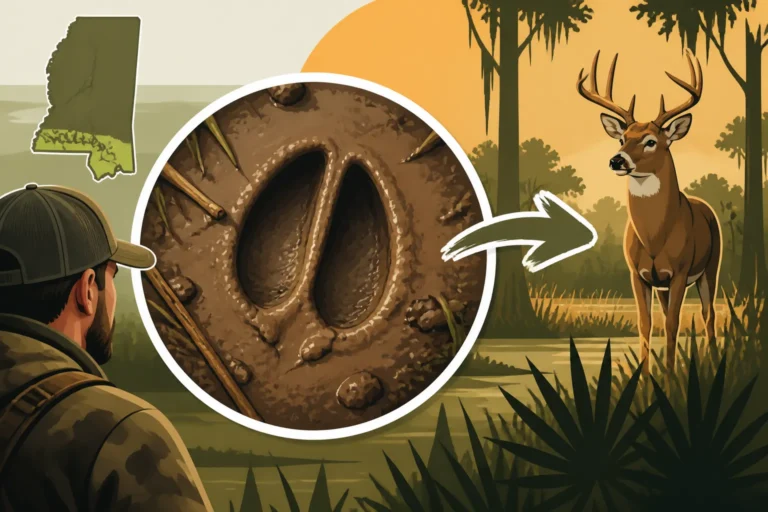
One of the most valuable tools for this kind of scouting is aerial imagery. Platforms like GoHunt allow you to zoom in and identify subtle features you'd never see from the ground: hidden sloughs, narrow strips of timber connecting larger blocks, field edges, and levee systems. You can mark potential stand locations, bedding areas, and travel routes. Don't just look for obvious sign; think about how a buck might move through the cover. Reading the mud for fresh tracks, especially larger tracks in key travel areas, can tell you what kind of deer are using the area and when. Remember, finding old sign gives you a starting point, but the real magic happens when those spots become active with fresh rubs and scrapes.
In-Season Scouting and Adjusting Your Strategy
Once the season is underway, your scouting shifts from identifying potential hotspots to confirming active ones. You're looking for fresh rubs, shiny and raw, and scrapes that are actively being worked. A "hot scrape" with fresh pawings and a pungent scent is a clear indicator that a buck is actively using that area. However, scouting during the rut needs to be done with extreme caution. Too much disturbance can quickly educate a mature buck and send him packing.
Trail cameras become invaluable here. Position them strategically on scrape lines, funnels, and near known doe bedding areas. They can tell you exactly when and where bucks are moving, providing critical intelligence without putting human scent all over the woods. Pay attention to daylight movement patterns; a buck moving in daylight during the rut is a prime target. If your cameras show a shift in activity, be ready to move your stand. Don't get stuck on a spot just because it produced last year. The Delta can change, and deer patterns with it. GoHunt's mapping features can help you quickly identify alternative spots based on new sign or intel. For monitoring deer movement, especially after dark or in challenging conditions, understanding Blood Trailing After Dark in Mississippi can also be a crucial skill, though ideally you’ll have a clean shot in daylight.
Identifying Key Funnels and Travel Corridors
In the vastness of the Delta, understanding funnels and travel corridors is paramount. These are the natural choke points that concentrate deer movement. Think about:
- Narrow strips of timber: Where a large block of woods bottlenecks between two agricultural fields or cuts through a levee.
- Points of woods: Fingers of timber extending into open areas or fields.
- Levee systems: Even small ones, can create elevated travel routes, especially during periods of wet ground.
- Creek bottoms and slough crossings: These are prime locations as deer are forced to cross at certain points.
- Brushy ditches: Often overlooked, these can be highways for deer trying to stay concealed.
Even subtle elevation changes, sometimes only a foot or two, can act as significant travel routes in a predominantly flat landscape. Bucks will often stick to these routes as they cruise for does. By studying aerial maps and doing boot-on-the-ground scouting, you can pinpoint these natural pinch points. Imagine yourself as a cruising buck; where would you go to minimize exposure while covering ground efficiently to find does? Those are your target areas. A solid understanding of Where Delta National Forest Bucks Bed can help you triangulate these travel corridors between bedding and feeding areas.
Effective Tactics for Hunting the Delta Rut
Once you've done your homework, it's time to put boots on the ground. The Delta demands a blend of patience, stealth, and sometimes, aggressive calling.
Stand Placement and Strategy
Given the dense cover, elevated stands are often your best friend in the Delta. Ladder stands or hang-ons positioned 20-25 feet high can give you crucial visibility over thick undergrowth that would obscure your view at lower heights. Look for trees that offer natural concealment and a good shooting lane into your identified funnels or along scrape lines. Setting up on the downwind side of a known travel corridor, where the prevailing wind carries your scent away from the deer's likely approach, is critical. Remember, Delta deer are not accustomed to wide-open spaces, so they expect concealment.
Ground blinds can also be highly effective, especially when brushed in meticulously. They offer excellent concealment and scent control, but you need to ensure you have clear shooting lanes. Whether in a tree or on the ground, always consider your entry and exit routes. The last thing you want to do is spook deer going to or from your stand. Plan routes that use ditches, sloughs, or terrain features to mask your approach. You might find some excellent advice on specific setups in our post about Treestand Setups in Delta National Forest, many of which apply across the unit.
Calling and Decoying Strategies
During the Delta rut, calls can be highly effective, but timing and volume are crucial.
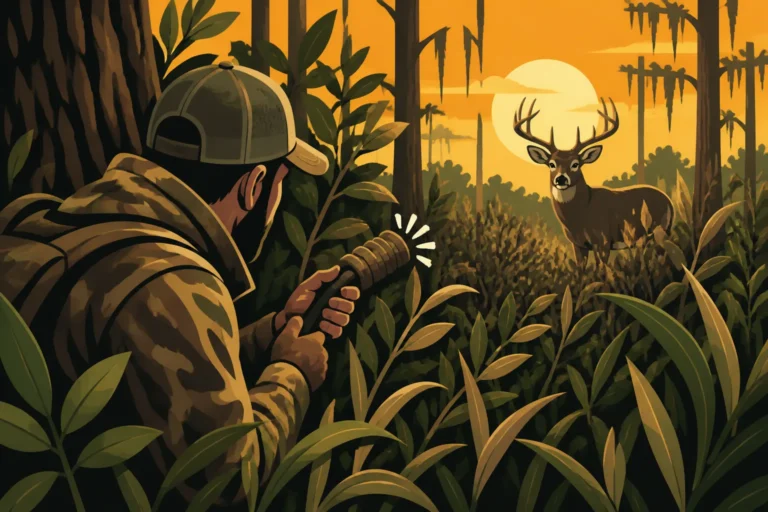
- Grunt Calls: A well-timed grunt can stop a cruising buck or pique the interest of one trailing a doe. Use short, soft grunts if you see a buck but can't get his attention. If you think a buck might be out of sight but close by, a slightly louder, drawn-out grunt can sometimes pull him in. If you want to dive deeper into this, our guide on Grunt Calls in Mature Mississippi Timber offers more specifics.
- Rattling: In the thick Delta cover, rattling can work wonders, mimicking two bucks fighting over a doe. Start with light sparring, then increase the intensity. The thick cover often means bucks can't see the "fight," so they come in to investigate. The key here is to gauge your volume based on the density of the cover; you don't want to overdo it. For more on this, check out Rattling Volume in Thick Cover.
- Decoys: A buck or doe decoy can be extremely effective during the peak rut. Position a buck decoy facing away from your likely approach, making it look like he's walking away, challenging a real buck to come investigate. A doe decoy can lure in lonely bucks. Place them downwind or crosswind, ensuring a clear shooting lane. Decoys work best when a buck is actively seeking a mate or looking for a fight. GoHunt data can sometimes give you a sense of peak rut activity, informing when these more aggressive tactics might pay off.
Still-Hunting and Tracking in Delta Bottoms
Sometimes, the best strategy isn't to sit and wait but to slowly, methodically move through the woods. Still-hunting involves taking a few steps, pausing, and thoroughly scanning your surroundings before taking a few more. This is particularly effective when bucks are actively cruising and you're not getting much action from a stationary stand. Focus on areas with fresh sign, hoping to intercept a buck as he moves.
Tracking in the Delta's dense undergrowth and leaf litter can be incredibly challenging, but it's a skill worth honing, especially if you wound a deer. Move slowly, follow every drop of blood or disturbed leaf, and don't push a wounded animal too quickly. If you're still-hunting, move into the wind, taking advantage of any slight elevation for better visibility. The key is quiet movement; minimize noise, wear soft clothing, and ensure your boots aren't dragging. During the rut, bucks are more tolerant of noise because they are so focused, but stealth is always paramount. When you're dealing with flat ground and thick cover, paying attention to Wind and Thermals in Delta Bottomland is essential for a successful approach.
Comparative Table: Delta Unit vs. Hills Unit Rut Hunting
| Feature | Delta Unit Rut | Hills Unit Rut |
|---|---|---|
| Peak Timing | Late December – Mid-January (often peaks early-mid January) | Late November – Early December (earlier, more pronounced peak) |
| Buck Behavior | More covert, cruising in dense cover, less open-field chasing, focused on does | More visible, aggressive chasing, frequent movement across varied terrain |
| Primary Habitat | Bottomland hardwoods, cypress sloughs, dense cane, ag fields | Rolling hills, pine plantations, hardwood ridges, food plots |
| Scouting Emphasis | Aerial imagery (GoHunt), fresh sign in thickets, funnels between water/cover | Food sources, ridge tops, saddles, creek bottoms, distinct travel routes |
| Stand Placement | Higher stands for visibility, strategic ground blinds in dense funnels | Stands overlooking food plots, ridge saddles, pinch points, clear-cuts |
| Calling Strategy | Moderate to aggressive grunting/rattling in thick cover; decoy use | Varied intensity, often effective in more open timber; decoy use |
| Key Challenge | Low visibility, vastness, difficult tracking, late peak | Hunting pressure, understanding thermal shifts, finding undisturbed pockets |
| Antler Restrictions | Delta Unit Antler Restriction Rules (12-inch outside spread or 15-inch main beam) | Hills and Southeast Unit Antler Restriction Rules (10-inch outside spread or 13-inch main beam) |
Disclaimer
Hunting is an inherently dangerous activity, and regulations can change frequently. Always consult the latest Mississippi Department of Wildlife, Fisheries, and Parks (MDWFP) regulations before heading afield. Ensure you have all necessary licenses and permits, obtain proper landowner permission if hunting private land, and prioritize safety above all else. This guide is for informational purposes only and does not supersede official regulations or professional safety advice.