Wind and Thermals in Delta Bottomland
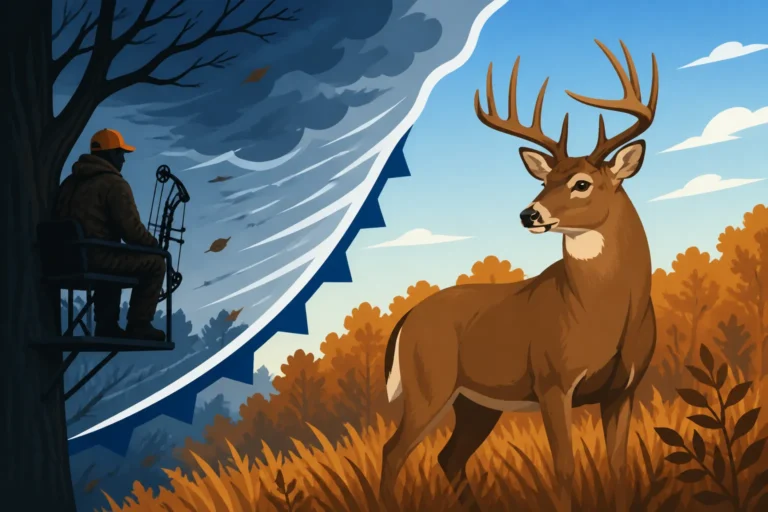
There's nothing quite as deflating as spending hours on a perfect treestand setup in the Mississippi Delta, only to watch a magnificent buck approach, suddenly throw its head up, and bound away because your scent swirled right into its nose. We've all been there, and it's incredibly frustrating when the invisible forces of wind and thermals undermine all your hard work. This guide will help you decipher the tricky air currents in our unique Delta bottomlands, giving you the upper hand in understanding and predicting how scent travels in these flat, often watery environments.
Understanding the Unique Delta Bottomland Environment
The Mississippi Delta is a beast of its own when it comes to hunting. Unlike the rolling hills of the central and eastern parts of the state, the Delta presents a mostly flat landscape, crisscrossed with sloughs, cypress breaks, and vast agricultural fields. This unique topography, or lack thereof, drastically alters how wind and thermals behave compared to what you might read in general hunting advice. Ignoring these specific conditions is a surefire way to educate the local deer herd about your presence.
The Lay of the Land: Flat and Wet
When we talk about the Delta, we're talking about incredibly flat country. There are no dramatic elevation changes, no steep ridges or deep valleys that funnel air predictably like in the Hills Unit. Instead, you have endless stretches of mature bottomland hardwoods, often interspersed with cypress-tupelo swamps, oxbow lakes, and the ever-present sloughs. These water bodies, from wide bayous to narrow drainage ditches, introduce a whole new layer of complexity.
Water holds and releases heat differently than dry land. During the day, open water heats up slower than the surrounding land, while at night, it cools down slower. This creates localized temperature differentials that can generate subtle, often imperceptible, air movements. Imagine a large, stagnant slough on a cold morning: the air directly over that water will be cooler and denser than the air over the adjacent timber, leading to a gentle, almost unnoticeable flow of cold air off the water and into the woods. This seemingly minor detail can be enough to carry your scent right into a buck's bedroom, even if your wind checker indicates a "good" wind. That's why having a detailed map, perhaps even using a mapping app like GoHunt to mark every water feature, is absolutely critical. Knowing the contours of the land, even if they're only a few feet in elevation change, can be the difference between success and failure in these flatlands.
Vegetation and Canopy Effects
The Delta is famous for its incredible timber, especially the ancient, towering bottomland hardwoods and cypress stands. This dense canopy, often reaching high into the sky, acts as a significant barrier and filter for large-scale wind patterns. Instead of a consistent, laminar flow, you often get a highly disrupted, turbulent wind at ground level. Think of it like a dense forest absorbing a strong breeze; the main wind might be blowing steadily above the trees, but down in the understory, it's a chaotic mess of swirls and eddies.
Thick undergrowth, such as river cane thickets, privet hedges, or dense young growth in clear-cuts, further exacerbates this. These barriers break up the airflow, creating micro-currents that can be incredibly frustrating. You might have a steady east wind above the trees, but a swirling, unpredictable breeze at your stand that momentarily pushes your scent to the west, then north, then south. This is particularly true near dense bedding areas or thick funnels, where deer are already on high alert. When you're scouting areas like Delta National Forest Hunting or trying to understand deer movement patterns after Timber Cuts and Where Deer Move After, remember that the vegetation isn't just cover; it's an active participant in how air moves and how your scent disperses. It's a constant battle to stay truly undetected in such environments.
Decoding Wind Patterns in Flat Terrain
In areas devoid of prominent hills and valleys, understanding how wind behaves requires a slightly different approach. You can't rely on classic "wind will follow the ridge line" or "thermals will pull up the hollow" wisdom. Instead, you need to think about surface friction, canopy interaction, and how even minor topographical features become significant.
Surface Winds and Canopy Influence
The biggest challenge in the Delta is the disconnect between the prevailing wind direction, which you might check with a weather app, and the actual wind a deer is experiencing at ground level. Above the canopy, the wind might be a steady 10 mph from the north. However, once that air mass hits the dense timber, it slows down dramatically due to friction. Furthermore, the air can be deflected, channeled, or even completely reversed in localized pockets.
Imagine a deer trail running along the edge of a slough or a long, straight logging road. Even if the broader wind is coming from across the timber, these more open corridors can act like subtle wind tunnels, channeling air differently than the surrounding dense woods. Your wind check might show a perfect crosswind from your stand, but a few feet lower, near the ground where a deer is moving, a slight eddy or channelized flow could be carrying your scent directly into their path. This is why using multiple wind indicators is so important. Don't just check the wind at your stand height; drop some milkweed seeds or a puff of unscented powder closer to the ground, especially in areas where deer are likely to travel. Understanding the nuances of Wind and Thermals in Delta Bottomland means acknowledging that what's happening at 20 feet might be vastly different from what's happening at 3 feet.
Identifying Microcurrents and Swirls
Microcurrents and swirls are the bane of every Delta hunter's existence. These unpredictable shifts are often caused by seemingly insignificant obstacles. A large, gnarled oak tree, a dense stand of briars, or even a sudden opening in the timber like a small food plot or a small break in the trees, can create a localized vortex that throws your scent in every direction.
Let's say you're hunting a small food plot tucked away in the woods. The main wind is coming from the west, so you set up on the east side of the plot. Perfect, right? Not necessarily. As the wind moves across the open plot, it can hit the dense timber on the east side and create a swirling effect, pushing your scent back into the plot or along its edges. Or, if a buck approaches through a thick block of woods, any small opening or change in vegetation density can cause localized air movement that makes your scent unpredictable for a few seconds—long enough for a mature animal to pick you off. This is where patience and observation come in. When Scouting Mississippi Public Land Before Season, pay close attention to how various obstacles might disrupt airflow. Look for areas with consistent, unbroken cover on one side of your approach, allowing a steadier wind flow, and avoid tight, claustrophobic areas where air gets trapped and swirls constantly.
Mastering Thermals: The Vertical Challenge
Even in flat terrain, thermals are a powerful force, driven by the sun's energy and the differential heating and cooling of the earth's surface. In the Delta, these vertical air movements are heavily influenced by the presence of water and the dense canopy, creating a unique set of challenges and opportunities for hunters.
Morning Thermals: The Rise
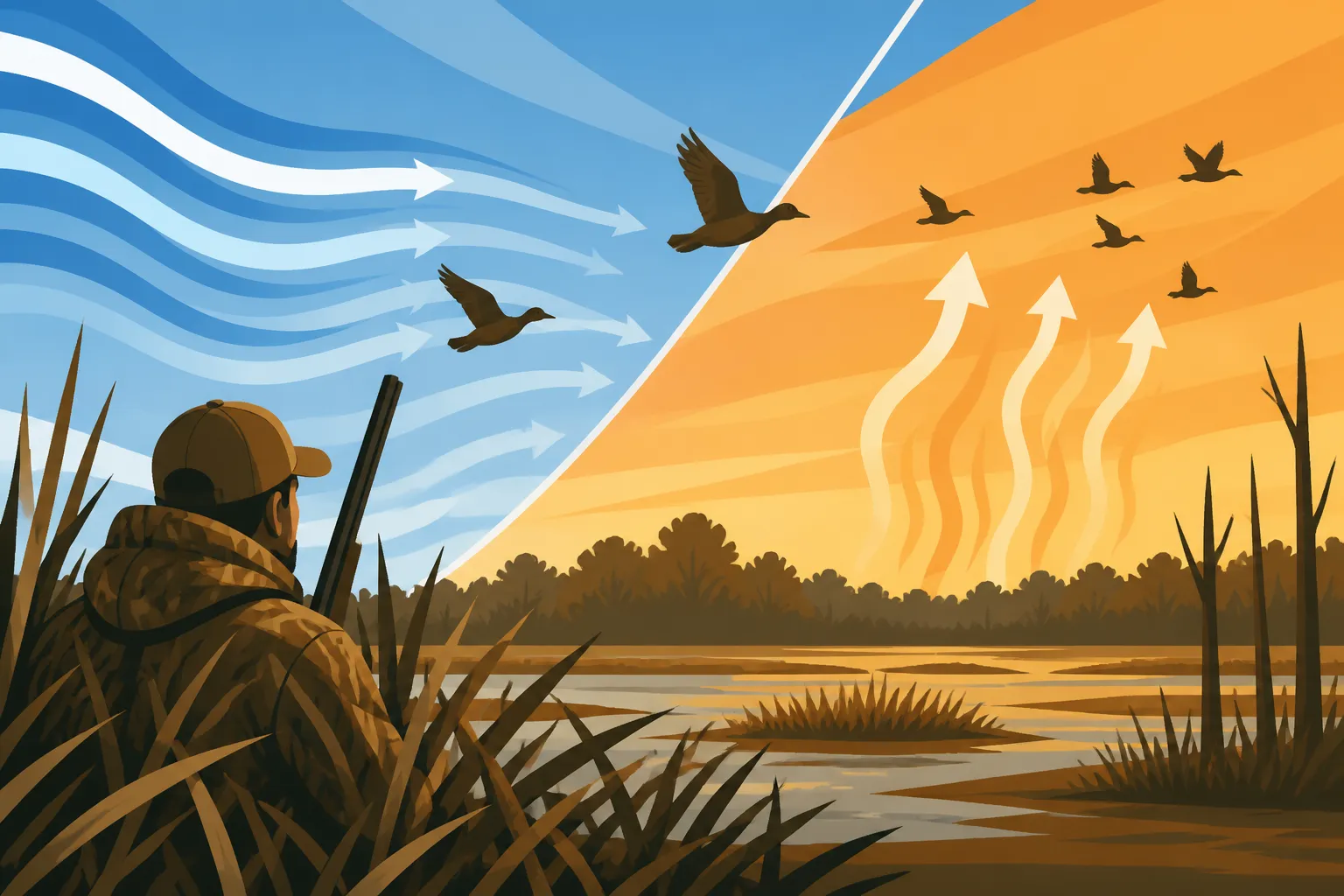
As the sun begins to peek over the horizon and its rays penetrate the canopy, the ground starts to warm up. This warming process transfers heat to the adjacent air, causing it to become less dense and rise. This is your classic morning thermal, and it happens even in the Delta. Instead of pulling scent up a steep hillside, in flat bottomlands, it acts like a gentle elevator, lifting your scent vertically and diffusing it higher into the atmosphere.
This rising thermal effect is most pronounced in areas that receive direct sunlight early, such as field edges, logging roads, or small clearings. If you're setting up on a stand for a morning hunt, especially when Hunting a Clover Plot at First Light, you want to approach from a direction that allows these rising thermals to carry your scent up and away from where deer might be feeding or traveling. This can be tricky, as cold air pockets can linger in low-lying areas, creating small temperature inversions where scent might initially hug the ground before the thermal lift really kicks in. Always assume your scent is initially going to be closer to the ground before it begins its ascent. A good digital compass and a detailed topographical map on GoHunt can help you identify these subtle low spots for a stealthier entry.
Evening Thermals: The Fall
As the sun dips below the horizon, the ground rapidly begins to cool, especially after a clear, sunny day. This cooling effect transfers to the air, making it denser and causing it to sink. This is the evening thermal, and it's essentially the reverse of the morning thermal. Your scent will tend to fall, hugging the ground and flowing into the lowest available points.
In the Delta, this means your scent will often pool in sloughs, ditches, and other low-lying depressions. If you're sitting a stand overlooking a field edge in the evening, perhaps for Sitting a Field Edge in Late Season, your scent will likely fall and spread out across that field. If deer are using a travel corridor in a subtle low area adjacent to your stand, that falling scent could bust you. Conversely, if you're set up higher, your scent might clear the immediate ground level but then descend into a game trail below. It's a delicate balance. Sometimes, a slightly lower stand in the evening might be beneficial if you can position yourself so the falling thermal carries your scent away into an area where deer aren't expected, perhaps a large, open water body or an inaccessible thicket.
Impact of Water and Humidity
The sheer amount of water in the Delta profoundly impacts thermal dynamics. Water has a higher thermal mass than land, meaning it takes longer to heat up and longer to cool down. This characteristic creates a constant interplay of temperatures that can influence air movement in ways that are often overlooked.
On a warm day, the air over a large slough or oxbow lake will be cooler than the air over the surrounding timber. This cooler, denser air can "spill" off the water and flow into the adjacent woods, creating a localized thermal current that can run counter to the broader thermal pattern. This is especially important if you're Hunting Flooded Timber for Wood Ducks or deer, where water is a dominant feature. High humidity, a constant companion in the Mississippi Delta, also plays a critical role. Moisture in the air makes scent particles heavier and allows them to linger longer and travel further. Fog, a common occurrence in the Delta, is a visible manifestation of these localized temperature and humidity interactions, often indicative of stagnant air and unpredictable thermal behavior. Always consider the proximity of water to your stand and how it might create unique micro-thermals that affect your scent cone.
Practical Hunting Strategies for Wind and Thermals
Now that we've dug into the science of Delta air movement, let's talk about putting this knowledge to work. It's about combining all these observations into a coherent strategy that maximizes your chances of success and minimizes your risk of being detected.
Strategic Stand Placement and Entry/Exit Routes
Successful Delta hunting hinges on strategic stand placement and meticulously planned entry and exit routes, all centered around wind and thermal intelligence. Since ground-level winds and thermals are so variable, elevated stands – whether a fixed treestand or a mobile climber – are almost always your best bet. Getting 15-20 feet up helps you rise above many of the swirling ground currents, allowing your scent to disperse higher and hopefully over the heads of approaching deer.
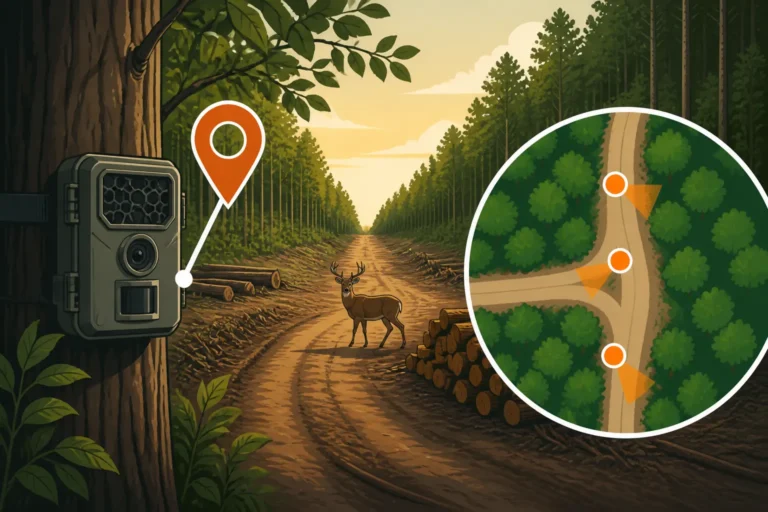
When choosing a stand site, aim for locations that offer multiple wind options or inherently mitigate swirl. For instance, the downwind side of a large, consistent block of timber might offer a more stable wind than a narrow pinch point surrounded by varied cover. Always have at least two access routes to a stand: one for morning thermals (approaching from a low point, letting scent rise behind you) and one for evening thermals (approaching from a higher point, letting scent fall behind you, or using a route where falling scent flows away from deer bedding/feeding areas). A robust mapping tool like GoHunt can be invaluable here. Before you ever step foot in the woods, use its layers to identify subtle elevation changes, water bodies, and dense cover. Plot out your potential stand locations, then meticulously draw your entry and exit routes, considering how Hanging a Stand on a Delta Bottomland Funnel might dictate a specific thermal strategy. Remember, the goal is for your scent cone to never intersect a deer's likely travel path, especially when they're relaxed and moving confidently.
Scent Control and Adaptive Tactics
Even with the best wind and thermal strategy, perfect scent control is impossible. Deer have an incredibly keen sense of smell. So, the goal isn't to eliminate scent entirely, but to manage it. This starts with the basics: washing hunting clothes in scent-free detergent, storing them in airtight containers, using scent-elimination sprays, and wearing rubber boots to prevent leaving human scent on the ground. However, in the Delta's high humidity, scent can cling and travel surprisingly far, even with these precautions.
Beyond the basics, true adaptability is your best friend. Always carry multiple wind indicators – milkweed fluff, a puff bottle, or even a small piece of yarn tied to your bow string. Constantly check the wind at different heights and directions. If you notice persistent swirling or a shift that puts you at a disadvantage, be prepared to adjust. Sometimes, this means moving to an entirely different stand, or even making the tough call to pack up and scout for another day. It’s better to live to hunt another day than to burn out a great spot by educating a mature buck. Understanding that Hunting Pressure on Mississippi Public Land makes deer even more sensitive means your scent management must be impeccable and adaptable. You can't rely on luck; you have to outsmart them.
Understanding Daily and Seasonal Changes
The Delta's weather is dynamic, and both daily and seasonal changes have a massive impact on wind and thermals. Frontal passages, in particular, are game-changers. A strong cold front will typically bring with it a stable, strong wind from a new direction (often the north or northwest) and a significant drop in temperature. While the wind might be more consistent, the sudden temperature drop will enhance thermal activity. Knowing when Hunting Deer After a Cold Front is best means understanding how those initial days post-front can be great, but you still need to play the thermals as the sun rises and sets.
Precipitation also plays a role. A steady rain can effectively "wash" scent out of the air, creating a temporary advantage. However, as the rain stops and clearing skies emerge, rapid thermal shifts often occur, making the post-rain period tricky. Seasonally, the warm, humid early season will present different challenges than the colder, drier late season. In early fall, with higher humidity and warmer temperatures, scent lingers longer and thermals are less pronounced, often leading to more stagnant, swirling air. By late season, colder temperatures bring more stable, predictable thermals, but also often stronger winds. Always check your local forecast for detailed hourly wind directions, temperatures, and dew points, and consider how these factors will interact with the Delta's unique environment. GoHunt offers excellent weather overlays that can help you visualize these shifts in real-time.
| Thermal & Wind Factor | Morning (Post-Sunrise) | Evening (Pre-Sunset) | Impact on Scent | Tactical Advice |
|---|---|---|---|---|
| Thermals | Rising (air warms) | Falling (air cools) | Scent rises and disperses higher | Approach from low ground, hunt higher stands. |
| Surface Wind | Often calm/swirly initially, then picks up | Steady during day, calms/swirls at sunset | Can be unpredictable near ground, especially in dense cover | Use multiple wind checkers, hunt elevated. |
| Canopy Effect | Diffuses and breaks up wind; creates micro-eddies | Same, but may experience more predictable channeling with stronger prevailing winds | Scent can swirl back or get trapped | Focus on areas with consistent cover behind you, avoid thickets. |
| Water Bodies | Cooler air over water may "spill" into woods | Water cools slower, can create inversions or localized currents | Can cause unexpected low-level scent movement | Account for subtle flows off sloughs/lakes. |
| Humidity | High | High | Scent lingers longer, travels further | Maximize scent control, choose stand locations that allow wide dispersal. |
Disclaimer
Hunting is an inherently dangerous activity. Always prioritize safety, understand and follow all local and state regulations, and obtain appropriate licenses and permits. The information provided in this guide is for informational purposes only and should not replace proper hunter education or professional guidance. Adapt your techniques to specific conditions and always be aware of your surroundings.