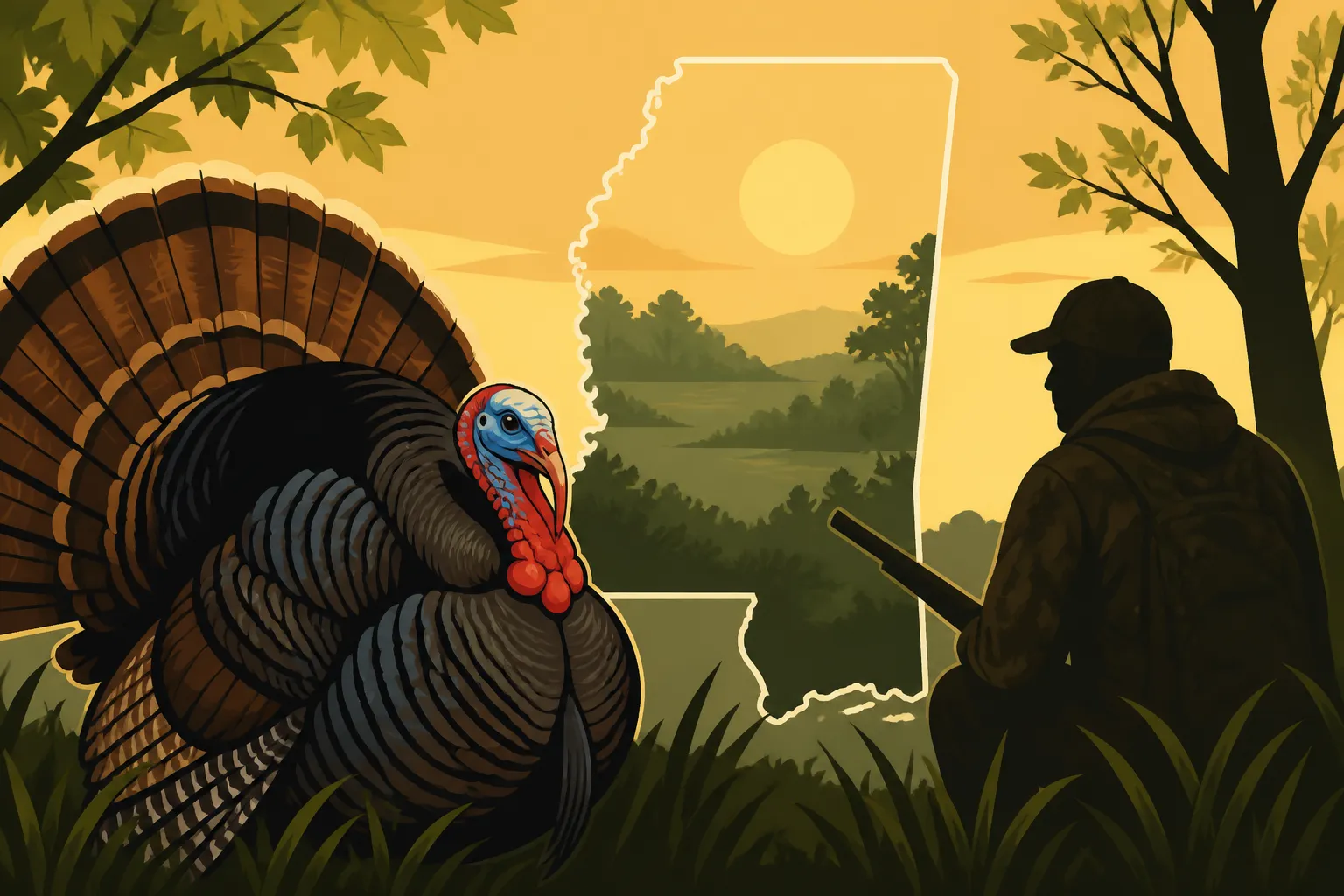
When Mississippi Gobblers Go Quiet in May
There's a specific kind of quiet that settles over the Mississippi woods in May, and if you're a turkey hunter, you know exactly what I'm talking about. That booming gobble that filled the air in March and April? It seems to have vanished, leaving you scratching your head, wondering where all the birds went. This shift can be incredibly frustrating, turning what was once an exciting, vocal hunt into a silent, often fruitless endeavor. But don't despair; this guide will dive deep into why Mississippi gobblers go quiet in May and, more importantly, how you can adapt your strategies to still find success when the woods go mum.
Understanding the Biological Shift in May Gobblers
The fundamental reason gobblers go quiet in May isn't that they've suddenly lost their voices or migrated to another state. It's a deeply biological shift tied to their reproductive cycle. Turkeys, like most wildlife, are driven by instinct, and once the primary breeding window has passed, their priorities change dramatically.
In the early season, those loud, booming gobblers are essentially advertisements. They're signaling their presence, virility, and location to hens, hoping to attract a mate. This intense vocalization is crucial for establishing dominance and securing breeding opportunities. It's a high-stakes game, and the loudest, most persistent gobbler often wins. Hens are actively seeking gobblers, and the woods are alive with the sounds of courtship. This is when your aggressive calling tactics really pay off, and you can often call a bird right into your lap. As the season progresses, however, those initial breeding rituals start to wind down. Many hens have been bred and are now nesting.
Once hens begin to sit on their nests, their behavior changes entirely. They are no longer actively seeking gobblers. Instead, their instinct shifts to protection and incubation. This has a direct impact on gobblers. A gobbler that was once surrounded by a harem of hens suddenly finds himself alone. His primary motivation for gobbling – attracting a mate – significantly diminishes. There's less competition among gobblers because there are fewer receptive hens to impress. This doesn't mean they stop gobbling entirely, but the frequency and intensity drop off dramatically. You might hear a courtesy gobble on the roost or a few sporadic calls throughout the day, but that consistent, fervent gobbling of early spring is largely gone.
Think about it like this: If you're single and looking, you're probably out and about, being social, putting yourself out there. Once you're in a committed relationship, that need to constantly advertise your availability disappears. Gobblers operate on a similar, albeit instinctual, principle. They become less focused on broadcasting their location and more focused on other activities, like feeding and recouping energy after the taxing breeding season. Understanding this biological imperative is the first step in adjusting your mindset for late-season success. It means you can't expect the same responses from birds, and trying to force early-season tactics onto these late-season birds will likely lead to frustration. For more on how these populations fluctuate, check out our insights on the Mississippi Turkey Population Estimate.
Environmental Pressures and Their Impact on Gobbling
Beyond the biological clock, the changing Mississippi landscape and weather patterns in May also play a significant role in quieting gobblers. The environment itself becomes a natural muffler, making it harder for sounds to travel and providing more cover for birds to move silently.
As spring deepens into May, temperatures steadily climb. What was once cool, crisp mornings perfect for hearing a gobble echo through barren timber often turns into warm, humid days. High humidity tends to absorb sound, making gobblers sound more distant even if they're close. The hotter it gets, the less likely a gobbler is to expend energy gobbling throughout the day. They become less active during the midday heat, often seeking shade and resting. This means your best chances for hearing a gobble might be right off the roost at first light or perhaps just before they fly up to roost in the evening, when temperatures are cooler.
Perhaps the most visually striking change in May is the explosion of foliage. The barren, open woods of early spring, where you could see for hundreds of yards, are now a thick, green jungle. Trees have fully leafed out, and undergrowth has exploded. This dense vegetation dramatically alters the soundscape. A gobble simply doesn't carry as far, and a bird might be gobbling consistently but you just can't hear him from your chosen setup. This thick cover also provides gobblers with more security. They can move through the woods with less fear of detection, making them less reliant on vocalization to establish their presence. They can slip through a green thicket or along a creek bottom without being seen or heard, which is a stark contrast to early season when they were exposed and vocal. This is especially true in areas like the Delta where vegetation can grow incredibly dense very quickly. Learning to read these landscape changes is key, and tools like GoHunt can help you visualize vegetation density and plan your approaches accordingly. You might find birds along the edges of fields or in areas where timber hasn't fully canopied yet, offering slightly better sound transmission.
Finally, let's not forget the cumulative effect of hunting pressure. By May, these birds have been called to, spooked, and pursued for weeks. They've heard every locator call, every hen yelp, and likely seen a decoy or two. Even on public land, which can feel vast, the pressure builds up. Gobblers become "call shy" or simply grow wary of human presence. They associate certain sounds with danger and learn to stay silent or move away from them. This learned behavior means that even if they could gobble, they choose not to, as a survival mechanism. This is a common frustration for hunters, and it’s why understanding Hunting Pressure on Mississippi Public Land is so important.
Tactical Adjustments for Late-Season Silence
Since May gobblers aren't as vocal and the environment makes hearing them tougher, your tactics need a serious overhaul. The aggressive, run-and-gun style that works wonders in early April often leads to frustration when the birds clam up. You have to become more of a hunter and less of a caller.
The first major shift is from expecting a response to actively seeking and locating. Instead of setting up and calling every 15 minutes, expecting a bird to respond, you need to cover ground. Don't be afraid to put some miles on your boots. Walk logging roads, old two-tracks, and field edges. Stop frequently to listen, but don't just rely on a gobble. Listen for other sounds: drumming, distant yelps from a lonely hen, or even the distinct sound of a turkey scratching in the leaves. When you do stop to call, scale back your volume and intensity. Use softer, more realistic hen yelps and clucks. Instead of a shock gobble, try a crow call or an owl hoot not to make a turkey gobble in response, but to maybe elicit a surprise gobble that isn't directly associated with a "turkey call."
Finding fresh sign becomes paramount. Before you even set foot in the woods, use mapping tools like GoHunt to identify potential roosting areas, strutting zones, and feeding areas. Look for tracks in mud, droppings, and shed feathers. Once you're in the field, focus on key terrain features. Look for areas where fields meet timber, along creek bottoms, or on low ridges. These are natural travel corridors and often where birds will congregate, even silently. If you find fresh sign, it's worth slowing down and setting up for a patient wait. They might not gobble, but they might still pass through. If you're on public land, areas that have less obvious access points can often hold less pressured birds, making that extra hike worthwhile.
Patience is a virtue in late-season turkey hunting. Instead of constantly moving, consider a more "sit-and-wait" approach, especially if you've done your scouting and have a good idea of where birds might be. Find a good ambush point near a known travel route or feeding area, brush in a ground blind, or find a comfortable spot against a large tree. You might be there for hours without hearing a sound, only for a silent gobbler to appear out of the thick cover. If you hear a distant gobble, resist the urge to immediately charge in. Instead, try to close the distance slowly and quietly, then set up and try some soft calls. The birds are educated, and too much movement or aggressive calling will often send them the other way.
Your calling strategy also needs refinement. Less is often more. Instead of loud, excited yelps, focus on soft, contented hen sounds. Think subtle clucks, purrs, and soft tree yelps. These non-committal sounds can sometimes pique a gobbler's curiosity enough to investigate, especially if he's lonely. You're trying to make him think there's a hen in the area, not scream at him. Decoys, if used, should be less aggressive. A single feeding hen or jake decoy can be effective, but avoid the full strutting gobbler setups that might intimidate a wary, educated bird. For more on this, our article on Decoy Placement for Pressured Mississippi Birds offers some great tips.
Key Differences Between Early and Late Season Hunting
The transition from early to late spring in Mississippi presents a stark contrast in turkey hunting conditions and gobbler behavior. Understanding these differences is crucial for adjusting your expectations and increasing your chances of success. It's almost like hunting a different animal entirely.
| Feature / Tactic | Early Season (March-Early April) | Late Season (May) |
|---|---|---|
| Gobbling Activity | High, frequent, intense gobbling from roost to midday | Low, sporadic, often limited to fly-down/fly-up, courtesy gobbles |
| Hen Behavior | Actively seeking gobblers, in large groups | Nesting, less receptive, often solitary |
| Gobbler Focus | Dominance, breeding, attracting hens | Feeding, recouping energy, less focused on vocal breeding |
| Calling Strategy | Aggressive, loud yelps, cuts, shock gobbling to locate | Subtle, soft clucks, purrs, minimal locator calling, patience |
| Decoy Strategy | Full strutting gobblers, multiple hens, aggressive setups | Single feeding hen or jake, non-threatening, less used |
| Vegetation Cover | Sparse, open woods, good visibility, sound travels far | Dense, full leaf-out, reduced visibility, muffled sound |
| Hunting Pressure | Variable, but often lower initially | High, cumulative, birds are more educated and wary |
| Typical Setup | Calling birds in from a distance, active chasing | Ambush hunting, subtle movements, covering ground silently |
| Best Time of Day | All day, especially mornings and late mornings | First light, last hour of daylight |
When the season opens, typically in mid-March, gobblers are hot. They're establishing pecking orders, trying to breed as many hens as possible, and competing fiercely. This is when you can hear multiple birds gobbling on the roost, responding aggressively to calls, and often coming in on a string. Hens are still grouped up, and those Mississippi Spring Turkey Bag Limit Rules allow for a fruitful season if you can connect. As May rolls around, that urgency fades. Hens are committed to their nests, and the gobblers are no longer constantly trying to prove themselves. You'll find them often alone or in small groups of other gobblers, quietly going about their business. This means you'll need to use every scouting advantage you can get, whether it's the MDWFP app or a platform like GoHunt, to find those secluded spots.
The environment itself transforms. Early spring woods offer stark visibility, allowing hunters to spot birds at a distance and pinpoint their locations. Sounds carry well, making those locator calls highly effective. In May, the woods are completely different. The canopy is full, providing deep shade but also obscuring vision. Undergrowth, spurred by Mississippi's warm, wet spring, can be waist-high or taller in some areas, making silent movement challenging. This green-out also offers more hiding spots for birds, allowing them to slip away undetected. You might need to adjust your approach to move through this thicker cover; methods discussed in Run-and-Gun Turkey Tactics on Public Land can still be effective, but require even more stealth.
The collective hunting pressure is another huge factor. From When Mississippi's Spring Turkey Season Opens until the Hunting the Extended Final Weekend, these birds have been pressured. They've learned to associate human sounds, vehicles, and even certain calls with danger. This accumulated pressure makes them incredibly wary. What might have worked on opening day will likely be completely ignored or even spook a bird in May. You have to be quieter, slower, and more observant. Focus on areas that might have seen less pressure, perhaps deeper into public land or small, overlooked pockets.
Late Season Scouting and Gear Considerations
Successful late-season turkey hunting isn't just about changing your calling; it's about changing your entire approach, starting with intensive scouting and thoughtful gear choices. You can't just stumble into the woods in May and expect to call up a bird like you might have in April.
Scouting becomes your most powerful tool. Since the birds aren't gobbling much, you need to rely on visual cues and sign. Before you even head out, use satellite imagery on platforms like GoHunt or the MDWFP app to identify potential roosting areas (tall timber near water, for instance), clearings for strutting, and known food sources. Look for areas with a mix of mature timber for roosting, open areas for strutting, and dense cover for loafing. Once in the field, look for physical evidence: tracks in soft dirt, dusting bowls, droppings (larger, J-shaped droppings from gobblers), and shed feathers. Fresh sign is key. If you find an area with abundant fresh sign, even without hearing a gobble, it’s worth committing time to.
Consider setting up trail cameras in key areas. Place them along game trails, near water sources, or on the edges of food plots if you have access to private land. While not always legal on public land, on private property, they can provide invaluable intel on turkey movement patterns, which specific birds are using an area, and at what times. This helps you understand their daily routines even when they're not vocal. Pay attention to how the birds are using the new, dense cover. Are they moving along specific field edges? Are they using logging roads as travel corridors? Your observations are gold. Our guide on Turkey Tactics for Delta Field Edges has some great scouting advice that applies here.
Your gear needs might also change slightly. While your shotgun and calls remain essential, a good pair of binoculars or even a spotting scope can be incredibly useful. With full foliage, spotting a subtle movement or a flash of red head can be challenging. Good optics allow you to patiently scan areas without moving. A comfortable, lightweight seat or ground blind is also a wise investment, as you’ll likely be spending more time sitting and waiting. Many hunters prefer a comfortable vest with a built-in seat to make those long, quiet waits more bearable.
Don't forget bug spray! May in Mississippi means mosquitoes, ticks, and chiggers are out in full force. Nothing ruins a patient wait faster than being eaten alive. A ThermaCell can be a lifesaver in a static setup. Finally, consider your clothing. Lightweight, breathable camouflage is essential for comfort in the rising temperatures. Layering is still a good idea for cooler mornings, but be prepared to shed layers as the day heats up. Remember, you're trying to blend in with a much greener, denser environment, so ensure your camo pattern matches the late-season foliage.
It's about adapting to the conditions, becoming a stealthier hunter, and relying more on woodsmanship than loud calling. The birds are still there; they're just playing a different game, and you have to be willing to play by their rules to find success in the quiet May woods of Mississippi.
Disclaimer
Hunting is an inherently dangerous activity. Always follow all local, state, and federal hunting regulations. Ensure you have the proper licenses and permits. Prioritize safety by wearing appropriate blaze orange when required, understanding your firearm, and always being aware of your surroundings and your target. Hunting ethics and responsible wildlife management practices are paramount.