Shot Placement on a Feral Hog
It's an age-old frustration for hunters across Mississippi: you make what feels like a solid hit on a big feral hog, only for it to disappear into the dense undergrowth, leaving you wondering what went wrong. Hogs are notoriously tough animals, built like tanks with thick hides, heavy bone structures, and a will to survive that makes them incredibly resilient. This guide is dedicated to demystifying effective shot placement on feral hogs, ensuring your efforts in the field translate into successful recoveries.
Understanding Feral Hog Anatomy and Their Toughness
Feral hogs are not like deer, and treating them the same when it comes to shot placement is a common mistake that leads to lost animals and frustration. Their anatomy, particularly their vitals, is situated differently, and their physical toughness is on another level. You need to understand these differences to maximize your chances of a clean kill and quick recovery.
The Peculiarities of Hog Vitals
Unlike deer, where the heart and lungs are nestled relatively far forward in the chest, a hog's vitals sit a bit lower and further forward. Their shoulder blade is also much thicker and heavier, sometimes referred to as a "shield," especially on older boars. This shield can extend quite a bit, covering a significant portion of what would be considered the traditional "boiler room" on a whitetail. If you aim for the same spot you would on a deer, you might end up hitting this dense bone or simply clipping the back of the lungs, leading to a long, arduous, and often unsuccessful tracking job.
Imagine trying to punch through a thick piece of plywood with a small stick – that's often what your projectile feels like trying to penetrate a hog's shoulder if your angle or caliber isn't right. The heart is tucked very low in the chest, almost directly above the elbow, while the lungs extend slightly back. The liver is also a viable target for a follow-up shot or if a quartering-away shot presents itself, but it's not the primary kill zone. Knowing this difference is paramount.
Why Hogs are So Resilient
Beyond their unique anatomy, hogs are just incredibly tough creatures. Their dense musculature, thick hide, and often a layer of fat, combined with a remarkable pain tolerance and adrenaline surge, mean they can travel an astonishing distance even with a lethal wound. I've seen hogs hit perfectly run 100 yards and then pile up, and I've seen hogs hit marginally run for miles.
Their survival instincts are also incredibly strong. A wounded hog isn't just trying to escape; it might also be looking for thick cover to bed down in or even become aggressive, especially a sow protecting piglets or a big boar feeling cornered. This resilience makes precise shot placement not just good practice, but an absolute necessity. You don't get many second chances with a hog if your first shot isn't lethal or severely debilitating. This is where using a tool like GoHunt can come in handy for understanding terrain to anticipate where a wounded hog might go, helping you plan your approach for recovery.
The "Mississippi Kill Zone" for Feral Hogs
Alright, let's talk about where to put that bullet or arrow. Forget what you know about deer for a moment. For a hog, we're aiming for a slightly different spot, and understanding angles is crucial. The goal is always to disrupt the central nervous system or cause massive hemorrhaging in the thoracic cavity as quickly as possible.
The Brain Shot: High Risk, High Reward
The brain shot is often considered the ultimate lights-out shot for a hog. It drops them instantly, no tracking required. However, it's also incredibly small and requires pinpoint accuracy. For this shot, you're looking to hit the crease between the eye and the ear, or directly in the center of the forehead where a line drawn from each eye to the opposite ear would intersect.
This shot is best attempted when the hog is perfectly still, usually at close range, like over a bait site or from a blind. If the hog's head is moving even slightly, or if the range is extended, the margin for error becomes incredibly small. A miss here often results in a jaw shot, which is a horrible wound for the animal and a nightmare for the hunter. It's not a shot I'd recommend for a novice, or in high-pressure situations, but for a seasoned hunter with a steady rest and a calm animal, it's undeniably effective.
The Neck Shot: Spinal Severance
Similar to the brain shot in its instantaneous effect, a high neck shot aims to sever the spinal cord. This is typically targeted at the base of the skull or slightly lower down the neck where it meets the shoulder. Again, this is a relatively small target compared to the body, and a slight miss can result in a superficial wound or a hog that's paralyzed but still alive, requiring a follow-up shot.
The neck shot offers a slightly larger target area than the brain, but it still demands precision. It's often viable if a hog is facing you directly or quartering towards you, allowing you to aim for the center of the neck where the spine runs. Just like the brain shot, it’s best reserved for steady, close-range opportunities. For hunters engaging in Night Hunting Hogs With Lights on Private Land, these precise shots become more manageable with the aid of thermal or night vision optics that enhance target clarity.
The Heart-Lung Shot: Your Best Bet
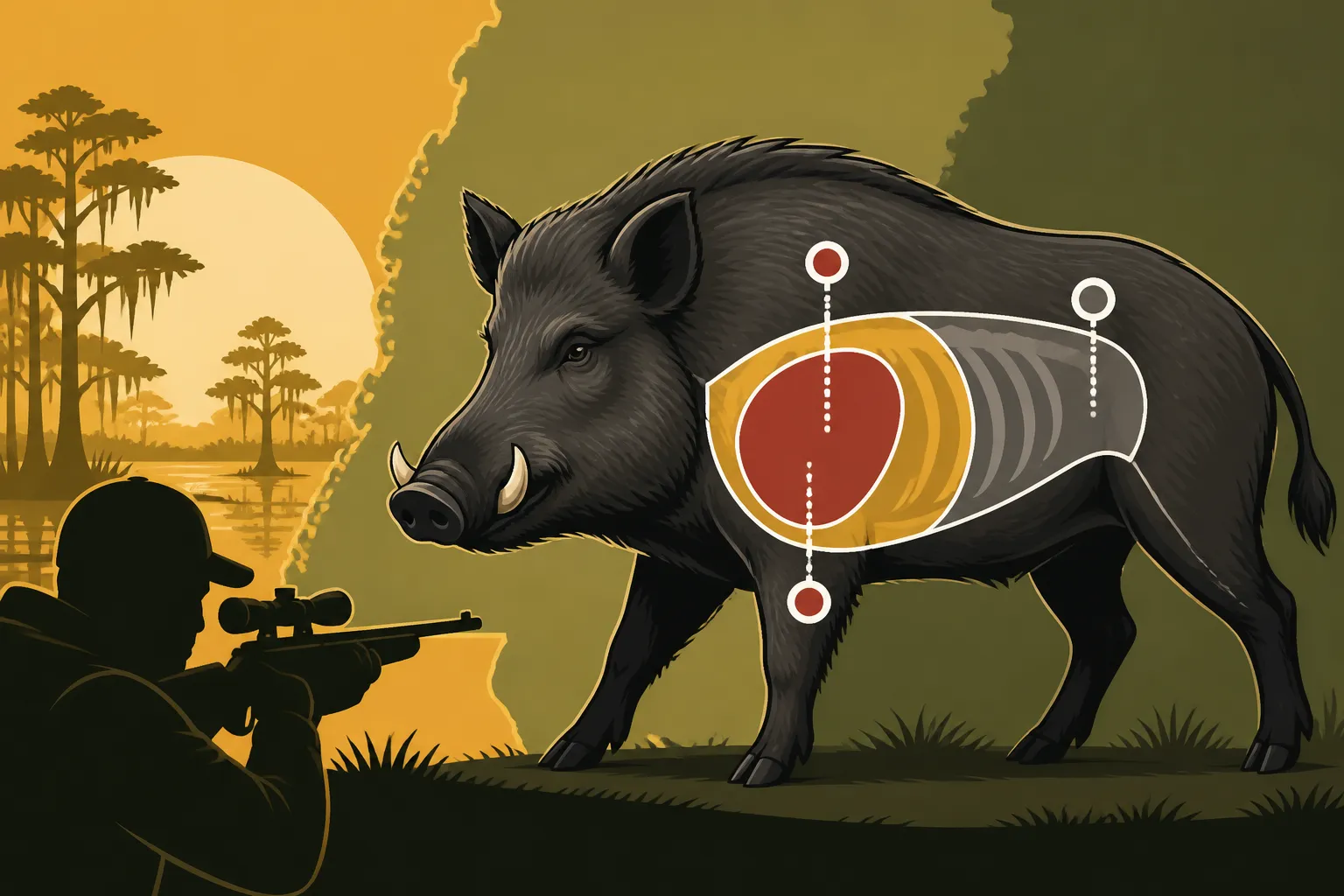
For most hunting scenarios with rifles, shotguns, or archery equipment, the heart-lung shot is your most reliable and ethical option. But remember, it's not the same spot as a deer. On a hog, you want to aim a bit lower and further forward than you might instinctively.
Visualize a line running up from the hog's elbow, and another line running just behind the shoulder crease. The sweet spot is where those two lines intersect, or slightly forward of that intersection, and low in the chest. This aims for the heart and the bottom portion of the lungs, minimizing the chance of hitting that tough shoulder shield.
When a hog is broadside, this shot offers the largest vital area. If the hog is quartering away, aim for the exit side, still keeping that low, forward placement in mind. The goal is for the projectile to travel through both lungs and ideally the heart. This creates massive internal damage and typically results in a quick, ethical kill. Even with a good heart-lung shot, hogs can still run, sometimes 50-100 yards, so be prepared for a tracking job, especially if hunting in thick cover where Tracking a Deer Through Mississippi Leaf Litter has taught you how challenging it can be.
Here's a quick comparison of vital shot placement for broadside hogs:
| Shot Type | Target Area (Broadside) | Pros | Cons | Recommended Situations |
|---|---|---|---|---|
| Brain Shot | Between eye and ear, or center of forehead. | Instant lights-out kill. | Extremely small target, high risk of non-lethal wound if missed. | Close range, stationary hog, excellent shooter, steady rest. |
| High Neck/Spine | Base of skull where neck meets shoulder. | Instant paralysis/kill. | Small target, miss can cause paralysis without death. | Close range, stationary hog, clear shot, facing you or quartering-to. |
| Heart-Lung Shot | Low in the chest, just above and forward of the elbow, behind the shoulder crease. | Largest vital area, highly lethal if hit correctly. | Hog may run a significant distance (50-100+ yards). Requires careful tracking. | Most common and reliable for all hunting methods, any ethical angle. |
Shot Placement Scenarios and Considerations
Every hog hunting situation is unique, from the type of weapon you're using to the angle the hog presents. Thinking through these scenarios beforehand can significantly improve your success rate.
Archery Versus Firearm Placement
When you're bowhunting, shot placement becomes even more critical due to the mechanics of an arrow. An arrow kills by hemorrhage, not hydrostatic shock, so you need to ensure it passes through as many vital organs as possible, creating a wide wound channel. With this in mind, the heart-lung shot is almost always your best bet with a bow.
For Bowhunting Mississippi's Long Archery Season, a broadside or slight quartering-away shot is ideal, allowing your arrow to penetrate deeply through both lungs and hopefully nick the heart. Avoid quartering-to shots with a bow, as the heavy shoulder shield is incredibly difficult for an arrow to penetrate, and the angle often prevents reaching the vitals. Even a slight miss can mean the arrow only penetrates muscle or fat, leading to a long, ethical dilemma.
With a firearm, particularly a rifle chambered in a cartridge like .30-06, .308, or even a .45-70, you have more bullet energy and penetration power. This gives you a bit more leeway for shots that might graze the edge of the shoulder shield. However, "more leeway" doesn't mean "aim carelessly." The heart-lung shot remains paramount, but a well-placed shot through the shoulder with a powerful rifle can still reach the vitals and drop a hog. The key is understanding your rifle's capabilities and knowing exactly where those vitals lie, even behind bone. For those Hunting Mississippi's Year-Round Feral Hogs, considering different weapon types for different seasons or methods is crucial.
Dealing with Tough Shoulder Shields
The shoulder shield on a big boar can be incredibly thick, sometimes an inch or more of dense cartilage and scar tissue built up over years of fighting. This is why aiming low and forward is so important. You want to slip your projectile under or behind that shield to get into the soft vitals.
If you're presented with a quartering-to shot with a firearm and feel confident in your ability to penetrate the shoulder, aim for the crease where the shoulder meets the neck, targeting the vitals on the opposite side. This is a higher-risk shot, but sometimes it's the only one you get. For ethical hunting, if you're not confident you can penetrate the shield and reach the vitals, it's always best to wait for a better shot opportunity. Patience, as any veteran hunter knows, is one of your best weapons, especially when Hunting Hogs Without Bait or Dogs where shots might be less predictable.
Shot Angles: Broadside, Quartering Away, Quartering To
Understanding shot angles is fundamental to ethical hunting.
- Broadside: This is your ideal shot for both bow and rifle. The heart and lungs are fully exposed without major bone obstruction, allowing for maximum penetration and damage. Aim for that low, forward sweet spot.
- Quartering Away: This is also an excellent shot, particularly for archery, as it allows you to aim for the opposite shoulder, ensuring the projectile travels through the vitals. The hog's body is slightly angled away from you, exposing the rib cage on the opposite side.
- Quartering To: Generally, this is the most challenging and highest-risk shot. For archers, it's usually a no-go. For rifle hunters, if the hog is quartering towards you, you'd aim for the point of the near shoulder, trying to angle the shot back into the vitals. The risk of hitting heavy bone or only wounding the animal is significant. Unless it's your only option and you're highly proficient, it's best to pass.
- Facing Away: Another high-risk shot. A shot to the rear of the animal is rarely lethal and will result in a wounded animal. Never take this shot. Wait for the hog to turn.
Always remember, if the shot doesn't feel right, or if you're questioning whether you can make a clean kill, don't take it. A responsible hunter knows when to pass. Utilizing modern mapping tools like those offered by GoHunt can also help you understand the lay of the land, anticipate hog movement, and select optimal stand locations for better shot opportunities before the moment of truth.
What to Do After the Shot
You've made the shot, heard the thwack or thump, and the hog has bolted. Now what? The moments immediately following the shot are crucial for a successful recovery, and they can be filled with adrenaline and uncertainty.
The Waiting Game and Initial Observation
Resist the urge to immediately sprint after the hog, especially if you saw it run. Hogs are masters of disappearing, and pushing a wounded animal too soon can make it run further, pushing it beyond your recovery capabilities. Instead, focus on observing.
- Listen: Did you hear a crash? A grunt? Continued running?
- Mark the Spot: Identify the exact location where the hog was standing when you shot it and the direction it ran. Use a landmark, like a specific tree or bush. If you're on unfamiliar
Mississippi Public Land Huntingground, this is even more critical. - Blood Trail: After a few minutes, slowly approach the shot location, looking for blood, hair, or bone fragments. The type of blood (bright red and frothy for lung, darker for liver, thick and red for muscle) and how much of it there is will give you valuable clues about the quality of your shot.
For a heart-lung shot, I typically recommend waiting at least 30 minutes to an hour, sometimes longer in thick cover or if you suspect a less-than-perfect hit. If it's a gut shot (which we always want to avoid but sometimes happens), extend that wait time to 4-6 hours, or even overnight if conditions allow. Blood Trailing After Dark in Mississippi can be treacherous, so consider daylight tracking if possible.
Tracking and Recovery Techniques
Once you start tracking, move slowly and deliberately. Hogs are notorious for leaving sparse blood trails, even with lethal hits, especially if they’re bleeding internally.
- Follow the Sign: Look for more than just blood. Disturbed leaves, broken branches, tracks in soft earth – any sign that indicates the hog's path. Hogs will often run into the thickest cover they can find.
- Grid Search: If the blood trail becomes too difficult to follow, try a grid search in the direction you last saw the hog. This involves systematically searching an area in a pattern to cover all ground.
- Utilize Tools: A good headlamp is essential, even if you're tracking during the day, for peering into thick brush. Some hunters use specialized tracking lights or UV lights, though their effectiveness can vary. Mapping apps like GoHunt can be invaluable for marking the last known blood, plotting your search area, and navigating dense terrain, preventing you from getting lost.
- Call for Help: Don't be afraid to call a buddy. An extra set of eyes can make all the difference. In some areas, trained Running Dogs on Mississippi Feral Hogs for tracking wounded game might be an option, but be sure to check Mississippi Feral Hog Regulations to ensure it's legal in your specific situation.
Remember, every effort you put into tracking is a testament to your commitment to ethical hunting. A wounded animal deserves your best effort to recover it. Knowing Handling a Hog After the Shot properly can make the whole process smoother, from field dressing to transportation.
When to Call It Quits (and How to Learn)
Unfortunately, not every hog will be recovered. Sometimes, despite your best efforts, the trail simply vanishes, or the animal was wounded in a non-lethal manner and will recover. If you've exhausted all options, covered a significant area, and still have no sign, you have to make the tough decision to call off the search.
It's a disheartening experience, but it's important to learn from it. Review your shot placement. What was the angle? What was the distance? What was the hog doing? Did your equipment perform as expected? Use these experiences to refine your skills and make you a more effective and ethical hunter in the future. The goal is always a clean, swift kill, and perfecting your shot placement on these tough Mississippi hogs is a crucial step in that journey.
Disclaimer
The information provided in this guide is for educational and informational purposes only. Hunting regulations and best practices can change, and it is the hunter's responsibility to know and comply with all current local, state, and federal laws. Always prioritize safety, ethical hunting practices, and animal welfare.