Working a Fencerow for Late-Season Deer
Late season in Mississippi can feel like a real head-scratcher. The deer that were so visible during the early archery or even the gun opener seem to vanish into thin air, leaving you wondering if they've packed up and moved to another state. But don't throw in the towel just yet! Those often-overlooked fencerows crisscrossing our landscape are actually late-season goldmines, and this guide will show you how to effectively hunt them for those elusive whitetails.
Why Fencerows Are Late-Season Goldmines in Mississippi
When the cold winds blow and hunting pressure mounts, deer behavior shifts dramatically. They become more secretive, more cautious, and they prioritize security cover above almost everything else. This is precisely why those seemingly insignificant fencerows become incredibly valuable. They offer a linear ribbon of safety in an otherwise exposed landscape, acting as vital arteries for deer movement.
Understanding Deer Behavior Near Fencerows
By late December and January, Mississippi deer have seen it all. They've dodged arrows, outsmarted gun hunters, and become masters of evading detection. This sustained pressure pushes them into the thickest, most secure cover they can find. Fencerows, especially those that have grown up with a dense tangle of vegetation, provide exactly that. Think of them as deer highways, allowing deer to travel from bedding areas to dwindling food sources without exposing themselves in open fields or sparse timber.
A mature buck, particularly, will favor these hidden routes. He doesn't want to step out into a cut bean field if he can sneak along a brushy fencerow, staying out of sight. These natural corridors offer both visual and often acoustic concealment, muffling their movements and hiding them from our keen eyes. Even in relatively mild Mississippi winters, the subtle thermal cover offered by a thick fencerow can be enough to draw deer in during a cold snap, especially if it catches the morning sun. They'll bed down in the thickest spots, often just a few yards from where you might walk right by.
Natural Cover and Food Sources
Beyond just providing a safe travel lane, fencerows are often surprisingly rich in late-season food and cover. While the main acorn crop is long gone and many agricultural fields are harvested, fencerows are often left untended, allowing a variety of woody browse, briars, and honeysuckle to flourish. Deer will actively seek out these often-forgotten snacks. Think about the last time you walked a fencerow – did you notice the tangled mess of greenbriar? That's prime deer food when other options are scarce.
Furthermore, these linear strips of vegetation act like snow fences, collecting fallen leaves and other debris, creating surprisingly warm and dry bedding spots. During colder periods, deer will gravitate to these thicker sections, especially those on a south-facing slope or side that soaks up what little warmth the winter sun provides. Sometimes, a farmer might have left a small section of standing crops near a fencerow, providing an irresistible magnet for deer. This combination of security, subtle food, and thermal cover makes fencerows incredibly appealing to deer when other areas have been hunted out or food sources depleted. For more on what deer are eating this time of year, you might want to read about Late-Season Food Sources for Mississippi Whitetails.
Scouting Mississippi Fencerows for Success
Just because a fencerow looks "deer-y" doesn't mean it's actively being used. Effective late-season hunting demands meticulous scouting. You need to know where the deer are using it, how they're using it, and when. This isn't just about looking at the edges; it's about getting down and dirty, getting into the thick stuff, and reading every sign the deer leave behind.
Reading the Sign on the Edge
When you're scouting Mississippi fencerows in the late season, fresh sign is absolutely paramount. Don't waste your time on old, crusty tracks from October. You're looking for fresh tracks—soft edges, clear hoof prints—especially where deer might cross from one field to another or enter the fencerow from a patch of timber. Droppings are another key indicator; fresh droppings will be moist and dark, while older ones are dry and faded.
Remember, deer are smart. They won't always leave sign in the open. You'll need to look inside the fencerow itself. Crawl in there if you have to! Look for small rubs on saplings and bushes within the fencerow's confines. While the primary rut is over, bucks will sometimes still rub to release frustration or simply to mark their presence. Scrapes might still be getting hit occasionally, especially if there's a strong mature buck in the area. Look for these small details that tell you deer are not just passing through, but actively using this specific section of cover. Using mapping apps, like those provided by GoHunt, can really help you identify these linear features from an aerial perspective and pinpoint areas you want to investigate on the ground. This visual reconnaissance before you ever set foot on the property can save you a ton of time.
Identifying Key Funnels and Crossings
Not all fencerows are created equal, and not every foot of a fencerow will be equally productive. Your goal as a hunter is to find the choke points, the bottlenecks, the places where deer are forced to funnel their movement. These are the absolute magnets for late-season deer. Look for areas where the fencerow might constrict, perhaps where it's squeezed between two open fields, or where it merges with a thicker block of timber.
A classic example is where a fencerow crosses a ditch, a small creek, or even an old farm road. These breaks in the linear cover create natural crossings that deer will use repeatedly. Similarly, pay attention to where a fencerow acts as a direct connection between a known bedding area (a dense pine thicket, a CRP field, or a swamp) and a dwindling food source (a cut cornfield with waste grain, a small green field, or a patch of late-season browse). This is where your GoHunt app can shine, allowing you to draw lines on the map connecting these features and measuring distances to predict the most likely travel routes. If you find a fencerow that acts as a funnel between a large block of cover and a major food source, you've hit the jackpot. These areas are worth investing significant time in, and they're precisely where you'll want to focus your setup. For more insights on finding these natural highways, check out Hanging a Stand on a Delta Bottomland Funnel.
Setting Up for a Fencerow Encounter
Once you've identified a hot fencerow, your next challenge is setting up effectively. Late-season deer are incredibly wary, and any mistake in your approach or stand placement can blow your hunt before it even begins. This requires careful consideration of the wind, your entry and exit routes, and how best to conceal yourself in the cover available.
Stand Placement for Different Winds
Wind direction is always critical in deer hunting, but it becomes even more crucial in the late season when deer are hypersensitive to scent. When hunting a fencerow, you absolutely must have the wind in your favor, blowing away from where you expect deer to approach or pass. Because fencerows are linear, the wind can be a bit trickier than in a block of timber.
Consider setting up perpendicular to the fencerow, perhaps 20-30 yards inside the adjacent timber, if possible. This allows your scent to blow across the fencerow and into an open field or less critical area. If you're forced to set up closer to or even within the fencerow, make sure your stand is on the downwind side of the most likely travel path. Always observe the prevailing winds, but don't forget about thermals. In the mornings, air often sinks, while in the evenings, it rises. This can create unpredictable wind currents, especially if the fencerow is running through varied terrain. Always have multiple stand options or be prepared to adjust your plan based on the conditions. If you're positioned correctly, your scent should not be carried directly into a bedding area or the primary travel path. Learning to read your local conditions is vital for a Warm-Weather Sitting Strategy in Mississippi or cold-weather strategy.
Ground Blinds and Concealment Tactics
Sometimes, a suitable tree for a stand just isn't available, or the cover is too sparse. This is where ground blinds truly shine in fencerow hunting. A well-brushed-in ground blind can offer incredible concealment, warmth, and mobility in areas where a tree stand simply isn't feasible. Consider setting your blind just inside the fencerow, nestled into the densest vegetation, or on the immediate field edge adjacent to a key crossing.
The key to a successful ground blind setup is concealment. Don't just pop up a blind in the open. Take the time to brush it in thoroughly with natural materials from the surrounding area – branches, deadfall, briars. Break up its outline so it blends seamlessly into the fencerow's natural clutter. Remember, these deer have seen it all, and anything new or out of place will put them on high alert. Your entry and exit routes are also critical. Use the fencerow's thick cover to your advantage to slip in and out undetected. Avoid walking directly down the fencerow if possible; instead, approach from the side, using existing ditches or depressions to stay out of sight. For a deeper dive into setting up ground blinds, check out Using a Ground Blind on Mississippi Public Land and Brushing In a Blind on a Field Edge.
Effective Hunting Strategies for Mississippi Fencerows
So, you've done your scouting, you've picked your spot, and your setup is dialed in. Now comes the moment of truth: the actual hunt. Fencerow hunting in late season often requires a blend of patience and subtle movement, a keen eye, and an understanding of how pressured deer use these linear covers.
The Art of the Still-Hunt
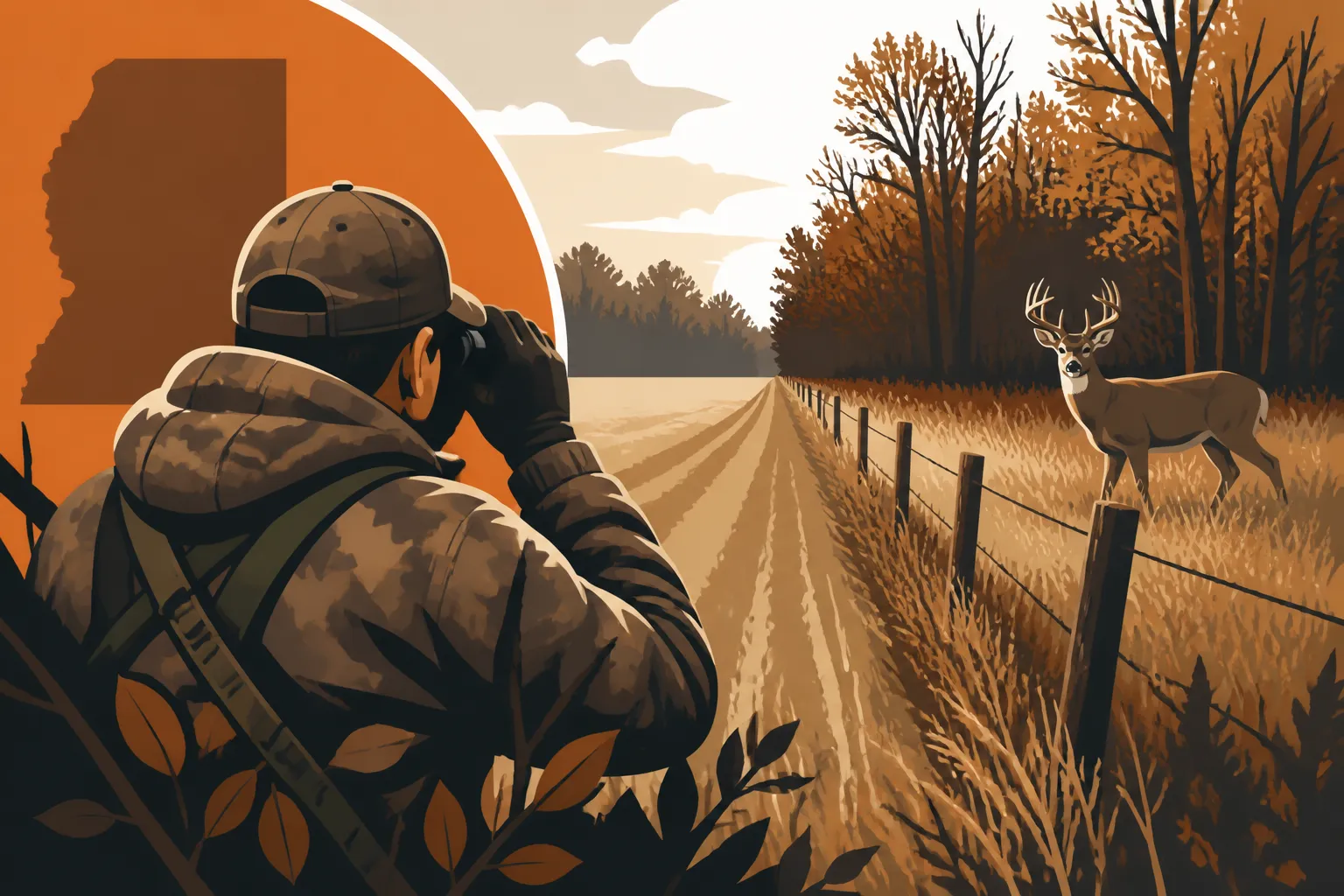
Fencerows are uniquely suited for still-hunting, especially if they are long and winding, connecting multiple areas. This strategy involves moving incredibly slowly and deliberately, taking a few steps, then pausing for several minutes to observe your surroundings. Think of it as a moving ambush. The linear nature of a fencerow allows you to use the vegetation to break up your silhouette and move unseen.
Focus on moving into the wind or with a slight crosswind, scanning ahead for any sign of movement. Look for horizontal lines in a vertical world – the back of a deer, a flick of an ear, a patch of brown that seems out of place among the grays and browns of winter. Utilize your binoculars often, meticulously picking apart the cover. This isn't about covering ground; it's about covering it effectively. Take 15-20 minutes to cover just 50 yards, if that's what it takes. Every snap of a twig, every rustle of leaves, should be examined. This is similar to the patience and observation needed for Still-Hunting Hills Unit Ridges. The more patient you are, the more likely you are to catch a deer unawares as it sneaks along its fencerow highway.
When to Be Patient and When to Move
One of the biggest dilemmas in late-season hunting is knowing when to sit tight and when to make a move. For fencerows, this balance is key. If you've found a primary crossing or funnel with abundant fresh sign, extreme patience is often rewarded. Settle in before daylight, minimize movement, and be prepared to sit all day, especially if it's cold. Pressured deer often move at odd times, and the midday lull can be surprisingly productive as deer shift between bedding areas.
However, if you've been sitting on a spot for several hours with no activity, and your scouting showed extensive fencerow use beyond your immediate location, a slow, calculated still-hunt might be the best course of action. Use the cover of the fencerow to your advantage, moving slowly and quietly to explore new sections. This is particularly effective on longer fencerows that connect several parcels of cover or different food sources. Be adaptable; if a particular section of the fencerow isn't producing, don't be afraid to change your plan. The late season demands flexibility, and sometimes, making a strategic move is more productive than simply waiting endlessly.
| Fencerow Type | Cover Quality | Food Potential (Late Season) | Travel Corridor Value | Best Strategy |
|---|---|---|---|---|
| Old Barbed Wire/Sparse | Low-Moderate | Low | Good | Still-hunt, careful ambush at pinch points |
| Dense Hedgerow | Excellent | Moderate-High | Excellent | Sit & wait, patient still-hunt |
| Mature Treeline | Moderate-High | Moderate | Excellent | Sit & wait at crossings, still-hunt edges |
| Ditch/Creek Bank Brush | Excellent | High | Excellent | Ambush at crossings, careful still-hunt |
| Agricultural Edge (no brush) | Low | Variable (waste grain) | Low-Moderate | Watch from afar, target movement at dusk/dawn |
By understanding these nuances and adapting your approach, those Mississippi fencerows can turn a frustrating late season into a truly rewarding one, proving that sometimes the best hunting spots are the ones we drive past every day.
Disclaimer
Hunting is an inherently dangerous activity. Always prioritize safety, understand and follow all Mississippi Department of Wildlife, Fisheries, and Parks regulations, and ensure you have the appropriate licenses and permits before heading into the field. This guide is for informational purposes only and does not substitute for professional instruction or personal experience in the field.