Glassing a Powerline Cut at Last Light
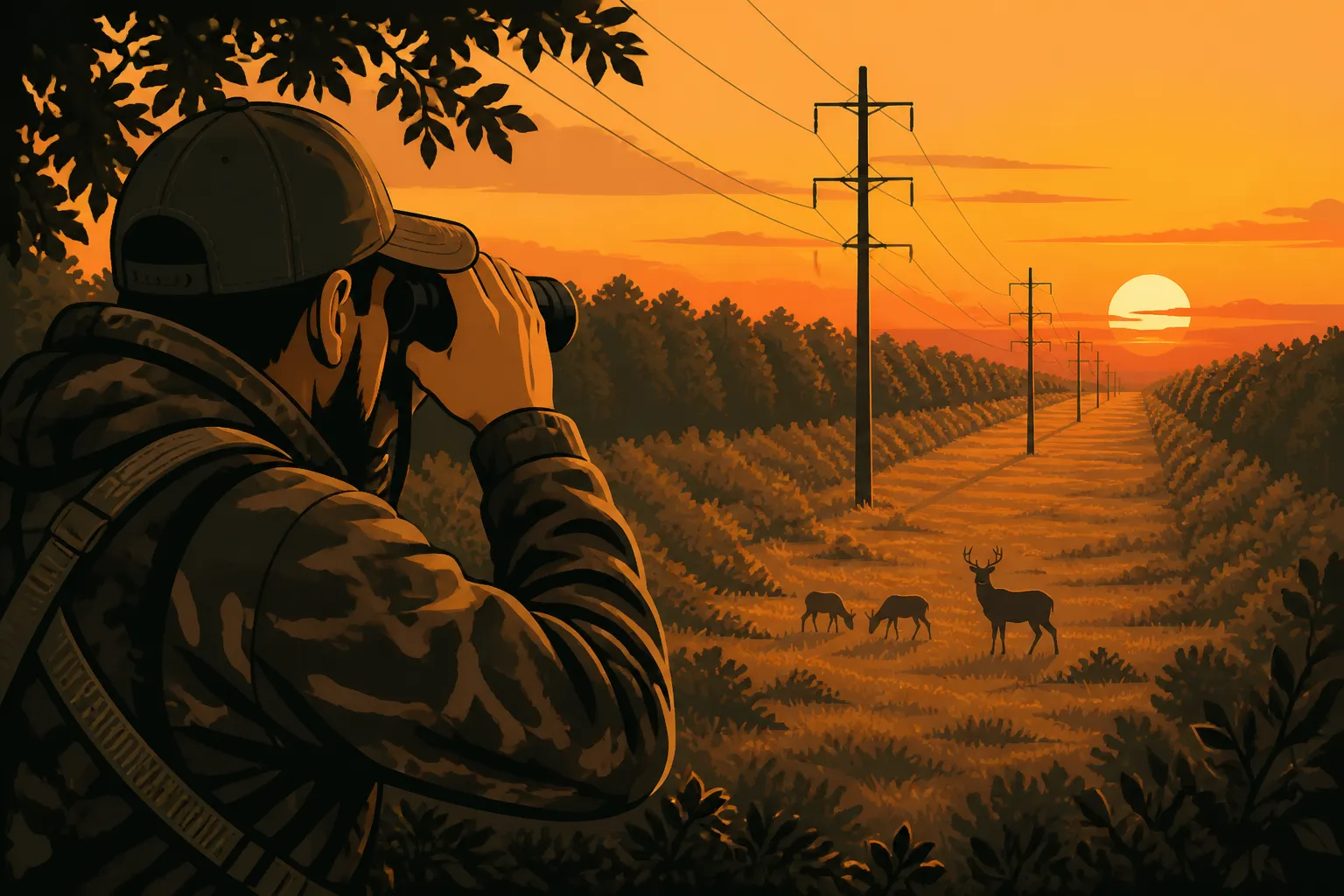
There’s a special kind of anticipation that settles over a deer hunter as the sun starts to dip below the horizon, casting long shadows across the landscape. You've been sitting tight all day, maybe seen a few squirrels or a straggler doe, but it's during those precious last minutes of legal shooting light that the real magic often happens. This is prime time, and few places offer a better stage for this drama than a wide-open powerline cut here in Mississippi. The challenge? Spotting that ghost-like buck as he steps out, just before he vanishes back into the timber, or knowing where to even look when all you see is open space.
This guide is all about honing your skills in glassing these crucial powerline cuts as daylight fades, helping you understand why deer use them, how to pick them apart with your optics, and what subtle cues to watch for when a Mississippi whitetail finally makes an appearance.
Why Powerline Cuts Are Prime Last-Light Spots in Mississippi
Powerline cuts, whether they snake through the dense pine plantations of the Piney Woods or dissect the hardwood bottoms of the Delta, are more than just utility corridors. To a whitetail deer, they represent a complex blend of opportunity and risk, a transition zone that offers vital resources, especially as evening approaches. Understanding why deer gravitate to these areas at last light is the first step to effectively hunting them.
Natural Corridors and Edges for Deer Movement
Think about it: a powerline cut is essentially a linear strip of cleared land, often bordered by dense timber. This creates a distinct edge habitat that deer absolutely adore. They don't typically want to walk right down the middle of a wide-open cut during daylight hours, but as the light fades, that open space becomes less intimidating. Instead, they’ll often skirt the edges, using the tree line for cover while still having clear sightlines into the open area. These edges act like natural highways, connecting different bedding areas to various feeding spots. A savvy hunter knows that these cuts provide easy travel routes through otherwise thick terrain. You might find a deer using one side for travel, pausing to browse, and then crossing the cut to access a different part of the woods. These subtle movements can reveal a lot about where the deer are coming from and where they're headed, information that's invaluable for future hunts or making a move right then and there.
Food Source Attraction Within the Clearing
Many powerline cuts are actively managed, or simply naturally grow, a diverse array of forage that deer find irresistible. The constant clearing prevents large trees from taking root, allowing sunlight to reach the forest floor. This promotes the growth of tender grasses, forbs, and young woody browse that are highly nutritious. In areas where row crops aren't prevalent, or even alongside them, these natural food plots can be a major draw. Deer will often wait until the low light of dusk to venture out into these openings to feed, feeling safer from predators (including us hunters). I've seen cuts where the utility company's spraying or mowing regimen inadvertently created ideal conditions for clover, lespedeza, or even young oak sprouts, turning a simple right-of-way into a deer buffet. Knowing these Late-Season Food Sources for Mississippi Whitetails can give you a huge advantage, as deer will often converge on these areas as their preferred, high-energy meals become scarcer elsewhere.
Thermal Advantages and Edge Transitions
While it might seem minor, the thermal properties of a powerline cut can also influence deer movement, especially during transitional periods like fall and early winter. Open areas, exposed to the sun throughout the day, can retain heat longer into the evening than the surrounding dense timber. Conversely, on colder mornings, they can warm up faster. This slight temperature difference, coupled with the security of the adjacent timber, can make powerline cuts attractive. Deer might stage on the timbered edge, soaking up the last warmth of the day or simply waiting for the air temperature to stabilize before committing to a crossing. These subtle environmental cues, combined with food and cover, make these cuts magnets for deer activity during those critical twilight hours. This becomes particularly relevant when considering your Warm-Weather Sitting Strategy in Mississippi during early archery or late-season gun hunts.
Strategic Glassing Techniques for Powerline Cuts
Glassing isn't just about looking through binoculars; it's a methodical process of observation, patience, and understanding what you're seeing (or not seeing). When you're trying to pick apart a long, open powerline cut at last light, every detail counts.
Choosing Your Vantage Point for Optimal Visibility
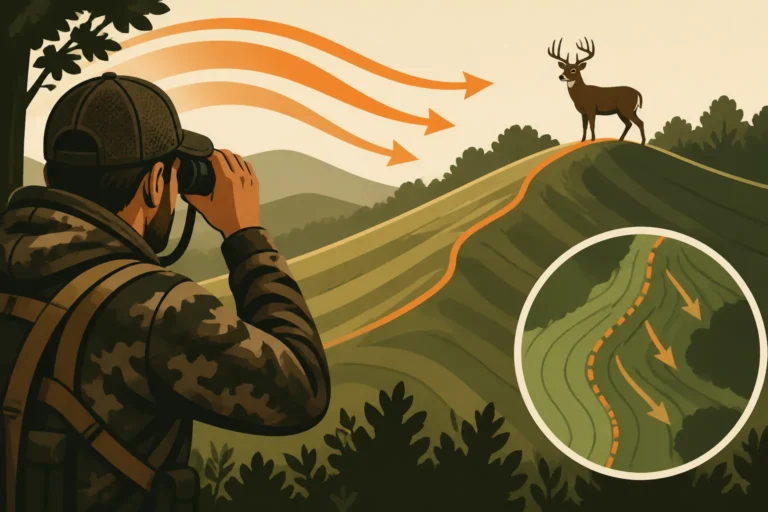
Your success in glassing a powerline cut hinges significantly on where you choose to set up. You need an elevated position if possible, something that gives you a commanding view of the entire cut and its edges. This could be a natural ridge, a slight knoll, or even a well-placed, tall ladder stand or box blind overlooking the cut. The goal is to minimize obstructions and maximize your field of view. Before the season even begins, use mapping tools like GoHunt to scout potential vantage points. Look for topographical features that give you an advantage, and always consider the wind. You want the wind in your favor, blowing from the powerline cut towards you, so your scent doesn't carry into the area you're trying to glass.
When you're Scouting Mississippi Public Land Before Season, marking these potential glassing points on your map during daylight hours is crucial. You'll want to identify specific trees or brush lines that offer natural cover, allowing you to blend into the background without casting a silhouette against the skyline. I often look for a spot where I can comfortably rest my elbows on my knees or use a tripod for my optics, ensuring a steady view for prolonged periods. The fewer movements you make, the less likely you are to spook an early-appearing deer.
Optics Selection and Methodical Grid Searching
The right optics make all the difference for effective last-light glassing. For most situations, a good pair of 10×42 or 12×50 binoculars are indispensable. They offer a wide field of view and gather a surprising amount of light as dusk approaches. If you're covering extremely long distances, a spotting scope (15-45x or 20-60x) mounted on a tripod can be invaluable, allowing you to discern antler points or subtle movements miles away. However, for most powerline cut scenarios, especially within typical shooting range, quality binoculars will be your primary tool. Brands like Vortex, Leupold, and Maven offer excellent light transmission and clarity for their price points, which is key when every photon counts.
Here's a quick comparison of popular optics for last-light glassing:
| Optic Type | Magnification Range | Best Use Case | Pros | Cons |
|---|---|---|---|---|
| Binoculars | 8x-12x | General scanning, closer ranges (under 500 yards) | Wide field of view, portable, good light gathering | Less detail at extreme ranges |
| Spotting Scope | 15x-60x | Long-range detailed observation (over 500 yards) | High magnification, superior detail, ideal for scoring | Narrow field of view, requires tripod, heavier/bulkier |
Once you have your optics, the key is to perform a methodical grid search. Don't just randomly scan. Pick a section of the powerline cut, say, the far-left edge. Start at the top of that section and slowly scan horizontally, overlapping each scan by about 20-30%. Once you reach the right side of that section, drop down slightly and scan back to the left. Continue this pattern, methodically "eating" the landscape, looking for anything that seems out of place. This might sound tedious, but it forces your eyes and brain to truly process the details, rather than just glance over them. It's amazing what you'll pick up when you slow down: a flicking ear, a horizontal line in a vertical world, or the slight shift in color that indicates a deer.
The Power of Patience and Persistence
Glassing, especially at last light, is a mental game as much as a visual one. Deer don't often just step out into the open and pose. More often, they materialize. You might catch a glimpse of a leg, then part of a body, then finally the whole animal as it slowly moves out from cover. This is where patience is paramount. Don't give up just because the sun is sinking fast. Often, the last ten to fifteen minutes are the most productive. Keep grinding, keep scanning, and keep your concentration sharp.
I recall a hunt near a powerline cut in the Hills Unit where I had been glassing for what felt like an eternity. I was about to pack up, convinced nothing was moving, when I decided on one last, slow scan. As I meticulously worked a small cluster of brush on the far edge, a buck's ear flicked. Just an ear. But that was enough. I held steady, my binoculars glued to the spot, and slowly, ever so slowly, the rest of him became visible. He was a mature 8-point, exactly what I was hoping for. If I had rushed, or given up, I would have completely missed him. It's that persistence, that refusal to quit until the light is truly gone, that often separates successful glassing efforts from the rest. Using a mapping app like GoHunt to mark your exact location and the spot you're observing can also help you stay organized and ensure you cover all areas methodically.
Reading Deer Behavior and Movement at Dusk
Spotting a deer is one thing; understanding what that deer is doing, or is about to do, is another entirely. At last light, deer are often transitioning, and their subtle behaviors can give you clues about their intentions.
Subtle Signs and Body Language to Watch For
When you're painstakingly glassing a powerline cut, especially on those timbered edges, you're not just looking for a whole deer to walk out. You're looking for parts of a deer. Start by searching for horizontal lines in an otherwise vertical landscape – the flat back of a deer against the upright trees. Look for ears flicking, tails twitching, or even just a patch of hide that seems a different color or texture from the surrounding vegetation. Deer are masters of camouflage, especially in low light. Their first move might be to simply poke their head out, smell the air, and assess the situation before fully committing to stepping into the open.
Pay attention to their body language. A deer that steps out cautiously, head up, ears swiveling, is still assessing danger. A deer that walks out confidently, head down, immediately feeding, feels secure. Often, a buck will "stage" in the thick cover just inside the tree line, watching the does and fawns enter the opening first. He's letting them test the waters, ensuring the coast is clear before he makes his move. This behavior is key for understanding Mississippi Buck Age Structure and how older, wiser bucks often behave. If you see does and fawns feeding calmly, it's a good bet a buck might be nearby, waiting for the last vestiges of light.
Predicting Entry and Exit Points
Observing where deer enter and exit the powerline cut repeatedly can give you invaluable information. They typically use established trails that offer the most cover or the easiest path between bedding and feeding areas. If you've done your Reading Aerial Photos for Hills Unit Deer during your scouting, you might have already identified these funnels or pinch points. At dusk, deer are often moving from their daytime bedding cover, nestled deep in the woods, towards evening food sources.
A powerline cut might intersect a creek bottom, a logging road, or a natural saddle, all of which can concentrate deer movement. By watching where deer emerge and disappear, you can start to form a pattern. Maybe they always step out from a thick pine thicket on the north side and disappear into a cut-over section on the south. This knowledge isn't just for that particular evening; it's intelligence you can use for future hunts, perhaps by setting a stand closer to those high-traffic entry points. During the rut, these cuts can also serve as cruising lanes for bucks checking for does, offering even more predictable movement patterns.
Interpreting Group Dynamics
It's rare to see just one deer in a powerline cut, especially at last light. More often, you'll see small groups or a series of individual deer making their way out. The order in which they appear can tell you a lot. Does and fawns are often the first to venture out, acting as natural sentinels. If they feel safe, more deer will follow. If they're jumpy, constantly looking back into the timber, it might indicate that a mature buck is nearby, but he’s taking his sweet time. Or, it could signal that they sense danger.
During the pre-rut and rut, you might see younger bucks trailing does, or a mature buck pushing a doe across the opening. Understanding these group dynamics can help you decide whether to hold tight or make a subtle move. If you spot a group of does, but no buck, consider waiting. That buck you're looking for might be just moments behind them. Knowing the Mississippi Buck-to-Doe Ratio by Region can also help set your expectations for what kind of group dynamics you might observe. If there's high pressure on Hunting Pressure on Mississippi Public Land, deer might be more wary and spread out, making solitary bucks even harder to spot.
Maximizing Your Last-Light Opportunity
Once you've spotted a deer, especially a buck you're interested in, the clock starts ticking. The remaining light is precious, and every decision you make in those final moments can determine success or failure.
The Ethical Shot and Time Management in Fading Light
When that target buck finally steps into view, it’s easy to get tunnel vision. But in those fading minutes, maintaining ethical shooting practices is paramount. You need to quickly assess the distance, the animal's angle, and the available light. Don't rush a shot just because it’s the last chance of the day. If the shot isn't clean, if you can't clearly discern vitals, or if you doubt your ability to make a precise shot in the dimming conditions, it's always better to pass. You owe it to the animal and yourself.
Keep a close eye on your watch or hunting app like GoHunt for legal shooting light. In Mississippi, legal shooting hours for deer typically extend from one-half hour before sunrise to one-half hour after sunset. As the light gets low, every second counts. Practice in low-light conditions with your rifle or bow before the season to understand your effective range in similar scenarios. Remember, a quick, clean kill is the goal, not just pulling the trigger.
Post-Shot Strategy and Recovery in Darkness
So, you’ve made the shot. What now? The immediate seconds and minutes after the shot are crucial. Mark the exact spot where the deer was standing, and where it was when you last saw it run. Pick out prominent landmarks: a specific tree, a distinct bush, a change in the powerline structure. If you have a partner, have them watch the spot while you quickly mark it on your GPS or GoHunt app.
Even if you saw the deer drop, give it time. For rifle shots, waiting 30 minutes to an hour is generally a good idea. For bow shots, especially if it wasn't a perfect hit, waiting 4-6 hours, or even until morning, is often the safest bet. Rushing in can push a wounded deer further, making recovery much harder. If you’re dealing with complete darkness, and you didn't see the deer fall, resist the urge to immediately track. Returning in the morning with fresh eyes and plenty of light, perhaps with a tracking dog if available, significantly increases your chances of a successful recovery. Blood Trailing After Dark in Mississippi is incredibly challenging, and often best avoided unless you have a high-certainty kill.
Utilizing Technology for Enhanced Last-Light Success
Modern hunting technology can be a game-changer for last-light glassing and hunting. Mapping apps like GoHunt are invaluable. Before your hunt, use them to pinpoint potential vantage points, identify natural funnels intersecting powerline cuts, and mark bedding and feeding areas. During the hunt, if you spot a deer but can't get a shot, or if you need to mark a rub, scrape, or a specific tree line where deer are entering, the app lets you drop pins and add notes in real-time. This helps you build a detailed picture of deer movement over time.
After a shot, the GPS features in these apps become critical for marking the last-seen point, planning a recovery route, and even navigating back to your vehicle or camp in the dark. Many hunting apps also provide sunrise/sunset times and legal shooting hours, taking the guesswork out of time management. Some even integrate weather patterns, which can further inform your decision-making when considering how deer will move at last light. For example, if you were considering Hunting Deer After a Cold Front, your app might show you the temperature drop and help you predict increased feeding activity. The better organized and informed you are, the higher your chances of success during those fleeting last minutes of daylight.
Disclaimer
The information provided in this guide is for educational and informational purposes only. Hunting regulations and conditions can change. Always consult the latest Mississippi Department of Wildlife, Fisheries, and Parks (MDWFP) regulations before engaging in any hunting activities. Adhere to all local, state, and federal laws. Safety should always be your top priority in the field.