Hunting Loess Bluff Ridgelines
Hunting the steep, winding ridgelines of Mississippi's Loess Bluff region presents a unique challenge for deer hunters. Unlike the flat expanses of the Delta or the rolling hills of the central part of the state, these bluffs demand a different approach, often leaving hunters frustrated by unpredictable thermals and elusive buck travel patterns. This guide will dive deep into understanding this distinctive landscape and equip you with the knowledge and tactics to successfully pursue deer, and other game, in these incredibly scenic, yet demanding, hunting grounds.
Understanding the Loess Bluff Terrain
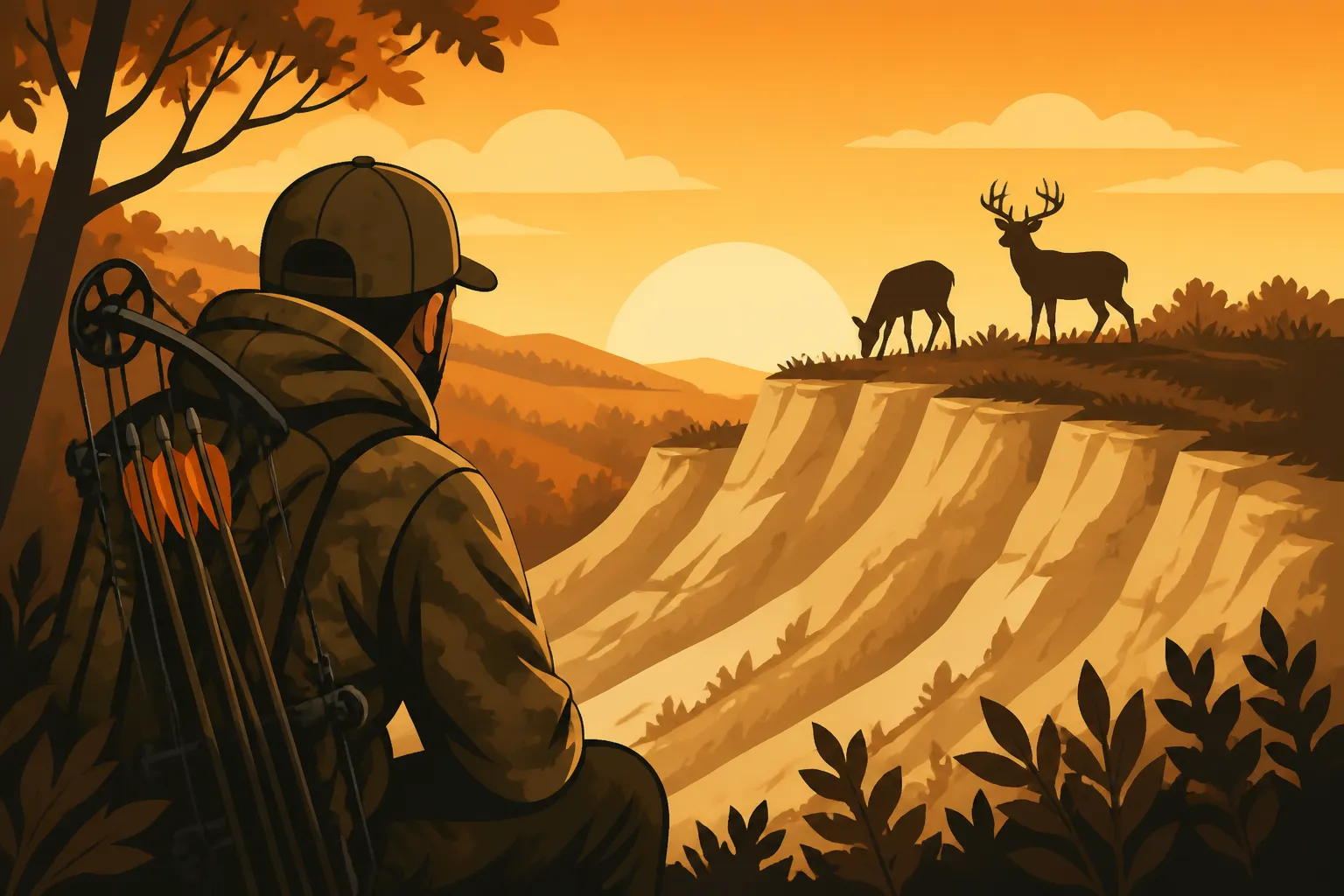
The Loess Bluffs are a truly distinct geological feature in Mississippi, running along the eastern edge of the Mississippi River floodplain. This region is characterized by steep, eroded hills composed of fine, wind-blown silt (loess) that can stand hundreds of feet tall. This unique composition directly influences everything from vegetation to how deer move through the landscape.
Unique Geological Features
The Loess Bluffs were formed over millennia by wind depositing glacial silt, creating a deep, fertile soil that, while prone to erosion, supports incredibly dense vegetation. What makes these bluffs so different is their dramatic topography – sharp drop-offs, deep ravines, and narrow, winding ridges. You’ll find sheer faces in some areas and deeply cut "gulches" or "hollows" that funnel water and wildlife. This creates a labyrinth of terrain that can be both daunting and incredibly rewarding for hunters who learn to read it. The bluffs act as natural barriers and travel corridors, making understanding their contours absolutely essential. This isn't flatland hunting; you'll be dealing with constant elevation changes that dictate everything from your approach to your shot placement.
Vegetation and Cover Types
The fertile loess soil supports a diverse and often extremely dense forest. You’ll encounter mature hardwoods like oaks and hickories, offering crucial mast crops, especially in the fall. However, the bluffs also feature thick undergrowth, often a mix of cane, privet, honeysuckle, and various thorny bushes. This dense vegetation provides incredible cover for deer, making visual spotting difficult and requiring keen attention to subtle signs. In many areas, the sheer density of the cover means deer can be within spitting distance and you’d never know it. During the rut, this thick cover can be a sanctuary for mature bucks seeking to evade pressure or hold does. This also means understanding how to navigate silently through brush is paramount. For example, knowing how to approach a ridge for Hills Unit Deer will be different than what you might find in other parts of the state.
Impact on Deer Movement
The rugged topography and dense cover of the Loess Bluffs profoundly influence how deer move. Instead of wide-open fields or sprawling timber blocks, deer here often stick to specific, repeatable patterns. They tend to travel along the flatter portions of the ridgelines, especially those connecting larger blocks of cover or feeding areas. They’ll also use the bottoms of the steep ravines (the "hollows" or "gulches") as protected travel corridors, especially when moving between bedding and feeding. Crossings of these ravines, often where the sides are less steep, become natural funnels.
During the day, deer will bed on the leeward sides of ridges, seeking protection from the wind and using elevation to detect predators. Understanding these patterns is key. A buck might use a specific "finger ridge" or a saddle connecting two larger bluffs as a primary travel route, while does might bed closer to a food source on a sheltered slope. Knowing how to read a ridge for Hills Unit Deer involves recognizing these micro-features that create predictable deer movement.
Scouting Strategies for Loess Bluffs
Successful hunting in the Loess Bluffs begins long before you ever set foot in the woods with your weapon. Effective scouting, both from afar and on the ground, is the foundation for finding those elusive bluff bucks.
Reading Topography Maps and Aerial Imagery
Before you even tie your boots, spend significant time studying the terrain from above. Tools like GoHunt or similar mapping apps are invaluable here. Look for the highest elevations, the sharpest drops, and the subtle saddles that connect larger bluffs. Identify primary ridgelines, secondary "finger" ridges that branch off, and the deep drainage features (ravines or hollows) that cut through the landscape.
- Ridgelines: Trace the highest contours. These are often primary travel routes. Look for points where a ridge narrows or where multiple ridges converge—these are potential ambush points.
- Saddles: These are dips in a ridgeline. Deer often prefer to cross a saddle rather than climbing over a higher point. They are natural funnels.
- Drainage Features/Hollows: These serve as protected travel routes and often contain water sources. Look for where these hollows become less steep, creating easy crossings.
- Bench Cuts: Sometimes, you'll find flatter "benches" or shelves along the side of a steep bluff. These can be excellent bedding areas or travel corridors slightly off the main ridge.
Use aerial imagery to identify different vegetation types. Denser, darker green areas often indicate thick cover, while lighter green or agricultural fields denote potential food sources. Overlaying topographic lines with aerial photos will reveal how deer might move from thick cover along a bench to a food source in a valley, using the terrain for concealment. For example, a hidden plateau off a main ridge might hold a small pocket of acorns, drawing deer that are otherwise invisible from above or below.
Identifying Key Funnels and Pinch Points
The Loess Bluffs are full of natural funnels and pinch points, which are absolutely goldmines for hunters. These are locations where deer movement is naturally constricted, forcing them into predictable pathways.
- Saddles between bluffs: As mentioned, these are classic pinch points. Deer will utilize the path of least resistance.
- Convergence of drainages: Where two or more ravines meet, deer often have limited options for crossing or traveling, creating a natural funnel.
- Narrow sections of ridgelines: A long, broad ridge might suddenly narrow to a 10-yard wide strip. This narrowing forces deer movement and makes them easier to intercept.
- Breaks in steep bluffs: Look for less steep sections or old logging roads that offer easier access up or down the bluff. Deer will use these frequently.
- Changes in vegetation: A transition from thick thorny brush to more open timber can create an "edge" that deer follow. Similarly, the edge of a clear-cut regrowth edge against mature timber is a highway.
Spend time on your chosen public land, like Scouting Mississippi Public Land Before Season, walking these areas and looking for fresh sign. If you find a saddle that consistently has fresh tracks, rubs, or scrapes, you’ve found a high-odds ambush spot.
Locating Rubs, Scrapes, and Bedding Areas
Once you’ve identified potential funnels and travel corridors from your map study, it's time for boots on the ground to confirm deer activity.
- Rubs: Bucks make rubs to mark territory and flex their neck muscles. Chains of rubs indicate a travel corridor, especially during the pre-rut and rut. Look for fresh rubs on saplings along the edges of ridges or leading into dense cover. Larger rubs on bigger trees often signify a mature buck.
- Scrapes: Scrapes are communication hubs for deer. Bucks paw the ground, urinate, and sometimes rub an overhead branch (licking branch). Active scrapes, especially those with fresh urine or paw marks, indicate a buck is in the area regularly. Look for them on flat spots along ridgelines, at the base of ravines, or near transition lines in vegetation. During the peak of the rut, a fresh scrape line along a logging road can be a hot ticket.
- Bedding Areas: These are often the hardest to find but the most rewarding. In the Loess Bluffs, deer will typically bed on the leeward sides of ridges, just below the crest, where they can catch thermals rising in the morning and falling in the evening, giving them an advantage to smell danger. Look for thick cover, often south-facing slopes in colder weather to catch the sun, or north-facing in warmer weather for shade. You'll find "beds" – matted down spots in the leaves or grass – and often concentrated droppings. Approaching a bedding area requires extreme caution, as you don’t want to spook deer out of their sanctuary.
By combining digital scouting with boots-on-the-ground confirmation, you can build a comprehensive understanding of how deer use the Loess Bluff landscape. This deep dive into their habits will dramatically increase your odds of success.
Effective Hunting Tactics on Ridgelines
Hunting the Loess Bluff ridgelines requires a flexible approach, adapting to the terrain, weather, and specific deer behavior. This isn't a one-size-fits-all scenario, so let's break down some effective strategies.
Stand Placement Considerations
Choosing the right stand location in the bluffs is paramount. You're not just looking for a tree; you're looking for a strategic point that gives you an advantage over the terrain and the deer's senses.
- Overlooking Saddles and Funnels: This is a classic tactic for a reason. Place your stand downwind of a saddle or a narrow pinch point on a ridge. Deer expect danger from below, so being slightly off the main ridge, but still overlooking the travel corridor, can be effective.
- Transition Lines: Set up where dense cover meets more open timber, or where a hard-to-navigate slope transitions to a more gradual incline. Deer often cruise these edges.
- Leeward Sides of Ridges: In cold or windy weather, deer will often travel and bed on the leeward (downwind) side of a ridge. Set your stand up to catch them moving along these protected routes.
- Access and Approach: This is critical. Can you get to and from your stand without spooking deer? Consider using the bottoms of ravines for quiet entry and exit, or approaching from the backside of a ridge. Your entry routes through standing soybeans might work on flat land, but here, silent ascent is key.
- Multiple Angles: The bluffs can hide deer easily. Sometimes, setting up two stands in proximity, allowing you to hunt different wind directions or cover different travel lanes, can increase your odds.
- Tree Type: Look for sturdy, mature trees that offer good concealment and a clear shot lane. Oaks are common in this area and often provide excellent options.
A well-placed stand might be 20-25 feet high, giving you a better view over the dense undergrowth and helping to keep your scent dispersed. Don't forget to trim shooting lanes well in advance of the season.
Still-Hunting and Stalking Techniques
Sometimes, a stand isn't the answer, or you need to be more proactive. Still-hunting and stalking can be incredibly effective in the dense cover of the Loess Bluffs, especially during the rut when bucks are actively cruising.
- Slow and Deliberate: This is not a hike. You should move at a snail's pace, often taking only a few steps every minute. Stop, look, listen. Use your binoculars to pick apart every piece of cover.
- Use the Terrain to Your Advantage: Stay just below the crest of a ridge, peeking over occasionally. Use the contours and vegetation for concealment. If you're moving through a ravine, use the high banks for cover.
- Wind and Thermals are Your Boss: Always hunt into the wind or with a consistent crosswind. Thermals are notoriously shifty in the bluffs. In the morning, air typically flows downhill. In the evening, it rises. Between these periods, or on cloudy, still days, they can swirl unpredictably. Pay attention to every leaf falling and every wisp of breeze. A good strategy is to move slowly up a ridge in the morning as thermals rise, or slowly down a ridge in the evening as they fall.
- Listen, Listen, Listen: The bluffs are noisy with falling leaves and snapping twigs. Use this to your advantage by moving when the wind rustles leaves or a distant crow calls. But also listen for the subtle sounds of deer—a flicking ear, a twig snap, or the rustle of leaves. Still-Hunting Hills Unit Ridges is a masterclass in this style of hunting.
- Footwear: Soft-soled boots are a must for silent movement. Avoid heavy, clunky hiking boots unless navigating treacherous terrain is your absolute priority.
Still-hunting requires immense patience and focus, but it allows you to cover ground and adapt to where the deer are.
Wind and Thermal Management
This is arguably the most critical aspect of hunting the Loess Bluffs, and often the most frustrating. The dramatic topography creates microclimates and unpredictable air currents.
- Morning Thermals (Falling): As the sun rises and warms the higher ground, air usually starts to rise. However, in deep hollows and valleys, cooler, heavier air will often flow downhill until the sun hits it. Plan your approach to be below where you expect deer to be, letting your scent rise over them, or hunt high and let your scent drift into the valley.
- Evening Thermals (Rising): As the sun sets and the high ground cools, the air begins to fall, but the valleys retain warmth longer. Air currents will typically rise up the bluffs. Position yourself to have your scent carried up and away from potential deer travel routes in the hollows.
- Midday Swirls: Between the stable morning and evening thermal patterns, especially on calm days, air can swirl like crazy. This is often the hardest time to hunt with scent control. Consider hunting tighter, dense bedding areas where deer are less likely to be actively cruising.
- Wind Direction: Always factor in the prevailing wind, but recognize that a ridge will often deflect and alter it. Use a powder puff or a string to constantly monitor minute air movements around your stand. A steady breeze is your friend; dead calm with swirling thermals is your enemy. You might feel a consistent wind at your face, but 20 yards away, it could be doing something entirely different.
Understanding Wind and Thermals in Delta Bottomland is a great start, but the bluffs add another layer of complexity. The table below summarizes typical thermal patterns.
| Time of Day | Thermal Movement | Ideal Hunting Strategy | Example Stand Placement |
|---|---|---|---|
| Early Morning | Cool air flows downhill into valleys/hollows. | Approach from below, allowing scent to rise over deer on slopes, or hunt ridge tops. | On a ridge top, letting scent blow down into a valley where deer might be feeding before moving up. |
| Mid-Morning/Day | Air begins to warm, thermals become less predictable, often rising. | Hunt higher on slopes or ridges where rising air carries scent upwards; be highly scent conscious. | On the leeward side of a ridge, above a known travel corridor, with scent rising. |
| Late Afternoon/Evening | Air cools, thermals reverse, rising up valleys and slopes. | Position above valleys or hollows, letting scent rise above approaching deer. | Overlooking a bottomland funnel where deer will come from a valley to a ridge. |
| Windy Days | Wind dominates, but bluffs create eddies and swirls. | Hunt on the leeward side of major ridges or within sheltered hollows; monitor micro-currents. | Along a bench cut on the downwind side of a main ridge, catching deer seeking shelter. |
Dealing with Specific Challenges
The unique environment of the Loess Bluffs presents several challenges that hunters must be prepared for, from physical demands to navigating hunting pressure.
Steep Terrain and Access
The Loess Bluffs are not for the faint of heart or the unprepared. The steep, often slippery slopes make for physically demanding hunting, especially when carrying gear or, even more so, a harvested deer.
- Physical Conditioning: Be in good shape. You'll be climbing, descending, and navigating uneven ground constantly. Leg strength and stamina are crucial.
- Footwear: Invest in high-quality, comfortable hiking boots with excellent ankle support and aggressive tread for traction. Waterproofing is a huge plus.
- Gear Management: Pack light. Every pound feels like two on these slopes. Use a good hunting pack that distributes weight effectively. Consider leaving unnecessary items at the truck.
- Safety First: Always be aware of your footing. Loose loess soil can give way easily, especially after rain. Use trekking poles for stability, especially when descending. If you're hanging a stand, ensure your safety harness is properly used. An unplanned slide down a bluff can lead to serious injury.
- Mapping & GPS: Rely heavily on your GoHunt app or other GPS device. It's easy to get disoriented in the winding ravines and dense cover. Mark your truck, stand locations, and any key sign.
Hunting Pressure on Public Lands
Mississippi's public lands, including portions of the Loess Bluffs, can experience significant hunting pressure, especially during opening weekends and the peak of the rut.
- Go Deeper: Most hunters don't venture far from roads and trails. The deeper you're willing to go into the bluffs, the more likely you are to find undisturbed pockets of deer. This aligns with Finding Ground Others Walk Past.
- Hunt Mid-Week: If your schedule allows, hunt on weekdays when pressure is typically much lower.
- Scout Smarter: Look for access points that other hunters might overlook. A steep, difficult entry might deter many, but could lead you to a secluded honey hole.
- Adapt to Pressure: If deer are heavily pressured, they become mostly nocturnal and will stick to the thickest cover. Adjust your tactics to hunt closer to bedding areas, or focus on transition periods at dawn and dusk.
- Communication: If hunting with a group, communicate your plans clearly to avoid unintended pressure on each other's spots. Be mindful and respectful of other hunters.
While the pressure might be daunting, remember that the sheer ruggedness of the bluffs naturally filters out many casual hunters, often leaving more serious, determined individuals to contend with.
Post-Shot Recovery in Rough Country
Successfully shooting a deer in the Loess Bluffs is only half the battle. Recovering that animal from steep, dense terrain can be incredibly challenging, and sometimes even dangerous.
- Shot Placement is Paramount: More than ever, strive for perfect shot placement. A double-lung or heart shot deer will typically expire quickly and leave a better blood trail. A marginal hit in this terrain can mean a lost animal.
- Wait Time: Give the deer plenty of time. If you suspect a less-than-ideal hit, back out for several hours, or even overnight if conditions allow. This allows the deer to bed down and expire, making recovery much easier. For example, if you're Blood Trailing After Dark in Mississippi, bring a good flashlight and a tracking partner.
- Detailed Blood Trailing: Mark the last spot you saw the deer, the impact site, and every speck of blood. Use flagging tape (and remember to remove it). Focus on individual blood drops, not just splatters, to discern direction.
- Use Technology: If available, a tracking dog can be a lifesaver in this terrain. Mark the last known blood, and call a reputable tracking service. Your GoHunt app can also help mark the blood trail, creating a map of the deer's path.
- Form a Recovery Plan: Before you even pull the trigger, consider how you would get a deer out of a particular spot. Is it a long drag? Do you need a game cart (unlikely in steep bluffs, but maybe on a logging road)? Will you need to quarter the animal on site? The physical demands of dragging a deer up a steep bluff can be immense, requiring multiple people or even multiple trips if quartered. For deer that expire near a creek or slough, Recovering a Deer From a Delta Slough provides a useful framework, though the bluffs add elevation to the equation.
Being prepared for a difficult recovery will save you heartache and ensure you can enjoy the fruits of your challenging hunt.
Disclaimer
Please note: Hunting regulations, seasons, and licensing requirements can change. Always consult the official Mississippi Department of Wildlife, Fisheries, and Parks (MDWFP) website or current hunting digest for the most up-to-date and accurate information before planning any hunt in Mississippi.