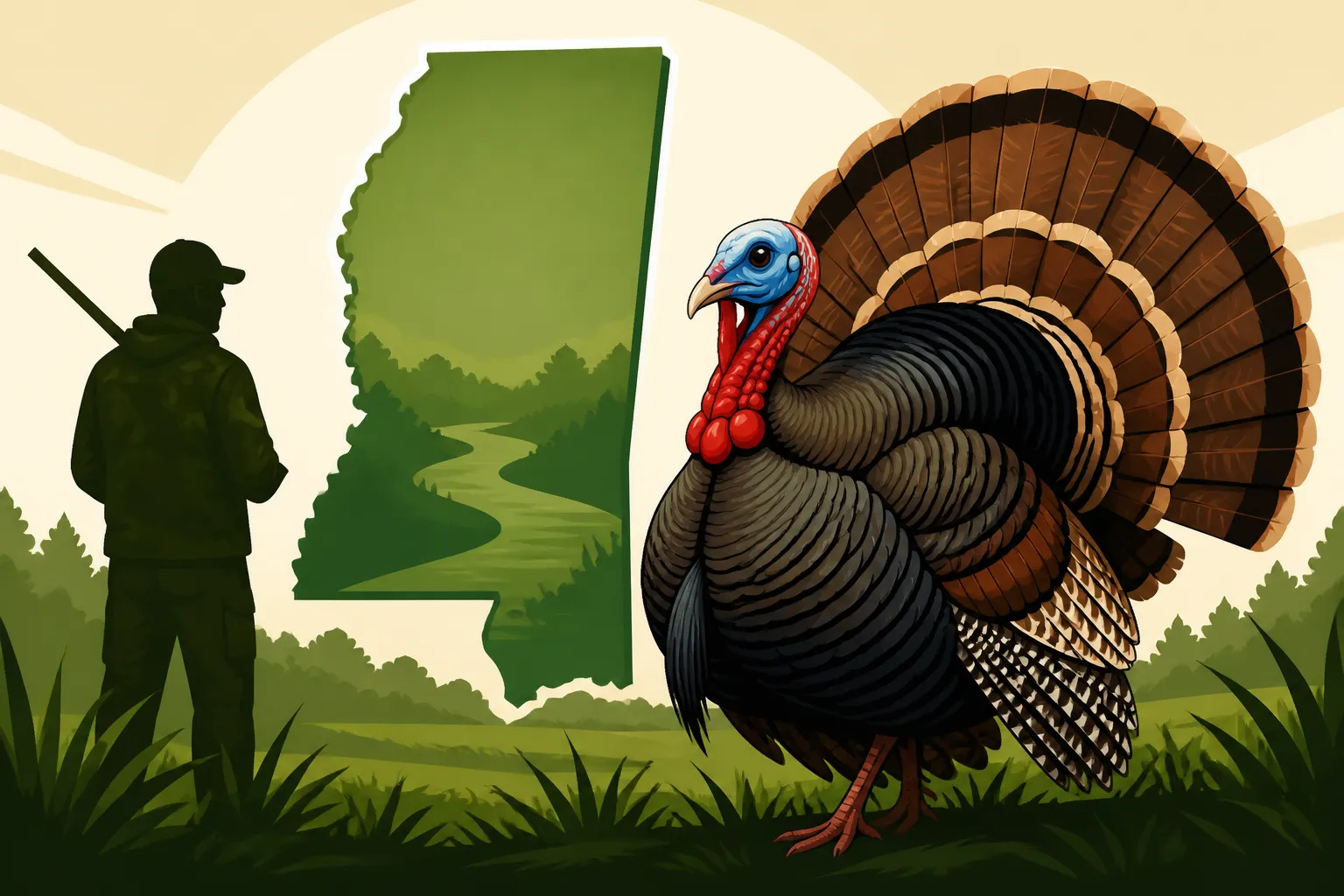
Mississippi Spring Turkey Season Rules
There's nothing quite like the sound of a Mississippi gobbler shattering the morning silence, but figuring out all the rules and regulations for spring turkey season can feel like trying to untangle a mess of fishing line. It’s easy to get frustrated with conflicting information or overlook a small but critical detail that could ruin your hunt. This comprehensive guide is here to cut through the confusion, helping you understand all the ins and outs of Mississippi's spring turkey season rules so you can focus on what really matters: chasing those elusive longbeards.
Understanding Mississippi's Spring Turkey Season Dates
The arrival of spring turkey season in Mississippi is a deeply ingrained tradition for many of us, a time when the woods come alive with the sounds of mating rituals and the promise of a thrilling hunt. But before you even think about putting on your camo and grabbing your calls, you absolutely need to nail down the exact dates for the season. These aren't just suggestions; they're hard rules set by the Mississippi Department of Wildlife, Fisheries, and Parks (MDWFP) to ensure fair chase and sustainable populations. Missing a key date or misinterpreting the calendar can land you in hot water, so let's get it straight.
The Anticipated Statewide Opener and Youth Opportunities
For many seasoned hunters, the statewide opener is like Christmas morning, but with more camouflage and colder mornings. Historically, Mississippi's general spring turkey season usually kicks off in mid-March, a time when the first signs of green are truly starting to pop, and those gobblers are feeling their oats. Imagine waking up before dawn, the air still crisp, making your way to your favorite hardwood bottom, heart thumping with anticipation, knowing that this is it—the day the season officially begins. This initial rush of activity can be some of the most exciting hunting of the year, with birds often more responsive before heavy pressure sets in.
However, it's incredibly important to remember that Mississippi also offers a dedicated youth turkey weekend before the general statewide opener. This is a fantastic opportunity, often the first weekend in March, designed specifically to get younger hunters, typically those 15 and under, out into the woods with a mentor. My own kid still talks about the gobbler he called in during his first youth weekend hunt a few years back – it’s a memory etched in our minds forever. This early window provides less crowded conditions and allows kids to experience the magic of turkey hunting without the added pressure of a full field of adult hunters. It's a critical program for fostering the next generation of conservationists, and mentors play an indispensable role in teaching not just hunting skills but also ethics and respect for the game.
Always double-check the MDWFP's current regulations for the precise dates each year, as they can sometimes shift slightly based on management goals or calendar alignment. You can find all this crucial information on the MDWFP website, or through handy hunting apps like GoHunt which often provide up-to-date season tables. Knowing these dates cold is your first step to a successful and legal season. Don't be that person who shows up a day early or late, especially when the regulations are so readily available.
Season Lengths and Closing Dates Across the State
Once the season kicks off, it’s not an endless party. Mississippi's spring turkey season typically runs for a specific duration, extending well into April and often wrapping up in early May. This allows for a good, solid run of hunting, covering the peak gobbling phases and giving hunters ample opportunity to pursue birds as they go through their breeding cycles. For many, the season feels like a marathon, not a sprint, offering chances to hunt aggressive gobblers early, and then adapting tactics as birds become more educated and breeding patterns shift.
Unlike some states that have different zone-specific dates or staggered openers, Mississippi generally operates on a statewide spring turkey season framework. This means that if the opener is March 15th, it's March 15th whether you're hunting in the Delta, the Piney Woods, or the Loess Bluffs. This consistency makes it a bit simpler for hunters, as you don't have to fret about crossing unit boundaries and accidentally violating different season dates. However, it’s always prudent to confirm the specific closing date for the current year. I’ve heard countless tales of hunters who pushed it right up to the wire, only to realize the season had closed the day before, leaving them with a valid but untagged bird – a heartbreaking and illegal situation.
While the statewide dates are consistent, it’s absolutely paramount to remember that individual Wildlife Management Areas (WMAs) and some National Forests may have their own specific season dates or shorter windows within the statewide framework. Some WMAs might open later, close earlier, or even require special quota permits for certain periods, especially for high-demand hunts. Never assume WMA rules are identical to statewide rules. If you're planning a trip to a public area, always, always consult the specific WMA regulations available on the MDWFP website. A quick search for " When Mississippi's Spring Turkey Season Opens " will typically bring you right to the most current MDWFP Turkey Program page where you can drill down into the details for the specific year, ensuring your season planning is perfectly aligned with the law.
Mississippi's Turkey Bag Limits and How to Stay Legal
Understanding the season dates is just the first hurdle. The next, equally critical, piece of the puzzle for a responsible turkey hunter in Mississippi is knowing the bag limits. These limits aren't arbitrary; they are carefully crafted by wildlife biologists to ensure the long-term health and sustainability of the state's wild turkey population. Think of them as the rules of the game that keep us all in the field, enjoying the gobblers for years to come. Violating bag limits is not only illegal but also directly harms conservation efforts, so let's make sure you're clear on the specifics.
Daily and Seasonal Limits for Adult Hunters
For adult hunters during Mississippi’s spring turkey season, there are very clear cut daily and seasonal bag limits you need to adhere to. Typically, the daily limit is one gobbler or male turkey. This means that once you’ve successfully harvested a legal bird for the day, your turkey hunting is done until the next day. I remember one season when I called in two birds practically at the same time; it was thrilling, but I knew I could only take one, no matter how tempting it was to double up. Ethical hunting dictates that once that first bird is down, you’re done for the day’s turkey hunt.
Beyond the daily limit, there’s also a seasonal limit, which generally allows adult hunters to harvest up to three gobblers or male turkeys over the entire course of the spring season. This three-bird limit is a generous one, offering plenty of opportunity for dedicated hunters. However, there’s usually a crucial caveat: you can only harvest one gobbler per day, even if your seasonal limit isn't met. It’s not a "three birds whenever you want" free-for-all. This structure spreads out the harvest pressure and encourages hunters to spend more time in the woods, appreciating the entire experience rather than just rushing to fill a limit.
A "legal" bird in Mississippi spring turkey season almost exclusively refers to a gobbler or male turkey. While some states have "bearded hen" seasons, Mississippi's focus in spring is on the male birds, which are identifiable by their tell-tale beards (though some hens do grow beards, they are typically protected in the spring). Understanding these specifics is critical. Make sure you can positively identify a gobbler before pulling the trigger. Misidentifying a bird can lead to an illegal harvest and potentially harm the reproductive capacity of the flock. For the precise breakdown, check the official MDWFP regulations for " Mississippi Adult Turkey Bag Limit " each year; it’s your definitive source for the most current rules.
Special Youth Turkey Bag Limit Rules
Mississippi has long recognized the importance of getting young people involved in hunting, and the youth turkey season is a fantastic example of that commitment. For youth hunters aged 15 and under, there are often special bag limits that can be a little different from the adult general season rules, especially during the dedicated youth weekend. This usually means that a youth hunter might be allowed a specific number of gobblers during that special youth weekend, sometimes counting towards or separate from their overall season limit, depending on the year's specific regulations.
The idea behind these youth-specific rules is to maximize the chances for young hunters to have a successful and memorable experience. By offering a dedicated weekend before the general opener, and sometimes a slightly adjusted bag limit, it helps alleviate some of the competitive pressure and allows youth to focus on the hunt itself, often with a higher chance of encountering less-pressured birds. Mentorship is key here; an adult mentor, who is legally licensed but not hunting themselves, guides the youth hunter, teaching them about calling, concealment, and shot placement. This structured environment ensures safety and proper ethical conduct, laying a strong foundation for future hunting endeavors.
It’s crucial for both the youth hunter and their adult mentor to fully understand these specific youth regulations. The rules might dictate how many birds can be taken during the youth-only weekend, and how those birds factor into the youth's total seasonal bag limit. For instance, a youth might have a higher daily limit on their designated youth weekend but still be subject to the statewide seasonal limit. Always consult the MDWFP's official literature for the current year's " Mississippi Youth Turkey Bag Limit " to ensure you're completely compliant. These experiences are vital for building a love for the outdoors, and adhering to the rules helps ensure those opportunities continue for generations to come.
Essential Licenses and Stamps for Turkey Season
Just like you wouldn't head out on the highway without a driver's license, you absolutely cannot step into the Mississippi woods to hunt turkey without the proper licenses and stamps. It's not just a formality; it's a legal requirement and, more importantly, your contribution to wildlife conservation. The fees collected from these licenses and stamps directly fund the management programs that ensure healthy turkey populations, habitat protection, and vital enforcement efforts. Skimping on this step is a non-starter and can lead to hefty fines and a ruined hunt, so let's make sure you've got all your ducks—or rather, gobblers—in a row.
Required Hunting Licenses for Residents and Non-Residents
The foundation of legal hunting in Mississippi starts with your basic hunting license. For Mississippi residents, the most common and comprehensive option is the "All-Game Hunting & Fishing License" or, even better, the "Resident Sportsman's License." The Sportsman's License is a fan favorite because it typically covers hunting, freshwater fishing, and even a saltwater fishing privilege, including all the various required stamps and permits for game like turkey, waterfowl, and even a deer permit. It’s often the most cost-effective choice if you plan on pursuing multiple species throughout the year. Imagine buying one license and knowing you’re covered for deer season, turkey season, and a fishing trip on the Gulf Coast – it’s convenience at its best.
Non-residents, however, have a slightly different set of requirements and options. If you're coming from out of state to experience Mississippi's incredible turkey hunting, you'll generally need a "Non-Resident All-Game Hunting License." This covers all huntable game species. Additionally, non-residents often have options for shorter-term licenses, such as a "Seven-Day Non-Resident All-Game Hunting License." This can be a great choice if you're only planning a quick trip and don't need a full annual license. Remember, prices for non-resident licenses are considerably higher than resident ones, which is standard practice across most states to help offset the local conservation costs for those who don't contribute via state taxes. Always verify " Mississippi Nonresident License Options " before your trip to ensure you select the correct permit for your specific hunting plans.
You can purchase all required licenses and permits conveniently online through the MDWFP website, via their official mobile app, or in person at various license agents across the state, such as sporting goods stores or bait shops. For those who like to be super organized, many online platforms, including resources like GoHunt, often provide direct links or guides to help you navigate the MDWFP's licensing portal. It’s always best to purchase your license well in advance of your hunt to avoid any last-minute technical glitches or delays, especially if you plan to hunt on opening weekend when online systems might experience heavier traffic. Make sure to carry proof of your license, whether a physical copy or a digital version on your phone, whenever you're afield.
The Mandatory Wild Turkey Stamp
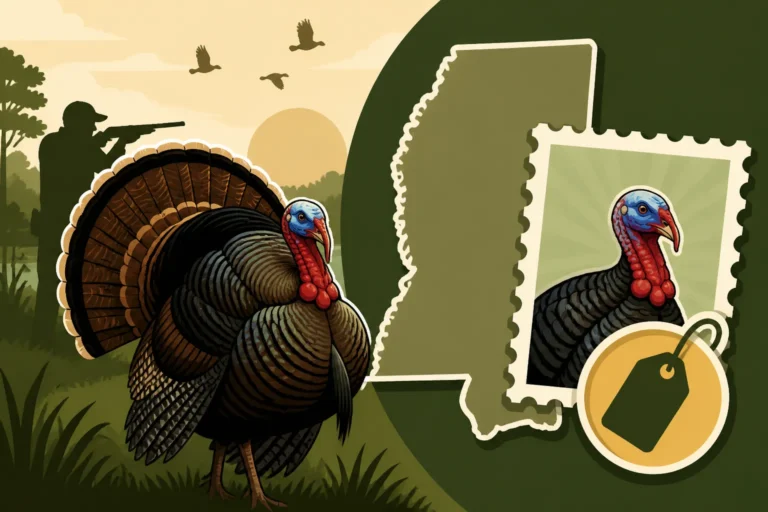
A few years back, Mississippi introduced a new requirement for turkey hunters: the Wild Turkey Stamp. This wasn't just another hoop to jump through; it was a strategic move by the MDWFP to generate dedicated funding specifically for wild turkey research, habitat management, and conservation efforts across the state. The thinking was simple: the hunters who benefit most directly from healthy turkey populations should contribute directly to their well-being. It’s a dedicated revenue stream that goes straight back into the resource we all love to pursue.
Essentially, if you plan to hunt wild turkeys in Mississippi, you are required to purchase and possess this stamp in addition to your regular hunting license. There might be some very specific exceptions, such as for certain youth hunters or those hunting on their own private land under specific exemptions, but for the vast majority of turkey hunters, this stamp is mandatory. Even if you hold a comprehensive Sportsman's License, you may still need to add this specific turkey stamp, so don't assume your all-inclusive license automatically covers it without checking. This stamp usually comes at a modest cost, a small price to pay for the significant benefits it provides to the turkey resource.
The introduction of " The New Mississippi Wild Turkey Stamp " was met with broad support from the hunting community, recognizing the importance of targeted funding for a species that faces various challenges, from habitat loss to disease. The funds derived from this stamp are often allocated to projects like habitat restoration, controlled burns to improve forage, population monitoring, and research into turkey health and reproduction. You can typically purchase the Wild Turkey Stamp at the same time and through the same channels as your other hunting licenses – online, via the MDWFP app, or from authorized license agents. Make sure you don't forget it, as enforcement officers are well aware of this relatively new requirement.
Legal Means of Take and Equipment Guidelines
You've got your licenses, you know the dates and bag limits, but what can you actually use to hunt those Mississippi gobblers? It’s not a free-for-all; specific regulations govern the types of firearms, ammunition, and other equipment allowed during spring turkey season. These rules are in place for safety, fair chase, and to ensure responsible hunting practices. Understanding these guidelines before you hit the woods will prevent any accidental violations and ensure your equipment is legal and effective.
Approved Firearms and Ammunition
When it comes to shotguns for turkey hunting in Mississippi, you have a pretty wide range of options, which is great for hunters who might already own different gauges. Legally, you're permitted to use 10, 12, 16, 20 gauge, and even .410 bore shotguns. This flexibility means you can hunt effectively whether you prefer the heavy hitting power of a 10 gauge or the lighter recoil and maneuverability of a .410, which has become incredibly popular with the advent of modern tungsten super shot (TSS) loads. The key is knowing what you're shooting and ensuring it's legal for the situation.
Ammunition is where things get a bit more specific. For spring turkey, there are strict limitations on shot size. You generally cannot use shot larger than #2 lead or #4 steel (or other approved non-toxic shot). This means no buckshot or slugs; turkey hunting is about precise patterns of small shot. Modern turkey loads, especially those featuring tungsten or bismuth alloys, have revolutionized turkey hunting, allowing for tighter patterns and extended ranges, even from smaller gauges. Many hunters spend considerable time patterning their shotguns with different chokes and loads to find the most effective combination for their specific gun, a practice I highly recommend. You want a dense, consistent pattern at the distances you anticipate shooting to ensure a clean, ethical harvest.
It’s worth noting that while shotguns are the primary weapon of choice for turkey season, using rifles for turkey hunting is generally not permitted in Mississippi. This is a crucial distinction and a common pitfall for new hunters or those unfamiliar with specific game regulations. Turkey hunting is a shotgun (or archery) sport in spring, focusing on close-range, patterned shots. Always consult the MDWFP regulations for the current year to confirm any specific updates or clarifications on legal firearms.
Archery Equipment for Spring Turkeys
For those who crave an extra challenge and a truly intimate hunting experience, archery equipment is absolutely a legal and thrilling way to hunt spring turkeys in Mississippi. Whether you prefer the precision of a compound bow, the traditional feel of a recurve, or the mechanical advantage of a crossbow, all are generally permitted. Bowhunting adds an entirely different layer of skill and stealth to the hunt, often requiring hunters to get significantly closer to their quarry for an ethical shot. I’ve known several bowhunters who swear by the adrenaline rush of having a gobbler strutting within spitting distance, an experience often unmatched by shotgun hunting.
When it comes to broadheads, the regulations typically require that they be broadheads with at least two sharpened edges. Expandable or mechanical broadheads are usually allowed, as long as they meet the minimum cutting diameter when open. Arrow fletching, shaft material, and draw weight are generally left to the hunter’s discretion, but the emphasis is always on using equipment that can deliver a humane kill. For instance, you wouldn't want to use a target arrow with a field tip; it simply wouldn't be effective or ethical for dispatching a turkey. Remember that hunting with a bow requires a heightened sense of awareness and meticulous attention to detail, from shot placement to tracking. For more general insights into bowhunting opportunities, you might want to look at " Bowhunting Mississippi's Long Archery Season " for deer, but the principles of ethical shot placement and equipment choices translate well to turkey hunting too.
Crossbows, once a point of contention in many states, have become widely accepted in Mississippi's spring turkey season. This opens up archery hunting to a broader demographic, including those who may not have the physical strength or mobility to draw a traditional bow, or simply prefer the rifle-like accuracy of a crossbow. Just like with traditional bows, broadhead requirements apply, and hunters should practice extensively with their chosen setup to ensure proficiency at various ranges. No matter your choice of archery equipment, the goal remains the same: a clean, ethical harvest through careful planning, precise execution, and a deep respect for the animal.
Decoy Use and Calling Regulations
Decoys and calls are often the bread and butter of spring turkey hunting, integral tools for luring in a wary gobbler. In Mississippi, the use of artificial decoys is absolutely permitted and, in many cases, highly effective. You can deploy various types of decoys, from full-strut gobblers and jakes to contented hens, or a combination of them. The strategic placement of these decoys can often be the difference between a successful hunt and going home empty-handed. For instance, setting up a breeding pair of hen and jake decoys can often infuriate a dominant gobbler into charging right into your setup, providing thrilling close-range action.
However, there’s a critical distinction to be made: live decoys are strictly prohibited. You cannot use a live turkey to attract other turkeys, for obvious reasons pertaining to fair chase and disease transmission. Stick to the lifelike plastic, foam, or fabric versions that are readily available at any sporting goods store. When using decoys, always consider safety; never set up a decoy between yourself and another hunter, and always be absolutely sure of your target before shooting. For more detailed tips on how to use decoys to your advantage, especially when birds are playing hard-to-get, check out " Decoy Placement for Pressured Mississippi Birds ".
When it comes to calls, Mississippi allows a wide array of non-electronic calling devices. This includes traditional mouth calls (diaphragm calls), slate calls, box calls, pot calls, and wingbone calls – all the classic tools of the trade. Mastering these calls, mimicking the clucks, yelps, purrs, and gobblers of wild turkeys, is a skill honed over many seasons and is one of the most rewarding aspects of turkey hunting. The sound of a gobbler responding to your carefully crafted yelp is pure magic. However, electronic calling devices, which broadcast recorded turkey sounds, are generally not permitted for turkey hunting in Mississippi. This regulation is in place to maintain the challenge and fair chase aspects of the sport, requiring hunters to develop their own calling skills rather than relying on technology. Always be sure to keep your electronic devices, like cell phones, muted and out of sight to avoid any appearance of illegal calling.
General Regulations and Safety Practices
Beyond the specific dates, limits, and equipment, there are overarching general regulations and safety practices that every turkey hunter in Mississippi must adhere to. These rules are designed to ensure public safety, ethical hunting, and respect for both the wildlife and other individuals enjoying the outdoors. Ignoring them isn't just irresponsible; it can lead to dangerous situations and legal repercussions. Let’s go over some of the fundamental guidelines that will keep your spring turkey season safe and enjoyable for everyone.
Hunting Hours and Sunday Hunting Considerations
Timing is everything in turkey hunting, and Mississippi has clear rules on when you can actually be actively hunting. Generally, legal hunting hours for spring turkeys extend from 30 minutes before sunrise until sunset. This window covers the prime times when gobblers are most active, especially in the early mornings when they're still on the roost and eager to sound off. Waking up before dawn, listening for those first distant gobblers, and setting up in the dim pre-light is a quintessential part of the turkey hunting experience. Knowing the precise sunrise and sunset times for your location on any given day is crucial for staying legal; a simple weather app on your phone can often provide this information.
When it comes to Sunday hunting, Mississippi has a relatively progressive stance compared to some other states. In Mississippi, hunting is generally permissible on Sundays on private land. This is fantastic for many hunters, allowing them more opportunities to get out, especially if they work during the week. However, this general rule often comes with important caveats when it pertains to public lands. Many Wildlife Management Areas (WMAs) and other public hunting areas may have specific restrictions or prohibitions on Sunday hunting, especially during peak seasons or for certain game species. This is often done to manage pressure, provide non-hunting recreational opportunities, or simply align with specific WMA management plans.
Therefore, if you plan to hunt on a Sunday, particularly on public land, you absolutely must check the specific regulations for that particular WMA or National Forest. Never assume that because Sunday hunting is allowed statewide on private land, it's automatically permitted everywhere else. A quick look at the MDWFP WMA regulations booklet or website will clarify any Sunday hunting restrictions. Failing to do so could result in a citation and the forfeiture of your hard-earned gobbler, which is a truly disheartening way to end a weekend hunt.
Blaze Orange Requirements and Exceptions
Safety is paramount in the woods, especially when multiple hunters are out pursuing the same game. In Mississippi, blaze orange (or fluorescent orange) requirements are in place primarily for safety during gun deer season. However, for spring turkey hunting, the rules are slightly different, and it's vital to understand these nuances to avoid both legal issues and dangerous situations. Generally, blaze orange is not required when you are stationary and actively hunting turkeys, such as sitting against a tree, in a ground blind, or while moving to set up your position specifically for turkey hunting. The logic here is that turkeys have excellent eyesight, and bright orange would immediately give away your position, making successful hunting nearly impossible.
Despite this general exception, there are still important safety considerations. If you are moving through the woods to or from your hunting spot, especially on public lands where other hunters might be present, wearing a blaze orange vest or hat is a very good idea. You can shed it once you are in your setup. Similarly, if you are participating in a deer drive or other group hunt where turkeys might also be present, the deer season blaze orange requirements would likely take precedence. The core principle is visibility for human safety versus concealment for hunting. It’s always better to err on the side of caution when it comes to being seen by other hunters.
Ultimately, the best advice is to carry blaze orange with you, even if you don't plan to wear it while actively calling. It can be invaluable if you need to walk out of the woods in low light, if you're tracking a wounded bird, or if you simply encounter other hunters and want to make your presence known. Always be absolutely certain of your target and what is beyond it. Never stalk a turkey call; assume every call you hear is another hunter until you can positively identify a wild bird. Familiarize yourself with the " Mississippi Hunter Education Requirements " which instill these critical safety practices in all new hunters.
Wildlife Management Area (WMA) Specific Rules
Hunting on Mississippi's extensive network of Wildlife Management Areas (WMAs) offers incredible public land access and opportunities, but it comes with its own set of rules that often differ significantly from statewide regulations. These WMAs are intensively managed properties, and the specific rules are designed to achieve very particular conservation and recreational goals for that area. This can include anything from unique season dates, adjusted bag limits, special equipment restrictions, or even limitations on vehicle access or camping.
For example, a WMA might have a spring turkey season that opens a week later or closes a week earlier than the statewide season. Some WMAs might impose stricter daily or seasonal bag limits, or even have specific regulations on what type of shot you can use or whether certain calls are allowed. Many of the most popular WMAs, especially those known for trophy deer or high turkey populations, often implement quota hunts or drawing systems for prime hunting periods, requiring hunters to apply in advance and be drawn for a permit. I've known several hunters who were disappointed because they simply showed up to a WMA on opening day only to find out it was a quota hunt they hadn't applied for.
Before you ever set foot on a WMA, you must consult the specific regulations booklet or webpage for that particular WMA. The MDWFP provides detailed information for each WMA, often updated annually, outlining all the special rules. A Mississippi WMA permit is also required to hunt most of these public lands, in addition to your regular hunting license and turkey stamp. This permit helps fund the maintenance and management of these vital public resources. Ignoring these specific WMA rules is a common mistake and can lead to immediate citations and the loss of hunting privileges. Always be proactive and informed; tools like GoHunt or the MDWFP's mapping applications can help you locate WMAs and find their respective rules. It’s also wise to check for " Mississippi WMA Permit Requirement " to make sure you have everything you need.
Reporting Your Turkey Harvest: It's the Law!
Once you've successfully tagged a gobbler, the hunt isn't truly over until you've completed one more critical step: reporting your harvest. In Mississippi, this isn't just a suggestion or a polite request; it's a mandatory legal requirement for all deer and turkey harvests. Failing to report your turkey can lead to fines and legal issues, but more importantly, it means valuable data is lost, hindering the state's ability to effectively manage its wild turkey populations. Let's dig into why this is so important and how easily you can fulfill this obligation.
Mandatory Reporting Requirements
Imagine the MDWFP biologists trying to manage a complex ecosystem without accurate data on harvest numbers. It would be like a doctor trying to diagnose a patient without any tests or symptoms. That's why mandatory harvest reporting is so vital for wildlife management in Mississippi. Every time a hunter reports a deer or turkey, it contributes to a larger dataset that helps biologists understand population trends, harvest pressure, and overall turkey health. This data is critical for making informed decisions about future season dates, bag limits, and conservation strategies.
For spring turkey, the requirement is typically that you must report your harvest by midnight on the day you take the bird. This immediate reporting ensures the data is as fresh and accurate as possible. It also prevents hunters from "stockpiling" unreported harvests or accidentally forgetting to report a bird taken days ago. I've seen firsthand how meticulously the MDWFP uses this data, correlating it with factors like poult-to-hen ratios and habitat conditions to paint a clear picture of the state's turkey health. So, when you report your bird, you're not just complying with the law; you're actively participating in the scientific management of the resource.
Failure to report a turkey harvest is a violation of Mississippi hunting regulations and can result in significant penalties, including fines and potentially the loss of hunting privileges. It's simply not worth the risk. Many hunters, myself included, make it a habit to report their bird as soon as they've taken care of field dressing and before leaving the woods, often while the memory of the gobbler is still fresh. It takes only a few minutes and ensures you're completely compliant. For an official breakdown, you should refer to " Mississippi Turkey Checking Requirements " on the MDWFP site.
Using the MDWFP App for Easy Reporting
Gone are the days of having to find a physical check station or call in your harvest from a landline (unless you're really out in the boonies!). The MDWFP has streamlined the harvest reporting process with its official mobile application, available for both Apple and Android devices. This app is an absolute game-changer for convenience, allowing you to report your turkey harvest right from your phone, often while you're still in the field.
The process is incredibly user-friendly. Once you've downloaded and logged into the app, you simply select "Report a Harvest," choose "Turkey" as the species, and then input a few key pieces of information. This usually includes the date of harvest, the county where the turkey was taken, and some details about the bird itself, such as whether it was a male or female (in spring, almost always male), its spur length, and beard length. Some apps even allow you to upload a photo of your harvest, which is a nice touch for your personal hunting journal, though not always mandatory for the report itself.
The benefits of using the app are numerous. It's fast, it's efficient, and it minimizes the chances of forgetting to report. Plus, the app often contains other useful features, such as mapping tools that can show WMA boundaries, license purchasing options, and even information on CWD zones. I personally find it indispensable for planning hunts and staying organized. Make sure your phone is charged and you have service (or can access it once you leave the woods) to ensure a smooth reporting experience. The ease of use means there's really no excuse not to report your gobbler promptly.
The Role of Harvest Data in Turkey Management
Every single turkey harvest report submitted by hunters contributes to a massive database that forms the backbone of Mississippi's wild turkey management strategy. This data isn't just collected; it's meticulously analyzed by MDWFP biologists to identify trends, pinpoint areas of concern, and evaluate the effectiveness of current management practices. For instance, consistent reporting helps them track the annual harvest success rates, understand the age structure of harvested gobblers, and see how harvest numbers correlate with factors like weather patterns or habitat changes. Without this ground-level input from hunters, their ability to make precise and effective decisions would be severely hampered.
This information directly influences crucial decisions that impact future hunting opportunities. If harvest data, combined with population surveys (like poult-to-hen ratios), indicates a decline in turkey numbers in a specific region, biologists might recommend adjusting season lengths or bag limits in that area to allow the population to rebound. Conversely, if populations are robust and healthy, they might maintain or even expand hunting opportunities. This adaptive management approach, driven by hunter-provided data, is how we ensure that wild turkeys continue to thrive across Mississippi for generations to come.
So, when you report your turkey, you're not just fulfilling a legal obligation; you're playing an active and vital role in the conservation of a cherished game species. Your few minutes spent with the MDWFP app contribute to a much larger effort to sustain the " Mississippi Turkey Population Trends " and ensure that future generations can experience the same thrilling spring mornings you do. It's a direct way to give back to the resource and reinforce the hunter-conservationist ethic that is so critical to our heritage.
Overcoming Common Turkey Hunting Challenges
Spring turkey hunting in Mississippi, as exhilarating as it is, is rarely a cakewalk. These birds are notoriously smart, wary, and often influenced by a myriad of factors that can make even the most seasoned hunter pull their hair out. From birds that suddenly go silent to navigating crowded public lands, there are a host of common frustrations that we all face. Understanding these challenges and having a few strategies up your sleeve can make all the difference between a frustrating morning and a successful one.
Dealing with Pressured Birds and Silent Gobblers
There's nothing quite as disheartening as a gobbler that was hot on the roost, sounding off every minute, only to "fly down silent" and disappear without a peep. Or perhaps you've encountered those birds on public land that have been called to relentlessly, becoming "call shy" and refusing to give you the time of day. These pressured birds and silent gobblers are a common frustration for many Mississippi turkey hunters, especially as the season progresses or on heavily hunted areas. It's easy to feel like you're doing something wrong, but often, it's just the nature of hunting educated wild turkeys.
When birds go quiet, or seem to be hanging up just out of range, it's a sign that your conventional calling strategy might need an adjustment. Often, less is more. Instead of aggressive, loud yelps, try softer clucks, purrs, or subtle tree yelps. Sometimes, a completely silent approach can even be effective, allowing the birds to come to you on their own terms. Another tactic is to reposition. If a bird is hanging up across a creek or field edge, sometimes a stealthy move to cut off its likely travel path can put you in a better position. Patience, above all, is your greatest virtue when dealing with these wary birds.
For those truly stubborn birds, or when you’re facing significant hunting pressure, embracing a more dynamic approach can be incredibly effective. Consider trying " Run-and-Gun Turkey Tactics on Public Land ," where you cover a lot of ground, stopping frequently to call, and moving quickly if you don't get an immediate response. This allows you to locate less pressured birds or those willing to commit. Alternatively, sometimes focusing on overlooked terrain, like small woodlots or creek bottoms that other hunters pass by, can yield surprising results with less-pressured gobblers.
Navigating Public Land and Finding Solitude
Mississippi offers a fantastic amount of public hunting land, but with that access comes the reality of other hunters, especially during popular seasons like spring turkey. Nothing deflates the mood faster than hearing another hunter's call echoing through your chosen spot, or worse, having someone walk right into your setup. The competition for prime real estate, particularly on opening day or prime weekends, can be intense and often frustrating. It's a common complaint, and it's valid – finding solitude and an unpressured bird on public land requires strategy. For more general advice on dealing with crowds, you might find " Hunting Pressure on Mississippi Public Land " helpful.
To counter the crowds, advanced scouting is your best friend. Don't just show up on opening day. Use satellite imagery and topographic maps (like those available through GoHunt's robust mapping layers) to identify remote pockets of habitat that might be harder for others to access. Look for areas with difficult terrain, dense cover, or features that create natural bottlenecks or funnels that might hold birds away from main trails. The further you're willing to walk, paddle, or even crawl, the higher your chances of finding unpressured birds and a peaceful hunt.
Beyond scouting, adapting your hunting schedule can also work wonders. While opening day is exciting, the woods often become significantly quieter during weekdays. If your schedule allows, hunting mid-week can provide a dramatically different experience with far less competition. Furthermore, don't overlook areas that might not be considered "prime" turkey habitat by the masses. Sometimes small, overlooked woodlots or neglected corners of a WMA can hold a few birds that are rarely bothered. Being creative and willing to explore off the beaten path is essential for success on public lands.
Weather Woes and Adapting Your Approach
Mississippi spring weather is nothing if not unpredictable. One day you're sweating in short sleeves, the next you're shivering in a cold front, or worse, battling a relentless downpour. These sudden shifts in temperature, persistent rain, or strong winds can dramatically impact turkey behavior and make hunting conditions challenging, to say the least. It's a constant frustration for hunters who meticulously plan their trips only to have Mother Nature throw a wrench in the works.
Heavy rain can effectively shut down gobbling activity, making it nearly impossible to locate birds. Turkeys tend to seek shelter in dense cover during prolonged precipitation, and their willingness to respond to calls diminishes significantly. In these conditions, patience becomes even more critical. Consider hunting during breaks in the weather, or focusing on areas with good natural cover that birds might gravitate towards. Foggy mornings can also dampen gobbling, requiring you to be extra vigilant and rely more on visual scouting.
Conversely, sudden cold snaps can make birds less active and less vocal, as their primary focus shifts from breeding to simply staying warm. Strong winds are another nemesis, making it difficult to hear distant gobblers and for turkeys to hear your calls. In windy conditions, focus on sheltered areas like creek bottoms, lee sides of ridges, or thick timber where the sound is less dissipated. Being adaptable in your gear choices is also key: always pack rain gear, layers for warmth, and consider waterproof boots. By anticipating these weather challenges and being willing to adjust your strategy, you can still find success even when Mother Nature isn't cooperating.
Mississippi Spring Turkey Season Snapshot
| Category | Detail | Notes |
|---|---|---|
| Season Dates | Mid-March to Early May (Statewide) | Check MDWFP annually for exact dates; Youth Weekend typically early March. |
| Bag Limits | 1 Gobbler/Male Turkey per day; 3 Gobblers/Male Turkeys per season | Youth limits may vary; positive ID required. |
| Licenses | Resident Sportsman's / All-Game License | Non-resident All-Game or 7-day license required. |
| Stamps | Mandatory Wild Turkey Stamp | Required for all turkey hunters (some youth exemptions may apply). |
| Firearms | Shotguns (10, 12, 16, 20 ga, .410 bore) | Shot size #2 lead or #4 steel (or smaller) only. Rifles NOT permitted. |
| Archery | Compound bows, recurves, crossbows with legal broadheads | Broadheads must have at least 2 sharpened edges. |
| Calls/Decoys | Artificial decoys and non-electronic calls permitted | Live decoys and electronic calls are PROHIBITED. |
| Hunting Hours | 30 minutes before sunrise to sunset | Strict adherence required. |
| Sunday Hunting | Permitted on private land; check WMA rules for public land restrictions | WMAs often have specific Sunday closures. |
| Reporting | Mandatory: By midnight on day of harvest via MDWFP app/website | Crucial for turkey management and legal compliance. |
| WMA Rules | Varies significantly by WMA; always check specific WMA regulations | A WMA permit is usually required in addition to other licenses. |
Disclaimer
The information provided in this guide is for general informational purposes only and is not intended as legal advice. Hunting regulations, seasons, and licensing requirements in Mississippi are subject to change by the Mississippi Department of Wildlife, Fisheries, and Parks (MDWFP). While every effort has been made to ensure accuracy, hunters are solely responsible for consulting the most current and official MDWFP regulations prior to engaging in any hunting activities. Always refer to the official MDWFP website or their annual hunting guide for the definitive and up-to-date rules.