Finding Which Deer Unit Your County Sits In
It can be incredibly frustrating to plan a deer hunt in Mississippi, only to realize you’re not entirely sure which deer management unit your favorite hunting spot falls into. With varying season dates, bag limits, and antler restrictions, a simple misstep can turn a great hunt into a legal headache. This guide is here to untangle that confusion, walking you through exactly how to determine your county's deer unit and understand what that means for your hunting strategy.
The Importance of Knowing Your Mississippi Deer Unit
Mississippi is a diverse state, from the fertile Delta to the rolling Hills and the pine-laden Southeast. Because of this varied landscape and differing deer populations, the Mississippi Department of Wildlife, Fisheries, and Parks (MDWFP) has implemented a system of deer management units. These aren't just arbitrary lines on a map; they are critical to ensuring healthy deer herds and providing optimal hunting opportunities across the state.
Why Unit Boundaries Dictate Your Hunt
Imagine spending weeks scouting, hanging stands, and burning vacation days, only to find out you've inadvertently hunted during a closed season or harvested a buck that doesn't meet the antler restrictions for that specific area. This nightmare scenario is precisely why understanding deer unit boundaries is non-negotiable for any hunter in Mississippi. The MDWFP sets these boundaries to tailor management strategies to the unique ecological and demographic characteristics of each region. What works for deer management in the rich bottomlands of the Delta might not be appropriate for the rugged terrain of the Hills.
These units dictate everything from the length of your season to the number of deer you can legally harvest. For instance, the opening day for archery season might be different depending on whether you're in the Delta or the Southeast Unit. Similarly, the legal definition of a "legal buck" can vary significantly. This nuanced approach helps distribute hunting pressure, manage population densities, and ultimately contributes to the overall health and quality of Mississippi's deer herd. Without these unit-specific regulations, the state's deer population would be much harder to manage effectively. To get a broader picture of these regulations, you might want to review Mississippi Deer Season Structure Explained as well.
Impact on Season Dates and Bag Limits
The most direct impact of deer unit identification comes down to your hunting calendar and your harvest goals. Each of Mississippi's four primary deer units – Delta, Hills, North Central, and Southeast – operates under its own set of dates for archery, primitive weapon, and gun seasons. This means that an archery hunt you planned for late October might be perfectly legal in one unit but still weeks away from opening in another. It's a logistical puzzle that can easily catch hunters off guard if they don't do their homework.
Beyond season timing, the bag limits for antlered bucks and antlerless deer (does) also fluctuate by unit. Some units might allow a higher antlerless harvest to help control population growth, while others might be more restrictive to promote herd growth or a better buck-to-doe ratio. And then there are the antler restrictions, which often spark the most debate and confusion among hunters. Knowing your unit is the first step to understanding what truly defines a "legal buck" in your hunting area. These specific unit rules are crucial, and we'll dive into more detail on those shortly. It's a lot to keep track of, but it’s essential for a responsible and lawful hunt. You can also explore Mississippi Deer Bag Limit Rules for more detailed information.
Pinpointing Your County's Deer Management Unit
So, how do you actually figure out which unit your hunting land, or the public land you plan to visit, falls into? Thankfully, the MDWFP has made this information accessible, but you still need to know where to look and what tools to use.
Utilizing the MDWFP Official Resources
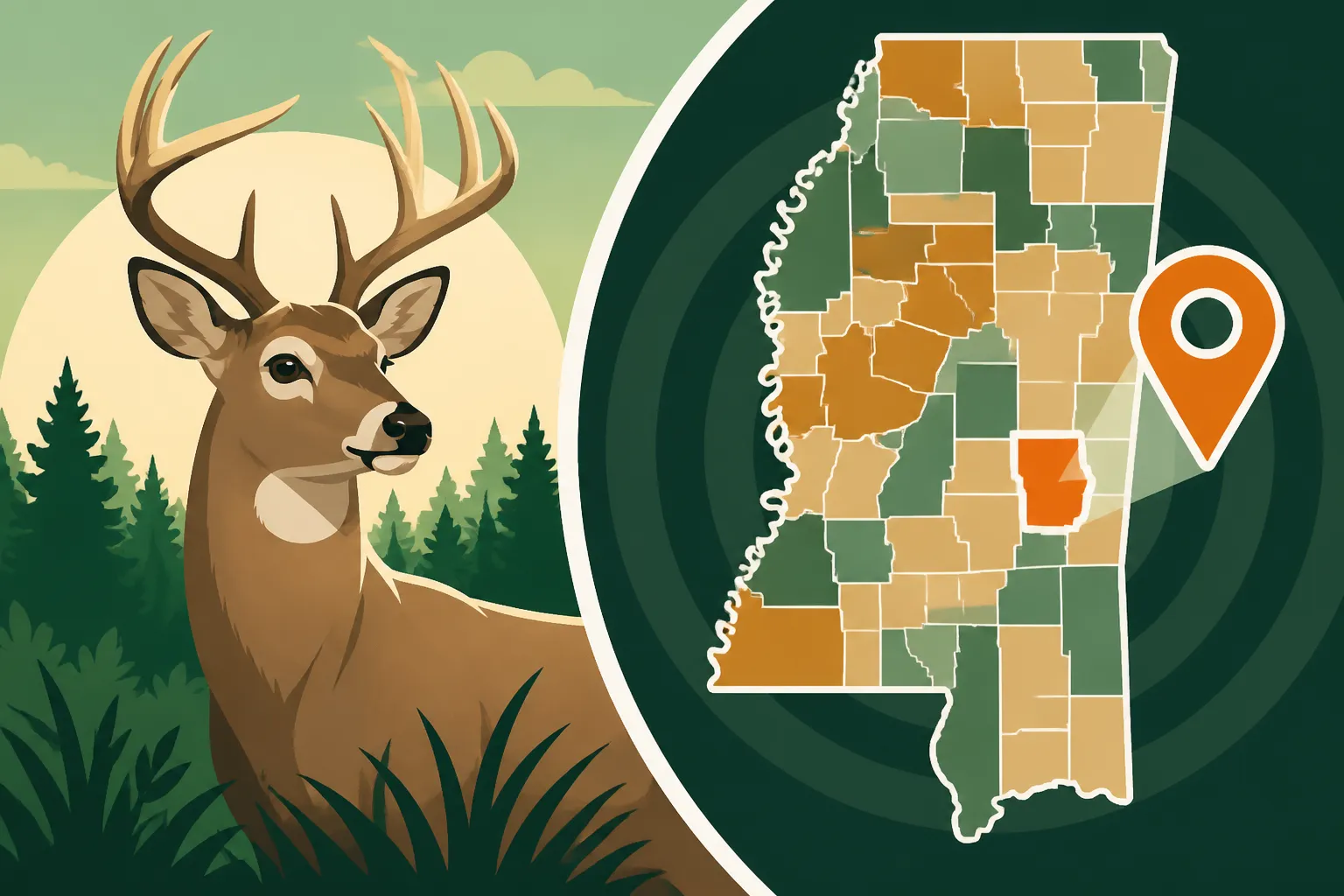
The absolute best and most reliable source for determining your deer unit is the Mississippi Department of Wildlife, Fisheries, and Parks (MDWFP) itself. Their official website is a treasure trove of information, and it should always be your first stop. Head over to the MDWFP website and navigate to the hunting section, specifically looking for deer regulations or maps. You'll usually find a comprehensive map that clearly delineates the boundaries of each deer management unit, often color-coded for easy identification. This map will show you which counties, or sometimes even parts of counties, fall into each unit.
Furthermore, the MDWFP offers a fantastic mobile application. This app is a game-changer for many hunters because it allows you to access regulations, check stations, and, most importantly for this topic, view interactive maps right from your phone. You can often drop a pin on your exact location and see which unit you're in. Just make sure to download the necessary maps beforehand, especially if you plan to hunt in areas with spotty cell service. This functionality is a lifesaver when you're deep in the woods and need to quickly confirm your location relative to a unit boundary. Think of it as your digital hunting companion, an extension of Using the MDWFP Map Tool right in your pocket.
Consulting Digital Mapping Tools and Apps
Beyond the official MDWFP app, many third-party digital mapping tools have become indispensable for hunters. Platforms like GoHunt, for instance, are widely used by hunters across the country to scout, plan, and navigate. GoHunt and similar apps often incorporate public land boundaries, private property lines, and, yes, official hunting unit boundaries. You can typically layer this information over satellite imagery or topographic maps, giving you a detailed visual understanding of where unit lines fall in relation to specific creeks, roads, or timber stands.
The beauty of these advanced mapping tools is their precision. You can zoom in incredibly close, see your GPS coordinates, and know with a high degree of certainty which unit you’re in. Many hunters use GoHunt to visualize their hunting area and identify potential pinch points or transition zones that might straddle a unit line. While these tools are fantastic for planning and on-the-ground navigation, it’s always a good practice to cross-reference with the official MDWFP map to ensure everything aligns perfectly. Technology makes our lives easier, but a quick double-check provides peace of mind. Learning to effectively use these tools for pre-season analysis is also key for Scouting Mississippi Public Land Before Season.
Physical Maps and Local Knowledge
While digital tools offer unparalleled convenience, never underestimate the value of a good old-fashioned physical map and, perhaps even more importantly, local knowledge. County plat books or detailed topographical maps can still provide excellent context, especially in areas where unit lines follow geographical features like major rivers, highways, or power lines. Keeping a printed map in your pack can be a great backup if your electronics fail or run out of battery.
Beyond maps, sometimes the best resource is another hunter who has been chasing deer in that area for decades. Local game wardens are also incredibly knowledgeable and approachable resources. They live and breathe these regulations and can often clarify confusing boundary areas or answer specific questions about where a certain creek or road divides two units. Don't be shy about striking up a conversation at a local diner, bait shop, or even during a casual encounter at a public land entrance. Just remember, while local insight is invaluable, always double-check against official MDWFP regulations to ensure you're getting the most current and accurate information.
A Closer Look at Mississippi's Four Deer Units
Mississippi's deer units were established to reflect the distinct ecological regions and deer management needs across the state. Understanding the general characteristics of each can help you not only identify your unit but also anticipate the kind of hunting experience you might have.
The Delta Unit
Ah, the Delta. This unit encompasses the flat, rich alluvial plain of the Mississippi River. Think vast agricultural fields – soybeans, corn, cotton – interspersed with huge tracts of bottomland hardwood timber. The soil here is incredibly fertile, providing abundant nutrition for deer, which is a major reason why this region is famous for producing large-bodied, heavy-antlered bucks. When people talk about Mississippi giants, they're often talking about Delta deer.
Due to the excellent habitat and nutrition, the MDWFP often manages the Delta Unit with specific objectives aimed at promoting buck age structure. This means the antler restrictions can be quite strict. For instance, you’ll typically find rules requiring a minimum 12-inch inside spread or a 15-inch main beam length for a legal buck. These rules are designed to protect younger bucks, allowing them to mature and express their full antler potential. Hunters in this unit often face a learning curve in judging deer, but the reward of a true Delta giant is well worth the effort. Familiarize yourself with Delta Unit Antler Restriction Rules to avoid any misidentification in the field.
The Hills Unit
Moving east from the Delta, you encounter the rolling topography of the Hills Unit. This is a much larger and more geographically diverse region, characterized by mixed pine and hardwood forests, steep ravines, and more varied agricultural practices. Deer populations in the Hills are generally robust, but the habitat can be less consistent than the Delta, leading to differences in deer size and antler quality.
The management philosophy in the Hills Unit often balances trophy potential with hunting opportunity. While antler restrictions are still in place, they are typically less stringent than in the Delta. For example, you might encounter a rule requiring a 10-inch inside spread or a 13-inch main beam for a legal buck. This allows hunters to harvest a broader range of mature bucks while still offering some protection to younger animals. The Hills Unit also covers such a broad area that rut timing can vary significantly from north to south, adding another layer of complexity for hunters. If you're hunting this region, be sure to study Hills and Southeast Unit Antler Restriction Rules carefully.
The North Central Unit
The North Central Unit is a smaller, somewhat transitional area located, as its name suggests, in the north-central part of the state. It often shares characteristics with both the Delta (especially along its western edges) and the Hills Unit. This blend of environments means you might find a mix of agricultural landscapes and more heavily timbered areas. Deer management here tends to reflect this hybrid nature, with regulations that may combine elements from the neighboring units.
Season dates and bag limits in the North Central Unit are specifically tailored to its unique deer population dynamics and hunting pressure. Antler restrictions might align more closely with the Hills Unit's standards, aiming for a balance between harvest and quality. Hunters in this unit need to pay extra attention to the details of the regulations, as it can sometimes be easy to assume rules from a larger, more prominent neighboring unit apply. Always double-check the specifics for the North Central Unit Season Rules to ensure you're in compliance.
The Southeast Unit
Down in the lower portion of Mississippi, stretching towards the Gulf Coast, lies the Southeast Unit. This region is predominantly characterized by pine forests, often interspersed with bottomland swamps and coastal plain habitats. The sandy soils and different forage types here contribute to a distinct deer herd compared to other parts of the state. While deer in this unit may not reach the colossal sizes seen in the Delta, they are plentiful, and the hunting culture is deeply ingrained.
The Southeast Unit often benefits from an extended archery season, providing hunters with more opportunities to get into the woods with a bow. This longer window can be a huge draw for archery enthusiasts. Antler restrictions typically mirror those found in the Hills Unit, focusing on an inside spread or main beam length to ensure bucks have a chance to mature. The terrain and vegetation in the Southeast can present unique hunting challenges and opportunities, favoring still-hunting or stand placement along pine timber edges and creek bottoms. This is also why many hunters prefer Hunting the Extended Southeast Unit Archery Window due to its longer duration.
Here's a quick overview of Mississippi's deer units:
| Deer Unit | General Geography | Key Antler Restriction (Example) | Common Season Nuance |
|---|---|---|---|
| Delta | Flat, fertile bottomland, vast agriculture, big timber | 12-inch inside spread or 15-inch main beam | Typically longer archery season, later rut peak |
| Hills | Rolling hills, mixed pine/hardwood, diverse ag | 10-inch inside spread or 13-inch main beam | Varied rut timing across the unit |
| North Central | Transitional, mixed landscapes, smaller area | Often similar to Hills unit | Specific, sometimes unique, season dates/bag limits |
| Southeast | Pine forests, sandy soils, swamps, coastal plain | 10-inch inside spread or 13-inch main beam | Often a longer archery season |
Note: Antler restrictions are examples and can change annually. Always consult current MDWFP regulations.
Navigating Overlapping Regulations and Special Areas
Just when you think you've got the deer units down, Mississippi adds a few more layers of regulations that can feel like trying to solve a Rubik's Cube in the dark. It's crucial to understand that while deer units provide the foundational rules, other specific designations can overlay or even supersede them.
WMAs and National Forests
One of the biggest areas of potential confusion arises when hunting on Wildlife Management Areas (WMAs) or National Forests within Mississippi. These public lands are managed intensively, often with specific goals that necessitate regulations beyond the general deer unit rules. For example, if you're hunting in the Delta National Forest, which is located squarely within the Delta Deer Unit, you still need to consult the specific WMA regulations for that area. These WMA rules might have different season dates, specific legal weapon types, daily draw requirements, or even unique antler restrictions that are stricter or different from the overall Delta Unit rules.
It's not uncommon for a WMA to have an "archery-only" period when the surrounding unit might allow primitive weapons or even gun hunting. You might also find special youth hunts or quota hunts that require advance application and selection. The important takeaway here is that unit rules are your baseline, but WMA or National Forest regulations always take precedence when you're on those specific public lands. Always check the MDWFP's WMA section and look for the specific WMA you intend to hunt. This principle applies whether you're at Delta National Forest Hunting, Homochitto National Forest Hunting, or any other public tract. This diligence is what separates a successful, legal hunt from a citation.
CWD Zones and Carcass Movement
Another significant layer of regulation that overlaps with, but is distinct from, deer management units involves Chronic Wasting Disease (CWD) Management Zones. CWD is a serious neurological disease affecting deer, and Mississippi is actively working to monitor and control its spread. When a county or group of counties is designated as a CWD Management Zone, it comes with a host of additional rules that impact hunters, regardless of which deer unit they fall into.
These rules often include mandatory CWD testing for harvested deer, especially during certain periods, and strict carcass movement restrictions. For instance, if you harvest a deer in a CWD zone, you might be prohibited from moving the entire carcass out of that zone. Only deboned meat, clean antlers, or taxidermy-ready hides might be allowed to cross the boundary. These regulations are critical for preventing the spread of the disease and are enforced with serious penalties. While CWD zones are defined by county lines, much like deer units, they represent an additional set of responsibilities for hunters. You'll need to know both your deer unit and if your hunting county is within a CWD zone to ensure full compliance. Always check the latest MDWFP information on Mississippi's Chronic Wasting Disease Zones and be aware of rules such as Moving a Deer Carcass Out of a CWD Zone.
Knowing your deer unit in Mississippi is more than just a good idea; it's a fundamental requirement for a legal and enjoyable hunting season. By utilizing the official MDWFP resources, leveraging modern mapping tools like GoHunt, and cross-referencing with local knowledge, you can confidently identify your unit and plan your hunt according to the correct regulations. Remember that WMA rules and CWD zones add extra layers, so always stay informed and verify current regulations before you head afield.
Disclaimer
This article is intended for informational purposes only and does not constitute legal advice. Hunting regulations in Mississippi can change annually. Always consult the official Mississippi Department of Wildlife, Fisheries, and Parks (MDWFP) website or printed regulations for the most current and accurate information before planning or engaging in any hunting activities. Hunters are solely responsible for understanding and complying with all applicable federal, state, and local laws and regulations.