Mississippi Dove Field Baiting Rules
The thrill of dove hunting in Mississippi is a tradition many of us cherish, from the anticipation of opening day to the camaraderie of an evening shoot. But let's be honest, the rules and regulations surrounding dove fields, especially when it comes to baiting, can feel like navigating a minefield. The fear of inadvertently breaking the law or misunderstanding what constitutes a "legal" field is a genuine headache for many hunters. This guide is here to cut through the confusion, offering a clear, realistic breakdown of Mississippi's dove field baiting rules so you can hunt with confidence and peace of mind.
Understanding the Basics of Migratory Bird Baiting Law
Before we even talk about planting sunflowers or broadcasting wheat, it's crucial to understand that dove baiting regulations are primarily set by the federal government, specifically the U.S. Fish and Wildlife Service (USFWS), and then implemented by states like Mississippi. This isn't just a state-level thing; these are federal migratory bird laws, and the penalties for violations can be steep. The core of the law revolves around distinguishing between a "baited area" and areas where doves are simply feeding as a result of "normal agricultural practices." This distinction is where most of the confusion arises.
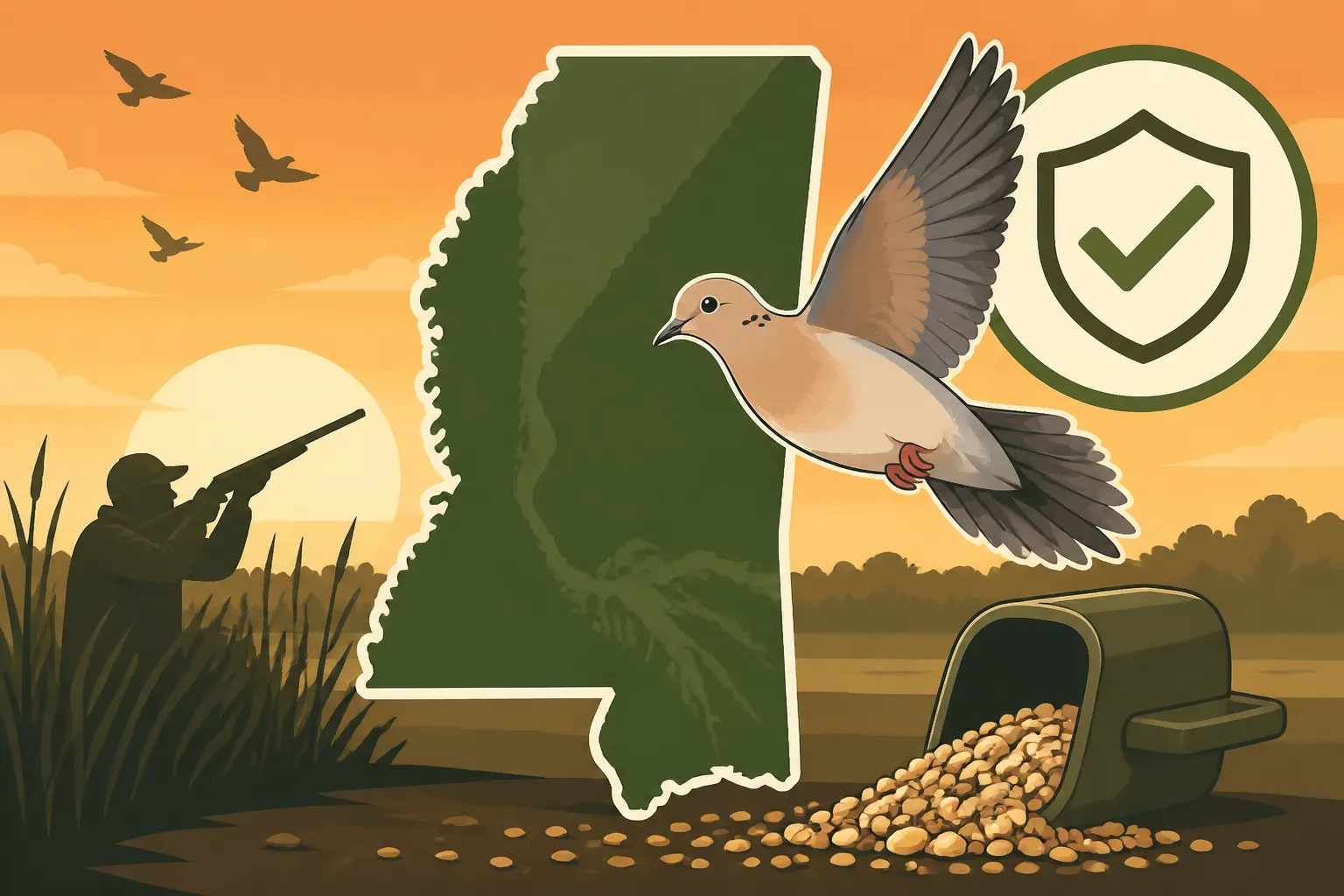
A baited area is essentially any land on which salt, grain, or other feed has been placed, exposed, deposited, distributed, or scattered to attract migratory game birds to, on, or over any areas where hunters are attempting to take them. The key here is the intent to attract birds for the purpose of hunting. This means if you intentionally put out corn or wheat just to draw doves closer to your blind, that's illegal. It's not just about what's on the ground, but how it got there and why. This is a critical nuance that often gets overlooked.
On the other hand, "normal agricultural practices" are perfectly legal. This includes harvesting crops, planting, tilling, or other routine farming activities that might incidentally leave grain on the ground. For instance, if a farmer plants a field of wheat and then harvests it, any grain that falls during the harvest, or is scattered during discing to prepare for a new crop, is considered a natural food source from a normal agricultural operation. Doves are scavengers by nature, and they're going to flock to these natural food sources anyway. The law isn't trying to stop doves from eating; it's trying to stop hunters from artificially concentrating them. Many folks get nervous about Mississippi Dove Season Opening Weekend because they're unsure if their field is compliant, but understanding this fundamental difference is the first step to confidently Working a Dove Field on Opening Day.
Defining "Baited Area" Versus Normal Agricultural Operations
Let's dig a bit deeper into what these terms really mean in a practical sense, because this is where the rubber meets the road. A "baited area" is deliberately created to lure birds. Think about someone scattering a truckload of corn in a field that isn't typically used for corn production, or spreading grain in a thinly planted area of native grasses. This is clearly an attempt to enhance the attractiveness of the area beyond what natural agricultural processes would achieve. The law considers this an unfair advantage, artificially concentrating birds for an easy shoot. It’s not just about hiding the bait; if the grain is there, and it’s not from a normal agricultural process, it’s problematic. The rule extends beyond simply scattering bait directly under your stand. Even if a field is baited 200 yards away and you're hunting within that range, it can still be considered a baited area.
Conversely, "normal agricultural practices" encompass a wide range of activities that farmers undertake for crop production. This includes planting, growing, harvesting, and post-harvest manipulation of crops, provided these actions are consistent with established good farming practices for the region. For example, planting corn for harvest, and then leaving the stalks and any residual grain after combines have run through, is completely fine. Discing a harvested soybean field to incorporate stubble and control weeds, which might scatter some beans, is also legitimate. The key is that the grain is exposed as a result of a routine, legitimate farming operation, not primarily to attract birds for hunting. It sounds simple, but the devil is in the details.
The "Attraction" Standard and Hunter Responsibility
The law doesn't just focus on the actions of the landowner; it places a significant burden on the hunter. As a hunter, you are legally responsible for ensuring that the area you are hunting is not a baited area. This means you can't just take a landowner's word for it. You have a duty to inspect the field and satisfy yourself that it's legal. Ignorance of the law or ignorance of the field's condition is generally not an acceptable defense. This "attraction" standard implies that if grain or feed is present and it could attract birds, and it's not from a normal agricultural practice, it's considered baiting.
Think of it this way: if you walk into a field and see piles of corn or neatly spread wheat in an area where no crop was grown, or if the grain appears freshly scattered without any signs of harvesting or planting equipment, that should raise a huge red flag. Even if you didn't put it there, hunting over it could get you into serious trouble. This is why thorough scouting is so vital. You need to really understand the history of the field, what was planted, when it was harvested, and how it was manipulated. Some folks find tools like GoHunt really useful for scouting public land boundaries and understanding potential access points, but for private dove fields, it's about getting boots on the ground and asking the right questions from the landowner.
What Constitutes a Legal Dove Field in Mississippi
Alright, so what exactly can you do to create a legal, attractive dove field in Mississippi? It all comes back to legitimate agriculture. The USFWS defines "normal agricultural planting, harvesting, or post-harvest manipulation" as the cornerstone of legal dove hunting. This means you can plant crops that doves love, such as sunflowers, millet, wheat, or corn, and then manage them in a way that is consistent with local farming practices. It's about growing food for the birds as part of a legitimate agricultural endeavor, not simply throwing out feed to the birds.
Let's take sunflowers, a classic dove magnet. You can plant a field of sunflowers and allow them to mature. Once the seeds ripen, you can then mow strips or whole sections of the field. The seeds that fall to the ground during this mowing are considered a byproduct of a normal agricultural practice – essentially, a harvest. The doves come in to feed on these naturally fallen seeds. The same goes for millet or wheat. You plant it, let it grow, and then manipulate it (mow, disc, or burn) in a way that farmers would to harvest or prepare the field for the next crop. This releases the seed and provides a smorgasbord for doves.
However, there's a fine line. If you plant sunflowers, then go back and broadcast additional sunflower seeds on top of the mowed areas, that crosses into baiting territory. The key is that the grain on the ground must be from the crop that was grown there. You can't supplement it with external feed. The goal is to simulate a natural feeding environment that results from agricultural operations, not to create an artificial feeding station. This often means carefully timing your mowing or discing operations to coincide with when you want to hunt, making sure the fields are ready. For those interested in optimizing their setup, learning about Setting Up a Dove Field Before Opening Day is absolutely essential to ensure compliance and success.
Allowed Agricultural Practices and Their Nuances
There are several common agricultural practices that are generally permitted for dove fields. These include:
- Growing and Harvesting Crops: Planting, allowing crops like corn, wheat, sorghum, or sunflowers to mature, and then harvesting them. Any grain that falls to the ground naturally during mechanical harvesting is legal.
- Mowing or Shredding: Mowing or shredding mature grain crops to make the seeds accessible to doves. This simulates a "harvest" for the birds and is a widely accepted practice.
- Discing or Plowing: After a crop has been harvested or mowed, discing or plowing the field to incorporate residue into the soil is also permitted. This can scatter seeds further, but it's part of soil preparation for the next crop cycle.
- Burning: In some regions, prescribed burning of certain crops or stubble is a normal agricultural practice. If the burning scatters seeds and is done for legitimate agricultural reasons, it can be legal.
The nuances often come down to the amount of grain and the method of distribution. For instance, if you're discing a field, you shouldn't create excessive piles or windrows of grain that aren't typical of a normal discing operation. The grain should be relatively evenly distributed, mimicking natural fallout. It also matters when these activities occur. Manipulating a crop in the off-season for soil health is one thing; doing it the day before opening day with a suspicious amount of exposed grain can raise eyebrows.
The Importance of "Bona Fide Agricultural Operation"
The concept of a "bona fide agricultural operation" is central to understanding legality. This means the primary purpose of the field must be agriculture, not just hunting. If you plant a tiny patch of sunflowers in the middle of a forest clearing with no other agricultural context, it might be hard to argue it's a "bona fide" agricultural operation. The field should be managed in a manner consistent with what a typical farmer would do for actual crop production or livestock forage.
This also ties into the quantity and type of crop. Are you planting an appropriate amount for the acreage? Is the crop commonly grown in that area of Mississippi? For example, if you have a massive tract of land and only plant a small, isolated food plot, and then heavily manipulate it with additional grain, it might look less like an agricultural operation and more like a deliberate baiting effort. Conversely, if you have hundreds of acres of corn or soybeans and only manipulate a few rows or a small section for doves, it's much easier to demonstrate a legitimate agricultural intent. This is where tools like GoHunt can help you scout and analyze satellite imagery to understand the broader agricultural landscape around your planned hunting area, ensuring your small plot fits within a legitimate farming context.
Table: Legal vs. Illegal Dove Field Scenarios
| Scenario | Legality | Explanation |
|---|---|---|
| Legal Scenarios | ||
| Mowing strips of a mature sunflower field for harvest. | Legal | Seeds fall as a result of a normal agricultural practice (simulated harvest). |
| Discing a harvested wheat field to prepare for next crop, scattering residual grain. | Legal | Grain is exposed as a result of routine soil preparation after a legitimate harvest. |
| Planting standing corn for livestock, leaving stalks after harvest. | Legal | Doves feed on natural waste grain from a bona fide agricultural harvest. |
| Planting millet, allowing it to mature, then bush-hogging it to drop seeds. | Legal | Seeds are from a grown crop and made available through normal field manipulation. |
| Illegal Scenarios | ||
| Scattering shelled corn or wheat in a field not from that field's growth. | Illegal | Introduces external feed for attraction; constitutes baiting. |
| Broadcasting additional sunflower seeds onto a mowed sunflower field. | Illegal | Supplementing the natural crop with external seeds, even if the same type, is considered baiting. |
| Creating large piles of grain (e.g., corn, millet) in a field. | Illegal | Deliberate concentration of feed beyond what would occur from normal agricultural operations. |
| Hunting within 200 yards of a known baited area, even if you didn't bait it. | Illegal (for the hunter) | Hunter is responsible for ensuring the hunting area is not baited. "Reasonable person" standard applies. |
| Planting a small food plot without any intent of harvest or agricultural use, only to attract birds. | Potentially Illegal (depending on intent/scale) | If it doesn't qualify as a "bona fide agricultural operation," and its sole purpose is attraction, it could be deemed baiting. |
Common Pitfalls and How to Avoid Them
Even with the best intentions, it's incredibly easy to accidentally create a baited area. Many violations happen not because hunters are trying to cheat, but because they simply don't understand the intricate details of the law. One of the biggest traps is the concept of "sweetening" a field. This is when hunters or landowners might plant a legal crop, manage it correctly, but then, perhaps out of eagerness or misunderstanding, they scatter a little extra grain, like a bag of wheat or millet, to "make it better" or "ensure the birds come in." This seemingly innocent act immediately turns a legal field into a baited one. Remember, any grain on the ground must be a direct result of the crop grown there and manipulated through normal agricultural practices. Adding anything from an outside source is a no-go.
Another common pitfall is misunderstanding the 10-day rule and the 200-yard rule. The 10-day rule states that an area remains baited for 10 days after all bait has been completely removed. This means if a field was illegally baited, you can't just clean it up and hunt it the next day. You have to wait a full 10 days. The 200-yard rule is also crucial: you cannot hunt migratory game birds within 200 yards of a baited area. So, even if your stand isn't directly over the bait, if you're within 200 yards, you're still hunting a baited area, and you're liable. This means scouting isn't just about your field; it's about what's happening on neighboring properties, too. You might want to consider the overall Mississippi Dove Season Bag Limit as well, because getting a limit over a questionable field isn't worth the risk.
Inadvertent Baiting Scenarios
Let's look at some real-life scenarios that often lead to inadvertent baiting:
- Too Much Waste Grain: A farmer harvests a cornfield. Instead of just letting the natural amount of waste grain fall, they intentionally adjust the combine to drop an excessive amount of kernels, far more than what would be typical for an efficient harvest. While technically from the "harvested crop," the intent and the excessive nature of the waste could lead an enforcement officer to deem it intentional baiting.
- Improper Crop Manipulation: You plant millet, let it mature, and then instead of mowing it, you just broadcast bags of millet over the standing crop. This is a clear violation because the new seed is not from the natural breakdown of the standing crop. Or, you mow a field, but then you rake the cut material into distinct piles, making grain much more accessible in concentrated spots than would naturally occur.
- Feeder Spills: If there's a deer feeder nearby, and corn or protein pellets spill out onto the ground where doves are feeding, that could potentially constitute a baited area for doves if they are being attracted to it. Even if the feeder is for deer, if it's attracting doves, and you're hunting within 200 yards, you could be in violation. This requires vigilance and a broad awareness of your surroundings.
- "Sweet Spots" and Isolated Piles: Even in a legally prepared field, if you go in and create a small, isolated pile of seeds or scratch grain in a particular spot, perhaps to draw doves closer to a specific blind, that is considered baiting. The distribution of accessible grain should be consistent with how it would naturally fall or be scattered during a legitimate agricultural process. When you're Pass-Shooting Doves Over a Water Hole, you need to be sure that water hole isn't also acting as an inadvertently baited spot due to runoff or spills from a nearby food source.
Hunter Due Diligence and Responsibility
As a hunter, your primary defense against a baiting charge is demonstrating due diligence. This means you must make a reasonable effort to inspect your hunting area for bait. What's "reasonable"? It means walking the field, observing the ground, looking for suspicious concentrations of grain, uncharacteristic piles, or signs of fresh scattering. If you see something that looks out of place, ask questions. If you're unsure, it's better to err on the side of caution and find another spot.
Don't rely solely on the landowner's assurance, especially if you're hunting a new property. Take the time to understand the agricultural history of the specific fields you plan to hunt. Ask about planting dates, harvest methods, and any manipulation tactics. If you're using a mapping tool like GoHunt, you can often look at historical satellite imagery to get a sense of crop rotation and field use over time, which can help confirm a landowner's story about their "normal agricultural practices." This proactive approach not only keeps you legal but also makes you a more informed and ethical hunter.
Navigating Regulations and Seeking Clarity
The regulations surrounding dove field baiting can be complex, and honestly, they change sometimes, or interpretations can evolve. The best way to ensure you're on the right side of the law is to proactively seek clarity from the official sources. The Mississippi Department of Wildlife, Fisheries, and Parks (MDWFP) and the U.S. Fish and Wildlife Service (USFWS) are your go-to authorities. They want hunters to be compliant, and they provide resources to help.
Don't be afraid to reach out to a local conservation officer or the MDWFP district office with specific questions about your field. It's much better to ask for an opinion before you hunt than to face an investigation afterward. In some cases, if you have a particularly unique situation or want absolute certainty, you can even request an on-site inspection by a USFWS agent, though this is usually reserved for larger, commercial operations or complex scenarios. Most often, a call to a local game warden with a detailed description of your field management practices will suffice to get some preliminary guidance.
Resources for Hunters from MDWFP and USFWS
Both the MDWFP and USFWS maintain websites with comprehensive guides and FAQs regarding migratory bird hunting regulations. The USFWS "Dove Hunting and Baiting" pamphlet is an invaluable resource that uses clear language and illustrations to explain legal and illegal practices. You can usually find this document on the USFWS website or at MDWFP offices.
Here are some specific resources to leverage:
- MDWFP Website: The official site of the Mississippi Department of Wildlife, Fisheries, and Parks (www.mdwfp.com) offers sections on migratory bird regulations, dove season dates, and contact information for regional offices. Regularly checking this site is crucial for staying current with Mississippi Dove Season Opening Weekend and other important updates.
- USFWS Website: The U.S. Fish and Wildlife Service (www.fws.gov) provides detailed federal migratory bird hunting regulations, including their official interpretation of baiting laws. Look for their "Waterfowl and Dove Hunting Regulations" or specific pamphlets on baiting.
- Local Conservation Officers: Your local game warden is often the best resource for on-the-ground questions. They are familiar with local agricultural practices and can offer advice specific to your area of Mississippi. Don't hesitate to call them with honest questions.
- Hotlines: Some agencies have dedicated hotlines for reporting violations or asking regulatory questions. Check the MDWFP website for any such numbers.
- Hunting Apps: While not official legal resources, apps like GoHunt can help you with the practical aspects of field reconnaissance, such as overlaying property lines, identifying different crop types (via satellite imagery), and marking points of interest where you've seen potential baiting issues. This information can then be used to formulate informed questions for wildlife officials.
When you communicate with officials, be prepared to describe your field in detail: what was planted, when it was planted, how it was harvested or manipulated, and when. Providing photos can also be incredibly helpful. The more transparent and thorough you are, the easier it will be for them to give you accurate guidance.
The "Reasonable Person" Standard and Documentation
Ultimately, in many enforcement situations, the "reasonable person" standard often comes into play. Would a reasonable, informed hunter, having inspected the field, believe it to be legally prepared? This is why your due diligence and documentation are so important. If you've walked the field, asked questions, and maybe even taken photos or kept notes on the field's history, you can build a strong case for having acted responsibly. This doesn't guarantee immunity if a violation occurred, but it demonstrates your intent to comply.
For landowners or hunting clubs, it can be beneficial to keep records of planting dates, crop varieties, harvest methods, and manipulation schedules. This documentation can serve as evidence of a bona fide agricultural operation. If you're working with a land manager or an agricultural consultant, ensure they are also well-versed in migratory bird baiting regulations. It's a shared responsibility to ensure that the fields we hunt are legal and ethical. By taking these steps, you can confidently participate in Mississippi's dove season, whether you're targeting the early Mississippi Dove Season Opening Weekend or Hunting the Second Dove Split in October. Happy hunting, and stay safe and legal out there!
Disclaimer
Please remember that hunting regulations, especially those related to baiting migratory birds, can be complex and subject to change. This guide provides general information and should not be considered legal advice. Always consult the most current regulations published by the Mississippi Department of Wildlife, Fisheries, and Parks (MDWFP) and the U.S. Fish and Wildlife Service (USFWS) or contact a local conservation officer for specific guidance before hunting.