Crop Damage Hogs Cause in the Delta
If you're a farmer, landowner, or just someone who cares about the agricultural backbone of our state, you've likely witnessed firsthand or heard the harrowing tales of rampant feral hog destruction in the Mississippi Delta. These intelligent, prolific invaders aren't just a nuisance; they're a relentless force laying waste to crops, tearing up fields, and costing our economy untold millions. This guide aims to pull back the curtain on the devastating crop damage hogs inflict in the Delta, exploring the economic, environmental, and practical realities faced by those on the front lines.
The Insidious Spread of Feral Hogs in the Mississippi Delta
It feels like one day they were a minor issue, and the next, they were everywhere. The proliferation of feral hogs in the Mississippi Delta isn't some accident; it's a testament to their incredible adaptability, intelligence, and sheer will to survive—and thrive. Understanding their journey to dominance helps frame the colossal problem we're up against.
Historical Context of Hog Proliferation
For centuries, wild hogs, or descendants of domestic swine that escaped captivity, have roamed parts of the South. However, their numbers and range in Mississippi have absolutely exploded over the last few decades. What changed? A combination of factors, really. Many populations originated from escaped domestic pigs, particularly as open-range farming practices declined. Then, in more recent times, intentional releases for hunting purposes, though often illegal and ill-advised, certainly contributed to their spread into new territories. We also saw an increase in their range as forestry practices changed and fragmented habitats, giving them new corridors to move and reproduce.
The Delta, with its rich soils and abundant food sources, became an unwitting perfect storm for them. It’s a flat, fertile region crisscrossed by waterways, offering dense cover along sloughs and ditches, and endless buffet lines in crop fields. Unlike other game animals, feral hogs aren't confined by traditional season dates or bag limits on private land, which means their population growth often outpaces localized hunting efforts. This lack of sustained, coordinated pressure allowed them to establish strongholds, setting the stage for the widespread agricultural damage we see today. If you're wondering How Wild Hogs Spread Across Mississippi, it's a mix of historical happenstance and modern neglect, unfortunately.
Reproductive Prowess and Population Explosion
This is where the real horror story begins for anyone trying to manage these animals. Feral hogs are, quite simply, baby-making machines. They breed year-round, with sows often having two litters of four to twelve piglets each year. And here’s the kicker: gilts (young female hogs) can start breeding as early as six months old. Think about that for a second. A single sow can produce 10-20 offspring in a year, and those offspring can start reproducing themselves before their first birthday. It’s an exponential growth curve that makes trying to "hunt down" the problem feel like trying to empty a swimming pool with a thimble.
This incredible reproductive rate is precisely Why Delta Hogs Reproduce So Fast. In an environment like the Delta, where food is always plentiful and mild winters don't pose significant threats to young, they reach sexual maturity quickly and have high survival rates for their litters. There are virtually no natural predators to keep their numbers in check; a coyote might get a piglet, but an adult sow or boar is a formidable creature. This biological advantage means that even if hunters remove a significant number of hogs, the population can rebound incredibly quickly, making sustained control efforts absolutely critical to prevent overwhelming crop damage.
Geographical Extent of the Problem
When we talk about the Mississippi Delta, we're talking about a huge swath of incredibly productive farmland, stretching from the Yazoo River basin west to the Mississippi River itself. This area is characterized by its rich, alluvial soils, making it prime agricultural real estate for row crops like corn, soybeans, rice, and cotton. And it's precisely these crops that draw feral hogs like a magnet.
The problem isn't confined to a few isolated pockets; it's systemic across the entire region. From the northern reaches near Tunica and Coahoma counties, down through Bolivar, Sunflower, Washington, and Issaquena counties, the story is depressingly similar. Fields along the Mississippi River batture lands, the edges of the vast Delta National Forest, and even smaller private tracts tucked away in rural communities are all susceptible. It’s tough to find a Delta farmer who hasn't suffered significant losses. Recent surveys and anecdotal evidence from local extension offices indicate that Which Mississippi Counties Have the Most Hogs often align perfectly with the most fertile agricultural areas of the Delta, illustrating the direct link between hog presence and farming heartlands. It's a landscape perfectly suited for growing crops, and unfortunately, perfectly suited for growing pigs that destroy them.
Quantifying the Devastation: Economic Impact on Agriculture
The sheer scale of financial loss due to feral hogs in Mississippi, and specifically the Delta, is truly staggering. It's not just the immediate damage you see; there's a ripple effect that touches everything from planting decisions to market prices. Farmers are facing an uphill battle against an enemy that literally eats their profits.
Direct Crop Loss from Feeding and Rooting
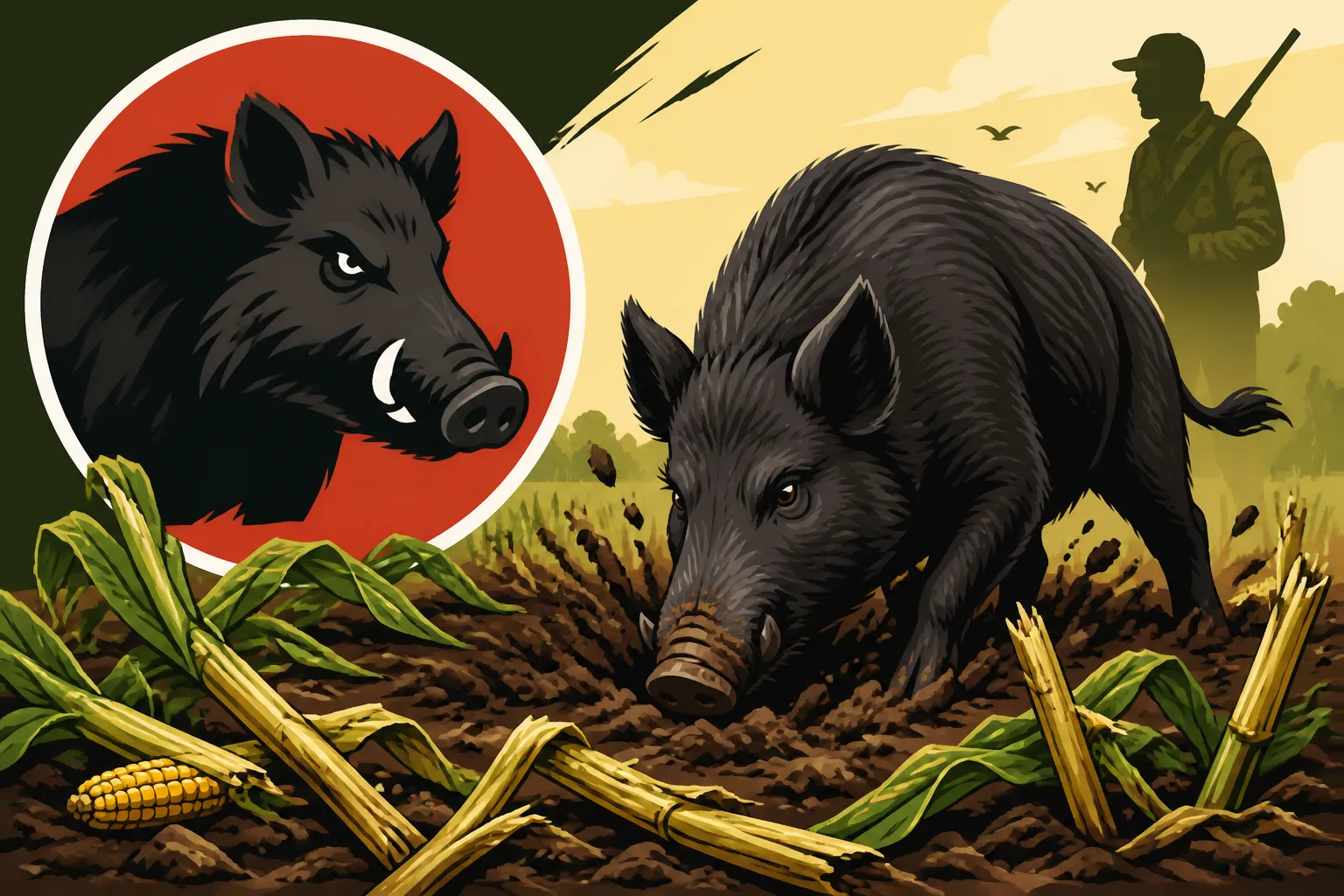
Imagine spending countless hours and significant capital preparing a field, planting your seeds, fertilizing, and praying for rain, only to wake up and see a tornado-like path of destruction through your young corn or soybean crop. This is the reality for many Delta farmers. Feral hogs aren't picky eaters. They'll devour just about anything edible, from tender young sprouts to mature grains. They'll root up planted seeds before they even have a chance to germinate, wiping out entire rows or sections of a field.
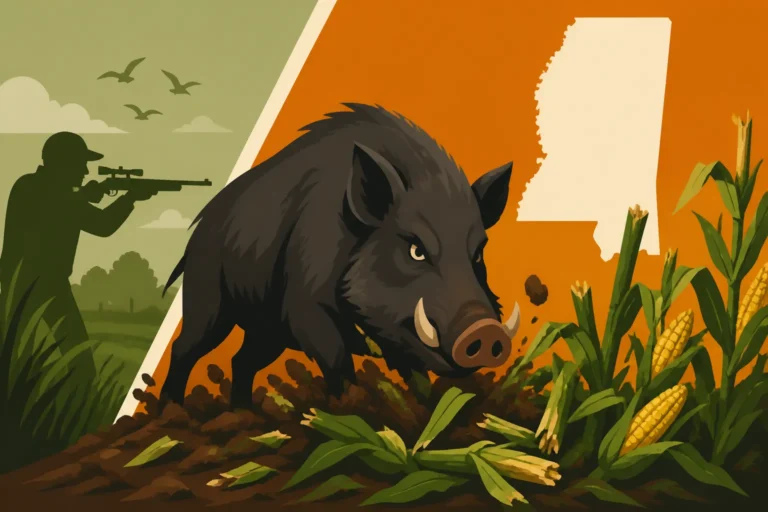
Their rooting behavior, where they use their powerful snouts to dig for tubers, insects, or even just to wallow in the mud, is incredibly destructive. This isn't just cosmetic damage; it physically uproots plants, severs their delicate root systems, and compacts the soil, making it impossible for remaining plants to thrive. In rice fields, they'll tear up levees, causing water to drain prematurely and impacting irrigation. For corn, a favored snack, they’ll chew through stalks to get to the ears, often damaging far more than they actually consume. The cumulative effect across thousands of acres in the Delta translates to millions of dollars in direct crop loss annually. It’s a direct hit to the bottom line, impacting the viability of family farms.
Indirect Costs and Decreased Yields
The damage isn't limited to what the hogs eat or directly destroy. There's a host of indirect costs and hidden losses that add up quickly. Consider the need for replanting. If a field is heavily damaged early in the season, a farmer might have to spend extra money on fuel, seed, and labor to replant. This often pushes back planting dates, which can then lead to decreased yields due to a shorter growing season or less optimal weather conditions later in the year.
Beyond replanting, there are equipment repair costs. Heavily rooted fields leave uneven terrain, often with deep furrows and hidden holes that can damage expensive farm machinery. Planters, cultivators, and harvesters can sustain significant wear and tear, or even catastrophic breakage, when driven over hog-damaged ground. The cost of replacing tires, axles, or other parts, not to mention the downtime during critical seasons, is a substantial burden. Furthermore, the stress and time spent by farmers dealing with hog damage—setting traps, repairing fences, inspecting fields—takes away from other vital farming tasks. These hidden costs, while harder to quantify precisely, are very real and contribute significantly to the financial strain on Delta agriculture.
Financial Strain on Delta Farmers
For many Delta farmers, agriculture is more than just a job; it's a legacy, a way of life passed down through generations. But the relentless assault from feral hogs is pushing some to the brink. Profit margins in farming are already thin, often dictated by unpredictable weather, volatile market prices, and rising input costs. Adding millions of dollars in preventable losses due to hogs can be the difference between a profitable year and one that plunges a farm into debt.
Small and medium-sized family farms are particularly vulnerable. They often lack the resources or scale to absorb significant losses, making them less resilient to the ongoing depredation. The mental and emotional toll on farmers, seeing their hard work literally torn apart by an uncontrollable force, cannot be overstated. It impacts their ability to plan for the future, make investments, and even keep their operations viable. This economic pressure isn't just about money; it’s about the very fabric of rural communities in the Delta, where farming is the primary economic driver. When the farms struggle, local businesses, schools, and services also feel the pinch.
| Type of Damage | Impact on Crops/Farm | Estimated Cost/Consequence |
|---|---|---|
| Rooting | Uproots young plants, exposes roots, creates uneven ground, compacts soil | Direct yield loss, replanting costs, equipment damage, soil degradation |
| Feeding | Consumes seeds, sprouts, mature grains (corn, soybeans, rice) | Direct yield loss, reduced harvestable crop, reduced quality |
| Wallowing | Creates mud holes in fields, damages levees in rice fields, compacts soil | Irrigation problems, soil erosion, equipment stuck, reduced land use |
| Trampling | Flattens standing crops, creates paths through fields | Yield loss, difficult harvesting, crop contamination |
| Fencing/Infrastructure | Breaks down fences, damages irrigation lines, undermines roads | Repair costs, livestock escapes, water waste, access issues |
| Disease Transmission | Potential spread of pseudorabies, brucellosis, E. coli to livestock | Veterinary costs, quarantines, market restrictions, food safety concerns |
Beyond the Crops: Environmental and Infrastructure Damage
While the direct assault on agricultural fields is often the most visible and economically painful consequence of feral hogs, their destructive tendencies extend far beyond crop rows. These animals are wreaking havoc on the delicate ecosystems of the Mississippi Delta and causing significant damage to vital infrastructure, creating a multi-faceted problem that affects everyone, not just farmers.
Habitat Destruction and Water Quality Degradation
The Delta is a unique ecosystem, characterized by its bottomland hardwoods, cypress swamps, and countless sloughs and bayous that feed into the larger river systems. Feral hogs don't respect these boundaries. Their incessant rooting and wallowing turn rich topsoil into churned-up mud. This isn't just unsightly; it destroys native plant communities, alters forest understories, and eliminates crucial habitat for ground-nesting birds, amphibians, and other small mammals. The impact on biodiversity is profound, displacing native species and disrupting natural ecological processes.
Furthermore, this rooting behavior near waterways is a major contributor to water quality degradation. When hogs churn up soil along stream banks, it leads to increased erosion and sedimentation. This sediment then washes into the Delta's numerous bayous, rivers, and drainage ditches. Increased sediment loads can choke out aquatic vegetation, smother fish spawning beds, and reduce water clarity, negatively impacting fish populations and other aquatic life. The waste products of large hog populations also contribute to nutrient loading, leading to algal blooms and reduced oxygen levels in the water, which can be detrimental to aquatic ecosystems. It's a continuous cycle of destruction that fundamentally alters the natural landscape.
Damage to Levees, Roads, and Farm Equipment
The infrastructure of the Delta, already facing challenges from heavy rains and seasonal flooding, is under constant assault from feral hogs. Their rooting isn't just confined to crop fields; they'll dig anywhere they find soft ground, which often includes the critical network of levees, drainage ditches, and rural roads. A hog digging into a levee, especially one protecting a rice field or a river system, can compromise its structural integrity. These breaches can lead to costly water leaks, inefficient irrigation, or even outright failures, causing significant flooding and damage to adjacent lands.
Beyond levees, farm roads and bridges also suffer. The deep ruts and holes created by hog activity make roads impassable, require frequent repairs, and can damage vehicles. Imagine trying to drive a heavy combine or tractor across a field where a sounder of hogs has had a party; it’s a recipe for disaster. We already touched on the damage to farm equipment when hitting these unseen obstacles in fields, but it bears repeating just how costly and frustrating this can be. Repairs to a combine can cost tens of thousands of dollars, not to mention the lost time during a critical harvest window. This damage makes farming operations less efficient, more dangerous, and significantly more expensive.
Disease Transmission Risks to Livestock and Wildlife
This is perhaps one of the most concerning and often unseen threats posed by feral hogs. These animals are carriers for a host of diseases that can easily transmit to domestic livestock, pets, and even native wildlife populations. Diseases like pseudorabies (not harmful to humans but devastating to swine and other mammals), swine brucellosis (which can also infect humans), leptospirosis, and even E. coli are commonly found in feral hog populations.
If a hog carrying brucellosis enters a cattle pasture, it can easily transmit the disease to the herd, leading to abortions, infertility, and significant economic losses for cattle ranchers. For domestic hog operations, the risk of pseudorabies outbreaks is a constant nightmare, potentially leading to herd depopulation and severe financial ruin. The thought of bringing home a prized buck from the Delta and worrying about potential disease transmission is also a growing concern for hunters. The MDWFP and federal agencies spend considerable resources monitoring these diseases, but with such a widespread and free-ranging reservoir of infection, eradication is nearly impossible. This public health and animal health concern is another heavy burden carried by the presence of feral hogs.
Why the Delta is a Hotspot for Hog Havoc
It's one thing to understand the damage; it's another to grasp why the Delta, in particular, seems to be a magnet for these destructive creatures. It boils down to an almost perfect storm of environmental factors and human activity that inadvertently creates an ideal, year-round paradise for hogs.
Ideal Habitat and Food Abundance
Let’s face it, the Mississippi Delta is a land of plenty, and feral hogs absolutely thrive in it. The climate is mild, providing relatively warm winters that reduce mortality rates for piglets, allowing more of them to survive and grow to reproductive age. But the real draw is the food. The Delta's vast agricultural landscape, particularly with its row crops, acts as an enormous, year-round buffet. Young corn, mature corn, soybeans, peanuts, rice – you name it, hogs will eat it. Even crop residues left after harvest provide ample foraging opportunities through the fall and winter.
Beyond the cultivated fields, the natural habitat is also incredibly supportive. The Delta is crisscrossed with numerous creeks, sloughs, and drainage ditches, all lined with dense vegetation, often thick briar patches and cane brakes. This dense cover provides perfect bedding areas, secure farrowing (birthing) sites for sows, and safe travel corridors where they can move largely undetected between feeding areas and cover. These areas offer both shade in the scorching Mississippi summers and protection from the elements during cooler periods. This combination of endless food and impenetrable cover creates a virtually perfect environment for hogs to multiply unchecked.
Lack of Natural Predators and Hunting Pressure
In many ecosystems, natural predators help keep herbivore populations in balance. In the Mississippi Delta, for feral hogs, those predators simply don't exist in any meaningful capacity. While a coyote might occasionally take a very young piglet, they pose no significant threat to juvenile or adult hogs. There are no wolves, no mountain lions, and certainly no bears that regularly prey on adult feral swine in this region. This absence of apex predators means that the primary check on their population falls to humans.
However, human hunting pressure, while sometimes locally effective, often struggles to keep pace with the hogs' reproductive rate across the entire landscape. Landowners and hunters participate in efforts like Trapping Mississippi Feral Hogs or engage in general hunting, but it’s often not enough. Hogs are smart; they quickly learn to avoid areas with high human activity. They become nocturnal or move into dense, inaccessible cover during daylight hours. While the state has liberal regulations—you can hunt hogs year-round on private land without a bag limit, and even engage in activities like Night Hunting Hogs With Lights on Private Land—the sheer scale of the problem and the difficulty in accessing some of their strongholds means that, overall, hunting pressure alone rarely achieves the sustained reduction needed.
Agricultural Practices and Hog Behavior
Ironically, some agricultural practices, while essential for farming, can inadvertently exacerbate the hog problem. Large, contiguous fields of single crops, like corn or soybeans, offer massive, uninterrupted food sources that can sustain huge hog populations. The timing of planting and harvesting provides predictable cycles of food availability, allowing hogs to time their breeding and foraging habits accordingly.
Furthermore, the relatively flat terrain of the Delta and the widespread use of irrigation create abundant water sources and muddy wallows, which hogs absolutely love, especially in the summer. Hogs are highly intelligent and adaptable. They quickly learn where and when to find food, and they communicate this knowledge within their sounders. They’ll adapt their routines to human activity, moving into fields at night when no one is around, or retreating to thick cover during the day. Their behavior is perfectly honed to exploit the agricultural landscape, making them incredibly difficult to predict and control. Understanding their habits, and perhaps leveraging tools like the scouting layers on a GoHunt app to identify potential bedding areas or travel corridors, can be crucial, though many local hunters rely on direct observation and trail cameras to learn these patterns.
Mitigation Challenges and Management Strategies
Dealing with feral hogs isn't just about hunting; it's a complex, multi-faceted challenge that requires a sustained, strategic approach. There's no silver bullet, but a combination of methods, informed by experience and modern science, offers the best hope for reducing their devastating impact.
Limitations of Traditional Hunting Methods
For many hunters, the idea of bagging a wild hog sounds like a fun challenge, and it certainly can be. Traditional hunting with firearms can remove individual hogs, and it definitely contributes to localized control. However, relying solely on recreational hunting, even with liberal season rules for Mississippi Feral Hog Regulations or Mississippi's Year-Round Hog Rule on Private Land, is often insufficient to significantly reduce or control large populations in areas like the Delta.
Here's why: hogs are incredibly intelligent. They quickly learn to associate human presence and gunshots with danger. If you shoot a hog from a sounder, the rest often scatter and become even warier, making them harder to target in the future. Moreover, hunters typically target larger, more visible hogs, which might not be the most effective strategy for population control. To make a real dent, you need to remove a high percentage of the entire sounder, including sows and piglets, which traditional "spot and stalk" or stand hunting rarely achieves. It can also be very difficult to get a clean Shot Placement on a Feral Hog when they are on the move or in thick cover, leading to wounded animals and increased suffering. While every hog removed helps, the numbers game is stacked against traditional hunting as a primary standalone control method.
Trapping: A More Effective, Yet Labor-Intensive Approach
When it comes to effective, large-scale hog removal, trapping is widely considered the most efficient method, especially for those interested in Trapping Mississippi Feral Hogs. The goal of trapping is to capture an entire sounder (a group of hogs) at once, minimizing the chances of educated survivors that become trap-shy. This usually involves large, corral-style traps equipped with sophisticated triggering mechanisms, often remote-controlled or sensor-activated.
The process involves pre-baiting an area for several days or even weeks, using attractive baits like soured corn or specific commercial attractants. The idea is to condition the hogs to enter the trap freely and comfortably, ensuring that the entire sounder is inside before the gate is dropped. This requires patience, observation, and often the use of trail cameras to monitor their activity. Building and maintaining a hog bait site effectively, like learning to manage Building and Freshening a Hog Bait Site, is key to success.
While highly effective, trapping is also incredibly labor-intensive. It requires significant investment in equipment, time for monitoring, baiting, and the physical effort of setting up and checking traps. It’s not something a casual hunter can just do on a whim; it demands a dedicated, systematic approach. But for landowners seriously committed to reducing hog damage, it's often the most impactful strategy.
Emerging Technologies and Coordinated Efforts
The fight against feral hogs is constantly evolving, with new technologies and collaborative efforts offering renewed hope. Thermal imaging and night vision equipment, for example, have revolutionized night hunting by allowing hunters to detect hogs in total darkness. Combining these optics with suppressors allows for the removal of multiple animals from a sounder before they fully disperse, making efforts like guided Night Hunting Hogs With Lights on Private Land far more effective.
The use of drones equipped with thermal cameras is also gaining traction for scouting and locating sounders in vast, dense areas that are otherwise inaccessible. This technology, sometimes explored through resources like GoHunt that focus on advanced hunting strategies and gear, can drastically cut down on time spent searching. Data-driven approaches, where landowners and agencies share information on hog movements and damage, are also becoming more prevalent. Coordinated efforts across multiple land parcels, rather than isolated attempts on single properties, are crucial for long-term success. This might involve communal trapping efforts, organized group drives like Deer Drives With Three or Four Hunters (though for hogs, the goal is often eradication, not just pushing them), or even employing professional hog removal services. The ongoing development of targeted toxicants, though currently heavily regulated and controversial, also represents a potential future tool in the management arsenal. However, without broad cooperation and a willingness to embrace these advanced, often expensive, strategies, the Delta will continue to grapple with the relentless challenge of feral hog damage.
Disclaimer
Please be aware that hunting regulations, license requirements, and wildlife management practices can change. Always consult the official Mississippi Department of Wildlife, Fisheries, and Parks (MDWFP) website or contact them directly for the most current and accurate information before engaging in any hunting or wildlife management activities. This guide provides general information and should not be considered a substitute for official regulations or professional advice.