EHD Die-Offs in Mississippi Deer
There's nothing quite like the crushing feeling of stumbling upon a deer that's clearly suffered, or finding multiple deceased animals in an area you know well. When you invest so much time and passion into understanding Mississippi's deer, seeing them succumb to something you can't control is truly disheartening. This guide is here to shed some light on Epizootic Hemorrhagic Disease, or EHD, a common yet often misunderstood illness that affects our deer herds, helping you understand what it is, how it spreads, and what it means for your hunting experiences across our beautiful state.
What Exactly is EHD and How Does it Spread in Mississippi?
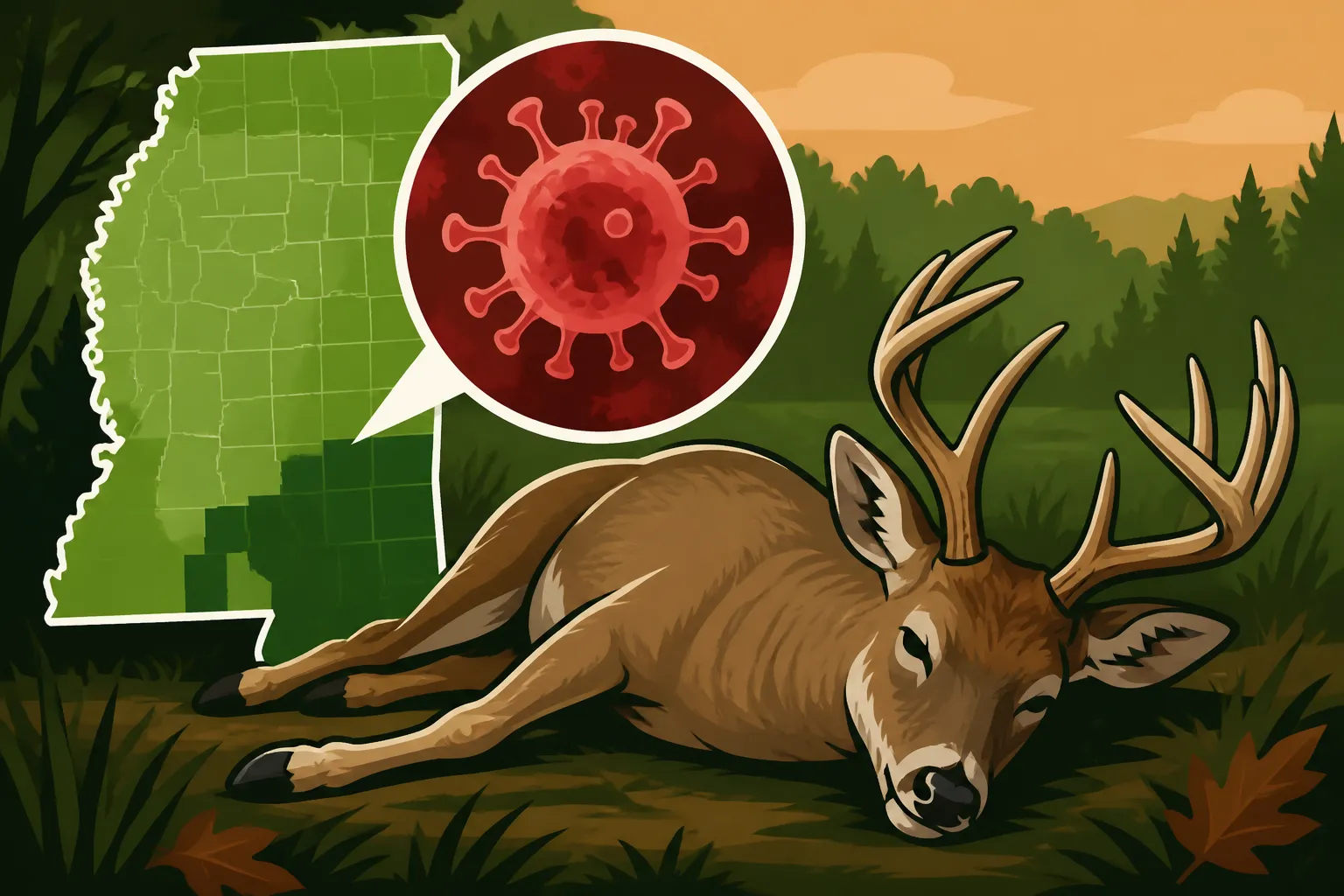
Epizootic Hemorrhagic Disease, or EHD, is a viral disease that can impact white-tailed deer populations throughout Mississippi. Unlike some other diseases that might be a slow burn, EHD can strike with surprising speed, leading to what we often refer to as "die-offs." It’s a natural part of the ecosystem, but that doesn't make it any less concerning when it affects a local herd you cherish. Understanding the basics of this disease is the first step in knowing what you're seeing in the field.
The culprit behind EHD isn't another deer directly, but rather a tiny, biting insect: a midge, often called a "no-see-um" or "gnat." These aren't just any gnats; they are specific species of Culicoides midges that act as vectors, carrying the EHD virus from one deer to another. When an infected midge bites a deer, it transmits the virus, and the cycle continues. This means the disease isn't spread directly from deer to deer through contact, but through these blood-feeding insects.
Mississippi's climate, especially during late summer and early fall, often provides prime conditions for these midges to thrive. Drought conditions, followed by heavy rains, can create stagnant water pools where midge larvae develop rapidly. As these pools dry up, the remaining water concentrates the midge population, increasing the chances of transmission. This is why you often hear about EHD outbreaks peaking in late summer and early autumn when temperatures are still high, and water sources are shrinking. While the presence of EHD is something our wildlife biologists constantly monitor, it's also true that deer can develop some immunity after exposure, leading to varied impacts year to year. For more information on deer health, you might want to review the larger topic of Chronic Wasting Disease Risk in Mississippi.
The EHD Virus and Its Forms
EHD is caused by an orbivirus, which specifically targets the cells lining a deer's blood vessels. This damage leads to internal hemorrhaging, which gives the disease its name. There are actually several serotypes of the EHD virus, and a deer exposed to one type might still be susceptible to another.
There are generally two forms of EHD seen in deer: acute and chronic. The acute form is the most severe and what typically leads to the rapid die-offs we hear about. Deer with the acute form can become severely ill and die within a few days of infection. They'll often develop a high fever, become weak, and exhibit a range of other distressing symptoms. The quick onset and progression of the acute form are what make it so devastating to local populations.
The chronic form, however, is a different beast entirely. Deer that survive the initial acute infection might go on to develop the chronic form of the disease. This is where you'll see more long-term physical effects. These deer might not die directly from the illness, but they can be significantly weakened, making them more susceptible to other diseases, predation, or even the harshness of winter. They might recover eventually, but often carry lasting evidence of their battle with EHD.
Identifying EHD: Signs and Symptoms in Mississippi Deer
Spotting EHD in the field can be tough, especially in its early stages. Deer are masters of disguise when it comes to illness, often retreating to thick cover. However, knowing what to look for can help you identify a potential EHD outbreak and report it to the proper authorities. It's truly heartbreaking to see an animal suffering, and being able to recognize the signs is important for understanding the health of your local herd.
One of the most common acute symptoms is a high fever, which drives infected deer to seek out water sources to cool down. This is why many deer that succumb to EHD are found dead near ponds, streams, or other water bodies. They literally go to water to alleviate the fever, and unfortunately, often die there. Beyond seeking water, you might notice a general lethargy, a deer acting disoriented, or exhibiting unusual fearlessness, almost like they’re in a daze.
As the disease progresses, more overt physical symptoms appear. Look for swelling of the head, neck, tongue, and eyelids. Their tongues might appear blueish. You might also see hemorrhages (bleeding) on the mucous membranes, such as inside the mouth or on the eyes. In later stages, deer can develop sores or ulcers in their mouths, and their hooves may even slough off, meaning they become detached or fall away. This severe hoof damage is characteristic of the chronic form of the disease if the deer survives the initial acute stage. Staggering, difficulty breathing, and a loss of appetite are also common. While EHD shares some generalized symptoms with other illnesses, these specific signs, especially the swelling and hemorrhaging, are strong indicators. This kind of observation can be useful when you're Scouting Mississippi Public Land Before Season.
Distinguishing EHD from Other Ailments
It's easy to get concerned when you see a sick or dead deer, and naturally, one's mind might jump to the worst-case scenario, like Chronic Wasting Disease (CWD). However, it's crucial to understand the differences between EHD and other conditions that can affect Mississippi deer.
| Characteristic | Epizootic Hemorrhagic Disease (EHD) | Chronic Wasting Disease (CWD) | Starvation/Malnutrition | Injuries (e.g., from vehicles, fights) |
|---|---|---|---|---|
| Cause | Virus, transmitted by biting midges | Prion disease, transmitted deer-to-deer | Lack of sufficient food/poor forage | Physical trauma |
| Onset | Acute (rapid, often days); Chronic (prolonged effects) | Chronic (slow, progressive, months to years) | Gradual over weeks/months | Acute (sudden) |
| Seasonal Pattern | Late summer/early fall (midge activity) | No specific seasonal pattern | Late winter/early spring (food scarcity) | Any time |
| Key Symptoms | High fever, swelling (head, neck, tongue), hemorrhages, seeking water, sloughing hooves (chronic) | Weight loss, abnormal behavior (stumbling, drooling, head tilt), excessive thirst/urination | Emaciation, dull coat, lethargy | Obvious wounds, broken bones, limping |
| Mortality | Can be high locally (acute form), variable | Always fatal | Can be fatal, especially for fawns/old deer | Variable, can be fatal |
| Location Found | Often near water sources | Anywhere, often in groups | Anywhere, especially in areas with poor habitat | Roadsides, near fences, woods |
| Hunter Safety | No human health risk (do not consume sick deer, but healthy deer are fine) | No definitive human health risk known, but consumption of infected meat is not recommended | Meat is safe if animal is otherwise healthy | Meat is safe if animal is otherwise healthy and not spoiled |
One of the biggest distinctions is how quickly EHD can sweep through an area, causing multiple deer deaths over a relatively short period, often concentrated around water sources. CWD, on the other hand, is a much slower, progressive neurological disease, and deer suffering from it typically waste away over months, showing symptoms like extreme weight loss, drooling, and abnormal behavior. While both are serious for deer, the immediate threat and transmission methods are very different. You can find more information on CWD in the article, Mississippi's Chronic Wasting Disease Zones.
The Impact of EHD on Mississippi Deer Populations and Hunting
EHD outbreaks can have a noticeable, sometimes devastating, impact on local deer populations, and by extension, on hunting opportunities. It’s important to remember that EHD tends to be quite localized. While one county might experience a significant die-off, a neighboring county might see very little impact. This makes it a challenge for hunters who might be seeing very different conditions across the state. Even within a specific unit, like those discussed in Mississippi's Four Deer Management Units, impacts can vary.
When an acute EHD outbreak hits an area, mortality rates can be alarmingly high for that specific localized herd. Fawns and older deer tend to be more susceptible, but deer of all ages can be affected. A severe outbreak can drastically reduce the number of deer in a particular hunting spot, which is a tough pill to swallow for anyone who has invested time and effort into managing or scouting that land. It means fewer deer seen, fewer deer harvested, and sometimes, a visible decline in the overall herd health for a year or two.
However, it's not all doom and gloom. Deer populations are incredibly resilient. While a severe outbreak can certainly depress numbers in the short term, herds often rebound surprisingly quickly, especially with good habitat and sound management practices. The natural cycle of immunity also plays a role. Deer that survive an outbreak often develop antibodies that protect them from that specific serotype of the virus in the future, meaning subsequent outbreaks might not be as severe in the same population. This natural resilience is a testament to the hardiness of our Mississippi deer.
Short-Term and Long-Term Effects on Hunter Success
In the immediate aftermath of a significant EHD die-off, hunters in the affected area will almost certainly experience a tougher season. Fewer deer simply mean fewer opportunities. You might spend more time in the stand without seeing the usual number of animals, and trophy buck sightings might be down as well. This can be incredibly frustrating, especially if you had high hopes for a particular season or a specific hunting spot.
For those planning their hunts, tools like GoHunt can be useful for scouting and understanding potential habitat changes, even if real-time EHD data isn't something directly integrated. After an EHD event, a hunter might use such tools to identify areas with less dense populations or focus on scouting unimpacted pockets of timber. You might also notice a shift in the age structure of the herd in affected areas, with fewer older deer if the outbreak was particularly hard on mature animals.
Over the long term, however, the picture often brightens. Given a few years, a healthy habitat, and mild EHD seasons, the deer population can bounce back. Fawns born in subsequent years fill the void, and the herd gradually rebuilds. In fact, some wildlife biologists suggest that EHD can, in some ways, act as a natural population control, helping to keep deer numbers in balance with available habitat in areas where populations might otherwise become too dense. While it's a painful process to witness, it underscores the dynamic nature of wildlife populations. Understanding the overall Mississippi Deer Population Estimate helps put these localized events into perspective.
What Hunters Can Do: Reporting and Safety
When it comes to EHD, there's no magic bullet for prevention or cure in the wild. We can't vaccinate wild deer, nor can we treat them. However, as responsible hunters and stewards of the land, there are definitely things we can do to help our state wildlife agencies monitor outbreaks and ensure safety. Your observations in the field are incredibly valuable.
The most important thing a hunter can do is report any suspected EHD cases to the Mississippi Department of Wildlife, Fisheries, and Parks (MDWFP). If you find sick or dead deer exhibiting the symptoms we discussed – especially multiple animals near water sources – don't hesitate to reach out to them. They track these reports to understand the scope and spread of the disease, which helps them better manage our deer resources. Reporting assists in mapping affected areas and evaluating the overall health of the statewide herd. You can typically find contact information for your local wildlife agency online. The internal link, Reporting a Sick Animal in Mississippi, provides more detail on how to do this effectively.
As for safety, it’s generally advised to avoid handling any deer that appears sick. While EHD is not known to be transmissible to humans, it’s always wise to exercise caution with any visibly ill animal. When it comes to venison from a healthy-looking deer, even if it came from an area that experienced an EHD outbreak, the meat is safe to consume. The virus does not affect humans. However, if a deer you harvest shows any signs of illness or abnormality when field dressing, it's best to err on the side of caution and discard the meat. Always fully cook venison, as you would any wild game, to ensure safety.
Field Practices and Scouting After an Outbreak
After an EHD outbreak, your hunting strategies might need some adjustment. Instead of packing up your gear for the season, think about how you can adapt. First, consider giving heavily impacted areas a break, if possible. Focusing your efforts on areas that show less evidence of an outbreak can be more productive. This might mean doing some extra scouting, using tools like GoHunt to analyze habitat and access points, to find new pockets of deer.
Water sources are always critical for deer, but even more so during and after EHD. Deer are drawn to water when sick, but healthy deer also need reliable water. Understanding local water sources and how they fluctuate can give you an edge. Pay attention to changes in deer trails and feeding patterns, as the remaining deer might shift their routines. Remember, the goal is always to pursue healthy game, and making informed decisions based on observed herd health is a cornerstone of ethical hunting. Staying informed about Mississippi Deer Harvest Records for your unit can also give you a broader sense of population trends.
It's natural to feel discouraged by EHD die-offs, but the resilience of Mississippi's deer population is truly remarkable. By understanding the disease, reporting observations, and adjusting your strategies, you can continue to be an effective and ethical hunter, playing a vital role in monitoring and appreciating our state's incredible wildlife resources.
Disclaimer
This article is for general informational purposes only and does not constitute professional advice. Laws, prices and regulations vary by location and change over time. Consult a qualified professional for guidance on your specific situation.