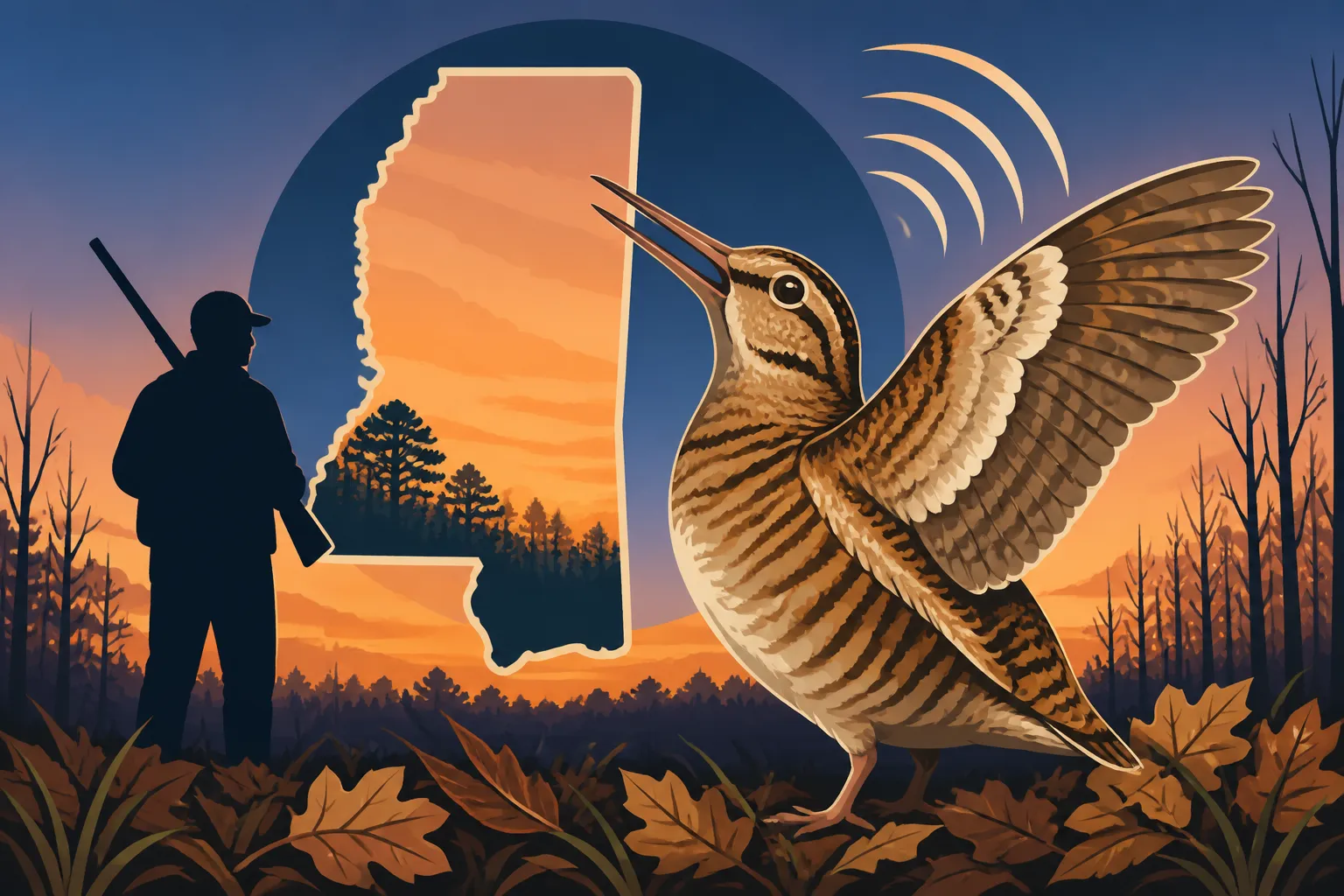
Mississippi Woodcock Singing Ground Surveys
Hunting woodcock in Mississippi, affectionately known as timberdoodles, can feel like chasing ghosts through the thickets. These migratory birds are elusive, their presence often fleeting, and understanding their population dynamics is crucial for both conservation and successful hunting seasons. This guide will take a deep dive into Mississippi's woodcock singing ground surveys, explaining what they are, how they're conducted, and how the invaluable data they collect helps shape hunting opportunities and ensures these unique birds thrive for generations to come.
What Are Woodcock Singing Ground Surveys?
Woodcock singing ground surveys are a critical component of migratory bird management across their range, and Mississippi plays an important role in this larger effort. For many hunters, the woodcock is a bird of mystery, often encountered by accident while pursuing other game. But for wildlife biologists, these surveys are a foundational tool for tracking population trends and ensuring sustainable hunting.
The Purpose of the Surveys
At its heart, the purpose of the woodcock singing ground survey is to monitor the breeding population of American woodcock. Unlike many game birds, woodcock are incredibly specific in their breeding behaviors, with males performing a unique "sky dance" display during courtship. This display, which occurs at specific times of day in particular habitat types, makes them countable. By counting the number of displaying (singing) males along established routes each spring, biologists can get an index of the breeding population. This isn't a direct head count of every bird, of course, but it provides a consistent, long-term dataset that shows whether populations are increasing, decreasing, or remaining stable.
The data gathered from these surveys are essential for the U.S. Fish and Wildlife Service, which manages migratory bird populations on a continental scale, and for state agencies like the Mississippi Department of Wildlife, Fisheries, and Parks (MDWFP). Without this consistent, standardized data, setting appropriate Mississippi Woodcock Season Dates and bag limits would be far more challenging, relying on less precise methods. It's about ensuring we can enjoy chasing these fascinating birds without impacting their long-term health.
The Survey Methodology
The methodology for woodcock singing ground surveys is quite standardized across North America to ensure data consistency. Surveys are conducted by trained observers, often biologists, technicians, or dedicated volunteers, driving pre-determined routes. These routes consist of a series of listening stops, spaced usually a half-mile apart, in suitable woodcock habitat. The magic happens during a very specific window: typically, 30 minutes before sunrise to 30 minutes after sunrise, or 30 minutes after sunset until about 60 minutes after sunset. This is when male woodcock are most actively performing their aerial courtship displays.
At each stop, the observer gets out of their vehicle, turns off the engine, and listens for a set period, usually two to four minutes. They record the number of "peenting" (the characteristic call of the male woodcock) birds and any other woodcock observations. The "peent" call is what gives the "singing ground" its name, signaling a male actively displaying. Weather conditions are also crucial; surveys aren't conducted during heavy rain or high winds, as these can suppress woodcock activity or make it difficult for observers to hear. The consistency in timing, route, and methodology is what makes the data so valuable for detecting long-term population trends.
How Mississippi Conducts These Surveys
Like other states in the woodcock's breeding and migratory range, Mississippi is an active participant in the singing ground survey program. While many hunters might only think of woodcock as a brief visitor during the cooler months, a significant number of these birds actually breed in the state before migrating north or spending their winter further south.
Local Implementation and Routes
In Mississippi, the MDWFP coordinates and conducts the woodcock singing ground surveys, typically during late winter and early spring. These are crucial months because they capture the birds when they are establishing breeding territories and performing their courtship displays. The survey routes are scattered across suitable woodcock habitat within the state, often focusing on areas known to have higher concentrations of breeding birds or good habitat. These routes aren't necessarily on public land, though some may include portions of Mississippi Wildlife Management Areas or national forests. Many routes traverse a mix of private timberlands, agricultural edges, and smaller woodlots.
Observers, often MDWFP staff, drive these routes in the pre-dawn or post-dusk hours, carefully listening at each stop. Mississippi's varied landscape, from the Delta's rich bottomlands to the rolling hills of the central and eastern parts of the state, offers diverse habitat for woodcock. Biologists are particularly interested in areas with young, regenerating forests, brushy fields, and moist soil conditions – the perfect recipe for a timberdoodle to set up a singing ground. The commitment to these annual surveys, year after year, allows the MDWFP to contribute to the larger continental picture of woodcock health.
Data Collection and Reporting
The data collected during Mississippi's singing ground surveys is meticulously recorded. Observers note the route number, date, start and end times, weather conditions (temperature, wind, precipitation), and, most importantly, the number of individual singing woodcock heard at each stop. They might also record observations of any other woodcock seen flushing or flying. This raw data is then compiled and sent to the U.S. Fish and Wildlife Service, which aggregates the information from all participating states and provinces.
This centralized data collection allows for a comprehensive assessment of the woodcock population across its entire range. Trends observed in Mississippi are combined with data from Maine, Louisiana, and everywhere in between, providing a powerful statistical tool for understanding population fluctuations. It’s this collaborative, consistent data collection that truly gives wildlife managers the insights they need to make informed decisions about the future of Mississippi Small Game and Furbearers and their seasons. Without this dedicated effort, we'd be flying blind when it comes to managing this unique migratory game bird.
Understanding the Survey Data's Impact
For hunters, it might seem like a bit of an academic exercise to know about singing ground surveys, but the reality is that the data collected directly impacts your ability to pursue woodcock. These surveys are not just about counting birds; they are about informing policy and guiding conservation efforts that keep the woodcock population healthy and hunting sustainable.
Influencing Season Dates and Bag Limits
One of the most direct impacts of the woodcock singing ground surveys is on the establishment of hunting regulations. The U.S. Fish and Wildlife Service uses the long-term trends identified by these surveys, combined with harvest data from hunter surveys and banding efforts, to determine the overall framework for migratory bird hunting seasons. States then select their specific Mississippi Woodcock Season Dates and bag limits within these federal frameworks.
If the surveys indicate a declining population trend over several years across a broad region, it might trigger discussions about more conservative bag limits or shorter seasons to allow the population to rebound. Conversely, stable or increasing trends give wildlife managers confidence to maintain existing regulations or even consider slight expansions if warranted by other data. It’s a delicate balance, and these surveys provide a crucial piece of the puzzle, ensuring that hunting pressure remains sustainable. For hunters checking an app like GoHunt to scout potential areas, knowing these regulations are built on sound science provides peace of mind.
Habitat Conservation Efforts
Beyond setting hunting seasons, the singing ground survey data also provides invaluable insights into habitat quality and the need for conservation efforts. Woodcock are early successional habitat specialists, meaning they thrive in young forests, brushy fields, and areas with dense, low-growing vegetation. These habitats are often transient, created by timber harvests, prescribed burns, or natural disturbances.
When survey routes show declining woodcock counts in certain areas, it can signal a loss of suitable habitat due to forest maturation, agricultural conversion, or other land use changes. This information can then spur habitat management initiatives on public lands, like Mississippi Habitat Work on Mississippi WMAs, or encourage private landowners to adopt practices that benefit early successional species. For example, if surveys reveal a lack of birds in areas that should be productive, it might lead to targeted efforts to promote Mississippi Prescribed Burns and Mississippi Hunting Closures to create the dense, shrubby cover woodcock adore. The health of the woodcock population is inextricably linked to the availability and quality of its habitat, and these surveys act as an early warning system.
Beyond the Surveys: Woodcock Habitat and Hunting Considerations
While the singing ground surveys focus on breeding populations, the insights gained are incredibly valuable for hunters seeking woodcock during the migration and wintering periods. Understanding what the birds need to breed helps you understand what they're looking for when they pass through Mississippi.
Identifying Prime Woodcock Habitat in Mississippi
For the hunter, knowing the type of habitat where woodcock are most likely to be found is key. They love moist, young, dense cover. Think thickets of saplings, especially sweetgum, willow, or young pines, often found in regenerating clear-cuts, old fields, or along the edges of bottomland hardwoods. They particularly favor areas with soft, moist soil that allows them to probe for earthworms, their primary food source. Areas near creek bottoms, sloughs, or wetland margins are often woodcock magnets.
Consider transition zones—the edge where an open field meets a dense stand of young timber, or where a mature forest gives way to a brushy regeneration. These edges provide the necessary cover, foraging ground, and sometimes, the small, open "singing grounds" the males seek out in spring. If you're scouting with an app like GoHunt, look for areas with a mosaic of young forest and moist ground. Areas that might be good for Rabbit Hunting Thick Mississippi Brush or Squirrel Hunting Delta Hickory Groves could very well hold woodcock as well, especially in the transitional periods of their migration.
Using Survey Insights for Hunting Success
While the singing ground surveys are conducted in spring to measure breeding populations, the habitat preferences they highlight are consistent year-round. If biologists are finding woodcock on survey routes in regenerating timber and moist bottomlands in March, it stands to reason that migrating and wintering birds in October through January will seek out similar conditions.
As a hunter, this means focusing your scouting efforts on these specific habitat types. Look for areas with young, dense cover and moist, workable soil. Pay attention to recent timber cuts, especially those that are three to fifteen years old and starting to grow up thick. A quick look at the satellite imagery on GoHunt can help you spot these transition zones and likely cover. Even though woodcock are migratory, Mississippi is a key wintering ground for many birds that breed further north, making the insights from these surveys all the more relevant for hunters here. By understanding the birds' needs, you can anticipate their movements and increase your chances of finding them, even on public lands accessible for Mississippi's Gun Deer Season by Unit or other Mississippi Small Game Season Rules.
The "Timberdoodle" Experience
Hunting woodcock, often called "timberdoodles" for their comical appearance and habitat preference, is a truly unique experience. It's often done with a good bird dog, which is essential for finding and flushing these camouflaged birds in dense cover. The flush itself is distinctive: a corkscrewing flight pattern that makes for challenging wing shooting. They are small birds, but their erratic flight, the challenge of finding them, and the joy of working a dog make it an incredibly rewarding pursuit.
It's a different kind of hunt than chasing deer or ducks; it's more intimate, often focused on smaller, forgotten pockets of habitat. This kind of information, combined with detailed maps from a platform like GoHunt, empowers you to make informed decisions about where to spend your time. Whether you're a seasoned woodcock hunter or looking to try something new, understanding the science behind the season, particularly the data gathered from Mississippi Woodcock Singing Ground Surveys, helps deepen your appreciation for these remarkable little birds and the efforts to conserve them.
Here's a quick look at ideal woodcock habitat features:
| Habitat Feature | Woodcock Preference | Why It Matters |
|---|---|---|
| Young Forest (3-15 years) | Dense stands of saplings, brushy undergrowth | Provides essential cover from predators and dense roosting areas. |
| Moist Soil | Soft, damp ground, often near water sources | Critical for probing with their long bills to find earthworms. |
| Brushy Field Edges | Transition zones between fields and dense woods | Offers foraging opportunities in fields and quick retreat to cover. |
| Regenerating Clear-cuts | Abundant new growth after timber harvesting | Creates ideal successional habitat, rich in cover and food sources. |
| Creek Bottoms/Sloughs | Wet, muddy areas with thick vegetation | Excellent for earthworm populations and provides persistent moisture. |
| Small Openings | Patches with sparse overhead cover for displays | Necessary for male woodcock to perform their distinctive "sky dance" courtship. |
Disclaimer
This article is for general informational purposes only and does not constitute professional advice. Laws, prices and regulations vary by location and change over time. Consult a qualified professional for guidance on your specific situation.