Mississippi Deer Vehicle Collisions
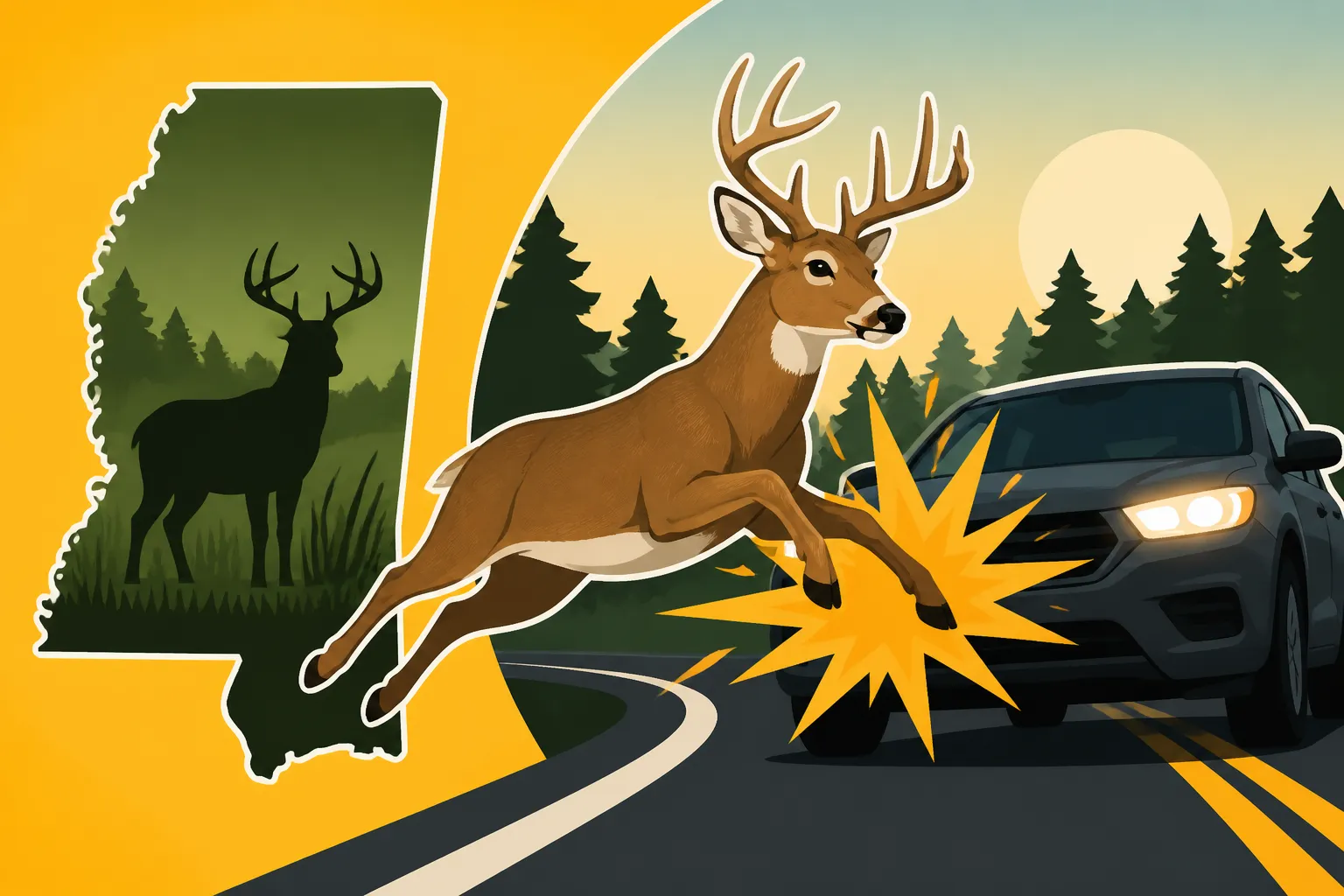
It’s a heart-stopping moment many of us have experienced or dread: driving along a quiet Mississippi backroad or even a busy highway, and suddenly, a deer appears as if from nowhere. Deer-vehicle collisions aren't just an unfortunate reality; they're a serious hazard that can cause significant damage, injury, and even loss of life. This guide is here to shed light on why these incidents are so prevalent in our beautiful state and, more importantly, what you can do to avoid becoming another statistic, offering practical advice and insights into understanding our local deer population.
The Alarming Reality of Deer-Vehicle Collisions in Mississippi
If you live in Mississippi or have spent any time driving our roads, you know that seeing deer is a common occurrence. While beautiful, their presence close to roadways, combined with our state's specific geography and deer population dynamics, creates a perfect storm for collisions. It's not just an inconvenience; it's a genuine public safety concern that impacts thousands of drivers every year.
Why Mississippi is a High-Risk State
Mississippi's landscape, a mosaic of dense timber, agricultural fields, river bottoms, and suburban fringes, provides ideal habitat for white-tailed deer. This abundance means a robust Mississippi Deer Herd Size, and with deer populations thriving, their range often overlaps significantly with human development and transportation corridors. We've got country roads winding through prime deer country, major interstates cutting through vast timber blocks, and even suburban areas where deer are increasingly comfortable navigating neighborhoods.
The sheer number of deer is a primary factor. While specific numbers fluctuate, the Mississippi Deer Population Estimate remains substantial, leading to more encounters. Add to that the fact that deer are constantly on the move, whether it's for food, water, or seeking cover, and you have animals crossing roads at all hours. Many parts of our state, especially where agricultural lands meet dense woods, become natural funnel points for deer movement, often right where our roads are built. It's a fundamental challenge of living in a state so rich in wildlife.
Seasonal Peaks for Collisions
Understanding when deer are most active can be your best defense. If you've lived here long, you probably already know that fall brings a significant spike in deer activity, and consequently, in collisions. This isn't just a coincidence; it's directly tied to the annual breeding cycle.
The rut, or breeding season, is undeniably the most dangerous time for deer-vehicle collisions. Bucks become single-minded, chasing does with little regard for anything else, often venturing into unfamiliar territory and across roads they might otherwise avoid. Does, in turn, are trying to evade bucks, and both sexes are moving more during daylight hours than at other times of the year. You can learn more about this critical period by checking out When the Mississippi Rut Peaks by Unit. Beyond the rut, there's another, less pronounced, peak in late spring and early summer when does are preparing to fawn and yearlings are dispersing from their mothers to find new territories. These young deer, less experienced and more prone to unpredictable movements, also contribute to collision numbers.
Understanding Deer Behavior to Prevent Collisions
To truly minimize your risk, it helps to think like a deer—or at least, understand their daily rhythms and instincts. They aren't trying to cause trouble; they're simply following ingrained patterns shaped by millions of years of evolution. Our roads are just obstacles in their way.
Peak Activity Times for Deer
Deer are crepuscular, meaning they are most active during dawn and dusk. This is when they typically move from bedding areas to feeding grounds, and vice versa. It’s no coincidence that these are also the times when human visibility is lowest due to low light conditions. The hour before sunrise and the hour after sunset are prime danger zones. During these times, deer are on the move, and our eyes are struggling to adjust to the dim light.
Weather also plays a role in deer movement, though it's less predictable than time of day. A sudden drop in temperature, especially after a warm spell, can spur increased activity as deer feed more heavily to prepare for colder weather. Heavy fog or rain can also make deer more difficult to spot, even if their overall activity isn't necessarily higher. Conversely, a prolonged period of severe weather might cause deer to hunker down, reducing their movement for a short while, only to see a burst of activity once the weather breaks.
How Deer React to Vehicles
Deer behavior around vehicles can be incredibly unpredictable, which is why it's so frustrating and dangerous. Often, a deer spotted on the side of the road might freeze, seemingly mesmerized by headlights, giving you a false sense of security that it won't move. Then, at the last second, it might bolt directly into your path. Other times, they’ll dart across the road without a second thought.
A crucial point to remember is that deer rarely travel alone. If you see one deer cross the road, assume there are more nearby, often right behind it. Bucks chasing does during the rut exemplify this, as the buck will follow the doe, often without looking for traffic. Yearlings, too, will follow their mothers. This herd mentality means that if you narrowly avoid one deer, your risk isn't over; you need to remain vigilant for its companions. Tools like the GoHunt app can sometimes provide insights into areas with higher deer concentrations, helping you anticipate where you might encounter groups. Even with their best intentions, deer lack an understanding of vehicle speed and danger, making their reactions to oncoming traffic inherently risky for both them and us.
Practical Strategies for Avoiding a Deer Strike
While you can't control deer behavior, you can control your driving behavior. Adopting a few key strategies can drastically reduce your chances of a collision, helping you navigate Mississippi's beautiful, yet deer-rich, environment more safely.
Defensive Driving Techniques
The most effective way to avoid a deer strike is to practice vigilant, defensive driving. First and foremost, slow down, especially in areas known for deer activity or during peak hours (dawn and dusk). Lower speeds give you more reaction time to spot a deer and brake safely. When driving in rural areas, keep your eyes scanning not just the road directly in front of you, but the shoulders and ditches on both sides. Look for the reflective gleam of eyes in your headlights or the subtle movement of a deer's silhouette against the treeline.
Utilize your high beams whenever possible and safe. On dark roads with no oncoming traffic, high beams extend your field of vision significantly, allowing you to spot deer much further away. However, remember to dim them immediately for approaching vehicles to avoid blinding other drivers. A common mistake drivers make is swerving to avoid a deer. While instinctual, swerving can lead to more severe accidents, such as hitting another vehicle, a tree, or rolling your own car. It's often safer to brake firmly and maintain control of your vehicle, aiming to hit the deer head-on if a collision is truly unavoidable, rather than swerving into a potentially more dangerous situation.
Utilizing Technology and Awareness
Beyond active driving, there are other tools and habits that can enhance your awareness. While deer whistles can be a point of debate—some drivers swear by them, others find them ineffective—they're a relatively inexpensive option that might help in some situations. The science on their efficacy is mixed, but for some, the peace of mind they offer is worth it.
More reliable are modern navigation apps and scouting tools. Apps like GoHunt, for instance, are designed for hunters to understand game movement and habitat, but that same data can be incredibly useful for drivers. Knowing where large tracts of forest or prime feeding grounds are located can help you anticipate areas where deer might be crossing. Many of these apps also incorporate mapping features that show public lands and terrain, giving you a better understanding of the local environment. You might even find some value in features related to Scouting With the MDWFP App to get a general sense of deer hot spots. Always pay close attention to roadside deer crossing signs. These aren't placed arbitrarily; they mark areas where wildlife officials have identified a consistent risk. Consider these signs as serious warnings to be extra cautious and reduce your speed.
What to Do If a Collision is Unavoidable or Happens
Even with the best precautions, accidents can happen. If you find yourself in a situation where a deer collision is imminent, or if you’ve already been in one, knowing the correct steps to take can protect yourself, your passengers, and comply with state regulations.
Immediate Steps After Impact
If you brace yourself and a collision occurs, the first thing to do is remain calm and pull your vehicle over to the side of the road as safely as possible. Turn on your hazard lights immediately to warn other drivers. Check yourself and any passengers for injuries, even minor ones. If anyone is injured, or if your vehicle is severely damaged and obstructing traffic, call 911 right away. Your safety and the safety of others on the road are paramount.
Once you've ensured immediate safety, assess your vehicle's damage. If the vehicle is drivable, note the location and any identifying landmarks. If it's unsafe to drive, do not attempt to move it. Never approach an injured deer. A wounded animal, even one that appears docile, can be unpredictable and dangerous. It's a sad reality, but for both your safety and that of the deer, maintain a safe distance.
Reporting and Insurance Considerations
In Mississippi, if a deer is killed or injured in a vehicle collision, it's generally a good idea to report the incident, especially if you intend to keep the carcass. The Mississippi Department of Wildlife, Fisheries, and Parks (MDWFP) has specific guidelines. You can often report a deer through Mississippi's app, which makes the process much more streamlined. This is covered in detail in topics like Reporting a Deer Through Mississippi's App. Additionally, contact local law enforcement, even if it's just to get a report for insurance purposes. They can assist with traffic control, dispatch an officer to the scene if needed, and officially document the incident.
When it comes to insurance, a deer-vehicle collision typically falls under the comprehensive portion of your auto insurance policy, not collision. This means it's considered an "act of nature" rather than an at-fault accident, which can sometimes impact your premiums differently. It's crucial to contact your insurance provider as soon as possible after the incident to report the damage and begin the claims process. They will guide you through the necessary steps, which might include taking photos of the damage and the scene. While it's a hassle, proper reporting ensures you're covered and that wildlife officials are aware of problem areas for deer activity.
Understanding the various Mississippi Hunting Licenses and What They Cost isn't directly related to avoiding collisions, but if you do decide to keep the deer, you may need to understand permits or tags. However, if the deer is legally harvested after being struck by a vehicle (which usually requires contacting MDWFP and following their instructions), you still need to be mindful of regulations regarding processing and transporting the carcass, especially with concerns like Chronic Wasting Disease.
| Time of Day | Deer Activity Level | Risk Factor | Action to Take |
|---|---|---|---|
| Dawn (1 hr pre-sunrise) | High | Very High | Slow down, use high beams, scan shoulders. |
| Daytime | Moderate | Moderate | Remain vigilant, especially in rural areas. |
| Dusk (1 hr post-sunset) | High | Very High | Slow down, use high beams, scan shoulders. |
| Night (after dusk) | High | High | Drive cautiously, use high beams, watch for eye shine. |
| Rut Season (Fall) | Extremely High | Extreme | Exercise extreme caution, expect unpredictable behavior. |
| Fawning Season (Spring) | Elevated (Yearlings) | Elevated | Be aware of young, inexperienced deer dispersing. |
| Inclement Weather | Variable | Increased | Reduce speed, increase following distance, maintain visibility. |
Living in Mississippi means sharing the roads with a vibrant White-Tailed Deer Across Mississippi population, and these majestic animals are a part of what makes our state so special. While we can’t eliminate the risk of deer-vehicle collisions entirely, by understanding deer behavior, practicing defensive driving, and knowing what to do in an emergency, we can significantly reduce our chances of an encounter. For more details on the hunting regulations that help manage these populations, explore topics like Mississippi Deer Season Structure Explained or even how to find specific areas like Finding Which Deer Unit Your County Sits In or general public land opportunities at Mississippi Wildlife Management Areas. Being informed and prepared is always your best strategy.
Disclaimer
This article is for general informational purposes only and does not constitute professional advice. Laws, prices and regulations vary by location and change over time. Consult a qualified professional for guidance on your specific situation.