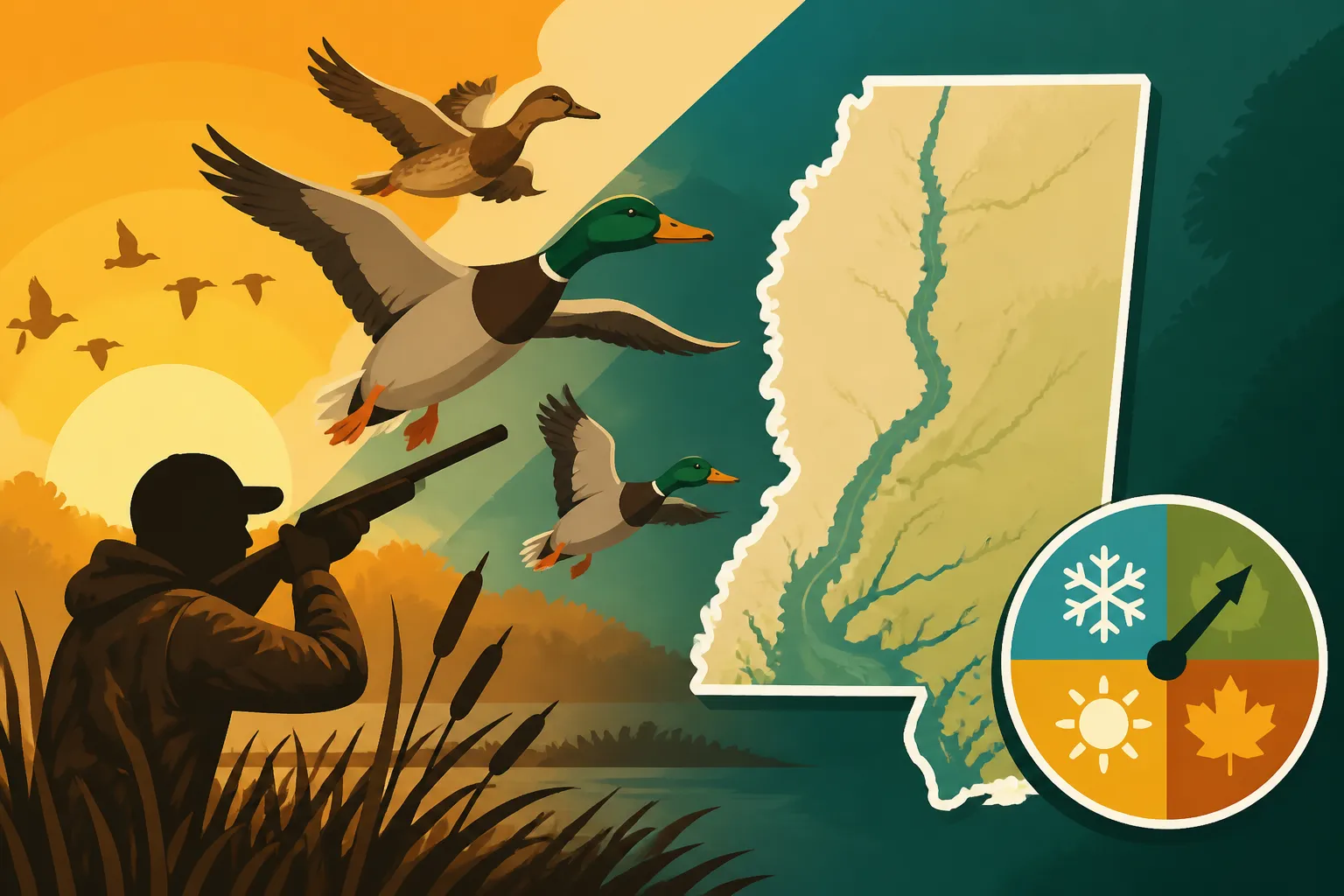
Duck Migration Timing Through Mississippi
Oh, the age-old question that keeps every Mississippi duck hunter up at night: When are they gonna show up? It's a dance with Mother Nature, the weather up north, and the unpredictable whims of a mallard. Trying to pinpoint the exact duck migration timing through Mississippi can feel like chasing a phantom, leaving us staring at empty skies and quiet ponds when all we want is to hear the whistle of wings. This guide is dedicated to helping you decipher the often-mystifying patterns of waterfowl migration in our state, so you can better anticipate those pushes of birds and make the most of your time in the blind.
The Rhythms of the Flyway: Understanding Mississippi's Position
Mississippi isn't just a place ducks pass through; for many, it's a vital wintering ground. Understanding our state's unique position along the migratory corridor is the first step to predicting when those ducks will finally decide to grace our marshes and fields. It's a complex system, and while we can't control the weather, we can certainly learn to read the signs.
The Mississippi Flyway: A Duck Superhighway
Imagine a massive, invisible highway stretching from the Arctic tundra all the way down to the Gulf Coast. That's essentially the Mississippi Flyway, a migratory route that funnels millions of ducks, geese, and other waterfowl through our state every fall and winter. These birds breed in the vast wetlands of Canada and the northern United States, places like the prairie potholes of the Dakotas and the boreal forests. As temperatures drop and food sources freeze over up north, an undeniable urge drives them south, following ancient pathways.
Mississippi lies directly in the heart of this incredible journey, making us a crucial stopover and often a final destination for birds seeking warmer climates and abundant food. When those massive northern breeding grounds start to lock up with ice, it sends a clear signal to the birds: time to fly. This isn't just a trickle; it's often a wave, with different species responding to the changing conditions at varying times, creating the distinct phases of our duck season. It's why one week might feel slow, and the next, your local hotspot is suddenly buzzing with new birds.
Local Factors Influencing Arrival and Stay
While northern cold fronts are the big headlines, they're not the only thing influencing when ducks arrive and, perhaps more importantly, how long they stay in Mississippi. Our local conditions play an enormous role, and sometimes, even with a massive influx of birds, they won't stick around if our habitat isn't appealing.
Water, for instance, is absolutely critical. Ducks need water to rest, feed, and escape predators. Heavy autumn rains or early efforts to flood impoundments, whether on public lands like the greentree reservoirs in the Delta National Forest or private timber holes, create inviting habitat. If the water isn't there, or if it's too shallow, birds will simply overfly us, continuing their journey to places like Louisiana or even Texas where conditions are more favorable. This can be incredibly frustrating when you know there are birds moving, but they just aren't landing here.
Equally important are the food sources available. Waste grain in agricultural fields, especially those vast expanses of corn, rice, and soybeans in the Delta, is a huge draw. Why the Delta Draws Waterfowl Every Winter really highlights this. Acorns in our bottomland hardwoods, aquatic vegetation in natural sloughs, and managed food plots on private timber also provide essential energy for these migrating birds. When these food sources are abundant and accessible (meaning, under water), ducks have little reason to leave. Conversely, if a mild winter means they can still find food up north, or if local fields are barren, our numbers can suffer.
Finally, hunting pressure significantly impacts how long birds will call Mississippi home. Ducks are smart. If a particular area gets hammered day in and day out, they'll quickly learn to avoid it, even if it has perfect water and food. They might move to unhunted refuges, shift to nocturnal feeding patterns, or simply pack up and move further south. This is why managing pressure, having unhunted resting areas, and understanding the concept of sanctuaries are so vital to keeping birds in your area throughout the season.
Early Season Arrivals: Teal and Wood Ducks
The very first whispers of the migration aren't typically the big greenheads, but smaller, faster, and often overlooked species that herald the coming of the main event. These early birds offer unique hunting opportunities and give us our first real taste of duck season each year.
September Teal and the Promise of Fall
When we talk about early season duck hunting in Mississippi, we're almost always talking about blue-winged teal. These speedy little rockets are the first significant wave of migratory waterfowl to pass through our state, often arriving in late August and peaking in September. They have a special, short early season dedicated just to them, a thrilling kickoff to the longer, main duck season that follows.
Blue-winged teal are some of the fastest migrants, driven south by the slightest chill in the air up north. They don't typically wait for hard freezes; a shift in temperatures and photoperiod is often enough to send them packing. You'll find them on shallow mud flats, flooded pastures, and the edges of larger bodies of water, where they feed on seeds and aquatic invertebrates. Their arrival can be explosive, with massive flocks appearing seemingly overnight, only to vanish just as quickly as they continue their journey to warmer climates further south, often to Central and South America. It’s a sprint, not a marathon, and you've got to be ready to hunt them when they're here. We often hear hunters lamenting how they were "here yesterday!"—that's the nature of these highly migratory birds.
While blue-winged teal are the stars of the early show, don't forget their smaller cousins, the green-winged teal, who begin to show up in increasing numbers toward the end of the early teal season and continue to build throughout the fall. They tend to be a bit more cold-hardy and will stick around longer into the main season, offering fast-paced action.
Resident Wood Ducks and Their Habits
Even before the first migratory teal arrive, many Mississippi hunters are already seeing wood ducks. These incredibly beautiful birds are unique because a significant portion of our population is actually resident, meaning they breed and live in Mississippi year-round. You'll find them in the flooded timber and cypress sloughs across the state, even in the dead of summer.
As fall approaches and hunting season nears, these local wood ducks are joined by northern wood ducks migrating south, boosting our overall numbers. Hunting Flooded Timber for Wood Ducks is a prime tactic for these birds, as they absolutely love the cover and food sources found in wooded wetlands. They are masters of navigating dense cover and often fly at first and last light, darting through the trees.
Their timing is less dictated by a single, massive cold front, and more by local conditions and the slow cooling of the environment. While you might get a surge of new wood ducks after a strong north wind, many of the birds you encounter in October and November have been in the general vicinity for weeks or even months. The challenge with wood ducks is less about when they migrate and more about finding their preferred roosting and feeding areas and being there when they are. They're early risers and often call it a day before other species, making early morning hunts particularly effective.
The Main Event: Peak Migration and Mallard Mania
This is what most Mississippi duck hunters eagerly anticipate: the true influx of wintering ducks, when the skies fill with the promise of mallards, gadwall, and pintails. This period is the backbone of our season, and understanding its drivers is key to consistent success.
November and December: The Core Migration
If you're dreaming of big numbers of ducks, especially mallards, then November and December are your sweet spot in Mississippi. This is when the main body of the Mississippi Flyway population really starts to pour into the state. Cold fronts are typically stronger and more frequent now, driving birds out of increasingly frozen northern habitats.
You'll see a dramatic increase in numbers of not just mallards, but also gadwall, wigeon, pintails, and various diving ducks like scaup and ringnecks. These birds are hungry and seeking refuge from the relentless northern winter. The Delta, with its vast agricultural fields and flooded timber, becomes a magnet. Waterfowl Hunting the Mississippi Delta during this time is a truly iconic experience. Birds that might have held up in Arkansas or Missouri during a mild early fall are now forced further south, and Mississippi often reaps the benefits. This period aligns perfectly with the primary gun seasons across our different units, like the dates outlined for the Mississippi North Zone Duck Dates and Mississippi South Zone Duck Dates. If conditions are right, the sheer volume of birds can be breathtaking, offering some of the best hunting opportunities of the year. Many hunters use scouting tools like those offered by GoHunt to keep tabs on waterfowl concentrations and track migration movements in real-time, helping them anticipate these big pushes.
Cold Fronts and Their Impact
Every duck hunter knows the refrain: "We need a cold front!" And for good reason – strong cold fronts are the primary engine of large-scale duck migration. It’s not just a drop in temperature, though. It’s often accompanied by strong northwest winds, which help propel birds south, making their journey more efficient.
When a significant cold front sweeps through the northern states, icing over potholes and snow-dusting fields, birds are pushed south. However, there’s often a lag time. A front hitting the Dakotas on Monday doesn't mean a flood of mallards will be on your Mississippi pond by Tuesday. It can take several days, sometimes even a week, for those birds to cover the distance and settle into new areas. The trick is watching the weather reports not just for Mississippi, but for Iowa, Missouri, and especially Arkansas. If those states are getting hammered, we know our turn is coming.
Successive cold fronts are even better. One front might bring the initial wave, but a second or third strong front keeps the pressure on, replenishing numbers and moving birds that might have stalled in northern parts of our state further south. These new arrivals are often less wary than birds that have been hunted for weeks, providing some fantastic opportunities. Understanding this pattern, and when the Mississippi Waterfowl Migration Timing tends to peak, can guide your hunting schedule, ensuring you’re in the blind when the new birds are buzzing.
Late Season Stragglers and Shifting Patterns
As the calendar turns to January and February, the hunting dynamics shift. While the peak numbers may have passed, the late season offers its own unique challenges and rewards for the dedicated waterfowler.
January into February: The Last Push
Many hunters feel like the season winds down after Christmas, and to a certain extent, the sheer volume of new birds does decrease. However, January and even into February can still offer incredible hunting, especially if the weather holds harsh up north. Extremely severe, prolonged cold snaps across the entire flyway can force even more birds into our southern reaches, creating a “late push” that can be every bit as exciting as the early season.
During this time, the birds that have been in Mississippi for a while become incredibly wary. They've seen every decoy spread, heard every call, and probably dodged their fair share of shots. They've also settled into specific patterns, using well-defined roosting, loafing, and feeding areas. This is when meticulous scouting and adapting your tactics become paramount. You might find a few pockets of new birds mixed in with the stale ones, especially if areas further south, like Louisiana, start to experience their own cold fronts or increased hunting pressure. This late season period also includes Hunting the North Zone Duck Split, offering a chance to target some of those late-migrating birds.
The key to late-season success often lies in finding those unpressured pockets of birds, being extremely still and camouflaged, and adapting your calling and decoy spreads to appeal to ducks that have seen it all. It can be a grinder, but the rewards of a successful late-season hunt are often the most satisfying.
Mild Winters and Their Effects on Migration
One of the most frustrating aspects of predicting duck migration timing is when we experience a mild winter. If states like Missouri, Arkansas, or even Illinois remain relatively warm, with open water and accessible food sources, a significant portion of the flyway's ducks might simply "short-stop." This means they don't feel the urgent need to fly all the way down to Mississippi, instead holding up further north.
This phenomenon can lead to a less concentrated duck population in our state. Instead of seeing massive flocks, birds might be more spread out, making them harder to find and pattern. Hunters often complain about a "lack of birds" during these years, when in reality, the birds are just not being pushed as far south or concentrated as tightly as we'd like. This unpredictability is precisely why diligent scouting, leveraging modern mapping tools, and understanding what the ducks are actually doing in your specific area, rather than relying solely on general migration reports, becomes absolutely vital. Resources like GoHunt, with their detailed aerial imagery and public land layers, can be invaluable for identifying potential hidden pockets of birds or tracking movements across various water sources, helping you locate where the Mississippi Mallard and Wood Duck Numbers are most concentrated.
When a mild winter occurs, it's a good time to reconsider your traditional spots and explore new territory. Those small, forgotten beaver ponds or less-traveled sloughs might hold birds that are avoiding the crowded, traditional hotspots.
Here's a quick overview of general migration patterns for common species in Mississippi:
| Species | Early Season (Sept-Oct) | Peak Migration (Nov-Dec) | Late Season (Jan-Feb) |
|---|---|---|---|
| Blue-winged Teal | Primary focus during the early teal season. Rapid migration. | Decreasing, most have moved further south. | Minimal numbers. |
| Green-winged Teal | Increasing, join early teal season birds. | Peak numbers, often found with mallards. | Present, can be found through season close. |
| Wood Duck | Resident birds supplemented by early northern arrivals. | Peak numbers, found in flooded timber and sloughs. | Present, many resident birds remain, some late migrants. |
| Mallard | Minimal, occasional early birds. | Peak numbers, driven by strong northern cold fronts. The "main event." | Decreasing, but new birds can arrive with late, severe cold snaps up north. |
| Gadwall | Increasing numbers, often early migrants. | Peak numbers, widespread across various habitats. | Present, can be quite numerous in certain areas. |
| Wigeon | Increasing numbers, often on open water. | Peak numbers, common on larger bodies of water and agricultural fields. | Present, often with other dabblers. |
| Pintail | Increasing, particularly later in the early season. | Peak numbers, often found in shallow water and open fields. | Present, but numbers can diminish unless cold pushes them south. |
| Divers (Scaup, Ringneck) | Increasing in deeper water. | Peak numbers, concentrated on large reservoirs and deep sloughs. | Present, particularly scaup and ringnecks in traditional deeper water haunts. |
Disclaimer
This article is for general informational purposes only and does not constitute professional advice. Laws, prices and regulations vary by location and change over time. Consult a qualified professional for guidance on your specific situation.