Mississippi’s Place on the Woodcock Flight
Many hunters in Mississippi, especially those chasing deer or turkeys, might not give much thought to the American Woodcock. But for a select few, the timber doodle offers a fantastic, fast-paced challenge, and understanding their migration patterns is key to finding success. This guide dives deep into Mississippi's crucial role as a wintering ground and migratory stopover for these elusive little birds, helping you uncover where and when to find them.
The American Woodcock: A Unique Migratory Game Bird
The American Woodcock, often affectionately called "timber doodle" or "bog sucker," isn't your typical upland game bird. Unlike quail or pheasants that prefer open fields, woodcock are creatures of thick, moist cover. They possess a long, prehensile bill used for probing soft earth for earthworms, their primary food source, and their large eyes are set high on their heads, giving them excellent overhead vision crucial for detecting aerial predators. Their camouflage is legendary, allowing them to disappear into the leaf litter with startling effectiveness.
Understanding Their Northerly Breeding Grounds
Woodcock are true migratory birds, spending their summers far to the north, across the eastern and central United States and into Canada. Their breeding grounds stretch from the maritime provinces of Canada west to Manitoba, and south through the Great Lakes region and New England down to the Mid-Atlantic states. These northern climes provide the ideal mix of young, regenerating forests, wet thickets, and open fields for their elaborate sky dance courtship displays each spring. When hunters think of woodcock hunting, states like Maine, Michigan, and Wisconsin often come to mind first, as these are the primary nesting and early season hunting grounds. However, once the frost starts to bite and the ground freezes, their food source disappears, triggering a mass exodus southward.
Why Mississippi is a Critical Winter Destination
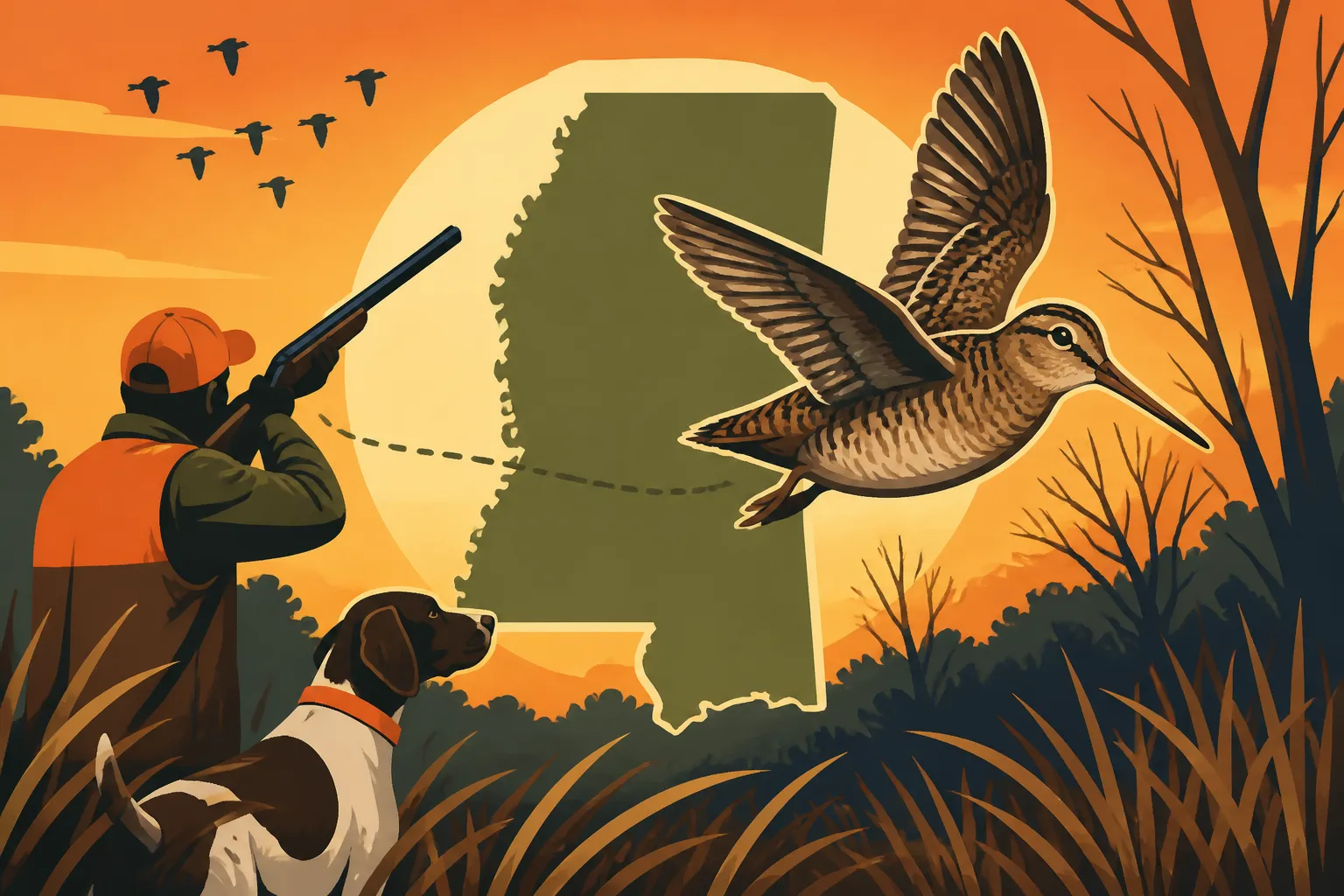
As autumn progresses and winter closes in on their breeding grounds, woodcock begin their arduous migration. They follow a broad migratory path that eventually funnels many birds into the southeastern United States, with Mississippi sitting right in the sweet spot of this flyway. The mild winters in our state, coupled with our abundant bottomland hardwood forests, regenerating pine plantations, and moist, fertile soils, create the perfect conditions for woodcock to thrive throughout the colder months. Here, the ground rarely freezes for extended periods, ensuring a consistent supply of earthworms. This makes Mississippi not just a temporary stopover but a significant wintering habitat, holding a substantial portion of the continent's woodcock population from late fall through early spring. It’s a fantastic opportunity for hunters who appreciate the unique challenge these birds present.
Prime Woodcock Habitat in Mississippi
Finding woodcock is all about finding the right habitat. These birds are very particular about their surroundings, favoring specific types of cover that provide both food and protection. A successful woodcock hunt in Mississippi often starts with understanding these preferences and knowing where to look for those specific characteristics.
Young, Regenerating Forests and Thickets
Woodcock absolutely adore young, brushy cover. Think clear-cuts that are 3-15 years old, dense briar patches, honeysuckle tangles, and areas of young saplings, especially sweet gums, greenbrier, and elderberry. These areas provide the perfect overhead cover to protect them from raptors, while the open understory beneath allows them to move freely and probe the soft ground for worms. They don't typically live in mature, open timber where sunlight can dry out the soil too quickly. Instead, look for edges where young growth meets slightly older timber, or pockets within a larger tract that have been recently disturbed by logging or storms. Scouting for the perfect spot can be done effectively using tools like GoHunt to examine aerial photos for these telltale signs of early successional habitat, especially on public lands.
Moist Soils and Bottomland Areas
The "bog sucker" nickname isn't for nothing; woodcock need moist soil. Their diet consists almost entirely of earthworms, which are most abundant in damp, loamy earth. This is why bottomland hardwoods, creek bottoms, and the edges of sloughs and ditches are prime real estate for these birds in Mississippi. Even during drier spells, woodcock will concentrate in the wettest pockets they can find. These damp areas are often characterized by specific vegetation such as switch cane, dense stands of willow, or even cypress and tupelo swamps with slightly higher ground. When the ground is softer, the woodcock's long bill can penetrate easily to extract its meal. Hunters often report great success Hunting Flooded Timber for Wood Ducks, and these same areas can sometimes hold woodcock in the dryer edges or along the levees.
Identifying Key Food Sources
While earthworms are the primary draw, woodcock will also consume other invertebrates found in moist soil. However, it's the presence of earthworms that dictates their residency. You can often tell if woodcock are using an area by looking for their distinctive "boring holes" in the mud or soft ground – tiny, pencil-sized punctures where they've probed for food. Another sign is their chalky, white droppings, often called "splats," which are quite noticeable against dark earth or fallen leaves. Look for these signs along logging roads, deer trails, and open patches within thick cover. These subtle clues are invaluable in determining whether an area holds birds or is merely suitable habitat. Remember, if the ground is hard as a rock, you likely won't find woodcock there.
Here's a quick overview of preferred woodcock habitat features:
| Habitat Feature | Description | Why Woodcock Like It |
|---|---|---|
| Young Forest/Thickets | Areas with dense saplings (3-15 years old), briars, honeysuckle, switch cane. | Provides overhead cover from predators, good hiding spots. |
| Moist, Loamy Soil | Creek bottoms, low-lying areas, edges of sloughs, areas with good drainage. | Essential for earthworm foraging, their primary food source. |
| Proximity to Water | Near swamps, rivers, streams, or ponds, especially in bottomlands. | Maintains soil moisture, attracting more earthworms. |
| Dense Overhead Cover | Thick canopy of young trees or dense shrubs. | Protection from aerial predators like hawks. |
| Open Understory | Relatively clear ground space beneath the canopy. | Allows easy movement and probing for food. |
| Edge Habitat | Transition zones between young and mature timber, or fields and woods. | Offers diverse cover and food sources. |
Mississippi's Woodcock Hunting Season and Rules
Hunting woodcock in Mississippi offers a unique opportunity for wingshooters, distinct from chasing quail or ducks. However, like all game species, there are specific regulations and seasons to adhere to, which are crucial for both legality and conservation efforts. Staying informed about these rules is part of responsible hunting.
Season Dates and Bag Limits
The Mississippi woodcock season typically opens in early December and runs through the end of January or early February. These dates are specifically set to coincide with the peak of the woodcock migration into and through Mississippi, as well as the arrival of the majority of wintering birds. It's a relatively short window, so planning your hunts carefully is essential. The daily bag limit is generally three birds, with a possession limit of nine. These limits are conservative, reflecting the broader population trends and the migratory nature of the species. Always double-check the current year's Mississippi Small Game Season Rules published by the MDWFP, as dates and limits can occasionally shift based on population data and federal guidelines. Remember, woodcock are federally regulated migratory birds, so state regulations align with federal frameworks.
Licensing and HIP Certification
Before you even step into the woods, ensure all your paperwork is in order. In Mississippi, hunters need a valid hunting license. For residents, this could be a Resident Sportsman's License. Non-residents will need to acquire a Nonresident License Options. Beyond the basic hunting license, anyone hunting migratory birds, including woodcock, must obtain a Harvest Information Program (HIP) certification. This is a federal requirement designed to collect data on migratory bird harvests, which helps wildlife agencies manage populations effectively. HIP certification is usually free and can be obtained when purchasing your hunting license online or at a license vendor. Without it, you are not legally permitted to hunt woodcock. It's a small step that makes a big difference for conservation, ensuring we have accurate data to inform future regulations.
Equipment and Safety Considerations
When hunting woodcock, lighter firearms are usually preferred, such as a 20-gauge or 28-gauge shotgun, typically with improved cylinder or skeet chokes for close-range flushing shots. Small shot sizes like 7.5 or 8 are ideal for these delicate birds. Given the dense cover they inhabit, safety glasses are a non-negotiable item to protect your eyes from whipping branches. A good brush vest or hunting coat that can stand up to briars is also a must. Unlike some other forms of hunting, there's no blaze orange requirement for small game in Mississippi, but wearing it, especially if hunting with a group or dogs, is always a good idea for visibility and safety. The terrain can be challenging – uneven ground, slick mud, and thick undergrowth – so sturdy, waterproof boots with good ankle support are crucial. And don't forget a whistle if you're hunting with a bird dog; effective communication is key in the thick stuff.
Effective Woodcock Hunting Strategies in Mississippi
Hunting woodcock is less about long-range shooting and more about precise dog work, quick reflexes, and knowing how to read the cover. It’s a truly immersive experience that gets you deep into some of Mississippi’s wilder places.
Working with a Bird Dog
Without a doubt, a well-trained bird dog is the greatest asset a woodcock hunter can have. Woodcock hold incredibly tight, often letting you walk right past them before flushing. A pointing dog, like an English Setter, Brittany, or German Shorthaired Pointer, will scent the bird and freeze, indicating its location. This allows the hunter to move in, mentally mark the bird's likely escape route, and prepare for the flush. Retrieving breeds like Labrador Retrievers are also excellent, not just for their ability to find downed birds in dense cover, but also for their quartering patterns that can help cover ground and flush birds.
Walking up birds without a dog is certainly possible, but it becomes much more difficult. You’ll need to walk slowly, systematically covering every bit of promising cover, often in zig-zag patterns, hoping to stumble upon a bird. When a woodcock flushes, it often flies straight up through the canopy for a short distance before leveling off and darting through the trees, making for a challenging shot. A dog helps you pinpoint their location, making your approach more deliberate and increasing your chances of a clean shot. When scouting public lands, tools like GoHunt can help identify potential holding cover, but a good dog will confirm presence.
Tactics for Thick Cover and Close-Quarters Shooting
Woodcock hunting is not for the faint of heart, or those who dislike getting scratched up. You will be walking through some seriously dense stuff. When your dog goes on point, approach cautiously from a direction that allows you the clearest possible shooting lane ahead of the bird. Woodcock typically flush vertically, so be prepared for an overhead shot, but don't assume they'll always go straight up. They often choose the path of least resistance through the nearest opening in the canopy. Keep your gun mounted and ready, eyes scanning for any movement.
The shots are typically very close, often within 15-20 yards, meaning quick reflexes are paramount. Resist the urge to rush the shot; give the bird a moment to clear the immediate brush before pulling the trigger. It’s not uncommon to only see a fleeting glimpse of the bird through the branches. Because of this, many hunters opt for open chokes and faster-handling shotguns. Practice shooting clay targets at close ranges, simulating a rising bird, to hone your skills for these unique situations. Understanding Squirrel Hunting Delta Bottomland Hardwoods can give you a similar perspective on navigating and shooting in dense, timbered environments.
Reading Woodcock Sign and Behavior
Beyond observing the habitat characteristics, learning to read "woodcock sign" is critical. As mentioned, the boring holes are a dead giveaway that birds have been feeding in an area. These are often concentrated in small patches of soft earth. Look for the white, chalky "splats" on leaves or bare ground; these are larger than a typical bird dropping and have a distinct white center. Both of these signs indicate fresh activity.
Woodcock are primarily crepuscular, meaning they are most active at dawn and dusk. They'll spend their days roosting quietly in dense cover, only moving to feed more actively during low light conditions. If you're hunting during the day, focus on pushing through the thickest cover, knowing they are likely holding tight. After a cold front pushes through, or a night with heavy rain that softens the ground, woodcock activity can increase dramatically. Conversely, during extended dry spells when the ground is hard, they will be much harder to find, as their food source becomes inaccessible. Pay attention to weather patterns, especially temperature drops to the north, which can signal new waves of migratory birds arriving in Mississippi. This kind of ecological intuition, combined with real-time weather data often available through hunting apps, can greatly enhance your success.
Conservation and the Future of Woodcock in Mississippi
The American Woodcock is a fascinating species, and its presence in Mississippi is vital for both its survival and the enjoyment of wingshooters. However, like many migratory birds, woodcock face significant challenges that necessitate ongoing conservation efforts to ensure their future.
Habitat Loss and Changing Landscapes
The biggest threat to woodcock populations across their range, including in Mississippi, is habitat loss. Woodcock depend on young, early-successional forests – a type of habitat that is often a transient stage in forest growth. As forests mature or are converted to other uses (agriculture, development), the specific brushy, moist cover that woodcock need disappears. Modern forestry practices, which sometimes favor longer rotation cycles for timber harvest, can also reduce the amount of available young habitat.
In Mississippi, while we have vast timberlands and bottomland areas, consistent management specifically for early-successional habitat is crucial. This often involves strategic timber harvests, prescribed burns, and other disturbances that reset the ecological clock and create the dense, young growth woodcock prefer. Without active management, these prime woodcock areas will naturally progress to mature forest, rendering them unsuitable. Landowners and public land managers play a critical role in providing this necessary habitat, and understanding the needs of species like the woodcock can help guide these management decisions. Organizations often partner with programs to promote beneficial habitats, benefiting a variety of species including Rabbit and Upland Hunting in Mississippi.
Monitoring and Management Efforts
Wildlife agencies, including the Mississippi Department of Wildlife, Fisheries, and Parks (MDWFP), work closely with federal agencies like the U.S. Fish and Wildlife Service to monitor woodcock populations. This monitoring includes breeding ground surveys to assess nesting success and population trends in the north, as well as wing collection surveys from hunters during the season. Hunters are often asked to submit a wing from their harvested birds; this data provides crucial insights into the age and sex ratios of the harvested population, helping biologists understand reproduction and survival rates. This information directly informs season lengths and bag limits, ensuring that hunting remains sustainable.
The MDWFP also manages various public lands, including Wildlife Management Areas (WMAs), with an eye towards creating and maintaining diverse habitats. While not exclusively managed for woodcock, many WMA practices that benefit deer, turkeys, and other small game also create suitable conditions for woodcock. Hunters utilizing resources like the MDWFP map tool can sometimes find areas on WMAs that fit the woodcock habitat description. Active partnerships between private landowners and conservation groups are also vital, promoting habitat improvements on a larger scale across the state.
The Role of Hunters in Conservation
Hunters are, and always have been, key conservationists. By purchasing hunting licenses and HIP certification, you directly contribute funds that go towards wildlife research, habitat acquisition, and management programs. Beyond financial contributions, active participation in surveys (like wing collections) provides invaluable data. Hunters also serve as on-the-ground observers, noticing changes in habitat or bird populations that can inform wildlife managers. Sharing observations with local biologists can be incredibly helpful.
Furthermore, introducing new hunters, especially youth, to woodcock hunting instills an appreciation for these unique birds and their habitat. It's a challenging but rewarding pursuit that connects people deeply with the natural world. Ensuring the continuity of this hunting tradition is crucial for fostering the next generation of conservation stewards. Whether you're tracking a deer through the woods in Still-Hunting Hills Unit Ridges or flushing woodcock, every moment spent observing and appreciating Mississippi's wildlife helps contribute to its future.
Disclaimer
This article is for general informational purposes only and does not constitute professional advice. Laws, prices and regulations vary by location and change over time. Consult a qualified professional for guidance on your specific situation.