Mississippi Mourning Dove Harvest Numbers
There's nothing quite like the crack of a shotgun on a warm September afternoon, the buzz of a dove's wings overhead, and the camaraderie of friends and family gathered in a cut field. But for many Mississippi dove hunters, there's also the burning question: how many birds are actually out there? This comprehensive guide dives deep into Mississippi's mourning dove harvest numbers, what they mean, and how understanding these figures can inform your own hunts and contribute to the long-term health of our beloved dove population.
The Annual Dove Harvest: A Snapshot of Mississippi's Tradition
Dove hunting is a cherished tradition across Mississippi, marking the unofficial start of the fall hunting season. From the Delta's vast agricultural fields to the rolling hills of the Piney Woods, hunters eagerly anticipate those first few weekends. But beyond the sheer enjoyment, the annual harvest data collected by our state wildlife agency, the Mississippi Department of Wildlife, Fisheries, and Parks (MDWFP), offers a crucial snapshot into the health and trends of our mourning dove population. It's not just a tally; it's a vital tool for wildlife management.
Understanding Harvest Data: What the Numbers Tell Us
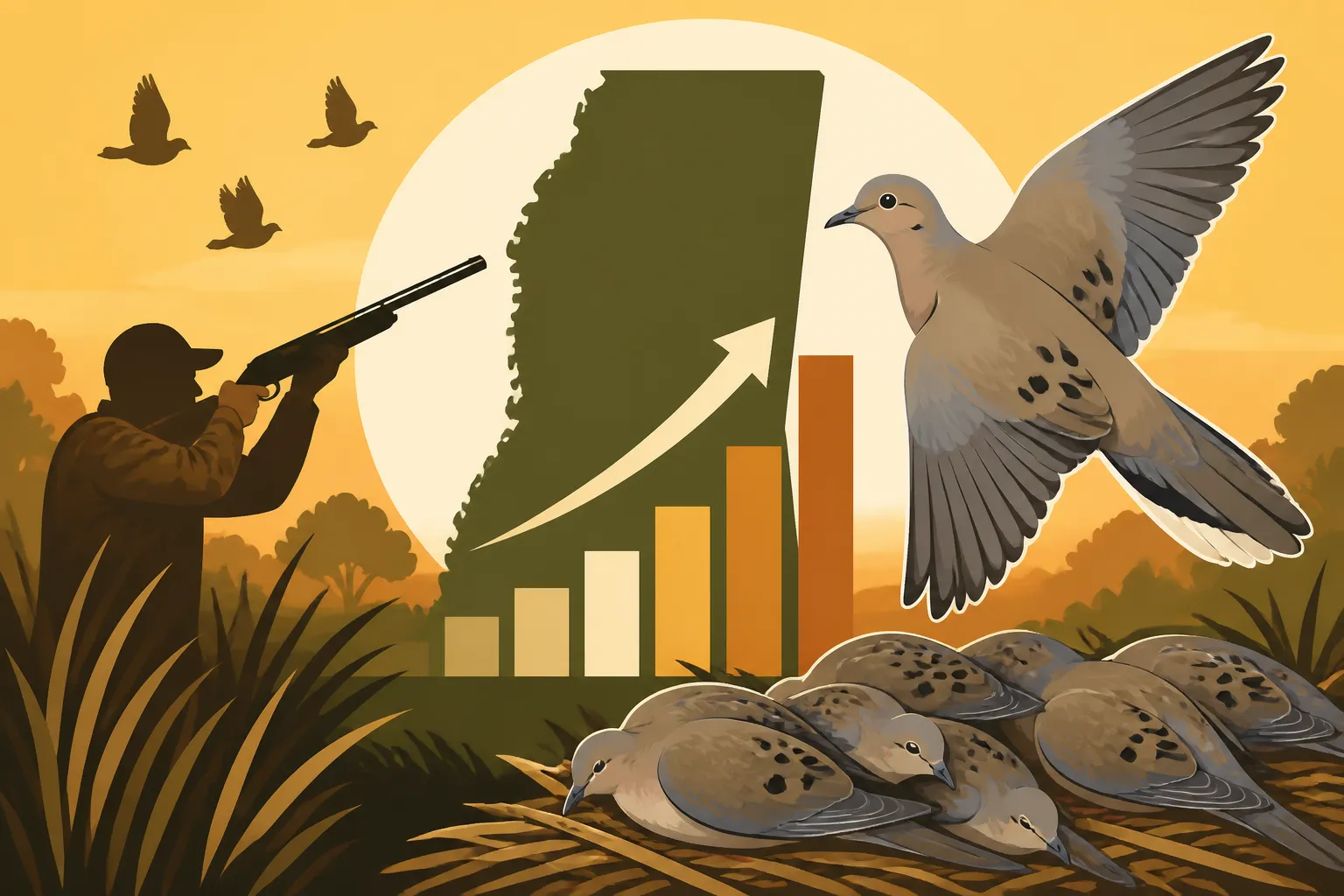
When we talk about "harvest numbers," we're really looking at the total count of doves taken by hunters across the state during the designated seasons. This data isn't just about showing off who killed the most birds, though a good day in the field is always a point of pride! Instead, these figures serve several critical purposes for wildlife biologists. They help estimate the overall dove population size, track population trends over time, and assess the impact of hunting pressure. Think of it like a doctor checking your pulse – it's a key indicator of health.
For instance, consistently high harvest numbers might suggest a robust and healthy dove population, capable of sustaining hunting pressure. Conversely, a noticeable dip could signal environmental changes, poor breeding seasons, or other factors that might warrant a closer look from wildlife managers. This isn't just theory; it directly influences decisions on future season lengths, bag limits, and conservation efforts. It's a feedback loop, with hunters providing the critical data that helps keep the tradition alive for generations to come. Without this data, management would be a shot in the dark, and we certainly don't want that when it comes to our precious natural resources.
Factors Influencing Yearly Fluctuations
If you've hunted doves for any length of time in Mississippi, you know that some years are absolute banner years, and others… well, they're character-building. These fluctuations aren't random; they're driven by a complex interplay of natural and anthropogenic factors. Weather is a huge player. A mild winter followed by a productive spring nesting season, with plenty of food and successful broods, can lead to a surge in bird numbers by early September. Conversely, a harsh winter or a particularly wet, cold spring can decimate nests and reduce the number of young doves entering the population.
Migration patterns also play a massive role, especially as the season progresses. Mississippi sits squarely in the heart of the Mississippi Flyway, making it a critical stopover for doves moving south. Early season hunting often relies on resident birds, but later splits can see an influx of migratory doves from further north. If these migratory pushes are weak or shift due to weather systems, hunters might find fewer birds in their traditional spots. Finally, agricultural practices like crop rotations, harvest timing, and field preparation (or lack thereof) directly influence food availability and attractants for doves. A farmer who cuts corn early and leaves some waste grain is creating a magnet for doves, while a field tilled clean offers little incentive. All these elements combine to create the unique hunting conditions we experience each year.
Interpreting Mississippi's Dove Harvest Numbers
Understanding the raw numbers is one thing, but truly interpreting them means looking at the broader context. Mississippi is a diverse state, from the fertile soils of the Delta to the rolling hills and pine forests, and this ecological variety means that dove populations, and thus harvest numbers, can look very different depending on where you are. It’s rarely a one-size-fits-all situation.
Statewide Trends and Regional Differences
While the MDWFP compiles statewide harvest data, it's really a mosaic of localized successes and challenges. Historically, certain regions, particularly the Mississippi Delta, have been synonymous with incredible dove hunting. This is largely due to the vast acreage of agricultural crops like corn, sunflowers, and wheat, which provide abundant food sources. Naturally, these areas often contribute disproportionately to the overall statewide harvest numbers. A strong year in the Delta, with plenty of prime dove habitat, can significantly boost the state's total.
However, other regions, like the Piney Woods or parts of the Loess Bluff Hills, also offer excellent dove hunting, albeit sometimes with different dynamics. These areas might have smaller, more dispersed fields, or rely more on natural food sources. Hunters in these regions might see steady, respectable harvests, even if the sheer volume doesn't match a large-scale Delta operation. When reviewing statewide data, it's important to remember that it's an aggregate. A dip in one region might be offset by a boom in another, leading to a relatively stable statewide number that masks localized changes. This is why local knowledge, along with broader data, is so valuable.
The Role of Hunter Participation
Harvest numbers aren't solely a reflection of the dove population; they are also intrinsically linked to hunter effort and participation. Simply put, if fewer people go hunting, fewer doves will be harvested, even if the bird population is healthy. Conversely, a surge in hunter interest can lead to higher harvest numbers, assuming there are enough birds to sustain it. This factor became particularly apparent during certain times when outdoor activities saw a boost in popularity, drawing new hunters to the field.
The MDWFP carefully tracks license sales and hunter participation rates, as these metrics are crucial for understanding the harvest data. For example, if the dove population appears stable but harvest numbers decline, biologists might look at hunter numbers. Was there a decrease in license sales? Did fewer people decide to go afield for doves that year? Mississippi Hunter Education Requirements ensure new hunters are prepared, and a healthy influx of these educated individuals can keep participation robust. Factors like economic conditions, fuel prices, or even simply how many opening day weekends fall on a three-day holiday can subtly influence how many hunters hit the fields. It’s a delicate balance: robust bird populations need adequate hunting pressure to keep them wild and wary, but too much pressure, especially on public lands, can lead to frustration.
The Importance of Accurate Reporting for Dove Management
For those of us who grew up in an era where you just went hunting, brought birds home, and maybe told a few friends about it, the idea of reporting a harvest might feel a little bureaucratic. But let me tell you, it's one of the most vital contributions we can make as hunters to the future of our sport. The MDWFP relies heavily on accurate, timely data to make informed management decisions, and that data primarily comes from us.
Hunter Responsibilities in Data Collection
Every hunter in Mississippi who pursues migratory game birds, including doves, is required to participate in the Harvest Information Program (HIP). This isn't just some arbitrary paperwork; it's the backbone of migratory bird management across the country. When you purchase your Mississippi HIP Certification for Bird Hunters, you're providing critical contact information. Then, through surveys, the MDWFP and federal agencies can reach out to a representative sample of hunters to gather information about their success. This is often done through post-season questionnaires that ask about the number of birds harvested, the days spent afield, and other relevant details.
It might feel like a small thing to accurately fill out a survey or report your harvest, but consider the sheer volume of data collected nationwide. It paints a massive picture of migratory bird health and hunter activity. Without this participation, wildlife managers would be guessing. They wouldn't know if a decline in harvest was due to fewer birds, fewer hunters, or simply an unlucky season. So, when you get that survey, take a few minutes and fill it out honestly. You're not just reporting your hunt; you're actively participating in conservation. It's a key part of our social contract as hunters: we get to enjoy the resource, and in return, we help manage it responsibly.
How Data Shapes Future Dove Seasons
The MDWFP uses the collected harvest data, alongside breeding ground surveys, banding studies, and habitat assessments, to develop robust management strategies for mourning doves. This isn't just about setting seasons; it’s about adaptive management. If harvest numbers are consistently low, and other indicators point to a declining population, they might consider shorter seasons or reduced Mississippi Dove Season Bag Limit to allow the population to recover. Conversely, if numbers are strong, they might maintain or even explore expanded opportunities, such as different season splits or extensions, like the considerations around Hunting the Second Dove Split in October.
For instance, the data helps inform how many days we get to hunt, the timing of those season splits, and the specific bag limits for each segment of the season. It helps evaluate the impact of Mississippi Dove Field Baiting Rules and ensures compliance. This scientific approach ensures that hunting remains sustainable and that we don't overharvest the resource. It’s a dynamic process, constantly reviewed and adjusted based on the best available data. Every single season structure and regulation you see in the Mississippi hunting digest is a direct result of this meticulous data collection and analysis. It's truly incredible how much effort goes into ensuring we have robust dove populations for years to come.
Maximizing Your Own Dove Harvest (Ethically)
While the big picture of harvest numbers is vital for management, as individual hunters, we also want to have successful days in the field. Ethical hunting means respecting the birds, the land, and other hunters, while still striving to fill our bag limits. There's a lot you can do to put yourself in a position for a great hunt, beyond just showing up on opening day.
Scouting and Field Selection
Successful dove hunting starts long before opening day. Scouting is absolutely paramount. Doves are creatures of habit, gravitating towards reliable food sources, water, and grit. You'll want to look for fields that have been recently harvested, especially those with waste grain like corn, sunflowers, or wheat. Pay attention to power lines, dead trees, and field edges where doves might stage or roost. A little pre-season legwork can make all the difference between a frustrating hunt and a limit. Setting Up a Dove Field Before Opening Day involves more than just finding a field; it's about observing bird patterns.
Tools like GoHunt can give you an overhead view of agricultural fields, potential flyways, and even identify property lines so you can plan your approach on public or private land. Look for areas with a mix of food, water, and cover. Doves often feed in open fields but will fly to nearby timber or dense brush for cover and roosting. Rivers and creeks can also be excellent flyways as birds move to and from water sources. Don't be afraid to drive around, walk some field edges, and simply observe. What are the birds doing? Where are they flying from? Where are they landing? These observations are gold. If you're on public land, checking WMA maps for agricultural fields or powerline cuts, often found on Mississippi Wildlife Management Areas, is a great starting point.
Effective Decoy Spreads and Shooting Skills
Once you've found a promising spot, your setup can significantly impact your success. Doves are social birds, and a good decoy spread can be a magnet, drawing them in close for ethical shots. Static decoys placed on the ground, especially near a watering hole or grit source, can be effective. But motion decoys, like spinning wing models, often make the biggest difference, mimicking landing birds and catching the attention of distant doves. Place them where birds can see them from a distance, typically into the wind, and ensure they are visible above any stubble or cover.
Beyond decoys, your shooting skills are, of course, critical. Doves are fast, erratic flyers, and they present a challenging target. Practice is essential, whether it's at a skeet range or with clay pigeons in a safe area. Focus on swinging through the bird, maintaining your lead, and following through. Many hunters miss doves by stopping their swing. Also, understand your shotgun's effective range and your chosen choke. For doves, a modified or improved cylinder choke is often a good all-around choice. Ethical hunting means taking clean shots within your effective range. If you find yourself consistently wounding birds or missing wildly, it's a sign to re-evaluate your setup, your practice routine, or simply pass on those longer shots. Remember, a responsible hunter always prioritizes a clean kill and minimizes waste.
Ethical Considerations and Conservation
As hunters, our responsibility goes beyond simply harvesting birds. We are stewards of the resource. This means always adhering to legal bag limits – which for doves, are often generous but still absolute. Never shoot over the limit, and always ensure every bird you shoot is retrieved. Mississippi Dove Season Bag Limit is there for a reason, to ensure sustainable hunting pressure. This is also why understanding Mississippi's Chronic Wasting Disease Zones and carcass restrictions for deer, though unrelated to doves, underscores the importance of following all regulations designed to protect wildlife health.
We should also practice good field etiquette. If you're hunting a public field or one with multiple groups, give everyone space, share the resource, and be mindful of your shooting lanes. Picking up spent shells and leaving the field cleaner than you found it is always a mark of a good hunter. Every hunter's actions, from reporting their harvest to upholding ethical standards, contribute to the positive image and future of hunting in Mississippi. This collective responsibility ensures that generations to come will be able to enjoy the thrill of Mourning Doves in Mississippi on those crisp autumn days.
Here’s a quick look at some key factors influencing dove harvest:
| Factor | Impact on Harvest Numbers | Hunter Strategy | Management Action |
|---|---|---|---|
| Breeding Success | High = More birds; Low = Fewer | Scout for good nesting habitat in spring | Monitor breeding bird surveys |
| Weather Patterns | Affects migration & food access | Watch forecasts, adapt to bird movement | Consider season splits based on weather |
| Food Availability | Attracts birds to specific areas | Scout cut fields, find natural food sources | Promote habitat diversity, field rotations |
| Hunter Participation | More hunters = Higher harvest | Respect other hunters, share information | Track license sales & HIP data |
| Hunting Pressure | Can disperse birds or make them wary | Seek less pressured areas, hunt during the week | Adjust season lengths, public land rules |
| Migration Timing | Influences bird availability | Target early season resident birds or later migrants | Align season splits with migration peaks |
Final Thoughts on Dove Harvest in Mississippi
The annual mourning dove harvest numbers in Mississippi are far more than just statistics. They are a reflection of our state's rich hunting heritage, a critical dataset for wildlife managers, and a testament to the health of one of our most popular game birds. By understanding these numbers, appreciating the factors that influence them, and diligently fulfilling our responsibilities as hunters, we actively participate in the conservation story of Mississippi.
Whether you're a seasoned veteran or just starting out, taking the time to scout, refine your skills, and contribute to data collection ensures that the joyous sound of wings beating over a sunflower field will continue for future generations. Keep practicing those lead shots, keep observing the birds, and keep cherishing those moments afield. The health of White-Tailed Deer Across Mississippi or Wild Turkeys in Mississippi is often discussed, but the humble dove plays just as important a role in our hunting culture.
Disclaimer
This article is for general informational purposes only and does not constitute professional advice. Laws, prices and regulations vary by location and change over time. Consult a qualified professional for guidance on your specific situation.