Reading a Delta Slough for a Morning Flight
There’s nothing quite like the anticipation of a morning duck hunt in the Mississippi Delta, but the frustration of showing up to a slough only to find it devoid of birds is all too common. Many hunters struggle to consistently put themselves in the right spot at the right time, often because they haven't learned to truly read the water and understand how ducks use these crucial wetland arteries. This comprehensive guide will walk you through the nuances of interpreting Delta sloughs, helping you predict waterfowl movement and position yourself for a successful morning flight.
Understanding Delta Sloughs and Waterfowl Behavior
The Mississippi Delta is a unique hunting ground, a vast, flat landscape carved by ancient river systems, leaving behind an intricate network of bayous, oxbows, and, of course, sloughs. These sloughs are critical waterfowl habitat, especially during the fall and winter migrations.
The Nature of Delta Sloughs
A slough, in its simplest form, is a backwater or marshy channel, often characterized by slow-moving or stagnant water, abundant submerged and emergent vegetation, and usually lined with cypress, tupelo gum, or various hardwoods. They can range from wide, open stretches to narrow, winding passages. What makes them so important for ducks is the combination of sheltered water, consistent food sources like acorns from flooded timber or aquatic plants, and a sense of security from predators. Ducks, particularly mallards and wood ducks, gravitate towards these areas to loaf, feed, and rest, especially after feeding in agricultural fields at night. During the day, they often seek refuge in these quieter, more protected waters. The character of each slough can change dramatically with water levels; what might be a shallow, muddy seep in early season can become a prime hunting spot after heavy rains flood the timber. This constant change means you can't rely on last year's knowledge alone; active scouting is always key.
Typical Morning Flight Patterns
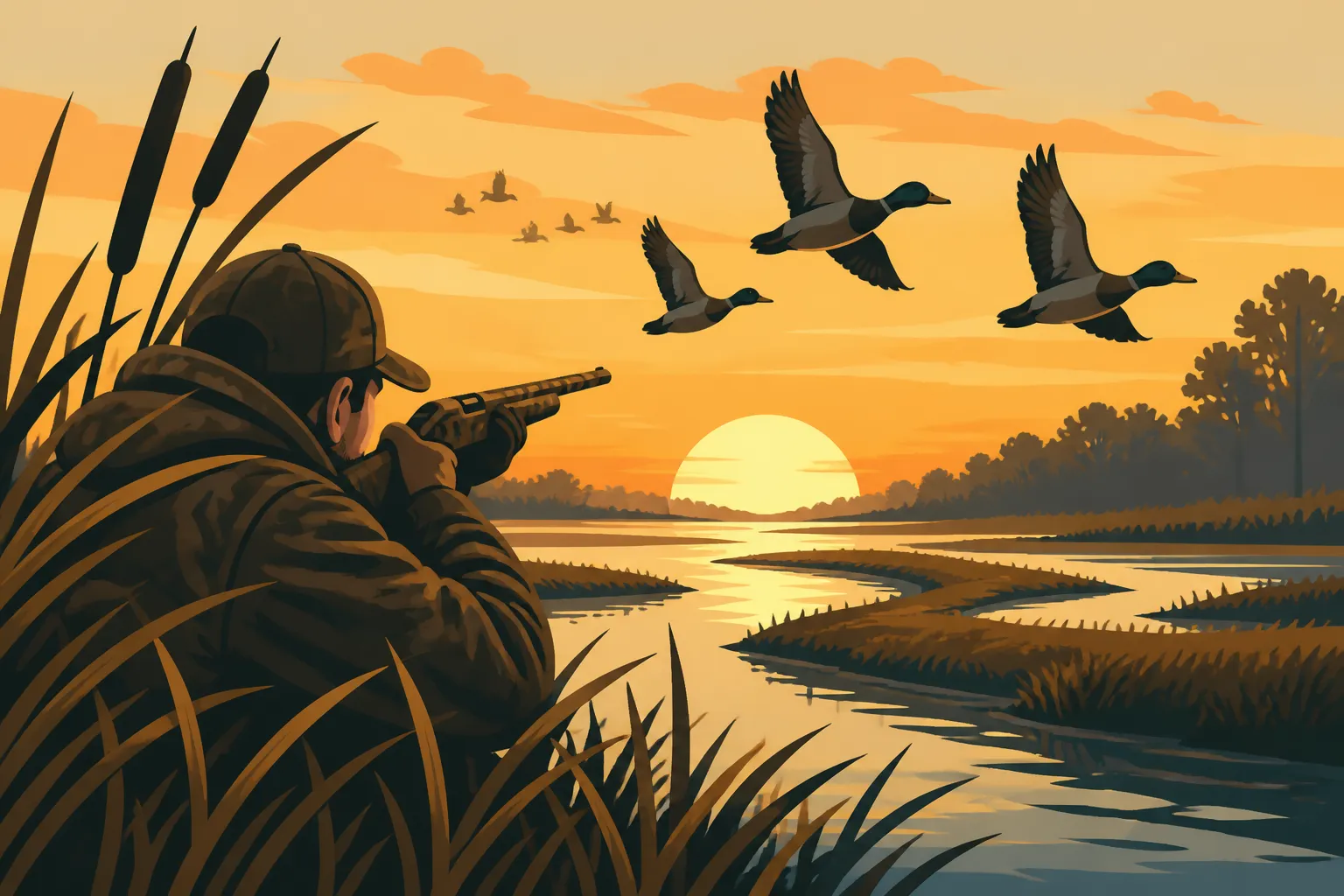
Ducks, being creatures of habit, often follow predictable patterns, especially during their morning flights. As dawn breaks, birds that have been feeding in distant fields overnight begin to make their way back to loafing and resting areas. For Delta ducks, these resting areas are frequently sloughs and flooded timber. You'll often see birds flying from north to south or east to west, depending on the predominant wind and the location of major feed fields relative to the sloughs. Mallards tend to fly higher and often make several passes before committing to a landing, circling to check for danger. Wood ducks, on the other hand, are often lower, faster, and more direct, zipping through the timber. Understanding these species-specific flight characteristics is crucial. They aren't just flying randomly; they're navigating familiar corridors and looking for specific conditions. A keen observer will notice certain "highways" that birds use consistently, connecting fields to water. Your goal is to intercept them along these routes or at their intended destination.
Key Factors for a Successful Morning Flight Setup
Simply finding a slough isn't enough; knowing how to position yourself and what tactics to employ can make all the difference between a limit and an empty strap.
Scouting Before Dawn
This cannot be overstated: effective scouting is paramount. Long before opening day, and even the day before a hunt, you need to be out there, looking, listening, and observing. Early season scouting might involve walking the banks, looking for fresh tracks, droppings, and disturbed vegetation that indicates feeding activity. As the season progresses and birds establish patterns, pre-dawn scouting becomes about listening for incoming birds, identifying flight lines, and marking where they prefer to land. Use mapping tools like a good GPS app or services like GoHunt to mark potential access points, timber breaks, and bottlenecks. On the morning of the hunt, arrive well before shooting light. This allows you to navigate safely, confirm any last-minute changes in conditions, and hear where birds are working. Sometimes, a subtle shift in wind or water level overnight can completely change where ducks want to be, making that last-minute intel invaluable. Don't be afraid to adjust your setup based on what you observe and hear right before legal shooting hours.
Decoy Spreads and Calling Strategies
Decoy spreads on a slough should mimic natural loafing and feeding behaviors. A common mistake is to put out too many decoys or place them in an unnatural pattern. On a slough, a more intimate spread often works better. Think about a small group of mallards dabbling along an edge, or a few wood ducks tucked into cover. A "J" or "U" shaped spread, with the open end facing into the wind, creates a landing zone directly in front of your blind. Consider adding motion decoys, like a jerk string or a spinning-wing decoy (where legal and appropriate), to add life to your spread. If you're targeting wood ducks, often a few decoys tucked into a shadowy pocket is enough.
Calling is another art form. For morning flights, particularly with mallards, a greeting call or a comeback call can be effective as birds approach, but over-calling can spook wary birds. Focus on realistic hen mallard calls – soft quacks, contented feeding chuckles, and short greeting sequences. For wood ducks, a sharp, piercing whistle can often turn birds that are screaming through the timber. Learning to read the birds' reactions to your calls is crucial. If they're flaring, ease off. If they're looking, give them a little more encouragement. Remember, calling is about confidence and realism, not just making noise. Knowing when to be quiet is just as important as knowing when to call. For more specific tactics, checking out our guide on Rattling and Grunting in Mississippi (even though it's deer-focused, the principle of understanding animal vocalizations applies) can offer insights into the importance of realism.
Reading the Water and Weather for Duck Movement
Ducks are exquisitely tuned to their environment. Water levels, current, wind, and temperature all play significant roles in where and how they fly.
Water Levels and Current
Water levels are arguably the most critical factor in the Delta. High water levels often mean ducks will spread out into newly flooded timber and fields, making them harder to concentrate. Conversely, low water can funnel birds into deeper sloughs and channels, creating hot spots. Always consult local river gauges and recent rainfall totals. A rising water level after a dry spell can be a duck magnet, flooding new food sources and opening up travel lanes. Conversely, a rapidly falling water level can push birds out of an area quickly. When water is moving, ducks typically prefer to land and take off into the current, similar to how they'd use wind. Strong currents might push them to calmer backwater eddies within the slough. Understanding the specifics of Hunting Flooded Timber for Wood Ducks often relies heavily on deciphering these water dynamics.
Wind Direction and Speed
Wind is a duck hunter's best friend and worst enemy. Ducks almost always land and take off into the wind. This means if you know the wind direction, you can often predict their approach. If the wind is blowing down a slough, birds will tend to work into it, giving you a good shot as they approach. Crosswinds can make for tricky shooting, as birds will often approach from one side, swing, and then try to land directly into the wind, often setting up perfectly on the far side of your spread. High winds can keep birds lower to the deck and make them seek more sheltered waters. Low winds or calm conditions can make birds wary, as they have more time to inspect your spread. A steady breeze can be ideal, providing motion to your decoys and masking your movements. When planning your setup, always position your blind with the wind at your back or quartering, so birds are landing right in front of you. Using an app like GoHunt for real-time wind forecasts can be a game-changer for planning your morning hunt.
Temperature and Fronts
Just like us, ducks react to changes in temperature and weather fronts. Cold fronts, especially those bringing strong north winds, are often accompanied by new migrations of birds. These "fresh" ducks are usually less wary and more eager to decoy. They're also often pushed by hunger and need to find food and rest quickly. Warm, stagnant weather can make birds lethargic and less responsive to calling. They might fly later, stay put longer, or simply not move much. Conversely, a sudden drop in temperature can spur significant morning flights as birds burn more calories staying warm and need to feed more. Paying attention to long-range forecasts and understanding the broader Duck Migration Timing Through Mississippi can help you plan your hunts for when fresh birds are likely to arrive. A strong cold front often means ducks will be seeking sheltered waters like sloughs, so keep an eye on the weather map.
Practical Tips for Setting Up on a Delta Slough
Once you’ve read the slough and understood the conditions, it’s time to execute your setup. Every detail matters for a successful morning flight.
Concealment is King
Ducks have incredible eyesight, and in the open waters of a slough, concealment is absolutely critical. A well-placed blind that blends seamlessly with the natural surroundings is non-negotiable. Whether you're using a portable blind, a layout blind, or a natural setup, brush it in thoroughly with local vegetation. Don't just throw a few branches on top; make it look like part of the landscape. Pay attention to your skyline and any shadows you might cast. If hunting with a boat, make sure it's completely camouflaged and settled into the bank or heavy cover. Even the smallest flash of movement or glare from an uncovered face can send birds flaring. Consider wearing face paint or a mask, and dark gloves. For some areas, a ground blind might be the best option, and knowing how to properly construct and position one, as detailed in Using a Ground Blind on Mississippi Public Land, can translate well to a slough edge. Remember, if you can see out easily, birds can often see in just as easily.
Entry and Exit Strategies
Your approach to and departure from a slough can be just as important as your setup itself. Ducks are extremely sensitive to disturbance. Plan your entry route to minimize noise and visibility. This often means walking in before first light, using natural cover to conceal your approach. If you're using a boat, motor in slowly and quietly, or even paddle the last stretch. Avoid shining bright lights directly onto the water or your hunting spot. Once you're set up, stay put. Resist the urge to stand up, stretch, or move around unnecessarily. Every movement can spook birds, especially those that are still in the air making their final approach. For your exit, try to wait until all reasonable shooting opportunities have passed and give any remaining birds time to settle back down if you plan to hunt the area again soon. Walking out too early, or too noisily, can educate birds and make them wary of that slough for future hunts. Using a detailed map from an app like GoHunt to plot a discreet path in and out, avoiding open areas, is a smart move. When you're thinking about a specific spot in a larger complex, our guide on Hunting the Mississippi River Backwaters can provide useful context on how to navigate those sensitive environments.
Setting Decoys and Blinds for Optimal Shots
When setting your decoys, always consider your shooting lanes. You want birds to be landing directly in front of you, within easy shotgun range. This means placing your decoys far enough out that birds don't land right on top of you, but close enough that they're still within ethical shooting distance. Generally, 20-30 yards is a sweet spot. Make sure there's an open landing zone in your spread, facing into the wind. If you're hunting timbered sloughs, sometimes fewer decoys are better, just enough to catch a passing bird's eye. A single motion decoy, like a jerk string, can add enough ripple to the water to make a small spread look alive. Position your blind so that you have a clear, unobstructed view of the landing zone and can swing your gun easily. Avoid setting up directly under power lines or in areas with too much overhead cover that might impede your swing or block incoming birds. Every little bit of planning makes for a smoother, more effective hunt.
| Factor | Impact on Morning Flight | Hunter's Strategy |
|---|---|---|
| Water Levels | High: Ducks spread out. Low: Ducks funnel into deeper water. | Consult gauges, scout for newly flooded timber (high water) or concentrated deeper pockets (low water). |
| Current | Ducks land/take off into it. Strong current pushes to eddies. | Set decoys for birds to land facing current. Hunt calmer eddies if current is strong. |
| Wind Direction | Birds land/take off into wind; dictates approach. | Position blind with wind at back/quartering. Decoys set with landing zone facing into wind. |
| Wind Speed | High: Birds fly lower, seek shelter. Low: Birds warier. | High wind: Hunt sheltered pockets. Low wind: Maximize concealment, minimal movement. Moderate wind is ideal. |
| Temperature | Cold: More active feeding, less wary. Warm: Lethargic, wary. | Cold front: Expect new birds, aggressive calling. Warm spell: More subtle tactics, later flights. |
| Barometric Pressure | Falling (pre-front): Often good. Rising (post-front): Can be excellent. | Pay attention to weather forecasts; a sharp drop or rise often correlates with increased bird movement. Consider how this influences Hunting Deer After a Cold Front – similar principles of animal response to pressure changes apply. |
| Time of Day | Early morning: Primary flight. Mid-morning: Loafing/feeding. | Be in the blind well before legal shooting light for the initial push. Be patient as birds settle for later flights. |
Disclaimer
Hunting involves inherent risks and demands responsible, ethical behavior. Always prioritize safety, adhere to all local, state, and federal hunting regulations, and respect wildlife and private property. This guide is for informational purposes only and does not supersede official hunting laws or safety guidelines. Before heading afield, always check the current Mississippi Department of Wildlife, Fisheries, and Parks (MDWFP) regulations for specific seasons, bag limits, and licensing requirements.