Mississippi Archery Season Dates by Unit
It can feel like you need a legal degree just to keep up with Mississippi's deer archery season dates, can't it? With our state divided into distinct deer management units, the opening and closing windows for bowhunting vary quite a bit, leading to a lot of head-scratching and worry about missing a prime opportunity. This guide is designed to cut through that confusion, giving you a crystal-clear understanding of the archery seasons in each unit so you can plan your hunts with confidence and maximize your time in the woods.
Understanding Mississippi's Deer Management Units for Archery
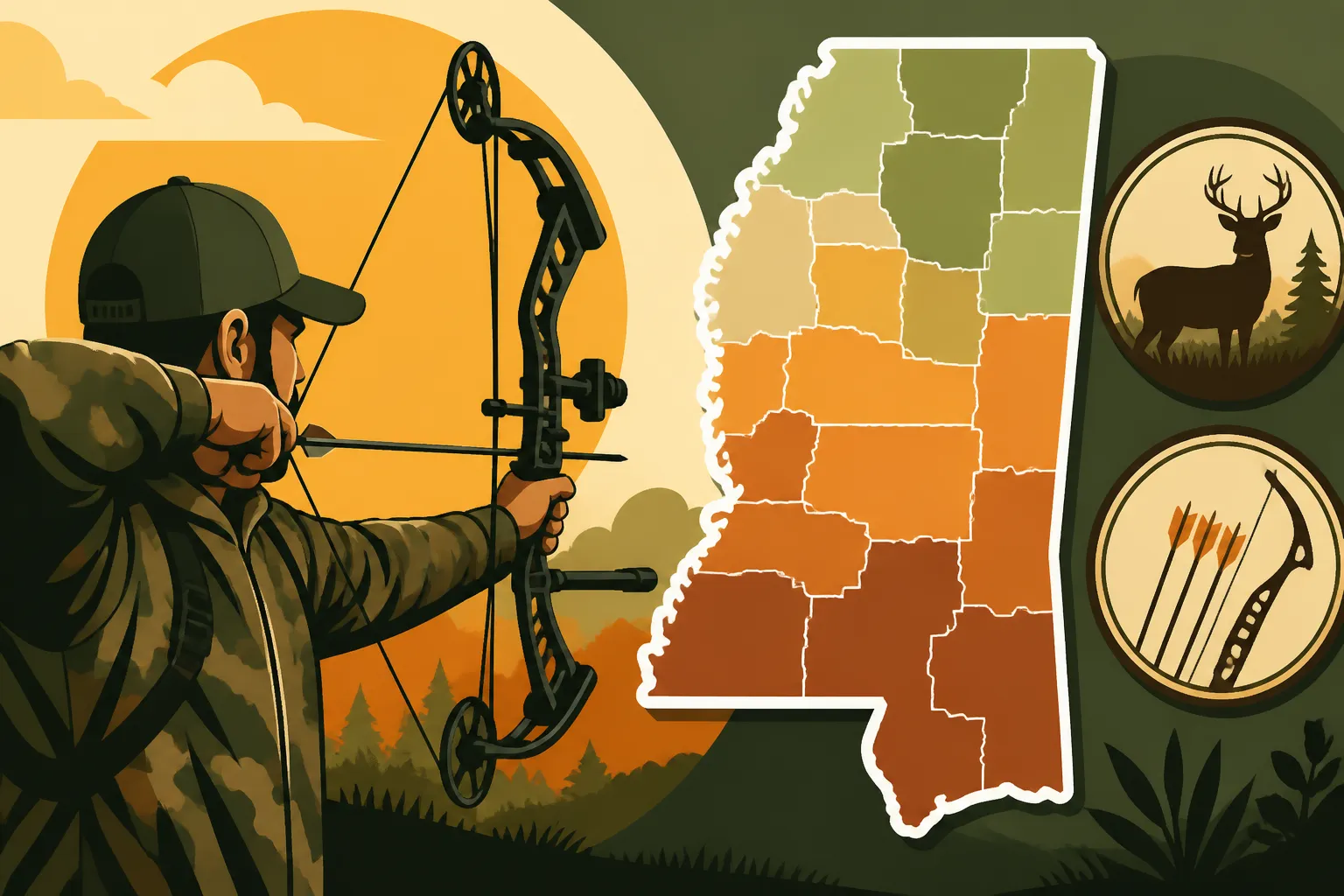
Mississippi is a fantastic state for deer hunting, but it's also wonderfully diverse, both geographically and biologically. That diversity is precisely why the Mississippi Department of Wildlife, Fisheries, and Parks (MDWFP) has implemented a unit-based management system. It's not just to make things complicated, I promise; it's a strategic approach to tailor regulations to the specific characteristics of the deer herd and habitat in different regions. If you've ever wondered why your buddy hunting a couple of counties over has different dates, this is why! Understanding this structure is the first step to truly mastering your hunting calendar. For a broader look, check out our guide on Mississippi's Four Deer Management Units.
Why We Have Different Units
The primary reason for dividing the state into units—Delta, Hills, Southeast, and North Central—comes down to sound wildlife management. Each unit possesses unique ecological traits, deer densities, and hunter pressures. For instance, the fertile soils and vast agricultural fields of the Mississippi Delta foster a different deer population dynamic than the rolling timberlands of the Hills Unit, or the mixed pine-hardwood forests of the Southeast. These differences mean that a "one-size-fits-all" approach to deer season would be inefficient and potentially detrimental to local deer populations. The MDWFP analyzes biological data, harvest reports, and habitat conditions from each unit to set specific season dates, bag limits, and antler restrictions. This tailored approach helps ensure healthy deer herds across the state while providing ample hunting opportunities. It’s all about balance, and making sure deer populations are managed sustainably in each unique environment.
How Units Impact Archery Season Lengths
The variations in archery season lengths directly reflect these unit-specific management goals. Some units might have a longer season to encourage more antlerless harvest, manage herd numbers, or spread hunter pressure. Others might have slightly shorter windows, often influenced by the timing of the rut or specific local population targets. It's a living system, constantly being evaluated, and sometimes those season dates can shift slightly from year to year based on the latest scientific data and public input. For archers, this means staying vigilant and knowing which unit you plan to hunt in well before you head out. Don't assume the dates from your home county apply everywhere! For more detailed information on how all seasons are structured, read our article on Mississippi Deer Season Structure Explained.
The Delta Unit Archery Season Breakdown
Ah, the Delta. Known for its rich soil, massive agricultural fields, and those bottomland hardwoods that hold some truly impressive deer. Hunting here is a special experience, but it definitely has its own rhythm, and that rhythm starts with a specific archery season.
Key Dates and Early Season Opportunities
Typically, the archery season in the Delta Unit kicks off in early October. This is a time of transition, where the sweltering heat of summer slowly begins to give way to cooler, crisper mornings, though afternoon temperatures can still be quite warm. Early October might seem early for some hunters, but it offers a unique advantage: deer patterns are often still tied to summer feeding habits, and food sources like standing beans or early dropping acorns can be incredibly productive. For many seasoned Delta hunters, this early window is about catching deer off guard before they become heavily pressured. The season usually runs continuously until mid-January, providing a long and ample opportunity to hunt bucks and does. It's a marathon, not a sprint, and there are many tactics to employ throughout this expansive season. If you're looking for exact dates for the Delta, our guide on Mississippi Delta Unit Archery Dates will have you covered.
However, hunting during these early weeks in October and even into November presents its own set of challenges. Mosquitoes are still a nuisance, and you'll often contend with dense foliage. Hunters typically focus on food-to-bedding funnels or water sources, especially during warmer spells. Finding that fresh sign along a field edge where deer are transitioning from bedding cover in the timber to a protein-rich soybean field can be golden. I've had some fantastic hunts simply glassing edges and finding the main trails leading into the woods. A good trail camera strategy is absolutely crucial during this period to understand current movement patterns, as they can change quickly with food availability.
Unique Challenges and Strategies
The Delta's unique terrain, dominated by flat landscapes, flooded timber, and vast fields, dictates specific archery strategies. Unlike hill country, you're often looking for subtle elevation changes, drainage ditches, or sloughs that act as natural travel corridors. Deer in the Delta can be notoriously reclusive in the dense bottomland hardwoods, often only revealing themselves when moving between bedding areas and food sources. The expansive nature of these properties, whether public lands like Delta National Forest or private leases, means you often have to cover a lot of ground, both physically and with your scouting efforts.
Another significant challenge is the potential for flooding, especially later in the season. Heavy rains can turn prime hunting spots into impassable swamps, requiring hunters to adapt quickly and have alternative locations scouted. When water levels rise, deer movement patterns can shift dramatically as they seek higher ground. This is where detailed topographic maps and aerial imagery, perhaps on a platform like GoHunt, become invaluable. You can identify those slight rises or isolated ridges that become deer magnets when the water comes up. Remember, patience is key in the Delta; sometimes, it takes multiple sits in a well-scouted area before a mature buck makes a mistake.
Navigating the Hills Unit Archery Dates
Moving east from the Delta, you enter the rolling topography of the Hills Unit, a diverse landscape of mixed pine and hardwood forests, steep ridges, and creek bottoms. This unit covers a massive portion of the state, from the upper reaches near the Tennessee border down towards the central part of Mississippi. The hunting here feels different, and so do the season dates.
Core Archery Window and Hunter Pressure
The Hills Unit generally sees its archery season open around the same time as the Delta, typically in early October. However, its closing date tends to align more closely with the statewide gun season opener, often in late November or early December, or sometimes continuing a bit longer. This period gives archers a solid window to pursue deer before the gun hunters fill the woods. Given the more accessible nature of many Hills Unit properties and a higher population density in some areas, hunter pressure can be more pronounced, especially on public lands and during weekends.
Early season in the Hills often finds deer still in their summer patterns, focusing on acorns when available, or browsing on lush green forage in creek bottoms. As the season progresses into November, the focus shifts towards the pre-rut and rut phases, which can offer some of the most exciting archery opportunities. Understanding Hunting the Rut in the Hills Unit can give you a significant edge during this crucial time. My advice? Get out there during the week if you can, especially in November. Those weekdays can offer a completely different experience with far less competition from other hunters.
Adapting to Terrain and Timber
Hunting the Hills Unit demands a different kind of scouting and strategy compared to the flatlands. Here, contour lines on your map become your best friend. Deer naturally use topography to their advantage, traveling along ridges, through saddles, and in the bottom of draws. Identifying these natural funnels and pinch points is paramount for successful archery hunting. Unlike the Delta where you might find deer spread out across vast fields, in the Hills, deer movement is often more concentrated along these natural corridors.
Timber composition also plays a huge role. Hardwood ridges dropping into oak flats can be absolute hotspots when acorns are falling. Pine thickets offer dense bedding cover, and deer will often stage in these areas before moving into feeding grounds. Mastering Reading a Ridge for Hills Unit Deer is a skill that will pay dividends. Setting up a treestand or ground blind along a transition line between a pine thicket and a hardwood bottom, or in a saddle connecting two ridges, can put you right in the deer's highway. Remember to pay close attention to wind direction in this varied terrain, as thermals can be tricky, often rising in the morning and falling in the evening in valleys and draws.
Extended Opportunities in the Southeast Unit
The Southeast Unit stands out for its unique, extended archery season, often stretching well into the colder months. This region, characterized by its longleaf pine savannas, mixed pine-hardwood forests, and sandy soils, offers a different kind of hunting experience and a wonderfully longer window for archers.
The Longer Archery Window Explained
One of the most appealing aspects of the Southeast Unit is its significantly longer archery season. While most units see archery wrapping up in late November or early December, the Southeast often continues into January, sometimes even into February, giving bowhunters several extra weeks, or even a full month, to pursue whitetails. This extended season is a fantastic opportunity for hunters who might not have as much time during the early or mid-season, or those who simply relish the challenge of late-season archery. This longer season often aligns with a later rut timing in some parts of the Southeast, providing a secondary or even primary peak for breeding activity that archers can capitalize on. Our detailed article, Hunting the Extended Southeast Unit Archery Window, dives deeper into how to make the most of this.
The logic behind this extended season often relates to deer density and management objectives in this part of the state. It allows for increased harvest opportunities, particularly for does, to keep populations in balance with the habitat. It also helps distribute hunter pressure over a longer period, potentially leading to a more relaxed hunting environment for those willing to brave the later dates.
Capitalizing on the Extended Archery Window
Hunting the Southeast Unit in January or February presents colder temperatures, often with less foliage, which can be a double-edged sword. On one hand, visibility is better, and deer movement can be more predictable as they focus heavily on remaining food sources. On the other hand, deer are often warier after months of hunting pressure. Key strategies for this late season involve finding those overlooked food sources that are still viable. These could be standing green fields, persistent acorns, or browse in clear-cuts.
It's also a great time to focus on bedding areas. With cold weather, deer need to conserve energy and will often bed in thick, south-facing cover to soak up what little sun is available. Setting up on travel routes leading to and from these bedding areas, particularly during midday, can be highly effective. Don't forget that using a ground blind can be particularly effective in these situations, allowing you to quickly adapt to changing conditions and provide ample concealment in sparse cover. The GoHunt app's satellite imagery can be a game-changer for identifying these crucial late-season bedding areas and travel corridors that might go unnoticed on the ground.
The North Central Unit: A Blend of Opportunities
Nestled between the Delta and the Hills, the North Central Unit offers its own unique set of archery season dates and hunting characteristics. This region often shares some features of both its neighbors, with areas of fertile bottomland mixed with more rolling timberlands.
Archery Season Structure and Overlap
The North Central Unit's archery season typically mirrors the Hills Unit, opening in early October and generally running until the gun season begins, usually in late November or early December. This provides a consistent archery window similar to much of the state, allowing hunters to target deer during the early season browse patterns and through the crucial pre-rut and rut periods. While it doesn't boast the extended season of the Southeast, it offers a solid, traditional archery experience.
Given its location, some parts of the North Central Unit experience a rut timing that can vary slightly from the peak in the deep Delta or the far eastern Hills. This variability means that diligent scouting and understanding local deer behavior are even more important. Hunters here often find success by focusing on transitional areas where agricultural fields meet timber, or along creek bottoms that serve as vital travel corridors, much like in the Delta, but with more elevation changes.
Public Land Considerations and Scouting
The North Central Unit contains several well-known public lands, including portions of Holly Springs National Forest and several Wildlife Management Areas. These areas offer excellent archery opportunities but can also see significant hunter pressure, especially as the gun season approaches. To succeed on public land, early season scouting is absolutely critical. Our article on Scouting Mississippi Public Land Before Season offers fantastic tips that apply directly to this unit. You need to get out there well before opening day to locate natural funnels, fresh sign, and potential bedding areas.
For those planning to hunt public land, using digital tools to pre-scout is paramount. Satellite maps can reveal hidden pockets of cover, forgotten food sources, or overlooked travel routes that might hold less pressured deer. Even with strong cell service, having your maps downloaded for offline use is a smart move, especially in areas with spotty reception. It's not uncommon to find yourself in a deep bottom where your phone becomes a glorified paperweight; having a mapping tool like GoHunt with offline capabilities can literally keep you from getting lost and help you navigate confidently. Setting up trail cameras where allowed can provide invaluable real-time intelligence on deer movement, helping you fine-tune your stand locations before you ever step foot in the woods with your bow.
Essential Tools for Staying Up-to-Date and Planning Your Hunt
Keeping track of Mississippi's ever-changing hunting regulations and season dates across multiple units can be a full-time job. Thankfully, there are some incredible resources available to help you stay on top of it all and plan your hunts effectively. Don't rely on old word-of-mouth or last year's calendar; direct, official sources are always your best bet.
Official MDWFP Resources
The absolute gold standard for Mississippi hunting information is the Mississippi Department of Wildlife, Fisheries, and Parks (MDWFP). Their website is a treasure trove of current regulations, season dates, license information, and unit-specific details. You can download the latest hunting digest, which outlines everything you need to know for the upcoming season, including precise archery dates for each unit. I can't stress this enough: always double-check the official MDWFP website or the latest hunting digest before heading into the woods. Regulations can change, and it's your responsibility as a hunter to be informed.
Beyond the website, the MDWFP also offers a fantastic mobile app. This app is more than just a digital copy of your license; it's a powerful tool that often includes maps of WMAs, allows you to check in harvests, and provides quick access to regulations right from your phone. Being able to quickly confirm a season date or antler restriction while you're in the field can save you a lot of grief. Make sure you've got it downloaded and are familiar with its functions. If you're ever worried about Using the MDWFP App Without Cell Service, remember many of the map features can be downloaded ahead of time.
Leveraging Digital Scouting and Planning Tools
In today's hunting world, digital scouting and planning tools have become indispensable. While the MDWFP provides the regulatory framework, platforms like GoHunt take your planning to the next level. These apps offer detailed satellite imagery, topographical maps, public and private land boundaries, and a host of other layers that help you identify prime hunting locations long before the season starts. You can mark potential stand sites, scout access routes, and pinpoint natural funnels from the comfort of your home.
When you're trying to figure out how to approach a tricky piece of public land or identify potential food sources on a new lease, a tool like GoHunt can be invaluable. It allows you to analyze terrain, vegetation types, and proximity to water, all factors that heavily influence deer movement during archery season. For example, during the early October archery opener, locating shaded creek bottoms for morning hunts in the Hills Unit or identifying standing crops adjacent to thick cover in the Delta becomes much easier with these digital aids. They empower you to make more informed decisions, leading to more successful and safer hunts.
| Deer Management Unit | Typical Archery Opening Date | Typical Archery Closing Date | Unique Notes for Archers |
|---|---|---|---|
| Delta Unit | Early October | Mid-January | Long season, flat terrain, focus on field edges and bottomland funnels. |
| Hills Unit | Early October | Late November/Early December | Varied terrain, focus on ridges, saddles, and creek bottoms. |
| Southeast Unit | Early October | Late January/Early February | Extended season, excellent for late-season hunts, focus on browse and thick cover. |
| North Central Unit | Early October | Late November/Early December | Mix of terrain, similar to Hills, strong public land presence. |
Note: Dates are generalized and can vary slightly year to year. Always consult the official MDWFP hunting digest for the precise, current season dates before hunting.
Disclaimer
The information provided in this guide is for general informational purposes only and is not intended as legal advice. Hunting regulations, season dates, and unit boundaries are subject to change. Always consult the official Mississippi Department of Wildlife, Fisheries, and Parks (MDWFP) website or the latest hunting digest for the most accurate and up-to-date information before planning and executing any hunting activities. Hunters are responsible for knowing and adhering to all applicable laws and regulations.