Mississippi Bison History Before Settlement
It's easy to look at Mississippi's lush, dense landscape today and think it's always been this way, completely overlooking the incredible natural history that shaped it long before roads and towns appeared. But if you dig a little deeper, you uncover fascinating truths, like the fact that magnificent bison once thundered across our fields and through our forests. This guide dives into the lost world of Mississippi's bison, exploring where they roamed, what sustained them, and how their presence shaped the very ground we hunt on today.
The Eastern Bison: A Lost Icon of Mississippi's Landscape
When we think of bison, most of us picture the vast plains of the American West, herds stretching to the horizon under endless skies. It’s a powerful image, but it’s incomplete. What many folks don't realize is that a distinct subspecies, the Eastern bison (Bison bison pennsylvanicus), once called the forests and savannas of the eastern United States home, including a significant portion of our own Magnolia State. These weren't just stray wanderers; they were an integral part of Mississippi's pre-settlement ecosystem, shaping the land and influencing the lives of its earliest inhabitants.
Imagine trying to track a deer today across a dense pine thicket, only to find ancient, well-worn trails wide enough for a massive beast. That's the kind of subtle hint of their presence that would have been obvious just a few centuries ago. The sheer scale of their existence here is hard to grasp now, but their impact was profound.
Tracing Their Ancient Hoofprints in the Magnolia State
How do we know bison were here? It's not just a hunch. We rely on a combination of archaeological findings, oral traditions from indigenous tribes, and detailed accounts from early European explorers and settlers. These historical records paint a vivid picture of a landscape far different from what we see now, one where bison were a familiar sight.
Archaeologists have unearthed bison remains in various parts of Mississippi, often near ancient village sites, indicating their importance as a food source for Native American communities. These discoveries aren't always complete skeletons, but fragments of bone, horn cores, or even tools made from bison parts, which offer undeniable proof. Then there are the stories, passed down through generations of Choctaw, Chickasaw, and other tribes, which speak of hunting these massive animals. These aren't just myths; they're historical documents in their own right, reflecting a deep, intimate knowledge of the land and its wildlife. Finally, European chroniclers, trappers, and surveyors, as they pushed into the territory, frequently noted the presence of buffalo (their common term for bison) in their journals, sometimes even complaining about how difficult it was to travel through areas "buffaloed" by their trails. These primary sources are crucial in piecing together the true scope of their range and numbers.
Habitat and Range: Where the Herds Once Roamed
Mississippi might seem like an unlikely place for bison today, given our predominantly forested landscape. However, before widespread deforestation and agricultural conversion, the state boasted a mosaic of habitats perfectly suited for these grazers. While not the endless short-grass prairies of the West, Mississippi had its own unique version of open country mixed with woodlands.
The primary habitats included extensive longleaf pine savannas in the southern and central parts of the state. These savannas, maintained by frequent natural fires, were characterized by a grassy understory beneath widely spaced pines, offering both abundant forage and relatively open travel. Imagine driving through parts of DeSoto National Forest Hunting or Bienville National Forest Hunting today, but with far more open understory and vast stretches of native grasses. Additionally, river cane breaks, found along major river systems like the Mississippi and Pascagoula, provided dense cover and year-round browse, especially during lean winter months. These cane fields were like natural hideouts and food pantries. Openings in the bottomland hardwoods of the Delta, often created by beaver activity or periodic flooding, also provided crucial grazing areas. Understanding these historical habitats can even inform modern deer hunting strategy; for instance, recognizing areas that historically held open, grassy understories might reveal forgotten travel corridors for today's deer herds. When I'm looking at satellite imagery on my GoHunt app, I sometimes try to visualize what those pre-settlement landscapes might have looked like, imagining where bison would have sought out prime grazing, which often correlates to where other game finds resources now.
What Supported Mississippi's Bison Population?
The presence of a robust bison population wasn't accidental; it was a testament to the rich, diverse ecosystems Mississippi once held. These magnificent animals were not just passing through; they thrived here, sustained by a delicate balance of climate, vegetation, and natural processes. It’s a powerful reminder of how truly wild and productive our state was, a far cry from the managed landscapes we often see today.
When we consider what it takes to support massive herds of any large herbivore, it comes down to consistent access to quality forage, water, and appropriate cover. Mississippi, in its pre-settlement glory, offered all these in abundance, albeit in a different configuration than the Western plains. It's a testament to their adaptability and the sheer bounty of the land.
The Landscape They Depended On
Forage was, without a doubt, the number one requirement for bison. They are grazers by nature, meaning their diet consists primarily of grasses and forbs (broad-leafed herbaceous plants). Mississippi's longleaf pine savannas and natural prairies, especially in areas like the Black Belt Prairie in the northeast or isolated prairies throughout the central part of the state, were essentially giant natural buffets for them. These areas were rich in switchgrass, indiangrass, big bluestem, and countless other nutritious plants. The soil here was often fertile, supporting lush growth.
Water was another critical factor. Bison, like all large mammals, need regular access to water sources. Mississippi's abundant rivers, streams, sloughs, and natural springs provided ample hydration, even during drier periods. The network of waterways, especially in the Delta and coastal plain, would have acted as natural highways for herds moving between grazing grounds. Furthermore, the practice of natural wildfires, often ignited by lightning or intentionally set by Native Americans to improve hunting grounds, played a vital role. These fires cleared out dense underbrush, promoted fresh, nutritious new growth of grasses and legumes, and created the open, park-like environments that bison preferred. It's a stark contrast to today, where fire suppression has often led to overgrown, less diverse forests. Even now, you can spot areas of managed fire on a good mapping app like GoHunt, and it gives you a sense of how vital those open areas are for wildlife.
The Role of Early Indigenous Peoples
The relationship between bison and the early indigenous peoples of Mississippi was deeply intertwined and mutually beneficial in many ways. Native American tribes like the Choctaw, Chickasaw, and Natchez viewed bison not just as game, but as a central figure in their survival, culture, and spiritual beliefs.
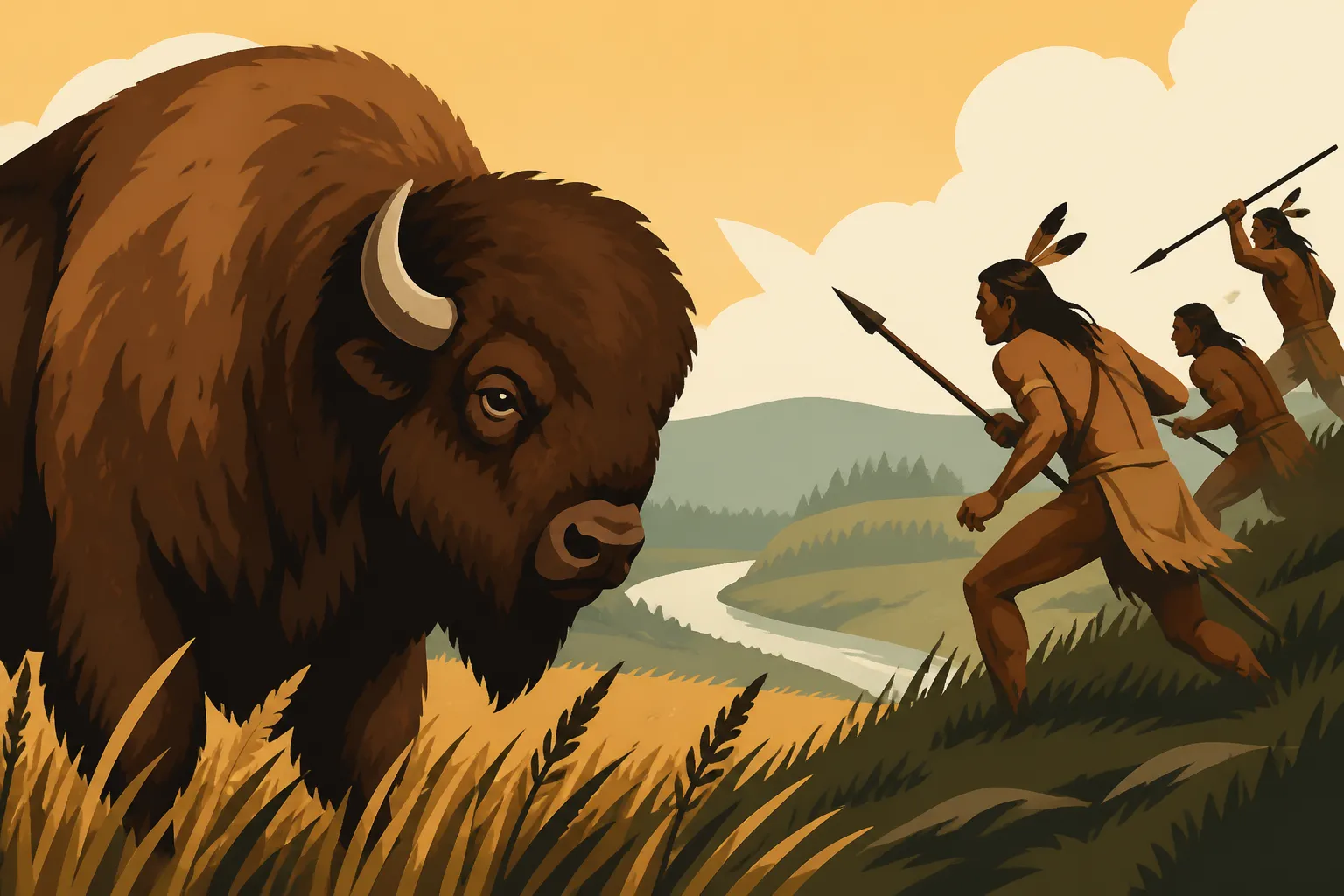
Bison provided sustenance in every possible way. Their meat was a primary source of protein, especially in leaner times. Beyond food, their hides were used for clothing, shelter (tipis), and blankets. Bones were fashioned into tools, utensils, and weapons. Horns became cups, spoons, or ceremonial objects. Even sinew was used for thread and bowstrings. Hunting these massive animals was a communal effort, requiring skill, bravery, and deep knowledge of the bison's habits and the terrain. Indigenous peoples often employed sophisticated hunting techniques, such as driving herds into natural traps or using spears and bows from horseback or on foot. They understood the delicate balance of the ecosystem and, unlike later European market hunters, generally hunted sustainably. They also played a role in maintaining the open grasslands through controlled burning, which benefited both bison and other game species. Their presence and practices inadvertently helped shape the very landscape that sustained these great herds, making them active participants in the ecological health of the region. This historical symbiosis is a powerful lesson in responsible resource management.
| Habitat Element Pre-Settlement Mississippi | Modern Equivalent / Significance |
|---|---|
| Longleaf Pine Savannas (grassy understory) | Managed pine forests, areas undergoing prescribed burns. Key for quail, deer, rabbits. |
| Natural Prairies (tallgrass) | Small, remnant prairies; open agricultural fields (less diverse). Excellent dove fields. |
| River Cane Breaks (dense cover & browse) | Thick creek bottoms, inaccessible swamp edges. Prime hog and deer bedding. |
| River/Slough Systems (water & travel ways) | Major river corridors (Mississippi, Pascagoula). Critical for waterfowl, deer, hogs. |
| Fire-maintained Openings (new growth) | Clear-cuts, food plots, intentionally burned areas. Attracts deer and turkey. |
The Decline and Disappearance of Mississippi's Bison
The story of the Eastern bison in Mississippi is one of incredible abundance followed by a tragically swift disappearance. It serves as a stark reminder of how quickly even the most robust wildlife populations can be decimated when faced with overwhelming pressures. For centuries, these animals had thrived alongside indigenous peoples, but the arrival of European settlers brought with it a different set of values and technologies that would prove catastrophic for the bison. Their extinction in Mississippi and across the East was not a gradual fading but a rapid, almost complete eradication that left a profound ecological void.
It’s sobering to think that such a powerful symbol of American wilderness could vanish from our state’s landscape within a relatively short period. The story of their decline is complex, but the primary drivers are clear, offering lessons that resonate even in today’s conservation efforts.
Factors Leading to Extirpation
The primary cause of the Eastern bison's demise in Mississippi was, without question, unchecked hunting by European settlers. Unlike the sustainable hunting practices of Native Americans, early European hunters, driven by market demand and a belief in inexhaustible resources, engaged in widespread slaughter. Bison hides were incredibly valuable, and their meat, particularly the tongue, was considered a delicacy. Hunters would kill hundreds of animals, often taking only the most valuable parts and leaving the rest to rot. This wasn't just subsistence; it was industrial-scale harvesting that completely overwhelmed the bison's reproductive capacity.
Alongside relentless hunting, habitat loss played a massive role. As European settlements expanded, forests were cleared for timber, and vast tracts of land were converted to agriculture. The open savannas and prairies that bison relied upon were plowed under for crops like cotton and corn. This fragmentation and destruction of their natural habitat left the herds with fewer places to roam, less food, and fewer safe havens. They were pushed into smaller, more isolated pockets, making them even more vulnerable to hunting pressure. Disease, sometimes introduced by domestic livestock, also contributed to their decline, weakening populations already stressed by hunting and habitat loss. By the mid-19th century, the Eastern bison was functionally extinct in Mississippi, a truly devastating loss of biodiversity that forever altered our state's natural heritage. This tragic history is why understanding Why Mississippi Has No Bear Season is so important, as it highlights modern efforts to protect vulnerable large mammals from a similar fate.
Echoes in Modern Mississippi
While the thunder of bison hooves is no longer heard across Mississippi, their historical presence leaves an indelible mark and offers crucial lessons for today's hunters and conservationists. Understanding where these magnificent animals once roamed helps us appreciate the scale of landscape change and the potential for habitat restoration.
For example, when we consider the importance of fire in maintaining the open, grassy understories of longleaf pine savannas for bison, it reinforces why prescribed burning is a vital management tool for species like white-tailed deer, wild turkey, and even bobwhite quail today. Areas where bison once grazed might still possess the underlying soil characteristics or hydrological patterns that make them prime locations for food plots or natural browse regeneration. Looking at historical maps or even modern topographic maps through the lens of a bison's needs can reveal forgotten corridors or resource-rich pockets that modern game animals still utilize. Using a tool like GoHunt to analyze terrain, vegetation patterns, and historical land use can give a hunter an edge by revealing areas that naturally concentrate game, much like they would have concentrated bison centuries ago. Even though we’re not tracking bison, applying historical ecological knowledge helps us interpret our current landscape.
The story of Mississippi's bison also underscores the importance of sound wildlife management and the dangers of uncontrolled exploitation. It's why we have seasons, bag limits, and robust conservation agencies like the MDWFP today. Their disappearance serves as a poignant reminder to cherish and protect the incredible diversity of game species we still have, from the numerous White-Tailed Deer Across Mississippi to the thriving populations of Wild Turkeys in Mississippi, ensuring that no other iconic species meets a similar fate.
Disclaimer
This article is for general informational purposes only and does not constitute professional advice. Laws, prices and regulations vary by location and change over time. Consult a qualified professional for guidance on your specific situation.