Mississippi Elk History and Extirpation
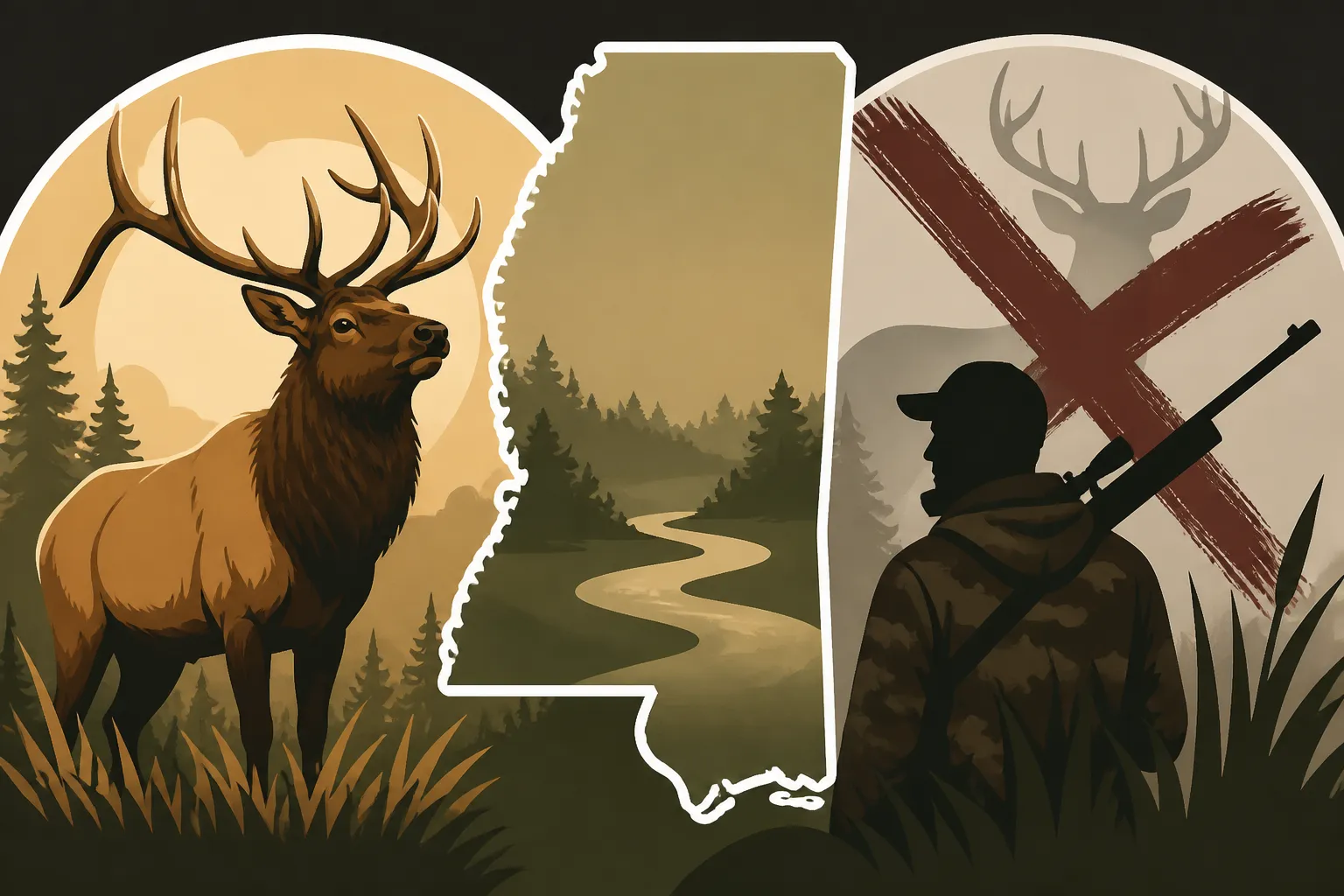
It's quite common for folks in Mississippi to wonder about the big game that once roamed our state, especially when you hear whispers of elk. Many hunters today have only known deer, turkey, and hogs, but our landscape once harbored truly magnificent animals that have long since vanished. This guide will take a deep dive into the historical presence of elk in Mississippi, exploring how they once thrived here, what led to their eventual disappearance, and why, despite conservation efforts for other species, these iconic animals haven't made a comeback to our timber and fields.
Mississippi's Ancient Elk Past: A Vanished Giant
Before European settlement transformed the landscape, Mississippi was a vastly different place, a sprawling mosaic of longleaf pine savannas, dense bottomland hardwoods, and open prairies. In this rich, diverse environment, a truly majestic creature, the Eastern elk (Cervus canadensis canadensis), was a native resident. These weren't the smaller, more familiar whitetails we chase today; these were imposing animals, far larger than any deer, with bulls weighing upwards of 600-1,000 pounds and sporting impressive racks that could span five feet or more.
Imagine walking through what's now the Homochitto National Forest or the vast tracts of the Mississippi Delta hundreds of years ago. You wouldn't just be looking for deer sign; you'd be seeing evidence of these colossal animals, browsing on woody vegetation, grazing in open glades, and leaving massive tracks in the soft earth. They were an integral part of the ecosystem, their grazing habits shaping plant communities, and their sheer presence influencing other wildlife. For early Indigenous peoples, elk were a vital resource, providing abundant meat, hides for clothing and shelter, and antlers and bones for tools and ornaments. Their stories and artifacts often speak to the profound relationship between humans and these magnificent creatures, highlighting their importance in the cultural and ecological fabric of the land.
Where Elk Roamed in Mississippi
Historical accounts and archaeological evidence suggest that elk were widely distributed across Mississippi, though perhaps more concentrated in certain areas that offered optimal habitat. The state's diverse topography, from the rich alluvial plains of the Mississippi Delta to the rolling hills and pine forests further east, provided a variety of environments suitable for elk.
The Delta region, with its expansive bottomland hardwood forests, lush canebrakes, and fertile river bottoms, would have been prime elk country. The abundant forage and water sources, coupled with dense cover, created ideal conditions for these large herbivores. Similarly, the longleaf pine ecosystems and hardwood draws found in the central and southern parts of the state would have supported healthy populations. These open, park-like savannas, maintained by natural fires, provided a mix of grasses, forbs, and browse that elk favored. Even the Loess Bluff hills, with their unique geological formations and mixed forests, likely harbored pockets of elk. Their movement would have followed food availability and seasonal changes, much like our White-Tailed Deer Across Mississippi do today, traversing various habitat types to find the best resources.
The Decline and Disappearance of Mississippi Elk
The tale of the Eastern elk in Mississippi, much like in many other states across the eastern U.S., is a somber one, marked by rapid decline and eventual extirpation. It's a classic example of how unchecked human expansion and resource exploitation can lead to the loss of an entire species from a region. The forces that drove elk to extinction here were complex, but they primarily boiled down to two major factors: habitat destruction and unregulated hunting.
The arrival of European settlers brought with it a dramatic transformation of the landscape. Forests were cleared for agriculture, towns, and roads, breaking up the vast, interconnected habitats that elk needed to thrive. Bottomland hardwoods were felled, pine savannas were converted, and the wild, untamed spaces that once defined Mississippi quickly shrank. Elk, being large animals that required significant acreage, were particularly vulnerable to this fragmentation. Their home ranges were reduced, forcing them into smaller, more isolated populations.
Unregulated Hunting Pressure
While habitat loss was a slow, grinding force, unregulated hunting delivered the knockout blow. Early settlers viewed elk as an unlimited resource, a source of meat, hides, and tallow that could be harvested without restraint. There were no seasons, no bag limits, and no thought given to sustainable populations. Market hunting, where animals were killed purely for commercial profit, was rampant. Elk meat and hides were valuable commodities, driving hunters to pursue them relentlessly.
This relentless pressure quickly decimated local populations. Elk, being large and relatively easy to track compared to smaller game, were often targeted first. The sheer volume of harvest, combined with the loss of their crucial habitat, meant that populations couldn't rebound. By the mid-19th century, elk numbers in Mississippi were in precipitous decline. The last wild Eastern elk in Mississippi is generally believed to have been killed in the 1840s, a stark reminder of how quickly a species can vanish under such conditions. It's a sharp contrast to the carefully managed Mississippi Deer Season Structure Explained we have in place now, designed to ensure healthy populations for future generations.
Why Elk Didn't Return to Mississippi
Following the extirpation of Eastern elk, and as conservation awareness grew in the late 19th and early 20th centuries, efforts to restore large game animals began across the nation. States like Pennsylvania, Kentucky, and Arkansas successfully reintroduced elk using stock from western states. However, Mississippi did not see a successful elk reintroduction, and there are several practical and ecological reasons for this.
One major hurdle is the sheer cost and logistical complexity of a reintroduction program. It requires significant funding, suitable release sites, a healthy source population of elk, and extensive public support. While Mississippi has done incredible work restoring other species, the resources simply haven't been allocated for elk. Furthermore, the genetic lineage of the Eastern elk is gone, meaning any reintroduction would involve Rocky Mountain elk or another subspecies, which brings its own considerations regarding adaptation and ecological fit.
Habitat and Human Factors
Even if funding and stock were available, modern Mississippi presents different challenges than it did two centuries ago. While there are still large tracts of public land, such as the Public Hunting Land in Mississippi like Delta National Forest or Homochitto National Forest, the overall landscape is more fragmented and populated. Elk require vast areas of diverse habitat, and finding contiguous blocks large enough to support a self-sustaining, free-ranging population without significant conflict with agriculture or private landowners would be a monumental task. Imagine the challenges that could arise when a 700-pound bull decides a farmer's cornfield looks like a tasty snack!
There are also concerns about disease transmission to existing deer herds, as seen with Mississippi's Chronic Wasting Disease Zones affecting our whitetails. Introducing a new large cervid population would require extremely careful health screenings and ongoing monitoring. While the idea of elk roaming Mississippi again is romantic to many, the practical realities of habitat availability, potential human-wildlife conflicts, and the significant financial and ecological investment required have consistently pushed it to the bottom of the state's wildlife management priorities. Our focus remains on managing the species we have, like working to improve Mississippi Turkey Population Trends or controlling Mississippi Feral Hog Regulations.
Lessons Learned for Modern Wildlife Management
The history of elk in Mississippi serves as a powerful, albeit tragic, lesson in wildlife management and the importance of conservation. Their disappearance highlights the critical need for regulated hunting, habitat preservation, and thoughtful wildlife policy. While we no longer have elk, the lessons learned from their extirpation continue to inform how we manage our current game species, ensuring that we don't repeat the mistakes of the past.
Today, wildlife agencies like the Mississippi Department of Wildlife, Fisheries, and Parks (MDWFP) employ sophisticated strategies, including scientific population surveys, habitat restoration projects, and careful regulation of hunting seasons and bag limits, to ensure sustainable populations. Hunters play a crucial role in this, not just through their participation in regulated harvests, but also through their financial contributions via license sales and excise taxes on hunting equipment, which directly fund conservation efforts. These funds support everything from land acquisition to research and enforcement. Tools like GoHunt can help modern hunters understand current regulations and find prime hunting locations for existing species by providing data-driven insights, a far cry from the unbridled exploitation of yesteryear.
Comparing Past and Present Management
Let's take a moment to reflect on the stark differences between how game was managed (or not managed) in the past versus our approach today.
| Feature | Early 19th Century (Elk Extirpation Era) | Present Day (Modern Mississippi Hunting) |
|---|---|---|
| Hunting Regulations | None; unlimited harvest, market hunting | Strict seasons, bag limits, species-specific rules |
| Habitat Preservation | Largely ignored; widespread clearing | Focus on land acquisition, habitat restoration, WMA management |
| Wildlife Monitoring | Non-existent; anecdotal observations | Scientific surveys, population estimates, disease testing |
| Public Land Access | Informal, often restricted | Designated public lands (National Forests, WMAs) with clear rules |
| Funding for Conservation | None | Hunter-generated funds (licenses, taxes), grants |
| Hunter Education | Not required | Mandatory for younger hunters, safety focus |
This comparison clearly illustrates the evolution of our understanding and approach to wildlife. While we can't bring back the Eastern elk, we can ensure that future generations of Mississippians have the opportunity to hunt and enjoy the diverse array of game species across Mississippi that still call our state home, from thriving deer herds to recovering Mississippi's Recovering Black Bear Population. It’s a constant balancing act, but one that dedicated hunters and conservationists work tirelessly to maintain. And when you're planning your next hunt, remember that resources like Mississippi Hunting Licenses and What They Cost and the MDWFP website are there to help you hunt legally and ethically, contributing to the very conservation efforts that protect our wild places and the animals within them.
Disclaimer
This article is for general informational purposes only and does not constitute professional advice. Laws, prices and regulations vary by location and change over time. Consult a qualified professional for guidance on your specific situation.