Mississippi Alligator Nuisance Complaints
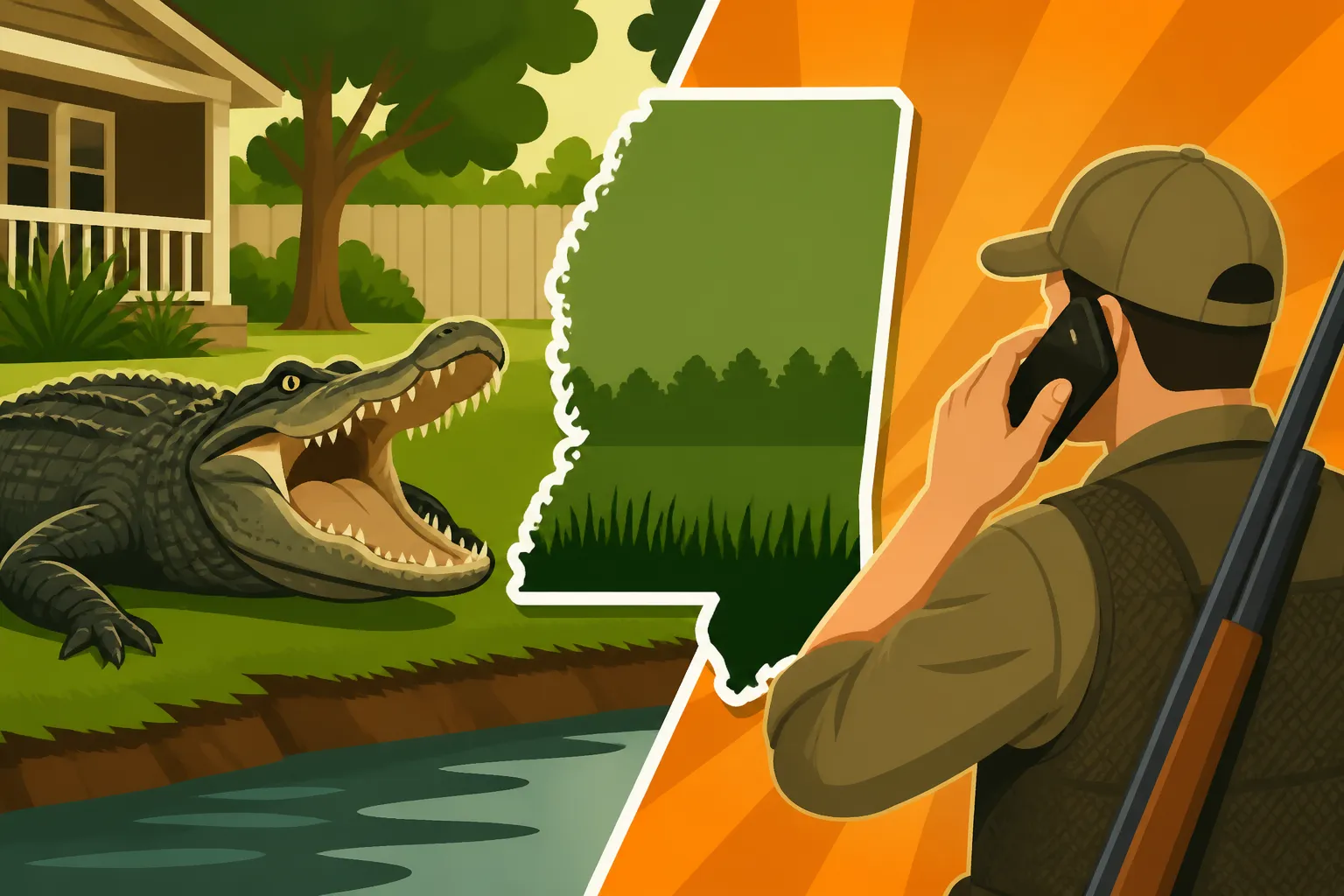
It’s a sight that can make your heart leap into your throat: spotting an alligator far too close to comfort, perhaps in your pond, near your dock, or even worse, near a playground. For many folks in Mississippi, the presence of these powerful reptiles is a part of life, but when they start showing up in places that feel unsafe or threaten your pets and livestock, it quickly becomes a serious concern. This guide is here to walk you through understanding what constitutes a genuine "nuisance alligator" in Mississippi and, more importantly, exactly what steps you should take to report it and ensure a safe resolution.
Understanding What Constitates a Nuisance Alligator in Mississippi
Before you pick up the phone, it’s really helpful to understand the difference between an alligator simply existing in its natural habitat and one that has truly become a problem. Mississippi is alligator country, especially in the southern and western parts of the state. These incredible reptiles are a vital part of our ecosystem, and seeing one in a bayou, a swamp, or even a large creek on public lands like the Pascagoula River Wildlife Management Area or Mississippi River Batture Public Access is usually just a sign of a healthy environment. They're doing their thing, living out their lives, and generally want nothing to do with us.
When an Alligator is Just Being an Alligator
Most alligator sightings are harmless. A gator basking on a log, swimming across a lake, or even crossing a road to get to another water body isn't necessarily a threat. They’re cold-blooded creatures, often just trying to warm up or find food and mates. It’s important to give them space and observe them from a safe distance. Don't approach them, feed them, or harass them in any way. Doing so can habituate them to humans, which is often the first step towards them becoming an actual nuisance. Many times, if you leave them alone, they will move on. This is especially true for smaller gators, which are generally more timid and less likely to pose a significant risk. Think of it like seeing a coyote in a field—it’s a wild animal, and usually, it’s best to let it be.
Defining a True Nuisance: When to Report
A "nuisance alligator" is one that poses a direct threat to people, pets, or property. This isn't just a subjective feeling of unease; it's about observable behaviors that indicate a real danger. The Mississippi Department of Wildlife, Fisheries, and Parks (MDWFP) has specific criteria for what they consider a nuisance.
Here’s a breakdown of situations that warrant a call:
- Aggressive Behavior: If an alligator is hissing, lunging, or charging at people or pets, it’s a nuisance. This isn’t typical gator behavior unless they feel cornered or have been fed by humans.
- Loss of Fear of Humans: An alligator that repeatedly approaches people, swims directly towards boats, or lingers around docks and fishing areas without retreating when approached suggests it has lost its natural fear. This is often a result of being fed, intentionally or unintentionally.
- Threat to Pets or Livestock: If an alligator has attacked or consumed a pet, or is actively preying on livestock (like chickens, goats, or small calves), it is absolutely a nuisance.
- Inappropriate Locations: While gators can wander, one that takes up residence in a swimming pool, a golf course pond frequented by people, or consistently appears in a residential backyard where children play is a problem.
- Size Matters: While any gator can be a concern, larger alligators (typically over 4 feet long) are generally considered more dangerous and are the primary focus of nuisance removal programs. Smaller gators usually pose little threat to humans or larger pets.
Consider this table to quickly assess if your alligator encounter crosses the line into a nuisance situation:
| Scenario | Is it a Nuisance? | Recommended Action |
|---|---|---|
| Gator basking on a distant bank | No | Observe from a safe distance. Do not approach. |
| Gator swimming across a large lake/river | No | Keep your distance. Do not harass. |
| Small gator (under 4 ft) in a pond/creek | No | Maintain distance. Do not feed. |
| Gator hissing/charging at you/your pet | YES | Retreat immediately. Call MDWFP. |
| Gator repeatedly approaching people/boats | YES | Do not engage or feed. Call MDWFP. |
| Gator has attacked a pet or livestock | YES | Ensure safety of other animals/people. Call MDWFP. |
| Gator habitually in a swimming pool | YES | Do not attempt to remove yourself. Call MDWFP. |
| Large gator (over 4 ft) on a playground | YES | Clear the area. Call MDWFP immediately. |
| Large gator frequently near residential docks | Potentially | If showing aggressive behavior or loss of fear, YES. If just passing through, monitor. If concerned, still worth a call for guidance. |
It's about observing behavior and understanding the context. A wild animal in its element is one thing; a wild animal acting aggressively or becoming too comfortable around human activity is quite another.
Reporting a Nuisance Alligator: Who to Call and What to Expect
Once you've determined that you truly have a nuisance alligator situation on your hands, reporting it promptly and correctly is key. You don't want to try and handle these powerful creatures yourself – it's incredibly dangerous and often illegal.
The Right Contacts: Mississippi Department of Wildlife, Fisheries, and Parks (MDWFP)
The Mississippi Department of Wildlife, Fisheries, and Parks (MDWFP) is the primary agency responsible for managing alligators and responding to nuisance complaints. They have trained wildlife biologists and alligator program coordinators who know how to assess the situation and safely capture and relocate or remove nuisance animals.
When you call, be prepared to provide as much detail as possible. This isn't the time to be vague! Here's what they'll likely want to know:
- Your Contact Information: Name, phone number, and address where the alligator was sighted.
- Exact Location of the Alligator: Be precise. Is it in a pond, a canal, a specific backyard, or a particular body of water on a Mississippi Wildlife Management Areas or private land? GPS coordinates or detailed directions are incredibly helpful.
- Size Estimate: Give your best guess of the alligator's length. This helps them determine the level of threat and the resources needed for removal.
- Behavior Observed: Describe why you believe it's a nuisance. Did it hiss? Lunge? Eat a pet? Continuously approach people? Just lying there?
- Time of Sighting: When did you last see the alligator, and how long has it been there?
- Photos/Videos: If you can safely get them, photos or short videos can be invaluable for the MDWFP to assess the situation before they even arrive.
It's generally best to reach out directly to the MDWFP’s regional office for your area or their central office. You can find their contact information on their official website. Avoid calling local police or sheriff departments unless it's an immediate, life-threatening emergency, as they will typically just refer you back to MDWFP.
The Nuisance Alligator Removal Program
Mississippi runs a dedicated Nuisance Alligator Removal Program. When you report a verified nuisance alligator, the MDWFP typically dispatches a permitted nuisance alligator trapper. These trappers are highly experienced individuals who are licensed and authorized by the state to handle these situations. They're not just random folks with a fishing pole; they have specialized equipment and knowledge to safely and humanely capture these animals.
It's important to understand that not every alligator sighting will result in immediate removal. MDWFP personnel will assess the situation based on the information you provide and, if necessary, an on-site evaluation. If the alligator is deemed a legitimate threat, the trapper will be assigned. The trapper will then work to locate and remove the alligator. This can sometimes take time, as alligators are elusive and can be difficult to capture. The process is handled by professionals to ensure public safety and the welfare of the animal where possible.
What Happens After a Report: Removal, Relocation, and Prevention
Once you've made that important call and an MDWFP-authorized trapper is involved, what’s the usual course of action? And what can you do to keep future alligator encounters from becoming problems?
The Trapper's Role and Alligator Fate
Nuisance alligator trappers in Mississippi have a tough job. They're dealing with powerful, wild animals that can be dangerous. Their primary goal is to remove the threat to public safety.
In many cases, especially with larger, aggressive alligators, removal often means euthanization. This is a reality of nuisance wildlife management, as relocating large, habituated, or aggressive alligators often just moves the problem to a new location or results in the alligator returning to its original territory. It's difficult to successfully relocate a truly problematic alligator to a new wild area without it trying to find its way back or causing issues in its new environment. MDWFP's focus is on protecting human life and property.
Smaller, non-aggressive alligators sometimes might be relocated to suitable, remote habitats, but this is less common for nuisance animals, as the very definition of nuisance implies a problem behavior or location that relocation may not solve. The trapper is also responsible for proper disposal or utilization of the captured alligator.
The Importance of Not Feeding Alligators
This cannot be stressed enough: DO NOT FEED ALLIGATORS. This is perhaps the single biggest factor in turning a wild alligator into a nuisance. When alligators are fed, they quickly associate humans with food. They lose their natural fear, become bolder, and will approach people expecting a meal. This is incredibly dangerous for both the alligator and for humans. An alligator that has been fed is much more likely to be deemed a nuisance and removed. This applies to intentional feeding, but also unintentional feeding, such as leaving fish scraps at a dock or cleaning game near the water's edge. Even something like discarding uneaten pet food near a pond can inadvertently attract and habituate them.
Consider the consequences, not just for you but for everyone else who uses that body of water. A fed gator becomes everyone's problem. Just as you wouldn't feed Mississippi's Recovering Black Bear Population or leave out food for Coyotes and Predators in Mississippi, treat alligators with the same respect for their wild nature.
Coexisting and Prevention Strategies
While you can't control every wild animal, there are many proactive steps you can take to minimize the risk of a nuisance alligator situation on your property or in areas you frequent:
- Give Them Space: If you see an alligator, keep a safe distance. A good rule of thumb is at least 30-50 feet. Never approach a nest or baby alligators; the mother is likely nearby and highly protective.
- Supervise Children and Pets: Always keep children and pets away from the edges of bodies of water where alligators might be present. Dogs, in particular, can be seen as easy prey. Keep them on a leash and away from the water's edge.
- Swim Safely: Only swim in designated swimming areas during daylight hours. Alligators are most active at dawn, dusk, and night. Avoid swimming in murky water where visibility is low.
- Remove Attractants:
- Fishing: Clean fish away from the water's edge and dispose of scraps in a secure garbage can.
- Pets/Livestock: Secure pets and livestock. Don't let dogs drink or swim in alligator-inhabited waters unsupervised.
- Garbage: Ensure all trash cans are secure and don't overflow, attracting rodents and other small animals that might, in turn, attract gators.
- Be Aware of Your Surroundings: If you're on a boat, kayak, or paddleboard, be mindful of gators. Avoid getting too close or startling them. For those who enjoy the outdoors, becoming familiar with local wildlife patterns, perhaps even through apps and resources like GoHunt, can help you understand the habitats you're recreating in. While GoHunt is often thought of for deer or turkey, understanding the general layout of swamps, bayous, and large water features can inform your overall awareness of where alligators are likely to be found.
- Educate Others: Share these safety tips with family, friends, and neighbors, especially those new to areas where alligators are common. The more people who understand responsible behavior around alligators, the safer our communities will be.
By taking these steps, you not only protect yourself and your loved ones but also contribute to the healthy and natural coexistence of humans and Mississippi Alligator Population. Remember, a little caution goes a long way when sharing the landscape with these ancient and powerful creatures.
Disclaimer
This article is for general informational purposes only and does not constitute professional advice. Laws, prices and regulations vary by location and change over time. Consult a qualified professional for guidance on your specific situation.