Mississippi Cottonmouth Range in Swamp Country
There’s a certain primal anxiety that bubbles up when you're deep in the Mississippi woods, especially in those low-lying, water-logged areas, and you hear that slithering sound or catch a glimpse of something dark moving in the muck. For many of us, that immediate thought leaps to the cottonmouth, or water moccasin, and the real fear of an encounter. This guide isn't here to stoke those fears, but to arm you with knowledge about where these venomous snakes actually live in our beautiful state, how to identify them, and crucially, how to navigate their territory safely so you can focus on your hunt, not your next step.
Understanding the Cottonmouth's True Domain: Where They Lurk in Mississippi's Watery Landscapes
When we talk about "swamp country" in Mississippi, we're really talking about a diverse collection of habitats, all linked by one common thread: water. This isn't just about stagnant ponds; it encompasses a whole network of wet environments that cottonmouths call home. Knowing these specific areas is your first line of defense, helping you stay aware and cautious, especially when you're focused on Hunting Delta Unit Bottomland Deer or other game.
Bottomland Hardwood Forests and River Floodplains
The classic image of "swamp country" often conjures up dense bottomland hardwood forests, and for good reason. These areas, particularly within the vast floodplains of the Mississippi River and its tributaries, are prime cottonmouth real estate. Think of places like the Delta region, where seasonal flooding creates extensive wetlands, sloughs, and oxbow lakes. The snakes thrive in these environments because they offer an abundant food source – fish, frogs, other snakes, even small mammals – and plenty of cover.
During the drier parts of the year, these areas might seem less threatening, but even a dried-up slough can still have pockets of moisture or dense vegetation that provide refuge. As a hunter, you'll often find yourself trekking through these exact spots, following deer sign along old river channels or setting up near a potential Hunting a Funnel Between Two Sloughs. The key is to understand that the very features that attract game, like thick cover and proximity to water, also make it attractive to cottonmouths. They're not actively hunting us, but they're certainly at home in these places.
Cypress-Tupelo Swamps and Permanent Water Bodies
Beyond the seasonally flooded bottomlands, Mississippi also boasts true cypress-tupelo swamps, especially along the Pascagoula River basin and other major drainages in the southern and central parts of the state. These are areas where standing water is the norm, and the signature buttressed cypress trees and water-loving tupelo gums define the landscape. The deep, dark water, often choked with aquatic vegetation, provides an ideal habitat.
Cottonmouths are semi-aquatic, meaning they are perfectly adapted to life in and around water. They'll bask on logs, tree roots, or low-hanging branches over the water. You might spot one swimming lazily across a slough or coiled up on the bank next to a permanent pond. When you’re Hunting the Mississippi River Backwaters or navigating these truly wet environments, assume cottonmouths are present. Their cryptic coloration helps them blend seamlessly with the dark water and decaying leaves, making them incredibly hard to spot until you're right on top of them.
Creek Bottoms, Drainage Ditches, and Wet Fields
It's not just the big, obvious swamps where you'll find these snakes. Cottonmouths are surprisingly adaptable and will inhabit smaller, often overlooked wet areas, especially in agricultural landscapes or hilly regions where water collects. Think about the winding creek bottoms that cut through timber, the drainage ditches that line farm fields, or even marshy edges of a pond on private land. These smaller waterways can act as corridors, allowing snakes to move between larger bodies of water or to exploit localized food sources.
Even seemingly dry fields can have wet spots or deep grass along fencerows that offer enough cover and moisture. When you're Reading Delta Mud for Fresh Deer Movement along a ditch bank or walking through dense vegetation near a water source, your awareness needs to be heightened. A field that looks innocent on the surface might have a hidden ditch or a depression that holds water and, consequently, cottonmouths. They are often found where you least expect them, not just in the deepest, darkest swamps.
Identifying the Cottonmouth: Separating Fact from Fear
One of the biggest anxieties about snakes in Mississippi's wetlands comes from misidentification. We have several non-venomous water snakes that look strikingly similar to cottonmouths, especially to the untrained eye. Knowing the key distinctions isn't just good for peace of mind; it's crucial for your safety and for avoiding unnecessary harm to harmless creatures.
Physical Characteristics to Look For
The cottonmouth has a few tell-tale signs that set it apart. First, their head shape is distinct: it's broad and triangular, much wider than their neck. This gives them a "heavier" or "blockier" appearance compared to the more slender heads of non-venomous water snakes. They also have a dark line that runs through their eye, which helps to camouflage it. Their pupils are vertical, like a cat's, though this is often hard to discern from a safe distance. Their body is stout and muscular, typically dark olive, brown, or black, often with vague crossbands that can be obscured, especially on older snakes.
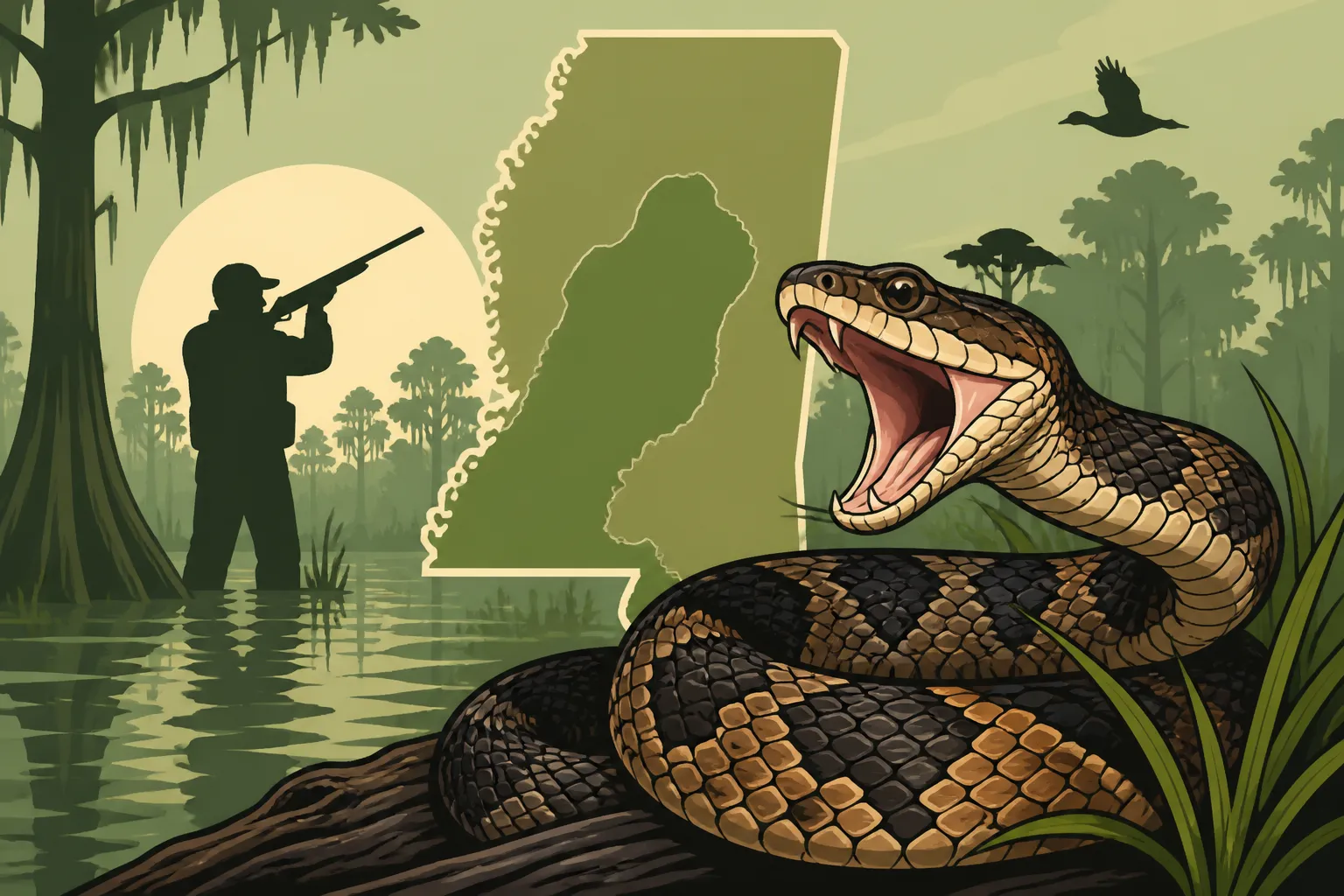
One of the most characteristic behaviors is their defensive posture. When threatened, a cottonmouth will often coil up and throw its head back, opening its mouth wide to reveal a stark white, cotton-like interior – hence the name "cottonmouth." This is a clear warning sign. They will also vibrate their tail, similar to a rattlesnake, though they don't have rattles. Remember, a non-venomous water snake will usually try to escape quickly, and while they might bite if cornered, they won't typically display that iconic white mouth warning.
Distinguishing from Non-Venomous Water Snakes
Mississippi has several species of non-venomous water snakes (like the banded water snake or diamondback water snake) that are frequently mistaken for cottonmouths. These harmless snakes are also common in swampy and wet areas. The key differences, beyond the head shape, often lie in their behavior and scale patterns. Non-venomous water snakes tend to have round pupils and more slender bodies, and their heads are not significantly wider than their neck. Their coloration is often more vibrant or patterned, though some can be quite dark.
A crucial behavioral difference is how they react when swimming. A cottonmouth will often swim with most of its body on the surface, its head held high, almost like it's gliding. Non-venomous water snakes, on the other hand, tend to swim with only their head visible above the water, their body submerged. This isn't a hard and fast rule, as individual snakes can vary, but it's a good general indicator. When using a scouting app like GoHunt to mark potential stand locations near water, keep these distinctions in mind if you encounter a snake during your reconnaissance. It helps to differentiate between a genuinely dangerous area and one that just happens to be home to harmless reptiles.
Staying Safe in Snake Country: Practical Tips for Mississippi Hunters
Hunting in Mississippi's rich, diverse habitats means accepting that we share the woods and wetlands with a variety of wildlife, including venomous snakes. Rather than letting fear dictate your hunting decisions, equipping yourself with practical safety measures is the best approach. After all, if you're navigating Hunting the Extended Southeast Unit Archery Window in thick cover, you want to focus on deer, not on constant anxiety about what's at your feet.
Appropriate Gear and Footwear
The most fundamental piece of safety equipment in snake country is your footwear. Invest in a good pair of snake boots or gaiters that come up to at least your mid-calf or knee. These provide a physical barrier against fangs. While no boot is 100% impenetrable, they significantly reduce the risk of a bite reaching your skin. Think about it: a split-second mistake could mean a serious injury, and quality snake protection is a small price to pay for that peace of mind.
Beyond boots, consider wearing long pants made of durable material, even in warmer weather. While a snake bite can penetrate thin fabric, heavier materials offer a slight buffer and can prevent minor scrapes from thorns or other hazards. Also, when you're carrying a pack, ensure you have a basic first-aid kit with an emergency snake bite kit (though understand its limitations – it's a first-aid step, not a cure-all). Proper gear isn't about overkill; it's about respecting the environment you're in.
Situational Awareness and Mindful Movement
This is perhaps the most critical aspect of snake safety. It comes down to constantly scanning your surroundings, not just for game, but for potential hazards. When walking through tall grass, leaf litter, or dense underbrush, use a stick or your walking pole to probe the ground ahead of you. This can scare off a hidden snake or alert you to its presence before you step on it. Avoid stepping over logs or rocks without first checking the other side; snakes love to bask or hide on these features. Step on them, then over them, so you can see what's on the other side.
When you're still-hunting or moving slowly, make every step deliberate. In those quiet moments where you might be Finding Sign in Big Delta Timber, you're also most likely to encounter wildlife unexpectedly. Be particularly cautious around water sources – ponds, creek banks, drainage ditches – and areas with heavy vegetation. Look before you reach into brush piles, pick up a log, or sit down on the ground. When using a ground blind, ensure you thoroughly check the area around it before settling in. Cottonmouths are not aggressive by nature; most bites occur when someone inadvertently steps on or too close to a snake that feels threatened.
Handling Game and Retrieval in Wet Areas
The excitement of a successful hunt can sometimes lead to a lapse in caution. When you've downed a deer and it's fallen in a thicket, near a slough, or even partly in the water, take a moment before rushing in. This is especially true if you're Recovering a Deer From a Delta Slough. The downed animal could have disturbed a snake, or the snake might have been attracted to the scent. Always approach with caution, use a stick to probe around the area, and carefully scan for any coiled surprises.
When field dressing, be mindful of where you place your hands. Again, probe the immediate area around the animal before you begin. If you're hunting with a friend, having one person watch the surroundings while the other tends to the game can add an extra layer of safety. Remember that warm blood can attract insects and other critters, which might in turn attract snakes. Taking an extra five minutes to be thorough can prevent a lifetime of regret.
If the Worst Happens: What to Do After a Cottonmouth Encounter
Despite all precautions, accidents can happen. It's rare, but a cottonmouth bite is a serious medical emergency. Knowing what to do in the immediate aftermath can significantly influence the outcome. Panic is your enemy, so having a clear, calm plan is essential.
Immediate First Aid Measures
The most important thing to do after a venomous snake bite is to stay calm. Panic will increase your heart rate, which can accelerate the spread of venom through your system. Immediately call 911 or your local emergency services. Give them your precise location, as best as you can determine, or use your GoHunt app to drop a pin.
While waiting for medical help, keep the bitten limb as still as possible and below the level of your heart if feasible. Remove any tight clothing or jewelry from the affected area before swelling begins. Do NOT try to suck out the venom, cut the wound, apply a tourniquet, or apply ice. These old wives' tales are not only ineffective but can cause more harm than good. The goal is to get professional medical attention as quickly as possible, as antivenom is the only effective treatment. Focus on staying calm and conserving your energy.
Getting Medical Help and Follow-Up
Once emergency services arrive, they will transport you to a medical facility where you can receive antivenom. It's crucial to be honest with medical professionals about what happened. While it can be tempting to downplay the situation or fear judgment, your health is paramount. Describing the snake, its behavior, and the circumstances of the bite can help them provide the most appropriate treatment.
After receiving antivenom and treatment, follow your doctor's instructions carefully. There might be swelling, pain, and tissue damage that requires ongoing care. Recovery from a venomous snake bite can take time and may involve physical therapy or follow-up appointments. It's a sobering reminder of the power of nature and the importance of respect for all wildlife, even the ones that give us the creeps. Going forward, you might reconsider how you approach certain wet habitats, or ensure your gear, like your snake boots when What to Pack for a Guided Mississippi Hunt, is always top-notch.
Disclaimer
This article is for general informational purposes only and does not constitute professional advice. Laws, prices and regulations vary by location and change over time. Consult a qualified professional for guidance on your specific situation.