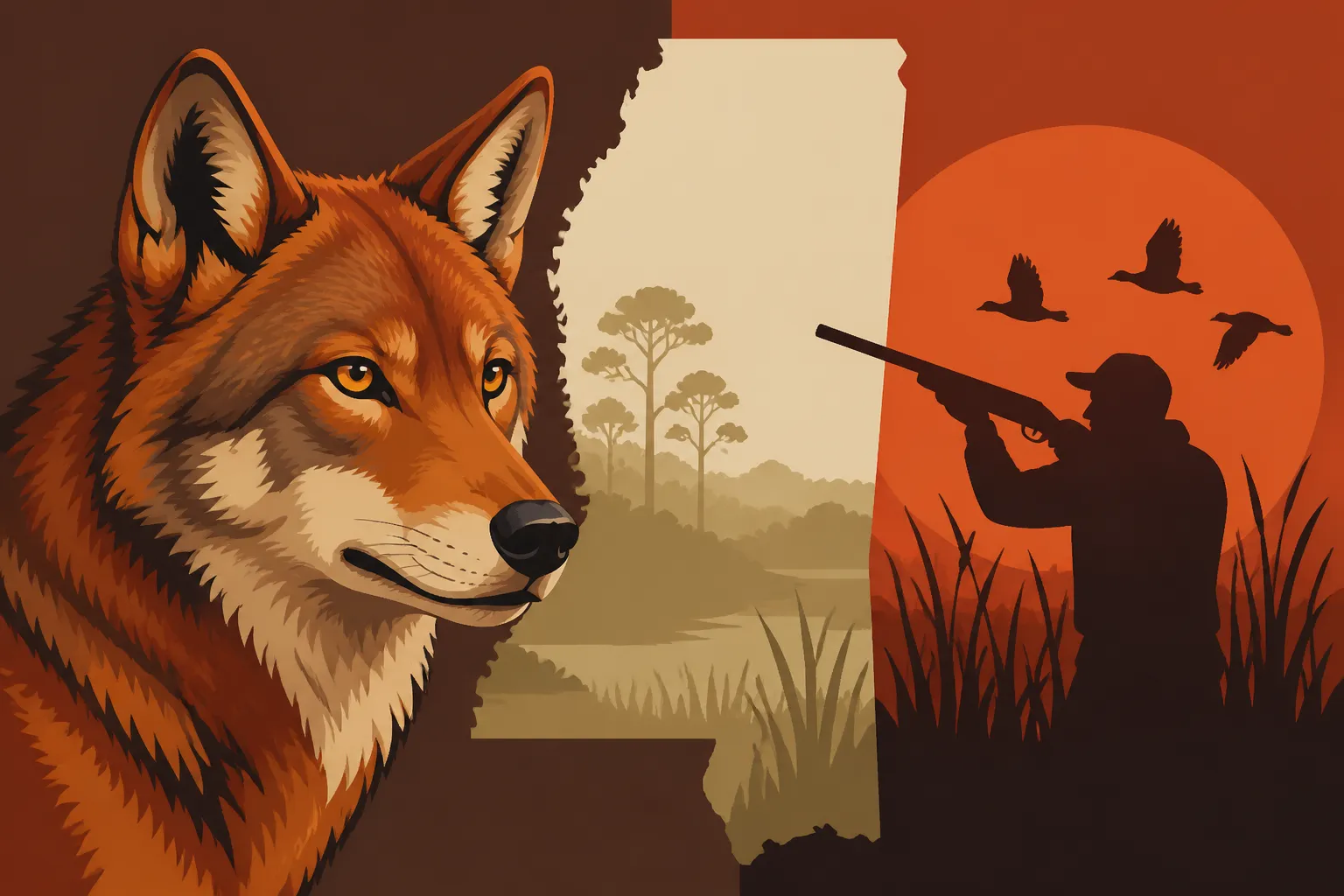
Red Wolf History in Mississippi
For many Mississippians, the idea of a wild wolf roaming our woods feels like something out of a history book, or perhaps a tall tale whispered around a campfire. But once upon a time, before the landscape changed so dramatically, a unique and elusive predator called the red wolf truly did stalk the swamps, river bottoms, and pine forests of our great state. Their disappearance left an ecological void, and understanding their past helps us grasp the complex story of wildlife in Mississippi, validating the quiet frustration some feel about lost wildness and the persistent mystery surrounding the "big canids" we sometimes glimpse today. This guide dives deep into the fascinating, yet heartbreaking, history of the red wolf in Mississippi, exploring its original home, the reasons for its tragic decline, and the echoes of its legacy that still resonate across our modern landscape.
A Ghost of the Past: The Red Wolf's Original Domain in Mississippi
Imagine a Mississippi where the howls of a true wild predator echoed through vast, unbroken forests. That was the reality when the red wolf roamed, a magnificent animal that was once a vital part of the natural order here. For generations, these creatures were an integral thread in the fabric of the Southern ecosystem, a reminder of a wildness that is now largely gone. Their presence shaped the behavior of deer, influenced the populations of smaller game, and played a critical role in maintaining ecological balance, a stark contrast to today's fragmented habitats.
Tracing the Historic Range and Habitat
The historic range of the red wolf (Canis rufus) once covered much of the southeastern United States, including a significant portion of Mississippi. These were not animals of the open plains; instead, they thrived in the dense, diverse habitats that characterized our state before widespread development. Think of the vast bottomland hardwoods along the Mississippi River, the cypress-tupelo swamps, the expansive pine savannas of the south, and the rolling hills of the central and northern regions. They were adaptable creatures, but they needed large, relatively undisturbed territories to hunt and raise their young. You could find them deep in the river batture lands, the kinds of places that still offer some Mississippi River Batture Public Access today, or far back in the dense piney woods.
These wolves were top-tier predators, primarily hunting white-tailed deer, but also taking smaller prey like rabbits, raccoons, and even wild hogs when available. Their presence naturally culled sick or weak animals, contributing to healthier game populations. This natural regulation helped prevent overbrowsing by deer in certain areas and kept mesopredator populations (like coyotes, which weren't here yet) in check. It's hard to visualize now, but their existence underscored a vastly different, more complete food web than the one we typically see today, a wilder version of the landscapes we now Scouting Mississippi Public Land Before Season.
What Did They Look Like? Distinguishing the Red Wolf
Physically, the red wolf was often described as an intermediate between the much larger gray wolf and the smaller coyote. Adults typically weighed in the range of 45-80 pounds, standing about 26 inches at the shoulder and measuring around 4 to 5 feet from nose to tail. Their fur was usually a tawny, reddish-brown color, particularly along their back and legs, often with lighter patches on their underside and muzzle. They had long legs, a relatively slender body, and large ears that were proportionally bigger than a gray wolf's. Their appearance was distinct enough to be recognized, though in areas where their population was dwindling, misidentification with encroaching coyotes became a real problem.
Behaviorally, red wolves were social animals, living in small family packs of typically 2-8 individuals, led by a breeding pair. These packs worked together to hunt, raise pups, and defend their territory. Their hunting strategy often involved coordinated efforts, allowing them to take down larger prey like deer more efficiently than a lone canid could. Unlike the more opportunistic hunting style often observed in individual coyotes, red wolf packs were highly organized and strategic, relying on communication and cooperation. Understanding these distinctions is crucial, as the landscape of our wild canids has changed so dramatically.
The Decline and Disappearance: Why Red Wolves Vanished from Mississippi
The story of the red wolf's decline in Mississippi, and indeed across its entire range, is a somber tale of habitat loss, direct human persecution, and a insidious biological threat. It wasn't a sudden event, but a gradual erosion of their world, culminating in their complete extirpation from the wild by the late 1970s. For many older hunters and landowners, the fading memory of these animals is tied to the expansion of agriculture and the unrelenting push to "tame" the wilderness.
The Human Factor: Persecution and Predator Control
From the time European settlers moved into the Southeast, large predators like the red wolf were often seen as threats to livestock and game animals. There was a prevailing mindset that dictated wildness needed to be controlled, and predators were certainly at the top of that list. Farmers and ranchers, trying to protect their livelihoods, often engaged in intensive predator control efforts. Bounties were common, encouraging people to trap, shoot, and poison wolves. This direct persecution, fueled by fear and economic necessity, decimated wolf populations over decades.
These efforts, though understandable from the perspective of an early settler, didn't account for the ecological role these animals played. The idea that eradicating predators would lead to more deer or safer livestock was deeply ingrained, even as the complex balance of nature was being irrevocably altered. It was a time when conservation as we know it today simply didn't exist in the public consciousness, and animals deemed "vermin" were systematically eliminated with little understanding of the long-term consequences.
Habitat Loss and Fragmentation
Beyond direct killing, the relentless transformation of Mississippi's landscape sealed the red wolf's fate. As human populations grew, forests were cleared for agriculture, timber, and settlement. The vast, contiguous tracts of wild land that red wolves needed to thrive began to shrink and become fragmented. Logging practices removed the dense cover they relied on for denning and ambush hunting. Swamps were drained, and river bottoms were converted into croplands.
This fragmentation meant that even if individual wolves survived persecution, they often found themselves isolated in pockets of remaining habitat, unable to disperse and find mates, leading to genetic bottlenecks and smaller, more vulnerable populations. Imagine trying to hunt a large territory when roads, farms, and towns cut through it every few miles. The landscape simply became too "choppy" for a wide-ranging predator, making survival increasingly difficult. When you look at Reading Aerial Photos for Hills Unit Deer today, it's easy to see how much more fragmented our landscape has become since the red wolf roamed free.
The Hybridization Challenge: Interbreeding with Coyotes
Perhaps the final, and most insidious, blow to the pure red wolf population was the arrival and subsequent proliferation of coyotes. As red wolf numbers dwindled due to persecution and habitat loss, and as gray wolves were pushed out of the eastern U.S., coyotes began expanding their range eastward. This meant that lonely, isolated red wolves, struggling to find mates of their own kind, began to interbreed with the more numerous and adaptable coyotes.
This process, known as hybridization, rapidly diluted the red wolf gene pool. Instead of distinct red wolves, the wild populations became a mix of red wolf-coyote hybrids, eventually losing the unique genetic and physical characteristics of the pure species. It's a sad irony that the very pressure of human expansion indirectly led to the biological absorption of the red wolf. This genetic dilution is a critical part of Why Red Wolves Vanished From Mississippi, making it nearly impossible to identify pure red wolves in the wild by the time conservationists recognized the severity of the problem.
Attempts at Recovery: Mississippi's Connection to Conservation Efforts
While the red wolf's demise in Mississippi was complete, the story didn't end there for the species globally. A desperate, last-ditch effort was made to save the remaining pure red wolves, leading to one of the most significant conservation stories in American history. Though Mississippi itself wasn't a direct reintroduction site, our state's historical context and the broader challenges of reintroducing a large carnivore are deeply relevant.
The National Red Wolf Recovery Program and Regional Impact
By the 1970s, the U.S. Fish and Wildlife Service, recognizing the dire situation, captured the last remaining wild red wolves from Louisiana and Texas. These animals were brought into a captive breeding program with the hope of eventually reintroducing them to suitable wild habitats. This monumental effort, which successfully bred pure red wolves in captivity, led to the establishment of the first reintroduction program in eastern North Carolina. While this program has faced immense challenges, it represents a beacon of hope for a species brought back from the brink of extinction.
For Mississippi, this program highlights a hypothetical "what if." Could Mississippi have been a reintroduction site? Our state still boasts significant wild areas, from the bottomland hardwoods of the Delta to the pine forests further south. However, the same issues that led to their extirpation – habitat fragmentation, existing Coyotes and Predators in Mississippi, and public perception – made a large-scale reintroduction here incredibly complex, if not impossible, without immense changes in land use and public attitudes. The very thought of it brings up conversations about Mississippi's Recovering Black Bear Population and the challenges those animals face, even though they are native and less persecuted than wolves were.
Challenges of Reintroduction in a Changing Landscape
Even if the political will and public acceptance existed, reintroducing red wolves to Mississippi today would be fraught with difficulties. The landscape is far more developed and fragmented than it was centuries ago. Large tracts of land, free from human disturbance and high road density, are scarce. Moreover, the dense and widespread population of coyotes across Mississippi presents a formidable challenge. Where red wolf populations once dwindled, coyotes moved in and proliferated. These canids now fill the ecological niche that the wolves once occupied, and their interbreeding with any reintroduced red wolves would be a persistent threat to the genetic integrity of the species.
Successfully establishing a viable red wolf population would require vast, secure areas, strict management of existing coyote populations, and overwhelming public support from landowners, hunters, and the general public. These are huge hurdles, demonstrating why the recovery efforts have been so concentrated and challenging in their chosen locations. The conversation around Mississippi's Recovering Black Bear Population offers a glimpse into how carefully balanced modern carnivore management must be.
Echoes of the Wild: Distinguishing Canids in Modern Mississippi
With the red wolf gone from Mississippi, what exactly are people seeing when they report "wolves" in the state? More often than not, these sightings are of coyotes or, sometimes, coyote-dog hybrids. The distinction is crucial, not just for scientific accuracy but for how we manage our wildlife and understand our ecosystem. The confusion often stems from the absence of true wolves and the successful adaptation of coyotes to our varied Mississippi environments.
The Rise of the Coyote and Its Impact
The coyote (Canis latrans) is a relatively recent arrival to Mississippi, having expanded its range into the state over the last century, filling the ecological niche left vacant by the red wolf. Unlike the specialized red wolf, the coyote is incredibly adaptable, thriving in everything from dense forests to suburban fringes and wide-open agricultural fields. Their populations are robust, and they are now an established part of Mississippi's wildlife, with Mississippi Coyote Range and Density extending across all 82 counties.
Physically, coyotes are smaller than red wolves, typically weighing 20-50 pounds. They generally have a more pointed snout, larger ears relative to their head size, and a bushy, black-tipped tail that usually hangs low. Their fur color can vary widely, from grizzled gray to reddish-brown, often causing confusion with historical red wolf descriptions. They are opportunistic predators, taking small mammals, birds, insects, and even fruits, and are known for their distinctive yips and howls, especially at night. This adaptability is precisely why they've become so widespread since When Mississippi Coyotes First Arrived.
Persistent Misidentification and Folklore
Despite the scientific consensus that red wolves are extirpated from Mississippi, stories and reports of "red wolves" persist. These are almost invariably misidentified coyotes, particularly larger individuals, or domestic dogs. The historical memory of the red wolf, combined with the often-elusive nature of wild canids, makes it easy for well-meaning individuals to mistakenly identify a coyote as something grander, a remnant of the past. It's an understandable longing for a piece of Mississippi's wild heritage that has been lost.
This misidentification can sometimes complicate wildlife management, as it feeds into misconceptions about species distribution and behavior. Understanding the differences between these canids – their size, coloration, vocalizations, and behavior – is vital for anyone spending time outdoors. Tools like GoHunt can assist in understanding terrain features where various canids might be encountered, helping hunters and outdoor enthusiasts better grasp the current distribution of species like coyotes or even Mississippi Feral Swine Genetics and Origin. Proper identification helps us appreciate the wildlife we do have, while also acknowledging what we've lost.
Looking to the Future: The Ongoing Discussion Around Mississippi's Wild Canids
The saga of the red wolf in Mississippi is a powerful lesson in ecology, history, and human impact. While the pure red wolf is gone from our wild landscapes, their story continues to influence how we think about conservation, particularly for large carnivores and the complex genetics of our modern canid populations. The questions their disappearance raised still resonate, pushing us to understand the present and plan for a more informed future for Mississippi's wildlife.
Monitoring and Genetic Studies
Modern science offers tools that weren't available when red wolves were disappearing. Today, wildlife agencies and researchers across the Southeast, including those connected to Mississippi, use advanced genetic techniques to study wild canid populations. These studies can help identify if any lingering red wolf genes exist in the broader coyote population, although the chances of finding pure red wolf ancestry in a wild Mississippi canid are incredibly slim. Such genetic monitoring is crucial for understanding the complex interplay between coyotes, domestic dogs, and the potential for a small amount of ancient red wolf DNA to persist. This type of detailed work falls under the umbrella of Mississippi Wildlife Disease Monitoring and broader ecological surveys, giving us a clearer picture of our wild populations.
These efforts are not about re-establishing the red wolf in Mississippi directly, but about understanding the legacy of its disappearance and how that impacts the current genetic makeup of our wild canids. They also inform broader discussions about conservation genetics and the challenges of managing interbreeding species, lessons that are valuable for ongoing recovery efforts in other states and for species facing similar threats.
Conservation and Coexistence in Mississippi
The history of the red wolf in Mississippi underscores the critical importance of conservation and finding ways for humans and large wild animals to coexist. While red wolf reintroduction here faces immense obstacles, the lessons learned from their extirpation inform modern wildlife management strategies for all our species. This includes thoughtful habitat management on public lands like the Public Hunting Land in Mississippi, managing game populations like deer, and educating the public about the roles of various predators.
Ultimately, the future of Mississippi's wild canids lies in our hands. It means understanding the ecological roles of animals like coyotes, promoting responsible hunting practices, and continually striving to protect and restore habitat where possible. While the red wolf's howl may no longer echo through Mississippi's forests, its ghost reminds us of the profound impact we have on the natural world and the enduring value of a truly wild landscape. By learning from the past, we can hope to safeguard the wildness that remains and make more informed decisions about the wildlife that calls Mississippi home today. Perhaps one day, a truly wild canid will again take its rightful place at the top of Mississippi's food chain, even if it's the continuing story of Coyotes and Predators in Mississippi adapting and evolving.
Disclaimer
This article is for general informational purposes only and does not constitute professional advice. Laws, prices and regulations vary by location and change over time. Consult a qualified professional for guidance on your specific situation.