Where Mississippi Black Bears Live Today
Many folks living in or visiting Mississippi are often surprised to learn that black bears, majestic creatures of our wild places, actually call the Magnolia State home. There's a lot of curiosity, and sometimes a little bit of misunderstanding, about where these magnificent animals roam. This guide aims to clear up those questions, offering a clear picture of the current distribution of black bears across Mississippi, particularly where you might encounter them and why.
A Brief History of Black Bears in Mississippi
To truly understand where Mississippi's black bears are today, it helps to look back a little. Their journey in our state has been a remarkable tale of decline and then a very slow, but steady, comeback. These aren't just animals; they're a part of the rich, wild fabric of Mississippi that we all cherish, whether we hunt them or simply admire them from afar.
Historical Decline and Extirpation
Back in the days before widespread settlement, black bears were a common sight across most of Mississippi, from the rich bottomlands of the Delta to the piney woods of the south and the rolling hills to the east. They were an integral part of the ecosystem, thriving in the vast, unbroken forests that once covered much of the state. However, as human populations grew, so did the pressures on their habitat. Extensive logging, especially in the late 19th and early 20th centuries, converted huge tracts of forest into agricultural land, particularly in the fertile Delta. This loss of habitat, coupled with unregulated hunting and conflicts with livestock and crops, led to a dramatic reduction in bear numbers. By the mid-20th century, black bears were considered largely extirpated from Mississippi, meaning they were locally extinct, with only a handful of individuals clinging to existence in the most remote, undisturbed corners of the state. It was a disheartening chapter, a stark reminder of how quickly even robust wildlife populations can vanish without careful management.
The Long Road to Recovery
Thankfully, the story didn't end there. Over the past few decades, dedicated conservation efforts, both at the state and federal level, have given Mississippi's black bears a fighting chance. Habitat restoration, particularly the reforestation of marginal agricultural lands and the protection of large, contiguous forest blocks, has been crucial. The establishment of national forests and wildlife management areas has provided much-needed refuges. Legal protections were put in place, making it illegal to hunt black bears in Mississippi, a regulation that remains firmly in effect to this day. This is why you won't find a bear season here; the goal is still to ensure their full recovery. You can read more about Why Mississippi Bears Stayed Protected So Long. Gradual natural recolonization from neighboring states like Louisiana and Arkansas has also played a vital role, with bears moving along river corridors and through suitable habitat patches to re-establish themselves within our borders. It's been a long, slow process, but we're seeing the fruits of those labors, with two distinct populations now firmly established. This recovery showcases the power of conservation and how patience and commitment can bring back species we once thought were gone for good.
Where to Find Black Bears in Mississippi Today
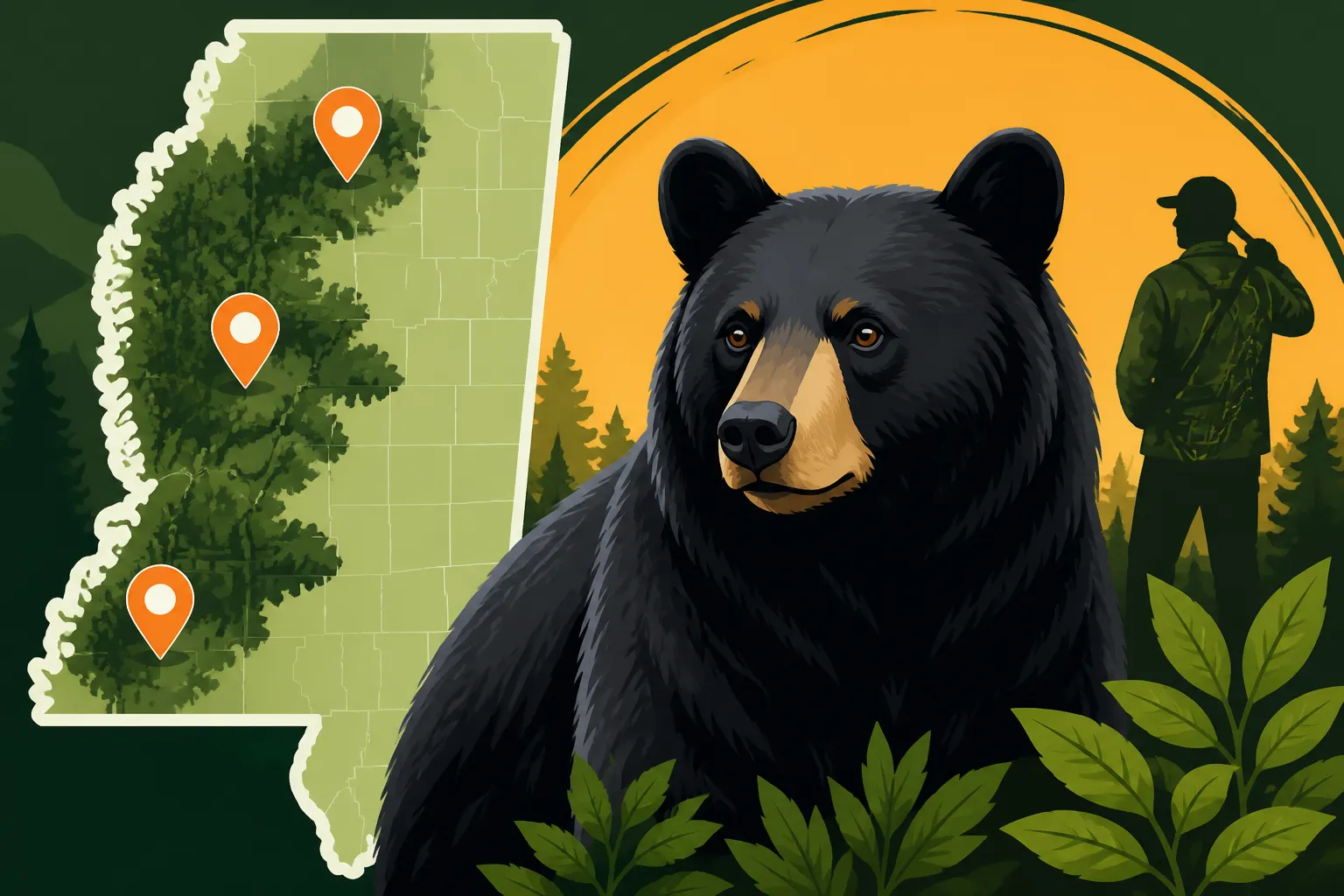
When people ask "Where are the bears?", they often envision them roaming everywhere, like deer. But the truth is, their presence is concentrated in specific regions where habitat conditions are ideal and disturbance is minimized. Understanding these core areas is key, not only for those curious about our wildlife but also for hunters who might inadvertently share the woods with these magnificent creatures.
The Delta Region Bear Population
One of the most significant populations of black bears in Mississippi resides in the vast bottomland hardwood forests of the Mississippi Alluvial Valley, commonly known as the Delta. This area, particularly the expansive federal lands like the Delta National Forest Hunting and Panther Swamp National Wildlife Refuge, provides critical habitat. These aren't your typical pine woods; we're talking about ancient cypress and tupelo swamps, towering oak and pecan groves, and dense cane thickets. The Mississippi River and its myriad of bayous, sloughs, and oxbow lakes serve as natural travel corridors and provide abundant food sources like acorns, berries, and various vegetation. Bears here benefit from the relative remoteness of these areas and the sheer size of the unbroken timber. While the Delta is primarily known for its incredible deer and duck hunting, the bears are a growing, yet often unseen, presence. Hunters, especially those spending time in areas like Sunflower WMA, need to be aware that they are sharing these woods with a healthy and expanding bear population. The Delta Region Bear Population is truly a jewel of our state's conservation success.
The Southern Mississippi Swamp Bear Population
Further south, another robust black bear population thrives in the dense, wet forests and swamps of Mississippi's coastal plain, particularly in the Pascagoula River Basin and extending into parts of the DeSoto National Forest Hunting. This region is characterized by extensive longleaf pine forests interspersed with cypress-tupelo swamps, pocosins, and intricate river systems. The Pascagoula River, often called "the singing river," forms one of the last free-flowing rivers in the continental United States, creating an incredible mosaic of habitats that are perfect for bears. These southern bears often utilize the thick, almost impenetrable cane and palmetto thickets for cover, alongside the rich mast crops provided by oak forests. This population is generally more dispersed than its Delta counterpart, but it's equally vital to the state's overall recovery efforts. Hunters in areas like the Pascagoula River Wildlife Management Area or near the Homochitto National Forest Hunting should always be bear-aware, especially in the deeper, wetter areas where these animals prefer to den and forage.
Scattered Sightings and Expanding Range
While the Delta and southern swamps are the primary strongholds, Mississippi's black bears are proving to be quite resilient and adaptable. We're increasingly seeing signs of them in other parts of the state. Individual bears, particularly young males dispersing from established populations in search of new territories or mates, have been spotted in unexpected places, sometimes far from their core habitats. These transient bears might travel along river systems, through large timber tracts, or even skirt agricultural fields. There have been confirmed sightings and evidence of bear activity in areas like the Loess Bluffs along the Mississippi River, and even occasional reports of Bears Moving Into Central Mississippi counties. This expansion is a positive sign, indicating a healthy, growing population base. However, it also means that folks out enjoying our state's wild places, whether hunting, hiking, or fishing, should always be mindful that a black bear could be in the vicinity, even in areas where they aren't traditionally considered common. Using mapping tools like GoHunt can sometimes help identify the larger, contiguous blocks of timber and water where these dispersing bears are more likely to travel, even if those areas aren't known for permanent bear populations.
Here's a quick comparison of Mississippi's two main black bear populations:
| Feature | Delta Region Population | Southern Swamp Population |
|---|---|---|
| Primary Habitat | Bottomland Hardwood Forests, Cypress-Tupelo Swamps | Piney Woods, Cypress-Tupelo Swamps, Pocosins |
| Key Locations | Delta National Forest, Panther Swamp NWR, Yazoo NWR | Pascagoula River Basin, DeSoto National Forest, Coastal Swamps |
| Food Sources | Acorns, berries, roots, insects, agricultural crops | Acorns, berries, palmetto hearts, insects, small mammals |
| Travel Corridors | Mississippi River system, Bayous, Sloughs | Pascagoula River system, smaller coastal rivers |
| Distinguishing Trait | Often associated with large, unbroken timber blocks within an agricultural landscape | More dispersed across a mix of pine and swamp habitats |
| Conservation Status | Well-established and expanding | Well-established and expanding |
Understanding Bear Habitat and Movement
Knowing where bears generally live is one thing, but understanding why they choose those places and how they move through them offers deeper insight. This knowledge can be particularly helpful for hunters and outdoor enthusiasts who spend time in these areas, even if their quarry isn't a bear.
Preferred Habitats and Food Sources
Black bears are incredibly opportunistic omnivores, meaning they'll eat just about anything they can get their paws on. However, certain habitats provide the consistent food and cover they need to thrive. In Mississippi, this translates to large tracts of mature forest, especially those with a strong component of mast-producing trees like various oak species, which drop acorns in the fall. These acorns are a critical food source, helping bears put on the fat reserves they need for winter. Berries, like blackberries, blueberries, and muscadines, are also incredibly important throughout the warmer months. You'll often find bears foraging along creek bottoms, slough edges, and in areas with dense undergrowth where these fruits are abundant. They also dig for roots, grubs, and insects, and aren't above raiding cornfields or other agricultural crops if they are available and easily accessed. Dense cover is just as vital as food. Thick cane brakes, dense pine plantations, or vast swamp bottoms provide security for bedding, raising cubs, and escaping human disturbance. When you're in the woods, especially in the Delta or southern swamps, looking for good deer or turkey habitat, keep an eye out for these same features; they're prime bear country too.
Movement Corridors and Dispersal
Bears aren't static creatures; they move, and they move with purpose. River systems, large contiguous blocks of timber, and even drainage ditches often serve as natural movement corridors. These corridors allow bears to travel between different foraging areas, find mates, or, in the case of younger bears, disperse to establish new territories. Male bears, in particular, can travel significant distances, sometimes dozens or even hundreds of miles, especially during the breeding season or when pushed by older, dominant males. This dispersal is a natural and healthy process that helps expand their range. However, it also brings them into contact with human-dominated landscapes, which can lead to conflicts. Understanding these patterns, and using tools like GoHunt with its robust mapping layers, can help you visualize these connections in the landscape. Even though you aren't hunting bears, recognizing these potential travel lanes in areas near their known populations can give you a better understanding of the overall wildlife movement in a specific area, influencing your stand placement or scouting routes for other game.
Coexisting with Mississippi's Largest Carnivore
While Mississippi black bears aren't hunted, their presence is a significant part of our state's biodiversity. For those of us who spend a lot of time in the woods, coexisting with them means understanding their behavior and respecting their space. It's a privilege to share the landscape with such a magnificent animal, a testament to the wildness that still exists in our state. Learning about Mississippi's Recovering Black Bear Population gives us a greater appreciation for the conservation efforts that have gone into their return. It means being mindful of food storage at deer camps, especially if you're in an area bordering known bear habitat. Keep trash secured and don't leave out food scraps. If you're out Scouting Mississippi Public Land Before Season or just enjoying a quiet hike, carrying bear spray, knowing how to make yourself known, and understanding what to do in a rare bear encounter are all part of responsible outdoor citizenship. Remember, the vast majority of black bears are shy and will avoid humans if given the chance. Our role is to help maintain that natural caution by not habituating them to human food sources.
What to Do If You Encounter a Bear (and Why They Matter to Hunters)
Encountering a black bear in the wild can be an exhilarating, if sometimes startling, experience. While bears are not game animals in Mississippi, their presence is a factor that any hunter or outdoors person should consider. Knowing how to react responsibly is crucial for both your safety and the continued recovery of these animals.
Safety First: Bear Encounters Afield
It's natural to feel a rush of adrenaline if you unexpectedly come face-to-face with a black bear, especially when you're deep in the woods targeting deer or turkeys. The most important thing to remember is that black bears are generally not aggressive towards humans. Most encounters are brief, with the bear quickly moving off once it recognizes your presence. However, it's always wise to be prepared. If you encounter a bear:
- Stay Calm: Avoid sudden movements.
- Make Yourself Known: Speak in a calm, assertive voice. Wave your arms slowly to appear larger.
- Back Away Slowly: Give the bear an escape route. Never run, as this can trigger a chase instinct.
- Do Not Feed Them: This is critical. Feeding bears habituates them to humans, leading to dangerous situations for both bears and people.
- Secure Food/Trash: If at a camp, ensure all food and scented items are secured in a vehicle or bear-resistant container.
You can find more detailed guidance on what to do if you encounter a bear in the article What to Do If You See a Mississippi Black Bear. Carrying bear spray, especially when in deep bear country, is always a good idea. Even if your focus is on Spring Turkey Hunting in Mississippi or Bowhunting Mississippi's Long Archery Season, a quick review of bear safety protocols is always prudent.
The Ecological Role of Black Bears
Beyond the sheer awe factor, black bears play a vital ecological role in Mississippi's forests. As omnivores, they are important seed dispersers, helping to spread the seeds of various plants and trees through their droppings. This contributes to forest regeneration and biodiversity. They also help control insect populations by turning over logs and rocks, and occasionally prey on small mammals or deer fawns, acting as a natural check on populations. Their presence is a strong indicator of a healthy, intact ecosystem with sufficient habitat and food resources to support a large, wide-ranging carnivore. When we see a healthy black bear population, it tells us that our conservation efforts are working, not just for bears, but for the entire web of life within those forests. Hunters, who often have a deep appreciation for healthy ecosystems, can see the presence of bears as a sign that the land they hunt is thriving.
Hunting Land Considerations
For hunters, the presence of black bears primarily means exercising caution and being aware of your surroundings, especially if you're hunting in or near one of the primary bear zones. While you cannot hunt bears in Mississippi (and doing so would result in severe penalties, as outlined in Game You Cannot Hunt in Mississippi), their presence affects other aspects of your hunt. For instance, a bear might visit your deer feeder or pass through your hunting area. If you come across a fresh bear rub on a tree or scat, it's a good indicator that bears are active in that specific area. This doesn't mean the deer are gone; it just means you have another magnificent creature sharing the woods. Being bear-aware when scouting, setting up stands, or retrieving game after dark is just good practice. When you're out there, even if you're focused on Hunting Delta Unit Bottomland Deer or Still-Hunting Hills Unit Ridges, consider the broader ecosystem. Tools like GoHunt can help you understand the landscape and identify potential bear corridors or dense cover areas that might attract them. It’s all about respecting the wildlife and enjoying the opportunity to share our wild spaces with creatures like the black bear.
Disclaimer
This article is for general informational purposes only and does not constitute professional advice. Laws, prices and regulations vary by location and change over time. Consult a qualified professional for guidance on your specific situation.