Reporting a Poacher in Mississippi
There’s nothing quite as gut-wrenching as being out in the woods, enjoying the peace and quiet, only to witness someone blatantly disregarding the rules, breaking the law, and stealing from our shared natural resources. It’s a violation of everything ethical hunting stands for, and it can leave you feeling frustrated and helpless. This comprehensive guide is here to walk you through exactly how to report a poacher in Mississippi, ensuring you have the knowledge and tools to take action and protect our wildlife.
Understanding What Constitutes Poaching in Mississippi
Before you pick up the phone, it’s helpful to understand what truly counts as poaching in our great state. Sometimes, what looks suspicious might just be an honest mistake or legal activity that you’re unfamiliar with. However, often, it's a clear violation that needs addressing. Poaching isn't just about illegally taking an animal; it encompasses a wide range of unlawful activities that undermine wildlife conservation and ethical hunting principles.
Common Types of Wildlife Violations
Mississippi has specific regulations designed to ensure sustainable wildlife populations and fair chase. When these are ignored, it’s a problem for everyone who respects the outdoors. One of the most common issues we see is people hunting out of season. Our deer seasons, for instance, are carefully structured, with different opening and closing dates for archery, muzzleloader, and gun season across various units. Taking a deer during a closed season, or even during the wrong type of open season (like using a rifle during archery-only), is a direct violation.
Another frequent offense involves illegal methods. This could be spotlighting deer at night, using bait where it’s prohibited, or hunting from a vehicle. These methods strip away the challenge and fairness of the hunt, giving the poacher an unfair advantage and often leading to wasteful harvests. Exceeding bag limits is also a major problem; if the annual deer bag limit in Mississippi is, say, three antlered bucks and five antlerless deer, taking more than that directly impacts the population numbers that MDWFP biologists work so hard to maintain. Then there are license violations, like hunting without a valid license or using someone else's. While it might seem minor, our license fees are the backbone of conservation funding, supporting habitat projects and law enforcement. Understanding the specifics of our Mississippi Hunting Licenses and What They Cost is crucial for every hunter, and certainly for recognizing violations.
Why Poaching Harms Our Wildlife and Hunting Heritage
It’s easy to feel like one poached deer or turkey doesn’t make a difference, but that couldn’t be further from the truth. Poaching directly impacts game populations. When animals are taken illegally, outside of established seasons and bag limits, it disrupts breeding cycles, reduces overall numbers, and skews age structures. This is particularly damaging for species that require careful management, like our white-tailed deer and wild turkeys. For instance, illegal antlerless deer harvest can severely impact fawn recruitment, while illegally taking trophy bucks removes prime breeding stock.
Beyond the biological impact, poaching erodes the very foundation of ethical hunting. Hunters pride themselves on fair chase, respect for the animal, and adherence to regulations. When poachers operate, they cast a shadow over all hunters, creating a negative perception with the non-hunting public and undermining the efforts of legitimate conservationists. It also siphons off vital funds. License sales and excise taxes on hunting equipment directly fund wildlife management, habitat restoration, and enforcement. Poachers contribute nothing but take resources, essentially stealing from law-abiding sportsmen and women who pay their fair share to support the future of hunting in Mississippi. This is why reporting these incidents is not just an option, it's a responsibility we all share.
How to Effectively Report a Poacher in Mississippi
Witnessing a wildlife violation can be unsettling, but knowing exactly what to do next can make all the difference in bringing offenders to justice. The key is to act quickly and provide as much detail as possible to the Mississippi Department of Wildlife, Fisheries, and Parks (MDWFP) conservation officers.
The MDWFP Poaching Hotline: Your Direct Line
The most immediate and often most effective way to report a poacher is to call the MDWFP's toll-free poaching hotline: 1-800-BE-ALERT (1-800-232-5378). This number is staffed by dispatchers who can quickly relay information to game wardens in the field. When you call, stay calm and be prepared to provide concise, factual information.
Here’s a breakdown of what they’ll want to know:
- What you saw: Describe the activity in detail. Was someone shooting a deer at night? Trapping hogs illegally? Hunting ducks out of season?
- When it happened: Give the exact date and time, or at least the closest approximation.
- Where it happened: This is critically important. Provide a precise location. Use road names, highway markers, landmarks, GPS coordinates if you have them, or even a general description like "about 2 miles north of [nearest town] on County Road 123." If you're a diligent scout, tools like GoHunt, which provide detailed mapping overlays, can be invaluable for pinpointing exact coordinates when you're out in the field. Having that information ready makes a huge difference.
- Who was involved: If you saw the individuals, describe them. What were they wearing? What was their approximate age? Did you recognize them? Do not confront them or put yourself in harm's way to get this information.
- Vehicle description: Make, model, color, and most importantly, the license plate number if you can safely get it. Any distinguishing features like dents, stickers, or equipment in the bed of a truck are also helpful.
- Weapons used: Was it a shotgun, rifle, bow, or crossbow? This can indicate if the method was illegal for the season or species. For instance, understanding Mississippi Crossbow Equipment Requirements helps you identify potential violations.
- Species involved: Deer, turkey, duck, hog, etc.
- Any evidence left behind: Blood, gut piles, spent shell casings, tracks.
Remember, the goal is to be helpful without exaggerating or guessing. Stick to the facts.
Online Reporting and the MDWFP App
If the situation isn't immediately life-threatening or time-sensitive (for example, if you discovered evidence of a past violation rather than witnessing one in progress), you can also report through the MDWFP's online portal or their mobile app.
The MDWFP website typically has a "Report a Violation" section where you can fill out a detailed form. This is excellent for providing comprehensive information when you have more time to gather your thoughts and details. You can often upload photos or other evidence through these portals as well.
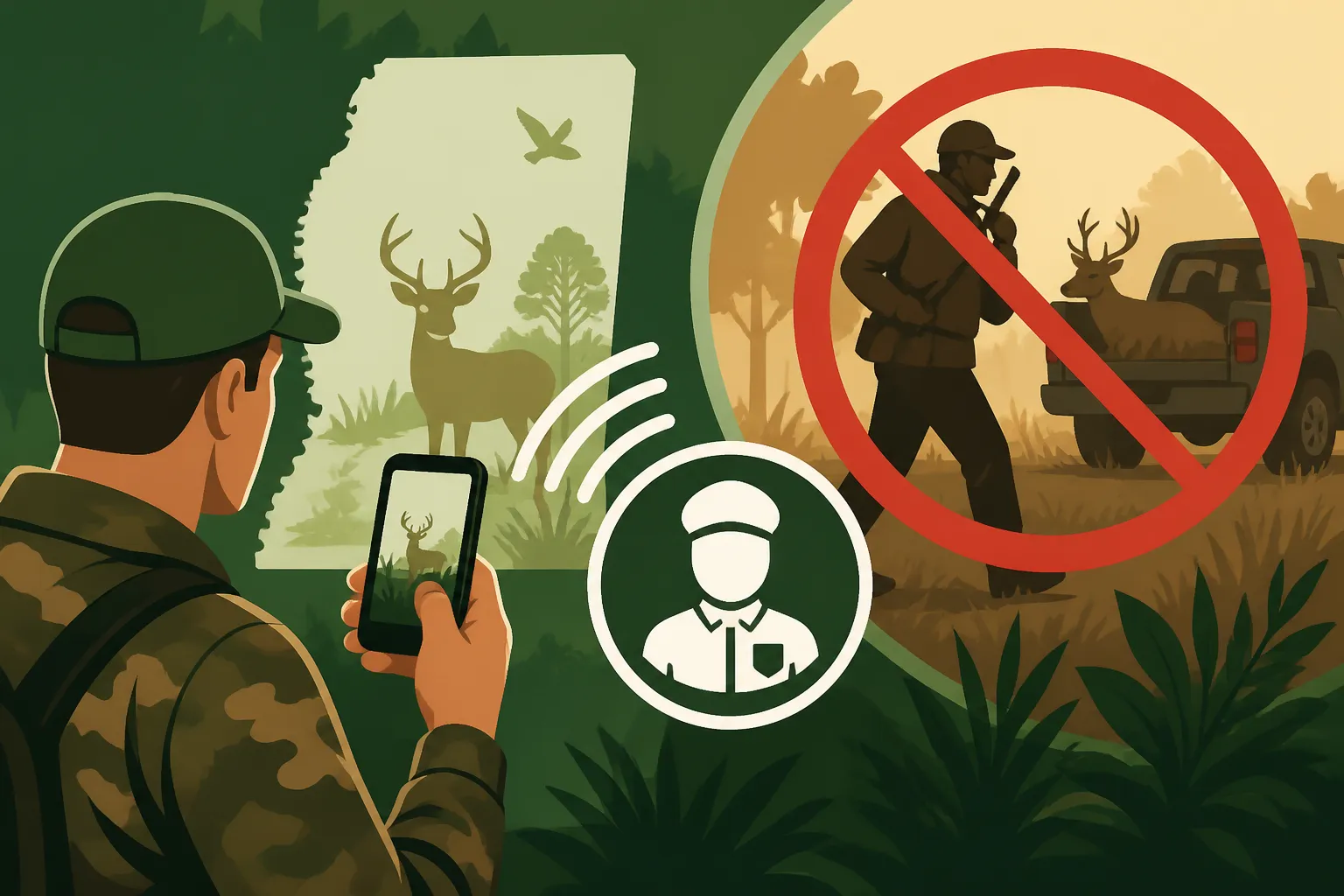
Even better, the MDWFP mobile app is a fantastic tool for modern hunters and anglers. It allows you to report violations directly from your smartphone, often incorporating GPS data from your phone to automatically pinpoint the location. It's also incredibly useful for checking current regulations, license status, and even reporting your harvests. If you're utilizing mapping features within apps like GoHunt for your hunting preparation, you're already accustomed to thinking spatially, which makes using the MDWFP app for reporting violations feel very natural and efficient. Knowing how to use the MDWFP app, especially if you find yourself without cell service in the field, can be a game-changer when seconds count. Familiarizing yourself with Scouting With the MDWFP App is highly recommended.
Information to Gather Before Making the Call
To make your report as effective as possible, try to collect the following details without compromising your safety or alerting the poachers:
| Information Category | Specific Details to Note | Importance |
|---|---|---|
| Location | GPS coordinates, street address, nearest intersection, landmarks | Crucial for officers to respond quickly. |
| Time/Date | Exact time and date of the incident | Helps establish legality (e.g., night hunting, closed season). |
| Suspect(s) | Number of people, gender, age, clothing, distinguishing features | Helps identify individuals, if known. |
| Vehicle | Make, model, color, license plate, any custom features, direction of travel | Essential for tracking down perpetrators. |
| Violation Type | What exactly happened (e.g., shooting deer at night, over limit) | Clarifies the nature of the crime. |
| Species Involved | Deer, turkey, waterfowl, small game | Determines applicable laws and potential penalties. |
| Weapons | Rifle, shotgun, bow, snare, trap, spotlight, night vision | Verifies illegal methods or equipment. |
| Evidence | Photos, videos, physical evidence (e.g., gut pile, tracks) | Supports the investigation. |
Remember, your safety is paramount. Do not approach or confront individuals suspected of poaching. Stay out of sight and observe from a safe distance. Take notes if possible, or use your phone's voice recorder to document details immediately after the event.
What Happens After You Report a Poacher
It’s completely understandable to feel like your report might just go into a black hole. We've all been there, wondering if our efforts even made a difference. However, when you report a poaching incident to the MDWFP, you’re initiating a process that is taken very seriously by dedicated conservation officers.
The Role of Mississippi Conservation Officers
Our MDWFP Conservation Officers are on the front lines of protecting Mississippi’s natural resources. They are sworn law enforcement officers with the authority to investigate wildlife crimes, make arrests, and enforce all game and fish laws. When you make a report, especially through the 1-800-BE-ALERT hotline, it goes directly to a dispatcher who will then relay that information to the appropriate officer in that jurisdiction.
Upon receiving a credible report, a conservation officer will typically:
- Respond to the scene: If the incident is current, they will attempt to intercept the individuals involved. This is why precise location information is so critical.
- Investigate: They will look for evidence such as tracks, shell casings, blood trails, discarded game, or other signs of illegal activity. They may interview witnesses (like you, if you’re willing and safe to do so) and canvass the area.
- Gather intelligence: Sometimes, a single report might be part of a larger pattern. Officers might recognize vehicle descriptions, methods, or locations that point to repeat offenders they’ve been tracking.
- Enforce: If sufficient evidence is found, they will take appropriate action, which could range from issuing citations to making arrests. This is where the importance of collecting good details, potentially aided by tools like GoHunt if you're marking locations, really pays off.
It's important to understand that immediate action isn't always possible or visible. Officers might be spread thin, or they might be working on other calls. Sometimes, they use your information to conduct covert surveillance at a later date, catching the poachers when they least expect it. Just because you don't see flashing lights right away doesn't mean your report wasn't valuable.
Anonymity and Protection for Reporters
One of the biggest concerns people have, and rightly so, is about their own safety and anonymity. No one wants to become a target for reporting illegal activity. The MDWFP understands this completely. All reports made to the 1-800-BE-ALERT hotline can be made anonymously. Your identity will not be revealed to the suspected poachers, nor will it be released to the public.
Conservation officers are trained to protect the identity of their informants. They won't disclose how they received the information. While you might be asked if you're willing to be contacted for follow-up questions, you are under no obligation to do so if you prefer to remain completely anonymous. This protection is a cornerstone of getting the public to participate in wildlife law enforcement. Knowing that you can report without fear of retribution empowers concerned citizens to act when they might otherwise hesitate.
Potential Penalties for Wildlife Violations
The penalties for poaching in Mississippi can vary widely depending on the severity of the offense, the species involved, and whether it's a first-time or repeat offense. Generally, wildlife violations carry fines, potential jail time, and loss of hunting and fishing privileges.
For instance, illegally taking a deer can result in significant fines, court costs, and restitution for the value of the animal. Repeat offenders face stiffer penalties, including mandatory jail sentences and permanent revocation of hunting and fishing licenses. There are specific Mississippi Wildlife Violation Penalties for various infractions. Violations within Chronic Wasting Disease (CWD) management zones, such as improper carcass disposal or movement, can also carry serious penalties due to the critical nature of containing the disease. Understanding Mississippi's Chronic Wasting Disease Zones is vital for hunters today. These penalties serve as a deterrent and reflect the serious impact these crimes have on our wildlife and the broader hunting community. Your report, no matter how small it seems, contributes directly to this enforcement and helps maintain the integrity of our outdoor traditions.
Cultivating a Culture of Vigilance and Ethics
Protecting Mississippi’s wildlife isn't just the job of conservation officers; it's a shared responsibility that falls on every single person who cherishes our natural resources. Developing a vigilant mindset and fostering ethical behavior are the cornerstones of ensuring healthy game populations for generations to come.
Being a Proactive Steward of Wildlife
One of the best ways to combat poaching is to be proactive. This means more than just reacting to a violation; it means being an active participant in conservation efforts. For hunters, this starts with knowing and following the regulations to the letter. Ignorance of the law is never an excuse, and staying informed about Mississippi Deer Season Structure Explained or even specific unit restrictions like Hunting the Rut in the Delta Unit is paramount. Beyond that, it involves scouting your hunting areas thoroughly. When you're familiar with normal activity, unusual behavior or signs of illegal activity will stand out more clearly.
Consider joining a local conservation organization, volunteering for habitat projects, or even just discussing ethical hunting practices with new hunters. By setting a good example and being knowledgeable, you become a resource for others. Pay attention to strange vehicles, unusual sounds, or out-of-place activity in hunting areas, especially during closed seasons or at odd hours. If something feels off, trust your gut. Remember, most poachers rely on the belief that no one is watching or that people won't report them. Your vigilance is their biggest deterrent.
Educating Others and Leading by Example
Education is a powerful tool in the fight against poaching. Many accidental violations occur simply because someone didn't know the rules. While "ignorance is no excuse," taking the time to explain regulations to a new hunter or a curious non-hunter can prevent future issues. Share resources like the MDWFP website or guides like this one. Encourage fellow hunters to check their licenses and tags, understand bag limits, and verify season dates before heading afield. Tools like GoHunt can be incredibly helpful for new hunters or those visiting Mississippi, as they often compile regulations and season dates in an easily digestible format, helping ensure everyone stays within legal bounds.
Leading by example is perhaps the most impactful action. When you consistently demonstrate ethical hunting practices – ensuring clean kills, adhering to fair chase principles, respecting private property, and staying within legal limits – you set a high standard for those around you. When you openly discuss the importance of conservation and how poaching undermines it, you help foster a community where illegal activity is not tolerated. It makes it clear that true sportsmen and women are stewards of the land and its creatures, not simply consumers. This collective commitment to ethics not only safeguards our wildlife but also secures the future of hunting itself in Mississippi.
Disclaimer
This article is intended for informational purposes only and does not constitute legal advice. While efforts have been made to ensure accuracy, hunting regulations can change. Always consult the official Mississippi Department of Wildlife, Fisheries, and Parks (MDWFP) regulations, website, or contact a local conservation officer for the most current and authoritative information before engaging in any hunting activities or reporting violations.