Food Plots on Mississippi Private Land
Many Mississippi landowners dream of seeing more deer on their property, of growing bigger bucks, and of having consistent, reliable hunting opportunities right outside their back door. Often, the first solution that comes to mind is food plots. But going from that dream to a successful, deer-attracting green patch takes a lot more than just tossing seed on the ground. This guide will walk you through the realities, planning, and hard work involved in establishing effective food plots on your private land in Mississippi.
Understanding the "Why" Behind Food Plots in Mississippi
Before you even think about buying a bag of seed, it's crucial to understand why you want to plant a food plot and what it can realistically achieve in the Mississippi landscape. It's not just about a pretty green field; it's about a strategic approach to deer management and hunting.
Attracting and Holding Deer
One of the primary reasons landowners invest in food plots is to draw deer to their property and keep them there, especially during hunting season. Our wild deer populations, particularly the White-Tailed Deer Across Mississippi, rely heavily on natural forage, which can fluctuate wildly with weather, timber management, and other factors. A well-maintained food plot offers a consistent, high-quality food source that can become a magnet for local deer.
Imagine your property is nestled among larger timber tracts or agricultural fields, but your deer seem to pass through rather than sticking around. A strategically placed food plot can change their travel patterns, giving them a reason to linger. It's like putting out a welcome mat with a gourmet meal – deer will often choose the readily available, nutritious food over having to browse extensively for scattered natural options. This can be especially effective during periods when natural browse is limited or less appealing, such as the late season after acorns are gone or early spring before much new growth emerges.
Improving Herd Health and Antler Quality
Beyond just attracting deer for hunting, many dedicated landowners hope food plots will contribute to a healthier deer herd and, consequently, better antler growth. Good nutrition is undeniably a cornerstone of deer health. When deer have access to a consistent, high-protein diet, it supports their overall well-being, strengthens their immune systems, and can indeed lead to larger body weights and improved antler development.
However, it's important to set realistic expectations here. While a food plot provides supplemental nutrition, it's just one piece of a much larger puzzle. Factors like deer age, genetics, and the overall Mississippi Deer Population Estimate in your area play significant roles. A plot won't magically turn a two-year-old buck into a Boone and Crockett contender overnight. It's a long-term investment in the health of your herd, working in conjunction with sound timber management, responsible harvesting practices, and managing the buck-to-doe ratio. Think of it as providing a consistent, healthy "snack bar" for the deer in your area, supplementing their natural diet rather than completely replacing it.
The Reality of Expectations vs. Effort
Here’s where a lot of enthusiasm for food plots can hit a wall: the expectation that they are a "plant and forget" solution. In Mississippi, with our diverse soils, varying rainfall, and sometimes intense deer pressure, food plots require significant effort, ongoing management, and patience.
Many hunters picture lush, green fields teeming with deer from the moment the seed sprouts. The reality is that factors like insufficient rain, poor soil pH, intense weed competition, or even too much browse pressure from an overpopulated herd can turn that dream into a patchy, disappointing mess. It’s also common for hunters to be frustrated when deer hit a plot hard for a few weeks, then seem to vanish, moving to another available food source like an unexpected acorn crop or a freshly cut soybean field nearby. Understanding these challenges upfront, and accepting that some plots will be more successful than others, is key to sustained satisfaction. A food plot isn't a magic button for guaranteed success, but a tool in your overall hunting and land management strategy.
Planning Your Mississippi Food Plot: Beyond Just Throwing Seeds
Once you've decided a food plot aligns with your goals, the real work begins: meticulous planning. This isn't a "wing it" operation; success hinges on understanding your land and the needs of your local deer.
Site Selection and Soil Preparation: The Unsung Heroes
The location of your food plot is paramount. It's not just about where it's convenient for you, but where it makes sense for the deer. Consider several critical factors:
- Sunlight: Most popular food plot forages, like clover, corn, and soybeans, need at least 6-8 hours of direct sunlight per day. Avoid heavily shaded areas under dense timber. The edges of clearings or areas that receive ample morning sun are often ideal.
- Drainage: Mississippi can get a lot of rain. You want a site that drains well and doesn't hold standing water for extended periods after a heavy shower. Low-lying areas prone to flooding will wash out your seed and rot young plants. Walk the potential site after a rain to observe water movement.
- Access: Think about how you'll get equipment in and out, and how you'll access the plot for hunting without spooking deer. A hidden plot that requires a long, quiet walk-in might be more productive for daytime deer activity.
- Safety: Ensure your plot is a safe distance from property lines, roads, and dwellings, adhering to all state hunting regulations regarding discharge of firearms.
- Proximity to Cover: Deer need to feel secure. A plot positioned near dense bedding cover, like thick pine plantations, regenerating clear-cuts, or river cane brakes, will encourage daytime use. They'll feed there, then quickly slip back into security cover. Use a mapping tool like onX Hunt to scout potential locations from an aerial view, identifying edges, cover, and access points before you even step foot on the ground.
Once you’ve identified a spot, soil testing is non-negotiable. This is probably the most overlooked, yet critical, step in food plot success. Mississippi's soils vary wildly, from the rich Delta silt to the acidic Piney Woods sands. A soil test will tell you your soil's pH and what nutrients are deficient. You wouldn't try to bake a cake without knowing what ingredients you have, would you? The same goes for growing plants. Most food plot forages thrive in a pH range of 6.0 to 7.0. If your pH is too low (acidic), you'll need to add agricultural lime, often months in advance, to raise it. The soil test will also recommend specific fertilizer ratios (e.g., 13-13-13 or 17-17-17) and quantities needed to correct any deficiencies. Skipping this step is akin to throwing money away on seed that will never reach its full potential.
Choosing the Right Forage for Mississippi: Seasonal Strategy
Mississippi's long growing season and mild winters mean you have options, but matching the right forage to the right season and your specific goals is vital.
Cool-Season Plots (Fall Plantings): These are typically planted from late August through October and are designed to provide food during the late fall and winter hunting seasons, lasting into early spring.
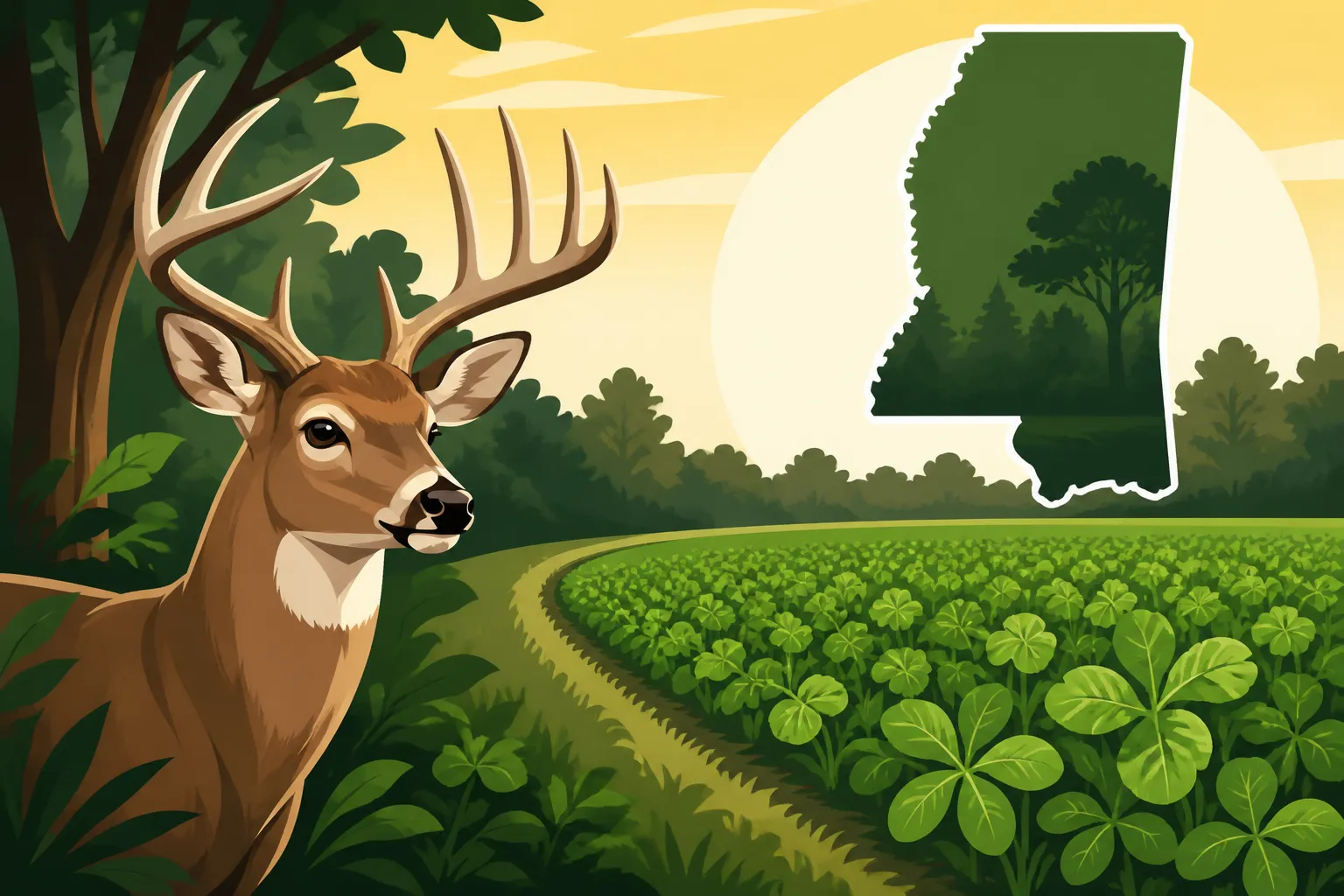
- Clover: Perennial clovers (like Durana or Ladino) are fantastic for long-term plots if maintained. They offer high protein and last multiple years. Annual clovers (crimson, arrowleaf) are great for quick, impactful plots. They thrive in a pH of 6.0-7.0 and need good moisture. Hunting a Clover Plot at First Light can be incredibly productive.
- Winter Wheat/Oats/Rye: These cereals are workhorses. They grow quickly, are cold-tolerant, and provide palatable forage throughout the cooler months. Oats are great for early attraction, while wheat and rye are more cold-hardy and persist longer. They are excellent when blended with clover or brassicas.
- Brassicas (Turnips, Radishes, Rape): These are incredible cold-weather food sources. Deer will often ignore the tops initially, but after a few hard frosts, the starches convert to sugars, making them highly attractive. They also produce underground bulbs that deer will paw up in late winter.
- Blends: Many hunters find success with a mixture of these, like a cereal grain for quick growth and early attraction, combined with clover for sustained nutrition and brassicas for late-season draw.
Warm-Season Plots (Spring Plantings): Planted from April through June, these plots provide high-protein forage during the spring and summer, critical for antler growth in bucks and lactation in does.
- Soybeans: Highly attractive and nutritious. Deer will hammer young soybeans, so they work best in larger plots or areas with moderate deer density. Hunting a Green Field Planted for Deer can be exciting during early season.
- Cowpeas/Iron Clay Peas: Similar to soybeans but often more browse-tolerant. They provide excellent forage through the summer.
- Corn/Grain Sorghum: While not as high in protein for forage, these provide crucial carbohydrates in the late season and can hold deer. They need a lot of space and good protection from early browse if you want them to produce a harvestable grain.
- Perennial Peanut: Less common but a great warm-season perennial for forage.
Here’s a quick comparison of some popular options:
| Forage Type | Planting Season | Primary Benefit | Persistence | Soil pH Preference | Notes |
|---|---|---|---|---|---|
| Clover | Fall/Spring | High protein, long-lasting forage | Perennial/Annual | 6.0 – 7.0 | Excellent for year-round plots, good browse tolerance. |
| Winter Wheat/Oats | Fall | Quick growth, palatable, cold-tolerant | Annual | 5.5 – 7.0 | Great for early season draw, often blended. |
| Brassicas | Fall | Late-season attraction, cold-hardy bulbs | Annual | 6.0 – 7.0 | Best after frost, highly nutritious. |
| Soybeans | Spring | High protein, summer/early fall food source | Annual | 6.0 – 7.0 | Can be heavily browsed if deer density is high. |
| Cowpeas | Spring | Good protein, browse-tolerant summer forage | Annual | 5.5 – 7.0 | Good alternative to soybeans in high-pressure areas. |
Consider your Mississippi Deer Season Structure Explained when choosing. Do you need something to draw deer during the early archery season, or a late-season magnet when other food is scarce? The answer will guide your seed selection.
Plot Size and Shape: Optimizing for Deer and Hunter
The size and shape of your food plot matter for both deer utilization and hunting effectiveness.
- Size: Even a small plot (1/4 to 1/2 acre) can be effective if strategically placed and properly managed. Larger plots (1-5 acres) can feed more deer and withstand heavier browse pressure, but require more effort and expense. Don't feel pressured to create a massive field if your resources are limited. A few smaller, well-placed plots are often better than one large, neglected one.
- Shape: Avoid perfectly square or round plots. Irregular shapes with fingers or points extending into cover provide more edge habitat, which deer love for security and travel. Think about creating natural funnels or pinch points that guide deer past strategic stand locations. A long, narrow plot along a field edge or timber line can be very effective, allowing deer to feed while remaining close to escape cover.
When planning, use a tool like GoHunt or onX Hunt to draw out potential plot shapes and sizes, integrating them with existing timber lines, travel corridors, and potential stand sites. This digital planning can save you a lot of time and effort in the field. Think about Reading Aerial Photos for Hills Unit Deer to identify these key features.
The Practicalities: Planting, Maintaining, and Hunting Your Plots
Once the planning is done, it's time to get your hands dirty. This phase involves both the elbow grease of planting and the strategic thinking for how to hunt what you've created.
Equipment and Time Investment: Be Realistic
Setting up a food plot isn't usually a shovel-and-rake job, especially if you're aiming for anything beyond a tiny patch. You'll likely need:
- Tractor or ATV with attachments: A tractor with a disk harrow or tiller, a cultipacker, and a broadcaster/seeder is ideal for larger plots. For smaller plots or those with difficult access, an ATV with pull-behind attachments can work wonders. If you don't own this equipment, consider renting, borrowing, or hiring a local farmer or contractor.
- Sprayer: Essential for applying herbicides to control weeds. This can range from a backpack sprayer for small plots to a large boom sprayer for larger areas.
- Soil testing kit (or mail-in service): As mentioned, absolutely critical.
- Fertilizer spreader: For evenly distributing lime and fertilizer.
The time investment is also significant. Preparing the ground, planting, fertilizing, and managing weeds isn't a one-and-done task. Expect to dedicate multiple days, or even weeks spread out over a season, to get your plots established and keep them healthy. This is especially true if you are new to it and learning the ropes. Don't underestimate the physical labor involved, especially in Mississippi's heat and humidity.
Year-Round Management: It's Not "Plant and Forget"
A healthy food plot requires ongoing attention.
- Weed Control: Weeds are the arch-nemesis of food plots. They compete for sunlight, water, and nutrients, quickly choking out your desired forage. This means pre-emergent herbicides (applied before planting to prevent weeds from sprouting), post-emergent herbicides (applied after planting to kill existing weeds that sprout with your forage), and sometimes even mowing. For perennial plots like clover, strategic mowing can also help control weeds and stimulate new growth.
- Fertilization: Based on your soil test results, you'll apply fertilizer at planting. Perennial plots, like clover, will often benefit from additional fertilization in the spring to boost growth and maintain vigor.
- Monitoring: Regularly inspect your plots for signs of heavy browse pressure, disease, or insect issues. If deer are wiping out a plot almost immediately, it might be too small for your deer density, or you might need to consider a more browse-tolerant forage. This kind of monitoring helps you adapt your strategy for future plantings. Even during the off-season, keeping an eye on your plots can give you valuable insights into deer movement and Mississippi Deer Antler Growth Timeline.
Hunting Strategies Around Food Plots: Maximizing Your Investment
Having a beautiful, deer-filled food plot is one thing; effectively hunting it is another.
- Stand Placement: Always set up your stand or blind with the prevailing wind in mind. Deer will almost always approach a food source from downwind to scent-check for danger. Consider multiple stand locations for different wind directions. Place stands on the edge of the timber, overlooking the plot, ensuring your entry and exit routes don't spook deer. For field edges, a ground blind brushed into the cover can be incredibly effective, especially if you are hunting with youth or need to be mobile. Brushing In a Blind on a Field Edge is a key skill.
- Entry/Exit Routes: This is critical. Plan your approach and departure to minimize disturbance. Use natural cover, ditches, or even planted screens (like tall sunflowers or corn) to hide your movement. Avoid walking directly across the plot or through bedding areas to get to your stand. Your goal is to be in position before deer arrive and leave after they've moved off.
- Time of Day: Food plots are often most active during prime feeding times: early morning and late afternoon/evening. However, don't overlook midday if deer are using the plot to stage before hitting larger ag fields, or during periods of cold weather when they need more calories. Warm-Weather Sitting Strategy in Mississippi can sometimes involve observing plots from a distance during the middle of the day.
- Use of Ground Blinds: For plots in open areas or where permanent stands are difficult, a well-placed ground blind offers versatility. They allow for more movement, are warmer in cold weather, and can accommodate multiple hunters. Just remember to Using a Ground Blind on Mississippi Public Land – many of the same principles apply to private land.
Common Pitfalls and Troubleshooting Mississippi Food Plots
Even with the best intentions, food plots can present challenges. Knowing what to look for and how to respond can turn a potential failure into a learning experience.
Soil pH and Nutrient Deficiencies: The Silent Killers
As we discussed, ignoring soil health is the fastest way to a failed food plot. Many Mississippi soils, especially in the piney woods, are naturally acidic. If your soil pH is too low, plants cannot properly absorb nutrients, even if those nutrients are present in the soil. It's like having a full refrigerator, but the door is locked – the food is there, but you can't access it.
If your plot is sparse, yellowing, or not growing vigorously despite seemingly good conditions, your first thought should be soil. Did you get a soil test? If so, did you apply the recommended amount of lime to adjust pH and fertilizer to correct deficiencies? Sometimes, it takes more than one application of lime over a year or two to significantly shift pH, especially in highly acidic soils. Don't be afraid to re-test your soil every few years to monitor its health and adjust your amendments. Consistent soil health is foundational to everything else.
Weed Competition and Browse Pressure: The Battle for Survival
Weeds are relentless. If left unchecked, they will outcompete your desirable forage, making your plot less attractive and less nutritious for deer. This often looks like a plot that starts strong but then quickly gets overrun by broadleaf weeds or grasses, leaving only a few struggling food plot plants.
Strategies for weed control:
- Chemical: Pre-emermergent herbicides prevent weeds from sprouting. Post-emergent herbicides kill actively growing weeds. Different herbicides target different types of weeds (grass-specific vs. broadleaf). Always read labels carefully to ensure the herbicide is safe for your chosen forage.
- Mechanical: Disking or tilling before planting can bury existing weeds. Mowing perennial plots can suppress weeds and encourage fresh growth.
- Cultural: Planting at the correct density, ensuring proper soil fertility, and choosing robust forage varieties can help your desired plants outcompete weeds.
Browse pressure is another significant challenge. If your plot is small and your local Mississippi Deer Herd Size is high, deer might simply eat your plot into the ground before it ever gets established. This is a common frustration, especially with highly palatable options like soybeans or clover.
Solutions for heavy browse:
- Increase plot size: A larger plot can simply handle more pressure.
- Plant browse-tolerant species: Consider iron clay peas instead of soybeans, or a mix that includes less palatable brassicas alongside more favored options.
- Use temporary fencing: For very small plots or during the early growth phase of a vulnerable crop, a temporary electric fence can protect the plot until plants are established enough to withstand browsing.
Realistic Expectations and Patience: The Long Game
Perhaps the biggest pitfall is simply having unrealistic expectations. Food plots are a tool, not a miracle cure. They can significantly enhance your property's attractiveness and the health of your deer herd, but they won't instantly produce trophy bucks if other factors (like age structure or genetics) aren't also in play.
- Weather: A late-season drought or an early-season flood can severely impact plot success, regardless of your efforts. You can't control the weather, but you can choose more drought-tolerant or water-tolerant species based on your location and typical climate patterns.
- Deer Movement: Deer are wild animals. They will move based on pressure, other food sources (like a bumper acorn crop or nearby agricultural fields), and the rut. Your plot might be a hotspot for weeks, then slow down. This is natural. Don't get discouraged; stay patient and observe.
- Long-Term Strategy: Think of food plots as part of a multi-year land management plan. What works best this year might need tweaking next year. Keep notes on what you planted, when, and how it performed. Tools like GoHunt can help you track this data over time, allowing you to refine your approach season after season. Remember, building exceptional deer hunting on private land is a journey, not a destination.
Disclaimer
This article is for general informational purposes only and does not constitute professional advice. Laws, prices and regulations vary by location and change over time. Consult a qualified professional for guidance on your specific situation.