Prescribed Burns and Mississippi Hunting Closures
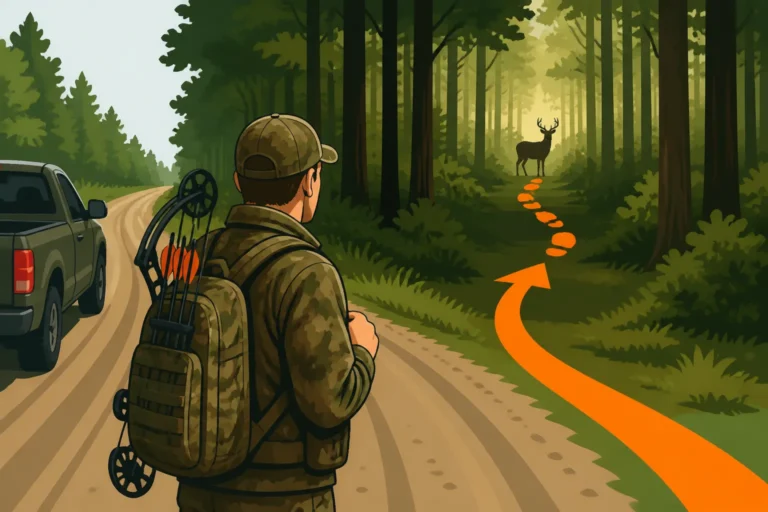
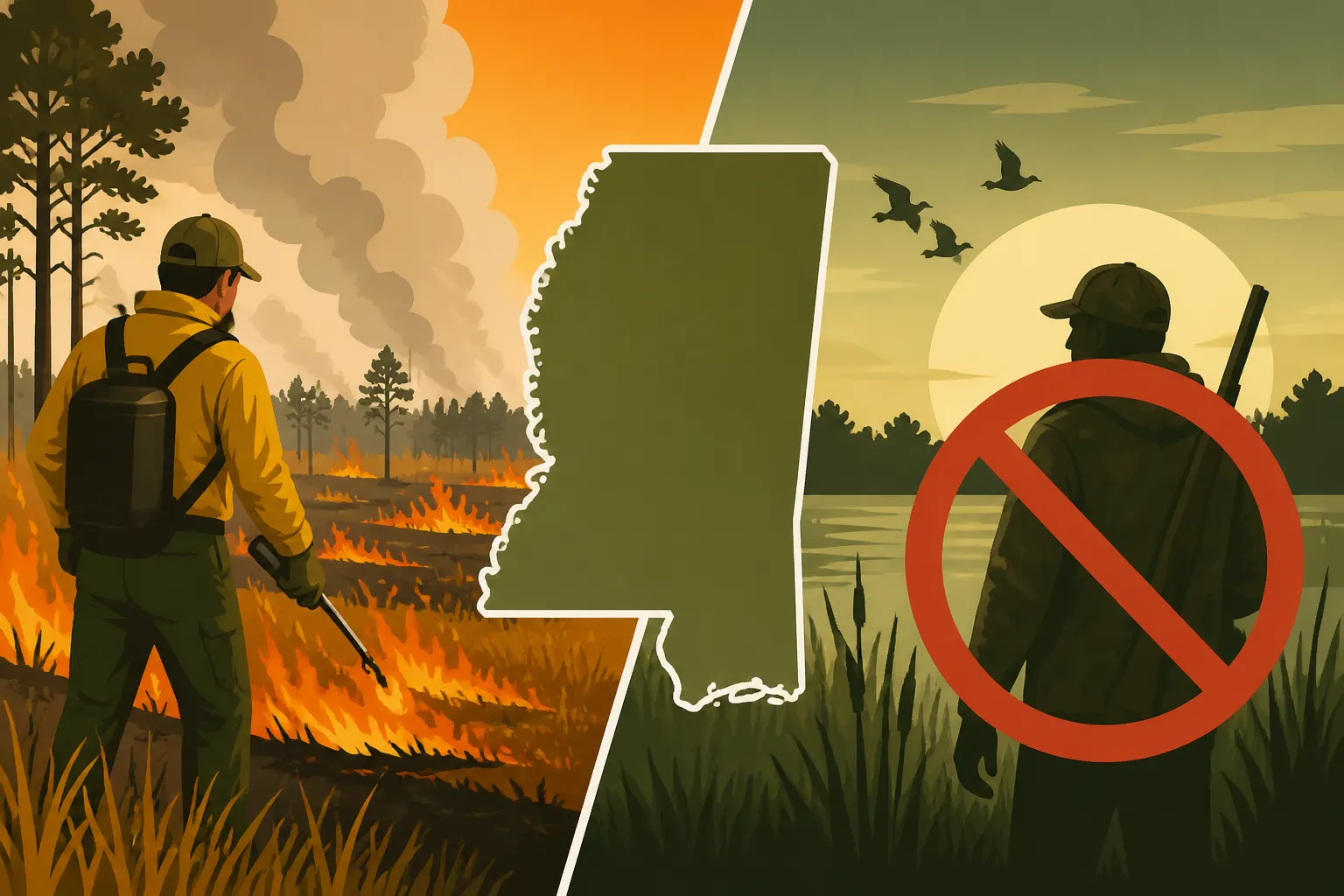
There’s nothing quite as deflating as planning a hunting trip, driving hours to your favorite public land, only to arrive and find a "Closed Due to Prescribed Burn" sign hanging prominently. It’s a gut punch, wasting time, gas, and precious hunting days. This guide is here to help you understand why these burns are crucial for Mississippi’s wildlife and how you can stay informed and adapt your hunting strategy to make the most of this vital land management tool, ensuring you're never caught off guard again.
Understanding Prescribed Burns in Mississippi's Ecosystems
Prescribed burns, often called controlled burns, are intentionally set fires used as a land management tool. While the sight of smoke and charred earth might initially seem destructive to a hunter, these controlled fires are actually a cornerstone of healthy ecosystems across Mississippi, directly benefiting the game animals we pursue.
Why Prescribed Burns Are Essential for Wildlife Habitat
Imagine a forest floor choked with dead leaves, dense undergrowth, and invasive plants. This isn't just a fire hazard; it's also poor wildlife habitat. Prescribed burns are a natural reset button. They clear out that suffocating ground litter, recycle nutrients back into the soil, and stimulate the growth of fresh, nutritious forage that our deer, turkeys, and small game desperately need. Think about it: a dense thicket of briars might offer cover, but if a deer can't move through it or find anything to eat, it's not productive cover. A controlled burn opens up these areas, allowing sunlight to reach the forest floor, which in turn encourages native grasses, forbs, and tender new shoots to sprout. These fresh, succulent plants are far more palatable and digestible for deer than mature, woody vegetation.
For wild turkeys, prescribed burns are critical for insect production and nesting habitat. After a burn, the exposed soil warms faster, bringing insects to the surface—a vital food source for poults. The reduction in dense underbrush also makes it easier for hens to move with their poults and spot predators, even if it feels a little exposed to us humans right after the fire. Quail, too, thrive in areas with frequent, low-intensity fires, which create the open piney woods habitat they prefer, encouraging the growth of their preferred seeds and insects while reducing dense, unsuitable vegetation. These burns are essentially replicating the natural fire cycles that historically shaped our landscapes before modern fire suppression, making them vital for long-term habitat health.
Who Conducts Prescribed Burns and When
Prescribed burns are not random acts; they are carefully planned and executed operations. In Mississippi, various entities conduct these burns, primarily the Mississippi Department of Wildlife, Fisheries, and Parks (MDWFP) on our state's Mississippi Wildlife Management Areas (WMAs), and the U.S. Forest Service (USFS) on our National Forests like the Delta National Forest, Homochitto National Forest, and Bienville National Forest. Private landowners, often with assistance from forestry consultants or federal programs, also utilize prescribed fire on their property, especially timber companies managing pine plantations.
The timing of these burns is crucial and depends heavily on weather conditions, fuel loads, and the specific ecological goals. Most burns occur during the dormant season (winter), when trees are less susceptible to damage and the risk of fire escaping is lower due to higher humidity and less volatile fuels. These dormant season burns are excellent for reducing fuel loads and promoting herbaceous growth. However, growing season burns (spring and summer) are also used for specific objectives, such as controlling hardwood encroachment in pine stands or stimulating certain plant communities. Regardless of the season, a burn plan is developed, outlining objectives, desired weather conditions, ignition patterns, and suppression resources. This planning ensures the burn achieves its habitat goals safely and effectively, even if it temporarily alters your hunting plans.
Navigating Hunting Closures Due to Burns
As hunters, we naturally want unrestricted access to our hunting grounds. However, when prescribed burns are underway or have recently occurred, closures become a necessary safety measure and a crucial part of the land management process.
How to Find Out About Planned Burns and Closures
The frustration of arriving at a closed gate is entirely avoidable with a little proactive research. The best way to stay informed is by checking official sources before you ever load up your gear. The MDWFP website is your go-to resource for WMAs. Each WMA typically has its own dedicated page where planned burns and any associated closures are posted. You can also sign up for email alerts or follow MDWFP on social media for real-time updates. For National Forests, consult the specific forest's website (e.g., Delta National Forest, Homochitto National Forest) or call the local ranger district office. They often have maps and schedules available.
Using modern mapping applications can be a huge help here too. While platforms like onX Hunt won't show live burn zones in real-time, they are invaluable for identifying property boundaries, road systems, and alternative access points around known burn areas. If you know a section of a WMA is scheduled for a burn, you can use your mapping app to find an adjacent, unburnt parcel that might still be open or to plan an entry route that avoids the closure. Don't rely solely on these apps for current closure information; always cross-reference with the official agency websites, but use them to scout alternative spots once you know a burn is happening. This dual approach ensures you have the most up-to-date information and a backup plan.
Types of Closures You Might Encounter
When a prescribed burn is in progress or has recently concluded, you might encounter different types of closures, each with its own implications for your hunt.
- Temporary Area Closures: These are the most common. A specific section or block of a WMA or National Forest will be closed for the duration of the burn and usually for a short period afterward. This allows fire crews to work safely without encountering hunters, and it gives the area a chance to cool down and for any smoldering embers to be extinguished. These closures might last from a few hours to several days. You might see signs posted at access points, or physical barriers like ropes or gates.
- Road Closures: Sometimes, only specific roads or access points leading into a burn unit will be closed, while other parts of the public land remain open. This is particularly common in larger National Forests where a burn might encompass a tract far from main access roads. Always heed these closures, even if you think you can "just walk around" them, as they are in place for your safety and the safety of the fire crews.
- Full WMA/National Forest Section Closures: In rare cases, especially with larger, more complex burns or immediately after a burn if there are lingering safety concerns (like falling snags or unstable ground), an entire WMA or a significant section of a National Forest might be temporarily closed to all public entry. This is less common but can happen, underscoring the need to check ahead. The key takeaway is that these closures, while inconvenient, are not arbitrary. They are essential for public safety and the successful implementation of habitat management. Respecting these closures ensures that land managers can continue to use this vital tool to improve the hunting opportunities we all enjoy in the long run.
Strategies for Hunting Burned Areas Post-Fire
While encountering a burn closure can be a setback, understanding how game animals react to and utilize burned landscapes can actually turn it into a unique hunting advantage once the area reopens. It's about shifting your perspective from initial disappointment to strategic opportunity.
Immediate Post-Burn Opportunities and Challenges
Right after a burn, the landscape looks stark. The ground is often black, and visibility can be dramatically increased, which itself can be an advantage for spotting game. Deer and turkeys will often evacuate the immediate burn zone during the fire, moving to unburnt adjacent cover. However, they don't typically travel far. Within hours or a day or two, they will often begin to cautiously filter back into the edges of the burned area, especially if there are unburnt pockets or "skips" within the unit. The immediate challenge is the lack of green forage, but this changes quickly.
One interesting opportunity immediately post-burn is tracking. With the leaf litter and undergrowth removed, deer tracks can be incredibly easy to spot against the blackened earth. This can be fantastic for still-hunting or identifying new travel corridors that emerge as animals navigate the altered landscape. You might also find that deer move more freely through previously impenetrable thickets. For turkeys, the exposed ground might reveal areas where they are scratching for insects that have been exposed or are seeking grit. It’s a temporary shift, but one that can offer a different kind of hunting puzzle to solve. Just be mindful of falling snags and hot spots that might still be smoldering for days after a burn, particularly in areas with heavy timber or deep organic soils.
Long-Term Habitat Improvement and Hunting Prospects
The real magic of prescribed fire reveals itself in the weeks and months following a burn. Once the initial shock wears off, the ground springs to life. Sunlight, no longer blocked by dense undergrowth, fuels an explosion of new growth. Tender green shoots of native grasses, legumes, and forbs emerge, providing a smorgasbord of highly nutritious browse for White-Tailed Deer Across Mississippi. These areas can become prime feeding zones, drawing deer in from surrounding unburnt habitat. Scouting these areas for fresh deer sign, like tracks and droppings, is crucial. Scouting Mississippi Public Land Before Season becomes even more critical when looking at areas with recent burn history.
For Wild Turkeys in Mississippi, the regenerating understory provides excellent bugging grounds and opens up areas for strutting and nesting the following spring. Small game like Mississippi Small Game and Furbearers (rabbits and quail) also benefit immensely from the improved forage and open travel lanes. Knowing the burn history of an area can give you a significant advantage. Tools for advanced hunting intelligence and land management, like specific mapping layers or analytical platforms, might allow you to research past burn activity on public lands. Even if you're not using a specialized platform like GoHunt which focuses on Western states, understanding burn cycles on MDWFP and USFS lands will empower you to predict where the best new growth and subsequent game activity will be. Look for areas burned 6-18 months prior for peak forage benefits, and focus on the edges where the burnt habitat meets unburnt thickets for prime travel corridors. These edges often become natural funnels.
Here's a quick look at how prescribed burns benefit our favorite game species:
| Game Species | Primary Benefits from Prescribed Burns | Strategic Hunting Implications |
|---|---|---|
| White-Tailed Deer | Increased palatable forage (new shoots, legumes), improved visibility, reduced thickets, enhanced native browse. | Deer are drawn to new growth for feeding. Hunt edges where burned areas meet thick cover. Easier tracking immediately after a burn. Burned areas can create new travel corridors or make existing ones more visible. Focus on areas burned 6-18 months prior for maximum forage. |
| Wild Turkey | Enhanced insect populations (food for poults), better nesting cover (after regrowth), easier travel for hens/poults. | Turkeys will frequent burned areas for insects and seeds. Increased visibility for spotting strutting birds. Regrowth provides excellent brood-rearing habitat. Look for scratching and dusting areas in the immediate post-burn. |
| Quail & Rabbits | Promotes early successional habitat, reduces dense mid-story, encourages seed-producing plants, improves escape cover. | Quail and rabbits thrive in open understories. Burned areas will offer better visibility for spotting and flushing. Concentrated food sources and patchy cover will attract them. Focus on areas that have a regular fire return interval to maintain this specific habitat. |
| Feral Hogs | Exposed food sources (roots, tubers, insects), easier travel, new growth. | Hogs are often drawn to freshly burned areas to root up exposed food. Increased visibility can aid in spotting. New soft soil is easy to root in. Can be hunted immediately post-burn as they often return quickly. |
| Small Game (Squirrels) | Improved mast production over time (less competition), better visibility. | While immediate impact might be negative, long-term health of mast-producing trees can improve. Visibility can aid in spotting squirrels on the ground or in trees. Squirrels will adapt to changed cover. |
Prescribed burns are a powerful, necessary tool for maintaining and improving the diverse ecosystems that support Mississippi's robust hunting opportunities. By understanding their purpose, knowing how to stay informed about closures, and learning to read the landscape post-burn, you can turn a potential frustration into an informed, strategic advantage for your next hunting adventure. Always respect the closures, check official sources, and embrace the dynamic nature of our wild places.
Disclaimer
This article is for general informational purposes only and does not constitute professional advice. Laws, prices and regulations vary by location and change over time. Consult a qualified professional for guidance on your specific situation.