Forrest County Public Hunting Ground
Finding quality public hunting ground in Mississippi, especially outside of the well-known Delta or large national forests, can sometimes feel like searching for a needle in a haystack. Many hunters get frustrated with dense private tracts and limited access, wondering if there are any accessible spots left for a good hunt. This guide will shine a light on the public hunting opportunities specifically within Forrest County, breaking down what's available, how to access it, and what you can expect when you hit the woods or fields.
Understanding Public Land Opportunities in Forrest County
Forrest County, nestled in the Piney Woods region of South Mississippi, isn't typically highlighted for its sprawling public lands in the same way the Delta is for its massive bottomland hardwoods. However, that doesn't mean there aren't opportunities here; they just require a bit more understanding and a strategic approach. Hunters often assume that if it's not a National Forest, there's nothing to consider, but many smaller, often overlooked parcels and Wildlife Management Areas (WMAs) provide excellent hunting experiences if you know where to look and how to navigate their specific rules.
The Landscape of Public Access
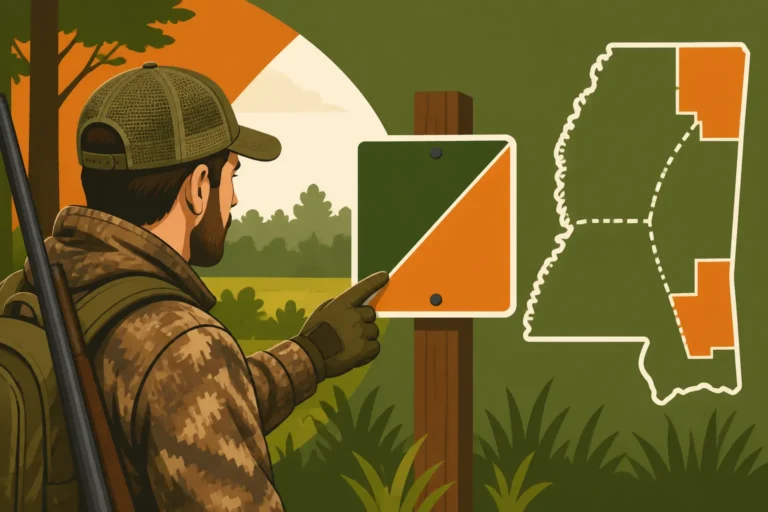
The public land available in Forrest County is generally managed by the Mississippi Department of Wildlife, Fisheries, and Parks (MDWFP) and often falls under the WMA system. These aren't always continuous blocks of timber stretching for miles, but rather a patchwork of state-owned or leased lands, sometimes intermingled with private property. This can be a challenge for new hunters or those unfamiliar with the area, as boundaries aren't always immediately obvious on the ground. You might find yourself hunting a section of pine plantation adjacent to a privately owned clear-cut, or a hardwood bottomland strip alongside a farmer's field. It's crucial to acknowledge this fragmented nature and prepare accordingly to avoid trespassing. Tools like onX Hunt can be invaluable here, allowing you to clearly see property lines and public land boundaries right on your phone, even when you're deep in the woods without cell service.
Managing Your Expectations
Before heading out, it’s important to set realistic expectations for hunting in Forrest County's public areas. While you might not find the same vast, unpressured expanses as in some of the larger federal lands, these areas can still hold significant game populations, particularly deer, turkey, and small game. The key is often to scout diligently, understand the localized patterns of game movement, and adapt your tactics to the specific environment. Pressure from other hunters can be a factor, especially during opening weekends or peak rut, but by getting off the beaten path and exploring deeper sections, you can often find unpressured pockets. Remember, a good hunt isn't always about a trophy, but about the experience of being out in nature and testing your skills.
Key Public Hunting Areas to Explore
When looking at Forrest County, the primary public hunting opportunities will revolve around specific Wildlife Management Areas. These areas are managed intensively to provide habitat for game and recreational opportunities for hunters. While the county itself may not have a sprawling National Forest footprint, these WMAs offer dedicated space for pursuing various game animals.
Black Creek Wildlife Management Area
A significant portion of public hunting land in or near Forrest County is associated with the Black Creek WMA, which is often intertwined with the DeSoto National Forest. This area provides a mix of pine forests, hardwood drains, and cypress swamps, typical of the Piney Woods ecoregion. The diverse habitat supports a healthy population of deer, turkeys, and various small game. Hunters venturing into Black Creek WMA will find opportunities for still-hunting through pine stands, setting up along hardwood bottoms that serve as travel corridors, or even calling turkeys in the spring.
Access to Black Creek WMA can be found off various state and county roads, with designated parking areas. It's not uncommon to hike a good distance to get away from road noise and other hunters. Familiarizing yourself with a detailed map, perhaps using a digital mapping application like GoHunt, is essential to understand the lay of the land, identify potential food sources, bedding areas, and water access. Be sure to check the specific regulations for Black Creek WMA through the MDWFP, as rules regarding weapon types, bag limits, and hunter orange requirements can differ from statewide regulations. For instance, sometimes areas within WMAs might have different rules for Mississippi Legal Firearms for Deer Hunting or require specific WMA permits in addition to your general hunting license.
Smaller, Dispersed Tracts and Special Opportunities
Beyond the larger WMAs, Forrest County might also contain smaller, more isolated public tracts that are less advertised. These could be small parcels managed by the MDWFP, or even landlocked sections of public domain that require careful navigation and permission to cross private property to access. Such areas can be golden opportunities for hunters willing to do their homework. Often, these smaller parcels receive less hunting pressure simply because they are harder to find or access.
To discover these hidden gems, you’ll need to put in some serious scouting time, both virtually and on the ground. Start by pouring over satellite imagery on your mapping apps, looking for blocks of timber that seem to be contiguous with known public lands, or even small, isolated green spaces that might be state-owned. Cross-reference these with plat maps or land ownership layers available on platforms like onX Hunt. Sometimes, a phone call to the local MDWFP office can also reveal insights into these lesser-known areas. While they might not be able to point you to a secret spot, they can often confirm public ownership or explain access points that aren't widely known. These smaller tracts can be excellent for Squirrel and Small Game Hunting in Mississippi if you're looking for a less intense outing.
Navigating Regulations and Access
Hunting public land in Mississippi, especially within the WMA system, comes with its own set of rules and requirements that can sometimes feel overwhelming. It's not just about having your Mississippi Hunting Licenses and What They Cost; you also need to understand specific WMA permits, check-in procedures, and often, unique regulations for each area.
WMA Permits and Check-In Procedures
Most Wildlife Management Areas in Mississippi require hunters to possess a valid WMA User Permit in addition to their regular state hunting license. This permit helps fund the management and maintenance of these crucial public lands. Beyond the permit, many WMAs, especially during deer and turkey seasons, require hunters to sign in and out at designated check stations or through an online system. This isn't just bureaucratic red tape; it helps the MDWFP monitor hunter pressure, track harvest data, and manage the game population more effectively.
Failing to check in or out can result in fines, so it's a step you absolutely cannot skip. Before your hunt, always verify the specific check-in procedure for your chosen WMA. Some have physical kiosks with cards, while others use phone apps or websites. It's smart to do this from home if possible, especially if you're heading to a remote area with spotty cell service. For those who hunt Mississippi Deer Season Structure Explained, knowing these specifics for your unit and WMA is paramount.
| Requirement/Action | General Mississippi Rule | Typical WMA Specific Rule | Important Notes |
|---|---|---|---|
| Hunting License | Required for all hunters | Required (state-issued) | Must be valid for the species and weapon being used. Mississippi Resident Sportsman's License or appropriate nonresident license is key. |
| WMA User Permit | Not statewide | Often required in addition to general license | Check MDWFP regulations for the specific WMA. Usually an annual fee. |
| Check-in/Check-out | Not statewide | Mandatory for most WMAs, especially during deer/turkey season | Can be physical sign-in sheets, online, or app-based. Failure to comply can result in fines. Verify procedure beforehand. |
| Blaze Orange/Pink | Required during gun seasons | Specific WMA rules might vary, always check. Often required for deer drives or still-hunting. | Typically 500 sq. inches visible from front/back for deer gun season. Always err on the side of caution. See How Much Blaze Orange Mississippi Requires. |
| Weapon Restrictions | Statewide rules exist | WMAs may have additional restrictions (e.g., archery-only zones, specific caliber limits). | Some WMAs might have archery-only periods or specific rules for Mississippi Crossbow Equipment Requirements. |
| Stand Placement/Removal | General guidelines | Specific rules on permanent stands, screws, and removal dates. | Many WMAs prohibit permanent stands or leaving stands overnight. Always remove stands at the end of the day or season. Treestand Rules on Mississippi Public Land covers this in detail. |
| ATV/Vehicle Use | Restricted on public land | Highly restricted; often only on designated roads/trails, some seasonal closures. | Consult WMA maps for vehicle access. Usually no off-road vehicle use allowed. |
| Harvest Reporting | Mandatory for deer/turkey | Same as statewide, usually through MDWFP app/website. | Report your harvest promptly. See Reporting a Deer Through Mississippi's App. |
Utilizing Digital Tools for Navigation and Information
In today's hunting world, digital mapping applications are no longer a luxury but a necessity, particularly when hunting public land that might have irregular boundaries or changing rules. Services like onX Hunt and GoHunt provide detailed satellite imagery, property line overlays, and public land boundaries that can be invaluable in Forrest County's mixed landscape. Imagine walking through a patch of woods, thinking you're on public land, only for your app to show you're just feet from a private property line. This prevents accidental trespassing and gives you the confidence to explore further.
Beyond basic navigation, these apps often integrate features that can help with scouting, such as identifying prime bedding areas, food sources, and travel corridors, even before you step foot in the woods. You can mark waypoints, measure distances, and track your movements. Many also update with relevant regulations or access points for WMAs. Even in areas with limited cell service, many apps allow you to download maps for offline use, ensuring you always have your bearings. Learning how to effectively use Scouting Mississippi Public Land Before Season with these tools will dramatically increase your success rate.
Targeting Game Species in Forrest County
Forrest County offers a good mix of game species for hunters willing to put in the time. While deer and turkey are undoubtedly popular pursuits, the area also provides excellent opportunities for small game and even some predatory species. Understanding the typical habitat preferences and seasonal patterns of these animals within the Piney Woods environment is crucial for success.
Deer Hunting in the Piney Woods
Deer are a primary target for many hunters in Forrest County. The deer herd here is healthy, though trophy sizes might not consistently match those from the fertile Delta region. Pine plantations, which are abundant in the area, provide excellent bedding cover, especially in younger stands. However, deer will often gravitate towards the scattered hardwood drains, creek bottoms, and mast-producing oaks for food, particularly during the early and mid-season. As the season progresses, green fields planted by the MDWFP within WMAs, or natural browse in mature timber, become critical food sources.
Hunters in Forrest County often find success using a variety of tactics. Still-hunting the edges of pine thickets where they meet hardwood bottoms can be very effective, especially during cooler weather. Setting up a climbing stand or a permanent ladder stand (where allowed) along a well-used trail connecting bedding to feeding areas is another popular method. Rattling and grunting can also draw in rutting bucks, particularly in the Hills and Southeast Unit Antler Restriction Rules where the buck population is generally well-managed. Remember to check the specific Mississippi Deer Bag Limit Rules for the Southeast Unit, which Forrest County falls within.
Spring Turkey Opportunities
Mississippi's spring turkey season is a highly anticipated event, and Forrest County offers some solid opportunities for gobblers. The mixed pine and hardwood forests provide ideal habitat, with large mature pines often serving as roost trees and open hardwood bottoms or logging roads offering strutting grounds. Finding turkeys often comes down to early morning scouting to locate roost sites or listening for gobblers to sound off at first light.
Calling tactics vary, but a combination of locator calls (owl hoots, crow calls) and realistic hen vocalizations (yelps, clucks, purrs) can be very effective. Setting up against a large tree with good visibility, especially where two habitat types meet, is a classic strategy. Be prepared to be mobile, especially on public land where gobblers might be pressured. A run-and-gun approach, moving and calling until you get a response, is often successful. Don't forget to secure your The New Mississippi Wild Turkey Stamp before heading out, as it's a mandatory requirement for turkey hunters.
Small Game and Furbearer Pursuits
Forrest County's extensive timberland also makes it a fantastic area for small game hunting, particularly squirrels and rabbits. The hardwood bottoms, rich with oak and hickory, are prime squirrel habitat. Early season squirrel hunting can be fast-paced, often involving still-hunting or using a small-caliber rifle. Later in the season, when leaves are down, it becomes easier to spot squirrels in the treetops. Mississippi Squirrel Season Opening Day is usually in the fall, offering a great way to introduce new hunters to the sport or just enjoy a relaxed day afield.
Rabbit hunting, often with beagles, is another popular small game pursuit. Thick briar patches, fencerows, and clear-cuts with dense regrowth provide excellent cover for cottontails. For those interested in furbearers and predators, coyotes are abundant throughout Mississippi, including Forrest County. Calling coyotes, especially in the early mornings or late evenings, can be a thrilling experience. Always check specific regulations for Predator Hunting in Mississippi, as rules regarding night hunting or specific methods might apply, especially on WMAs.
Disclaimer
This article is for general informational purposes only and does not constitute professional advice. Laws, prices and regulations vary by location and change over time. Consult a qualified professional for guidance on your specific situation.