Deer Drives on Mississippi Public Land
Hunting deer on Mississippi's public lands can feel like a constant battle, especially when you're competing with other hunters or dealing with the sheer size and wildness of the Delta bottomlands or the rugged Hills Unit. It's frustrating to sit patiently for hours, only to have a deer busted by another hunter or simply never show up. This comprehensive guide is here to help you navigate those challenges by focusing on one of the most effective, albeit often misunderstood, tactics for public land whitetails: organized deer drives.
Understanding the Dynamics of Public Land Deer Drives in Mississippi
Deer drives aren't just for big private clubs with dozens of members. When executed correctly, even a small group of hunters can significantly increase their odds of success on Mississippi's public land. The key is understanding why they work here and how to conduct them safely and ethically within state regulations.
Why Drives Work on Heavily Pressured Public Land
On public land, deer often become largely nocturnal or seek out the thickest, nastiest cover during daylight hours, especially as hunting pressure mounts. They learn quickly to avoid open areas and travel corridors. This makes traditional stand hunting incredibly challenging. A well-orchestrated drive aims to push these pressured deer out of their sanctuaries and past strategically positioned standers. Think about areas like the Delta National Forest or certain WMAs where the deer are constantly bumped; a drive can exploit their predictable desire for dense cover, using that to funnel them into shooting lanes. It's about taking the fight to them, rather than waiting for them to come to you, which they often won't do on their own during peak hunting times.
What makes drives so effective on public ground is that they capitalize on the deer's natural evasive instincts. Deer aren't usually looking to run miles away; they're trying to slip through the smallest opening or circle back around the drivers. If you can anticipate those escape routes and place your standers accordingly, you create opportunities where none existed before. It's not about running deer ragged across the county, but rather gently nudging them from a bedding area to a stander who's ready.
The Ethical and Safety Considerations of Group Hunting
When you're hunting in a group, especially on public land where other users might be present, safety becomes paramount. Every member of your driving party needs to be on the same page regarding shot zones, communication, and clear identification of targets. You're responsible not just for your own actions, but for the collective safety of the group and anyone else in the vicinity. This means no "cowboy" shooting, no speculative shots into thick brush, and always identifying your target beyond a shadow of a doubt before putting your finger on the trigger.
Communication is also crucial for ethical hunting during a drive. Knowing where everyone is and what everyone is doing prevents potential accidents and ensures that deer are pushed efficiently, not just scattered randomly. Before you even step foot in the woods, discuss what constitutes a safe shot, your specific shooting lanes, and what happens if a deer circles back. This upfront planning builds trust and makes the entire operation smoother and safer for everyone involved.
Legalities and Regulations for Deer Drives in Mississippi
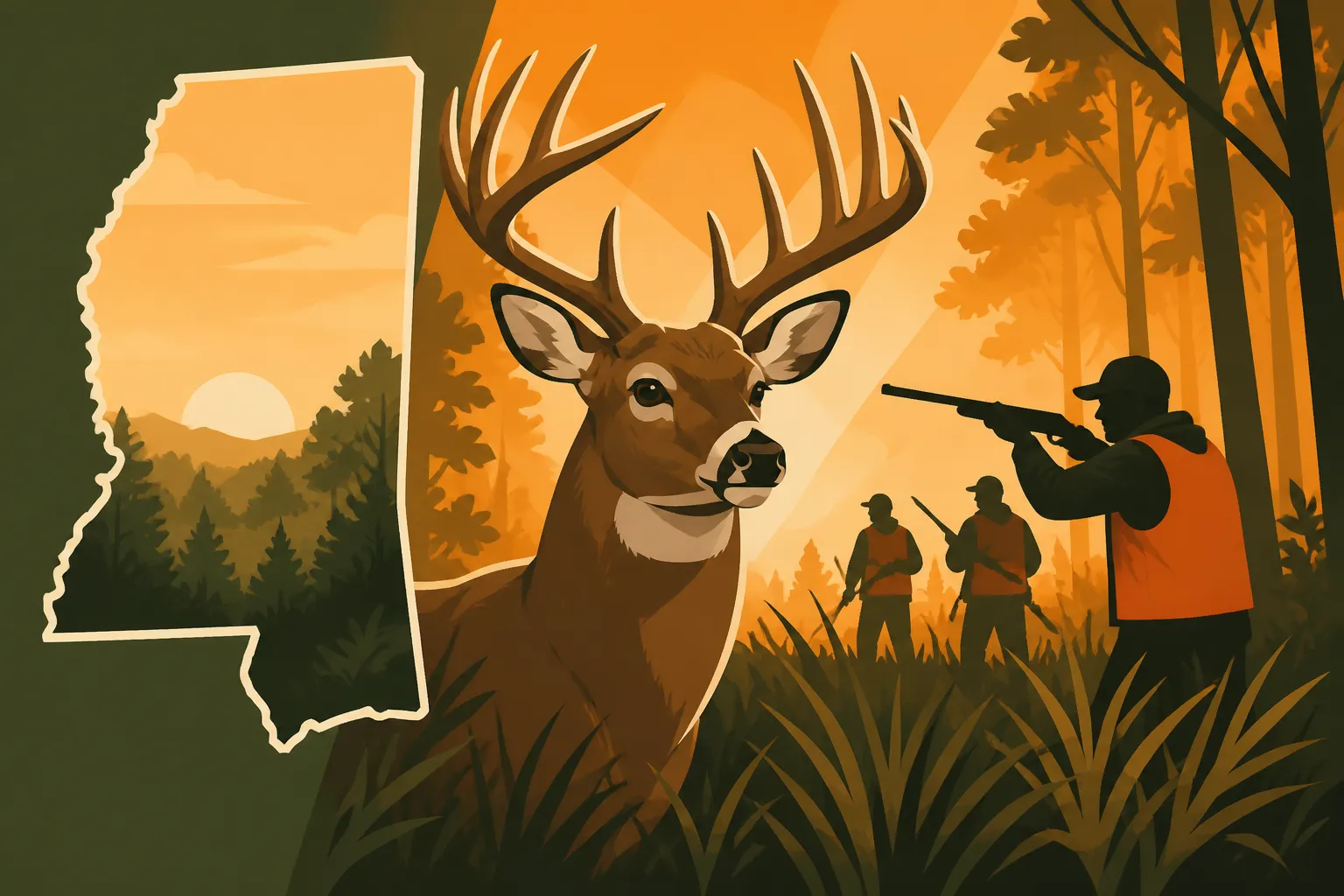
Mississippi has specific rules that apply to hunting, and while deer drives themselves aren't explicitly outlawed, you must adhere to all general hunting regulations. This includes proper licensing, adherence to bag limits, and understanding legal shooting hours. Most importantly, you need to be aware of Mississippi Blaze Orange Requirements for all hunters during gun season. Every person involved in the drive, whether a driver or a stander, must wear sufficient blaze orange to be visible from all directions.
Beyond hunter orange, it's critical to understand the rules regarding ATVs or vehicles on public land. Most public areas restrict vehicle use to designated roads. You can't just drive through the timber to push deer. Also, familiarize yourself with Mississippi Public Land Hunting Hours to ensure your drive starts and ends within legal times. Ignorance of the law is no excuse, and a violation during a drive can lead to significant fines and penalties, not to mention a ruined hunt. Always check the latest MDWFP regulations before planning your outing.
Scouting and Planning Your Drive on Mississippi Public Land
A successful deer drive isn't spontaneous; it's the result of meticulous planning and thorough scouting. You can't just show up and start yelling. The more you know about the terrain, deer movement, and potential escape routes, the higher your chances of success.
Identifying Prime Public Land Features for Drives
Public lands across Mississippi, from the flat, dense bottomlands of the Delta to the rolling, timbered hills of the central and eastern regions, offer unique opportunities and challenges for deer drives. Look for natural funnels like creek bottoms, narrow strips of timber between clear-cuts, or hard-to-access thickets that deer use for bedding. These are the places where deer feel safe and will likely hold up, making them prime candidates for a drive. On public land, identifying areas with less pressure can also be key. Sometimes the deepest, hardest-to-reach pockets of cover are exactly where deer are hiding from other hunters.
Consider the topography. In the Delta, a drive might push deer along a slight rise, a levee, or through a slough edge. In the Hills Unit, you'd be looking at saddles between ridges, dense cedar thickets, or deep draws. Thinking about how deer will try to escape once pushed is paramount. They'll almost always try to use the path of least resistance or circle back into familiar cover. Your drive strategy needs to anticipate and block those movements.
Pre-Season Reconnaissance and Mapping Tools
Before opening day, hit the woods without your hunting gear. Walk the areas you're considering, looking for old rubs, scrapes, and most importantly, fresh tracks and bedding areas. Pay attention to how deer might move between these areas and any natural bottlenecks. Tools like GoHunt's mapping software or the MDWFP's own online maps are invaluable for this. You can overlay property lines, topo maps, and aerial imagery to identify key terrain features and potential escape routes. This digital scouting can save you countless hours of boots-on-the-ground work, helping you pinpoint exactly where to focus your efforts.
Beyond digital maps, physical scouting is irreplaceable. Get out there and look for tangible evidence of deer activity. Where are the thickest briar patches? Which creek crossings are most used? Are there any small, isolated patches of cover surrounded by more open woods? These details, invisible on a map, are critical for predicting deer movement during a drive. When you're Scouting Mississippi Public Land Before Season, prioritize finding these hidden gems that other hunters might overlook.
Assembling Your Team and Assigning Roles
The size of your driving party matters. For public land, you're rarely going to have a massive club, so often a drive with Deer Drives With Three or Four Hunters is most practical. Each person needs a clear role: drivers and standers. Drivers are responsible for moving through the cover, making enough noise to push deer, but not so much that they scatter them wildly. Standers are positioned quietly and strategically along anticipated escape routes, ready for a shot.
Before any drive begins, assign specific stand locations and routes for the drivers. Everyone needs to understand the plan. Who's standing where? Who's driving which line? What's the communication signal (e.g., a text message when standers are set)? A pre-hunt briefing outlining these details is non-negotiable. Discuss wind direction and how it might affect deer movement and scent dispersal. If your standers are downwind, you're already at a disadvantage.
Executing Effective Deer Drives in Varied Mississippi Terrain
Mississippi's diverse landscape means a "one-size-fits-all" approach to deer drives simply won't work. What's effective in a Delta bottomland will be very different from tactics in the rugged Hills Unit or a managed pine plantation.
Tactics for Delta Unit Bottomland and Swamps
The Delta Unit is defined by its vast, flat bottomland hardwoods, cypress sloughs, and dense cane thickets. Deer here are masters of concealment. When driving these areas, focus on pushing deer out of these thick bedding areas, often found along old river channels or in the middle of dense swamps. Standers should be placed on high ground, like old levees, logging roads, or the edges of slightly higher timber where deer will inevitably try to cross or skirt the water. Posting a Drive Around a Delta Slough can be incredibly effective, as deer are reluctant to cross open water if they can avoid it.
The key in the Delta is patience and understanding water features. Drivers might need to navigate knee-deep water or wade through thick, mucky ground. Maintaining a consistent line and pace is more important than speed. Deer will often try to circle back or slip between drivers, so spacing and clear communication are essential. Consider how deer move in Hunting Delta Unit Bottomland Deer; they often stick to the fringes of the thickest stuff, using slight elevation changes to their advantage.
Strategies for Hills Unit Ridges and Hardwoods
In Mississippi's Hills Unit, deer drives take on a different character. Here, you're dealing with elevation changes, hardwood timber, and often dense pine thickets on ridge tops. Drivers should focus on pushing deer off ridge points, out of saddles, and through draws. Standers should be positioned to cover these natural funnels. Deer typically try to run up and over ridges to escape, or slip down into the thickest draws. A great strategy is to have drivers push down a ridge into a bottom, with standers positioned at the bottleneck where the draw meets a wider area.
Thermals play a huge role in the Hills Unit. In the mornings, thermals rise, carrying scent upwards. In the evenings, they fall. Plan your drive accordingly, trying to keep drivers and standers from blowing their scent directly into the areas you expect deer to be. Still-Hunting Hills Unit Ridges can give you an idea of typical deer travel paths, which are ideal locations for standers. Pay close attention to wind direction, as it can make or break a drive in this terrain.
Driving Clear-Cuts and Pine Plantations
Clear-cuts and dense pine plantations are absolute magnets for deer in Mississippi, offering incredible bedding and browse. They're also incredibly difficult to hunt traditionally due to their impenetrable nature. Deer drives are often one of the best ways to get deer out of these areas. For clear-cuts, drivers should work in a line through the thickest new growth, pushing deer towards a natural edge or a more open timber block where standers are waiting.
Pine plantations, especially those 5-15 years old, are just as thick. Drivers will need to move slowly and methodically, making consistent noise. Standers should be placed on roads, fire lanes, or transition lines where the pine thicket meets mature hardwoods or fields. Deer will burst out of these areas quickly, so standers need to be alert and ready for fast-moving targets. Always ensure standers have clear shooting lanes and backstops, as visibility can be very limited coming out of these dense areas.
Positioning Standers and Navigating the Drive Path
The success of any deer drive hinges on two critical components: where your standers are placed and how your drivers move through the cover. Get either of these wrong, and your drive will likely be a bust.
Strategic Stand Placement for Maximum Coverage
Choosing stand locations isn't random; it's a science. Standers need to be placed in areas where deer are most likely to travel once pushed. This means looking for natural funnels like creek bends, narrow timber strips between fields, saddles on ridges, or specific crossings of logging roads. Don't put standers in wide-open fields unless it's a known crossing point at a very specific bottleneck. Instead, place them just inside the timber edge, or at the corner of a thicket, giving them concealment but also a clear view of where deer are expected to emerge.
Consider the escape routes of the deer. When pushed, deer will often try to sneak along the edge of the cover, or circle back behind the drivers. Sometimes, putting a stander deeper into the cover, in a ground blind tucked into a briar patch, can be more effective than having them exposed on an open road. If you're Using a Ground Blind on Mississippi Public Land, make sure it's brushed in well and offers a wide enough field of view for quick shots. The goal isn't just to see deer, but to get an ethical shot opportunity.
Effective Driver Paths and Noise Management
Drivers are not just walking through the woods; they are actively working to move deer. The path drivers take should systematically cover the bedding area or thicket being driven. A straight line is often best, especially in flat country like the Delta. In hilly terrain, drivers might need to move in a more staggered or "U" shape to sweep the contours of the land. The key is to maintain consistent spacing between drivers. If there are too many gaps, deer will slip through.
Noise management is equally important. You don't want to sound like a marching band. Drivers should make enough consistent noise – talking, stomping, snapping branches – to make deer uncomfortable and encourage them to move, but not so much that they panic and break cover wildly in unpredictable directions. A steady, purposeful progression is far more effective than sporadic bursts of noise. The idea is to gently usher them, not scare them into a full-blown stampede.
Communication and Safety Protocols During the Drive
Before anyone steps out, ensure every member of the party has reliable communication. Two-way radios are excellent for this, especially if cell service is spotty, which it often is on public land. Establish clear signals for when standers are set, when the drive begins, and any other critical updates. For instance, a quick "Standers set!" text followed by a group call to start the drive. This prevents anyone from moving before everyone is in position.
Safety protocols are non-negotiable. Clearly define shooting lanes and danger zones. Emphasize that no shot should be taken at a deer moving directly towards a fellow hunter, or at a deer that is silhouetted against another hunter. Every shot must have a safe backstop. Remind everyone that safety takes precedence over harvesting an animal. If a situation feels unsafe, the hunt is called off immediately. This goes back to Mississippi Deer Season Structure Explained where safety is implicitly a part of ethical hunting.
Post-Drive Strategies and Ethical Recovery
The drive doesn't end when the shot is fired. Ethical hunting demands a thorough and respectful recovery process, which can be particularly challenging on Mississippi's public lands.
Following Up After the Shot on Public Land
Once a shot is taken, don't immediately rush to the spot. Give the deer some time, especially if the shot wasn't absolutely perfect. A deer that feels less pressured might bed down and expire, while one that's pushed immediately could run much further. Wait at least 20-30 minutes for a suspected good hit, and an hour or more for a questionable shot like a leg or gut shot. Mark the spot where the deer was standing when shot, and where you last saw it. These two reference points are crucial for beginning your Tracking a Deer Through Mississippi Leaf Litter.
When you begin tracking, move slowly and methodically. Look for blood, hair, bone fragments, and disturbed ground. On public land, you might encounter other hunters, so it's wise to communicate your intentions and the general area you're tracking in to avoid interference, or even better, to get a fresh set of eyes. Having a second person can significantly help the tracking process, as one person can focus on the sign while the other keeps an eye on the path ahead.
Blood Trailing and Recovery in Challenging Cover
Mississippi's public lands offer plenty of challenging terrain for blood trailing. The dense undergrowth of the Delta, the steep ravines of the Hills, or the thick clear-cuts can make even a strong blood trail disappear quickly. In these situations, slow down. Get on your hands and knees if you have to. Use flagging tape to mark the last blood you found, and then search in a grid pattern around that spot. Don't be afraid to circle widely, as deer will often take a sharp turn or jump over obstacles.
If darkness falls before you find your deer, it's a tough call. In warm weather, leaving a deer overnight can lead to meat spoilage. However, Blood Trailing After Dark in Mississippi comes with its own set of dangers, including getting lost or stumbling in thick cover. If you must leave it, mark the last blood thoroughly, noting landmarks, and return first thing in the morning with fresh eyes. Often, a deer left to expire will not move far from where you last saw blood.
Checking and Transporting Your Harvest
Once you've recovered your deer, the work isn't over. Mississippi requires all harvested deer to be reported to the MDWFP. You can do this quickly and easily through their app or website. Have your license information and the deer's sex, unit, and method of harvest ready. It’s a vital step for wildlife management and helps the MDWFP track deer populations and harvest data across the state.
Transporting a deer off public land can be a logistical challenge. You can't usually drive your truck directly to the animal. Be prepared with a game cart, sled, or strong ropes. In some areas, quartering the deer in the field might be the most practical option, especially if you have a long haul. Always ensure you have a cooler with plenty of ice ready, particularly if the weather is warm, to preserve the meat until you can get it properly processed. Respect the animal and the regulations, and you'll have a successful and ethical end to your deer drive.
Disclaimer
The information provided in this guide is for general informational purposes only and is not a substitute for official Mississippi Department of Wildlife, Fisheries, and Parks (MDWFP) regulations. Hunting laws and regulations can change, and it is the responsibility of every hunter to review and comply with the most current MDWFP rules and local ordinances before engaging in any hunting activity. Always prioritize safety and ethical hunting practices.