When Self-Guided Public Land Makes More Sense
For many hunters, the dream of a successful trip often conjures images of luxurious lodges, seasoned guides, and prime private land. But let's be honest, those experiences come with a hefty price tag, and for a lot of us, it's just not financially feasible every season. The good news is, you absolutely don't need a high-dollar outfitter to have an incredibly rewarding hunt here in Mississippi. This guide is all about helping you understand when hitting the public land on your own, setting up your own stand, and relying on your own skills truly makes the most sense – not just for your wallet, but for your soul as a hunter.
Evaluating Your Hunting Style and Goals
Before you even start looking at maps or calculating costs, it's crucial to take an honest look in the mirror and assess what kind of hunter you are, what you hope to achieve, and what resources you have at your disposal. This isn't about judging your abilities, but rather matching your expectations with the realities of the field.
Experience Level and Self-Sufficiency
If you're a seasoned hunter who's spent years in the woods, understands game behavior, can navigate by map and compass (or GPS!), and isn't afraid of a little discomfort, then self-guided public land hunting is probably already in your wheelhouse. You know how to scout, set up a stand, field dress an animal, and track a blood trail. You're comfortable with the solitude and the problem-solving that comes with being on your own. You've likely developed your own tactics over the years and enjoy the challenge of pitting your skills against the wild.
However, if you're relatively new to hunting, or new to Mississippi's specific terrain and game, going completely self-guided on public land might be a steep learning curve. While it's certainly possible to learn as you go, a guided hunt can offer invaluable lessons and a quicker path to success. A guide essentially fast-tracks your learning, showing you how to read sign, understand local patterns, and make critical decisions in the moment. For someone who thrives on learning by doing and has a decent foundation, public land is an incredible classroom. But for those who need more structured guidance, an outfitter might ease those initial anxieties.
Target Species and Expectations
What are you actually hoping to hunt? If your primary goal is to fill the freezer with venison, chase squirrels in the hardwoods, or call in a spring gobbler, then Mississippi's public lands offer abundant opportunities. Our state boasts a healthy deer herd, thriving turkey populations, and plenty of small game across numerous Wildlife Management Areas (WMAs) and National Forests. The chance of harvesting an animal is quite good if you put in the work.
However, if your absolute, non-negotiable goal is a Boone and Crockett class buck, or to take a specific kind of duck with a guaranteed daily limit, then an outfitter with exclusive access to thousands of acres of intensely managed private land might be a better fit for those specific, high-bar expectations. While monster bucks are certainly killed on public land every year in Mississippi, they are the exception, not the rule. The odds are generally lower, and the effort required significantly higher, to find those truly giant animals on public ground due to hunting pressure and habitat differences. It's about being realistic with what public land can consistently offer versus what private land, often under intense management, can provide.
Budget Realities and Time Investment
This is often the biggest deciding factor. A guided hunt, especially for deer or ducks, can easily run into the thousands of dollars, covering guide fees, lodging, meals, and sometimes even processing. For many working families, that's just not a practical expense, especially when you factor in licenses, gear, and travel on top of it.
Self-guided public land hunting, on the other hand, dramatically slashes those costs. Your primary expenses become your Mississippi Hunting Licenses and What They Cost, fuel, food, and maybe some basic camping fees. This frees up your hard-earned money for better gear, more trips, or simply to stay within a reasonable budget. The trade-off is often time. To be successful on public land, you generally need to invest more time in scouting, learning the area, and adapting to conditions. You won't have a guide who has done all that legwork for you. If you have limited vacation days and want maximum efficiency, a guide might save you time; but if you have the flexibility and enjoy the process of discovery, public land offers a wealth of experience for a fraction of the price.
The Advantages of Self-Guided Public Land Hunting
There's a unique satisfaction that comes from planning, executing, and succeeding on a self-guided hunt. It's an experience that connects you more deeply to the land and to your own capabilities.
Cost Savings and Financial Freedom
Let's get straight to it: money. The financial burden of an outfitted hunt is a major hurdle for many. When you opt for a self-guided experience on public land, you retain control over every dollar. Instead of paying a premium for a guide's services, you're investing in your own gear, your own fuel to scout and hunt, and your own food for the trip. This cost efficiency allows many hunters to enjoy multiple trips in a season, or even explore different regions of the state, whereas a guided hunt might be a once-every-few-years splurge.
Think about it: that money saved can go towards a new stand, better optics, or a reliable set of boots – all things that will serve you on countless future hunts. The freedom to decide where and when you spend your hunting budget is incredibly liberating, allowing you to tailor your experience exactly to your financial comfort zone. It's not just about spending less; it's about spending smarter on your hunting journey.
The Thrill of the Challenge and Self-Reliance
There's an undeniable pride that comes with hanging your own stand, locating your own game, and making the shot all on your own terms. Public land hunting is often more challenging than hunting on a manicured, managed private lease with feeders and food plots. You're dealing with hunting pressure, less predictable game patterns, and often thicker, less accessible terrain. But that's precisely where the immense satisfaction lies.
Every successful deer, every gobbler called in, every limit of squirrels bagged feels like a hard-won victory because you did it yourself. You relied on your scouting, your woodsmanship, and your perseverance. This self-reliance deepens your connection to the outdoors and builds skills that extend far beyond hunting, fostering confidence and adaptability. It's a true test of skill and grit, and many hunters find that profound sense of accomplishment to be the most valuable part of the experience.
Flexibility and Personal Exploration
Guided hunts often come with a rigid schedule: wake-up times, meal times, hunting times, and specific areas assigned by your guide. While efficient, this can sometimes feel restrictive. Self-guided public land hunting offers unparalleled flexibility. You decide when you wake up, when you hunt, which areas you explore, and how long you stay. If a spot isn't producing, you can pull up stakes and move without consulting anyone. If a cold front rolls in and changes the game, you can adapt your strategy on the fly.
This freedom allows for genuine exploration. You can spend days learning a new WMA, discovering hidden pockets of timber, or walking miles of river bottom. It's about immersing yourself in the landscape and letting the hunt evolve organically. For those who cherish the journey as much as the destination, and love the process of discovery, public land provides an endless canvas for personal adventure. You can really get to know an area, like the vast expanses covered in Public Hunting Land in Mississippi.
Building Deep Woodsman Skills
When you're out on your own, you're forced to hone every aspect of your hunting and woodsmanship skills. There's no guide to tell you where to go or what to do. You become intimately familiar with Scouting Mississippi Public Land Before Season, learning to read sign, identify prime bedding areas, understand thermals, and predict game movement based on weather and food sources. You learn to adapt when plans go awry, how to stay found, and how to stay safe.
This deep dive into the craft transforms you from just a hunter into a true woodsman. You develop a more profound understanding of the ecosystem, the habits of the animals you pursue, and your own capabilities within that environment. These skills are cumulative, building season after season, making you a more effective and knowledgeable hunter over time. Platforms like GoHunt, while often associated with private land data, can also offer fantastic tools for self-guided hunters to analyze terrain, weather patterns, and public land access points, helping you develop those crucial planning skills even before you step foot in the woods.
When Outfitters Are Still the Right Choice
While self-guided public land hunting holds immense appeal, there are undeniably situations where booking an outfitter or guide is the smarter, more practical, or even necessary decision. It's not a one-size-fits-all world out there.
Specific Trophy Goals or Exotic Hunts
If your dream is to harvest a truly exceptional, record-book whitetail, especially one with very specific antler characteristics, an outfitter on a well-managed private property significantly increases your odds. These operations often invest heavily in herd management, nutrition, and habitat improvement, leading to older age-class bucks with superior genetics. They know where the big ones are, often down to specific stands or blinds. While it's possible on public land, chasing a particular trophy class can become a multi-year, highly dedicated endeavor with no guarantees.
Similarly, if you're looking for a hunting experience that's less about the everyday deer hunt and more about a unique, specialized pursuit – perhaps a specific type of waterfowl hunt in a remote location, or a challenging predator hunt with specialized equipment – an outfitter often has the specialized knowledge, gear, and access to make that happen efficiently. They might even have permits or access to areas that are otherwise restricted.
Limited Time and Logistical Constraints
Not everyone has the luxury of taking weeks off work to scout and hunt public land. If your vacation time is limited to a few days, and you want to maximize your hunting opportunities within that narrow window, a guided hunt can be incredibly efficient. Outfitters handle all the logistics: scouting, stand placement, transportation to and from hunting areas, meals, and lodging. All you have to do is show up with your gear and hunt. This can be especially appealing for non-resident hunters who might only have a weekend or a long week to experience Mississippi's Four Deer Management Units.
Consider the travel time, the uncertainty of new terrain, and the sheer effort of setting up a camp and finding game. For many, the value of having someone else manage these details, allowing them to focus solely on the hunt itself, is well worth the investment. This efficiency can make the difference between a frustrating, unproductive trip and a memorable, successful one when time is of the essence.
Accessing Prime Private Land
Let's face it, some of the most productive hunting ground in Mississippi is on private property. While knocking on doors for permission is always an option, it can be a hit-or-miss endeavor. Outfitters often have long-term leases on prime agricultural land, timber tracts, or river bottom properties that simply aren't accessible to the average public land hunter. These properties might have established food plots, cover, and sanctuaries that hold large numbers of game.
For species like ducks, outfitters often control access to flooded timber, managed impoundments, or prime agricultural fields that attract vast numbers of migratory birds. This exclusive access can be a game-changer, especially in areas like the Delta where private land dominates. If accessing highly productive, less pressured private land is a priority, then an outfitter is your most direct route. Services like BookYourHunt are designed to connect hunters with these types of private land opportunities and guided experiences, giving you a comprehensive look at what's available beyond public access.
First-Time Hunters or Specific Challenges
For individuals new to hunting, or those introducing youth hunters to the sport, a guided hunt provides a safe, educational, and often more successful initial experience. A guide can teach proper gun handling, shot placement, game recovery, and field dressing in a controlled environment, reducing stress and increasing the likelihood of success. This positive first experience can be crucial in fostering a lifelong passion for hunting.
Similarly, if you're facing specific physical challenges or limitations, an outfitter can often accommodate these needs with specialized blinds, transportation, or assistance, making the hunt accessible where it might otherwise be impossible. They might also be equipped to handle more complex or physically demanding game recovery, which can be a significant factor in areas with dense cover or water features.
Navigating Mississippi's Public Lands Successfully
Choosing the self-guided path doesn't mean just showing up and hoping for the best. Success on public land requires dedication, preparation, and a strategic approach.
Researching and Scouting Public Areas
The key to success on public land starts long before opening day. You need to become an armchair expert on your chosen Mississippi Wildlife Management Areas or National Forest. Start with online maps and resources. The MDWFP website offers excellent maps and information on WMAs. Using the MDWFP Map Tool is invaluable for identifying access points, terrain features, and sanctuary areas. Satellite imagery and topographic maps are your best friends for identifying funnels, pinch points, bedding areas, and potential food sources. Look for subtle changes in elevation, creek bottoms, old logging roads, and variations in timber type.
Once you have a few promising spots, it's time for boots on the ground. Pre-season scouting is non-negotiable. Walk the areas, look for fresh sign like tracks, rubs, scrapes, and droppings. Identify primary travel corridors. Understand the lay of the land, especially how game might move under Hunting Pressure on Mississippi Public Land. This hands-on research will build your confidence and give you a huge advantage when the season opens. Even if you're targeting small game, knowing where the mast trees are or where thickets provide good rabbit cover makes all the difference.
Essential Gear for Self-Guided Hunts
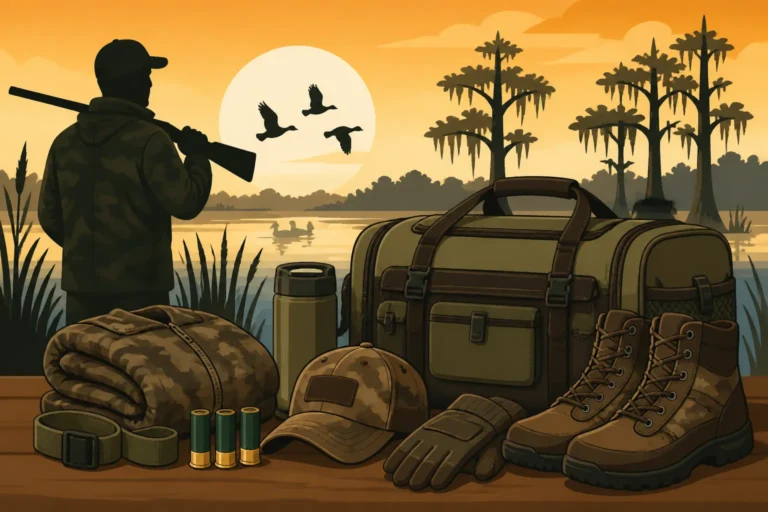
When you're self-guided, you are your own outfitter. This means being prepared for anything. Beyond your weapon of choice, certain gear is absolutely essential:
- Navigation: A reliable GPS unit (like a Garmin InReach for satellite communication in dead zones) or a smartphone app like onX maps, along with a compass and physical map as a backup. Don't rely solely on cell service.
- Optics: Good binoculars are critical for scanning distant timber, fields, or swamps.
- Clothing: Layered clothing appropriate for Mississippi's often unpredictable weather, including rain gear. Blaze orange is a requirement for many seasons; know How Much Blaze Orange Mississippi Requires.
- Stands/Blinds: If deer hunting, a comfortable, safe treestand or ground blind. Understand Treestand Rules on Mississippi Public Land for public land.
- Game Recovery: Gloves, a sharp knife, game bags, and perhaps a small cart or sled for dragging out your harvest.
- First Aid: A comprehensive first-aid kit.
- Water and Food: Enough for the day, plus extra in case of unexpected delays.
- Headlamp/Flashlight: Essential for early mornings and late evenings.
Being prepared with the right gear ensures safety, comfort, and efficiency, allowing you to focus on the hunt itself.
Understanding Regulations and Pressure
Public land comes with specific rules and regulations that often differ from private land. It's your responsibility to know them inside and out. This includes general state hunting regulations, but also specific WMA rules that might govern things like hunting hours, weapon restrictions, ATV use, or even special Mississippi WMA Permit Requirement beyond your general license. Always check the MDWFP website or the specific WMA brochure before you go.
Furthermore, understand that public land, by its nature, can see significant Hunting Pressure on Mississippi Public Land, especially on opening weekends. This pressure can change game patterns, making animals more nocturnal or pushing them into thicker cover. Knowing this, you can adjust your tactics – perhaps by walking deeper, hunting mid-week, or focusing on areas that other hunters might overlook. Often, the best public land spots are those that require a little more effort to reach, meaning you'll find less competition and potentially more undisturbed game. It's all part of the self-guided challenge and reward.
| Feature | Self-Guided Public Land Hunting | Guided Private Land Hunting |
|---|---|---|
| Cost | Significantly lower (licenses, fuel, food, basic gear) | Significantly higher (guide fees, lodge, meals, tips) |
| Experience Level | Ideal for experienced, self-sufficient hunters; good for learning | Great for first-timers, or those new to an area/species |
| Flexibility | High (choose your own schedule, move freely) | Lower (set schedules, specific hunting locations) |
| Logistics | All on you (scouting, stand setup, game recovery) | Handled by outfitter (scouting, stands, meals, lodging) |
| Access | Open to all with proper license/permit | Exclusive access to private, often managed land |
| Trophy Potential | Possible, but generally lower odds and more effort | Higher odds for trophy animals due to management |
| Skill Development | Excellent for honing woodsmanship and self-reliance | Focus on hunting, less on overall woodsmanship development |
| Hunting Pressure | Can be high, especially in easily accessible areas | Generally lower due to exclusive access |
| Sense of Accomplishment | Immense, as success is entirely your own | Still high, but shared with the efforts of the guide/outfitter |
In the end, choosing between a self-guided public land hunt and an outfitted experience really boils down to your personal priorities, budget, and what you hope to gain from your time in the woods. Both have their place in the hunting world, but for many, the deep satisfaction and financial freedom of a self-guided public land adventure in Mississippi can't be beat.
Disclaimer
This article is for general informational purposes only and does not constitute professional advice. Laws, prices and regulations vary by location and change over time. Consult a qualified professional for guidance on your specific situation.