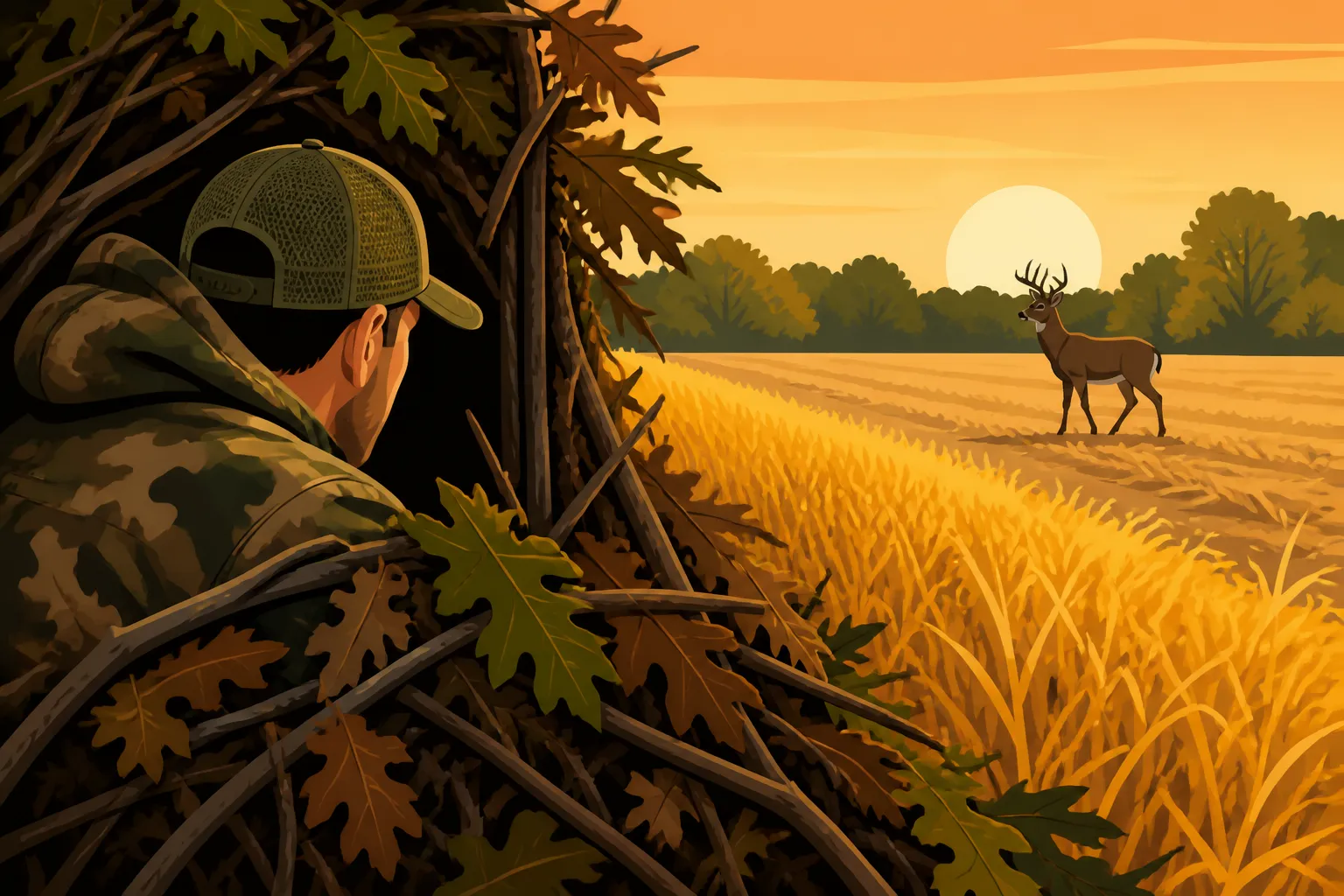
Brushing In a Blind on a Field Edge
Hunting field edges in Mississippi offers incredible opportunities, especially during the early season or when deer are transitioning from bedding to feeding, but it also presents a huge challenge: how do you hide in plain sight? Deer are incredibly wary creatures, and the slightest unnatural shape or movement on an open field edge can blow your hunt before it even starts. This comprehensive guide will walk you through the essential techniques and nuanced strategies for effectively brushing in a blind on a field edge, ensuring you become an invisible part of the landscape.
Understanding the "Why" Behind Brushing In
Let's be honest, we've all been there. You've got the perfect field edge picked out, maybe where a thicket meets a lush food plot or a soybean field. You set up your ground blind, feeling pretty good about it, only to have every deer that steps out into the open instantly lock onto your position, stomp, snort, and bolt. It's frustrating, and it happens because simply placing a blind isn't enough; you need to understand why brushing it in makes such a difference from a deer's perspective.
The Deer's Perspective on Open Spaces
Deer, especially mature bucks and older does, are hyper-vigilant in open areas. They've learned that wide-open spaces, while offering abundant food, also expose them to predators – both four-legged and two-legged. When a deer steps out of cover, their eyes immediately scan the perimeter, looking for anything out of place. A solid block of camouflage fabric, even if it's "camo" printed, stands out like a sore thumb against natural vegetation. It creates a dark, unnatural shape that doesn't blend with the varying textures and shades of the woods or field. They don't need to know it's a hunter; they just need to know it's not part of their familiar, safe environment, and that's enough to send them packing. This is particularly true if you’re trying to catch them during daylight hours as they leave their bedding areas.
Breaking Up Your Outline
The primary goal of brushing in a blind isn't to make it disappear entirely, but to break up its distinct, human-made outline. Think about it: a rectangle or a square shape is almost never found naturally in the woods. By adding branches, tall grasses, small saplings, and other natural materials, you're disrupting those hard lines and mimicking the irregular, organic shapes of the surrounding habitat. This visual "noise" helps your blind melt into the background. Instead of seeing a solid blind, the deer's eye perceives a chaotic mix of foliage, shadows, and light, making it difficult for their brain to register a threat. This becomes even more critical when you're hunting in areas with high hunting pressure, where deer have become accustomed to spotting subtle anomalies.
Adapting to Changing Field Conditions
Mississippi's landscape, especially around its agricultural fields, is constantly changing. A cornfield might be standing tall in early fall, then cut down to stubble weeks later. Soybeans grow dense and green, then dry and yellow. Hardwood leaves go from vibrant green to brown and falling. Your brushing needs to adapt to these shifts. What works perfectly to conceal your blind in September might make it stick out like a billboard in December. For instance, if you're Hunting a Standing Cornfield in Farm Country, you might use corn stalks. But once that field is harvested, those stalks will be gone, and you'll need new material. Successful field edge hunters are always scouting, always observing, and always adjusting their blind's concealment to match the current environment. This ongoing adaptation is key to remaining invisible throughout the entire season.
The Art and Science of Material Selection and Placement
Brushing in a blind isn't just about throwing some branches at it; it's a thoughtful process that combines a bit of artistry with a good dose of scientific understanding of how light, shadow, and perception work. You're creating an illusion, and the better your materials and placement, the more convincing that illusion will be.
Sourcing Natural Materials
The golden rule for brushing in a blind is to use materials found on-site or very close by. This ensures your blind matches the local ecosystem perfectly. For instance, if you're set up on the edge of a pine plantation, use pine branches. If you're near a bottomland hardwood drain, use oak and hickory limbs. The more specific you are, the less likely deer are to notice a difference.
Here’s a look at common materials and their uses:
| Material Type | Best Use Case | Pros | Cons |
|---|---|---|---|
| Pine Boughs | Conifer edges, providing dense, year-round cover | Excellent visual break-up, good year-round color | Can be bulky, needles shed over time |
| Hardwood Branches | Deciduous woods, Mimics natural tree line | Natural color and leaf texture, especially when green | Leaves fall in autumn, requiring refresh |
| Tall Grasses/Weeds | Field edges, ditches, transition zones | Easy to gather, blend with field vegetation | Less durable, might need more frequent replacement |
| Corn Stalks/Soybean Stubble | Agricultural fields after harvest | Perfect match for specific field types, readily available | Seasonal, can be brittle |
| Brush Piles/Fallen Limbs | Forest edges, creating natural obstacles | Very natural look, can provide bulk | Heavy, might require more effort to place |
| Cedar Branches | Areas with cedar thickets, strong scent mask | Dense, aromatic (can mask human odor) | Can be thorny, specific to certain regions |
When gathering materials, always be respectful of the land. If it's private land, get permission from the landowner. On public land, check WMA or National Forest rules; often, you can only use naturally fallen debris. A good pair of loppers or a small saw will make gathering much easier and cleaner.
Layering for Maximum Concealment
Think of brushing in as building layers, much like you would dress for a cold Warm-Weather Sitting Strategy in Mississippi. You don't just put on one big coat; you layer. The same principle applies here.
- Base Layer: Start with your blind's existing camouflage pattern.
- Structural Layer: Use thicker, more rigid branches or small saplings to create a framework around and on top of your blind. These should be secured to the blind's frame (if possible) or simply leaned against it and tied. This layer begins to break up the hard lines and creates depth.
- Filler Layer: Now, fill in the gaps with smaller branches, grasses, and weeds. Weave them through the structural layer. The goal is to create varying textures and densities. Don't create a solid wall; natural cover always has gaps and shadows.
- Top Layer (Optional but Recommended): Place some loose leaves or grass on the roof of your blind, especially if it's visible from higher ground or a slight rise.
Remember to leave shooting lanes, but make them narrow and integrate them into the brushing. You want to be able to see out clearly, but an approaching deer shouldn't be able to see in. Test your setup by stepping 20-30 yards back and observing it from different angles, especially from where deer are likely to approach. Look for any tell-tale straight lines or dark voids.
Considering Wind and Sun Angles
This is where the science really comes into play. The angle of the sun and the direction of the wind can significantly impact your blind's visibility throughout the day.
- Sun Angle: A blind brushed in perfectly under midday sun might cast a hard, unnatural shadow early morning or late evening. Try to position your blind and its brushing so that the sun doesn't directly backlight it, making it glow or silhouette your outline. If the sun is at your back, it can help illuminate your brushing, making it look more natural, but be mindful of casting long, distinct shadows of your blind onto the field.
- Wind Direction: Beyond scent control, which is paramount in any Mississippi hunting scenario, wind also plays a role in how your brushing looks. Materials like tall grasses and small leafy branches will sway in the wind. This natural movement helps your blind blend in, as it mimics the movement of surrounding vegetation. However, poorly secured, brittle branches can rattle or break off, drawing attention. Also, consider the prevailing winds in your area when picking a field edge spot. Wind and Thermals in Delta Bottomland can be particularly tricky, making careful blind placement and brushing essential.
Use tools like GoHunt mapping features to analyze terrain, prevailing winds, and even sun angles for your specific setup location. This digital reconnaissance can save you a lot of trial and error in the field.
Advanced Tactics for Field Edge Blind Setup
Once you've mastered the basics of material selection and layering, it's time to refine your strategy with more advanced tactics. These methods aim to not only hide your blind but to actively integrate it into the deer's natural environment, making it utterly indistinguishable from existing cover.
Blending with Existing Habitat
The goal isn't just to cover your blind, but to make it appear as an extension of the natural world. Look for natural breaks, thickets, or clumps of vegetation along the field edge. These are ideal spots to position your blind, allowing you to build off existing cover.
- Natural Funnels and Pinch Points: If there's a natural funnel created by a dense patch of woods jutting into the field, or a narrow strip of timber between two fields, that's your prime real estate. Hanging a Stand on a Delta Bottomland Funnel or finding a similar ground blind spot means you're already halfway there. You can tuck your blind right into the heart of that cover, then extend the natural lines of the existing vegetation to envelop your blind.
- Leveraging Deadfall and Old Brush Piles: Don't overlook natural debris. An old, rotten log or a forgotten brush pile can be an excellent anchor for your setup. Position your blind behind or within this existing cover, then use the same type of deadfall and smaller branches to blend it in. This gives your blind a history, making it look like it's been there forever.
- Mimicking a 'Brake': In Mississippi, especially in the Delta, a "brake" refers to a dense thicket of cane, briars, and small trees that deer love for bedding and security. If you can replicate the look of a small brake along a field edge, you've hit the jackpot. This involves dense, multi-layered brushing with thorny elements or dense cane, creating an almost impenetrable wall of natural material that deer are accustomed to seeing.
When scouting for these natural features, take your time. Use an app like GoHunt to study aerial imagery, identifying dense cover that offers natural ambush points. Pay attention to how deer move through these areas during your Scouting Mississippi Public Land Before Season.
Creating Shooting Lanes and Portholes
It's a common rookie mistake: you brush in your blind so well that you can't see out. That's counterproductive! The key is to create discreet, effective shooting lanes and portholes that offer you clear views and shot opportunities without exposing you to the deer.
- "Keyhole" Lanes: Instead of wide-open windows, aim for narrow, vertical, or horizontal "keyholes" in your brushing. These should be just large enough to confidently shoulder your rifle or draw your bow. The smaller the opening, the less chance a deer has of seeing movement inside.
- Multiple Lanes for Multiple Angles: Deer rarely follow a predictable, straight line. They might skirt the field edge, or cut across a corner. Have multiple shooting lanes covering different approach angles and distances. For example, a lane down the field edge, one out into the field, and maybe another covering a trail that enters the field further down.
- Natural Frames: Use existing branches or strategically placed larger limbs to frame your shooting lanes. This makes the opening look less like a manufactured window and more like a natural gap in the foliage.
- Clear the Ground in Front: Inside your blind, make sure the ground directly in front of your shooting lanes is clear of any debris or sticks that could snag your bowstring or create noise when you shift your position for a shot.
Always remember to check your shooting lanes from a sitting position, which is how you'll typically be hunting. This ensures your field of view is truly unobstructed from your actual hunting posture.
Ongoing Maintenance and Adjustments
Brushing in your blind isn't a one-and-done task. Mississippi's weather, especially those strong summer and fall storms, can wreak havoc on your carefully constructed hide. Plus, leaves will dry, turn brown, and fall.
- Pre-Season Setup and Refresh: Ideally, set up and brush in your blind a few weeks before the season opens. This allows deer to get accustomed to its presence and for any initial human scent to dissipate. Then, a week or two before you hunt, go back and refresh the brushing, adding new, fresh materials to account for any decay or damage.
- Mid-Season Adjustments: As the season progresses and the landscape changes (e.g., leaves falling, crops harvested), your brushing will need updates. Carry a small pair of loppers with you during your hunts, and if you notice a spot that needs a little more cover, take a few minutes to address it. A quick refresh of your Setting Up on a Delta Field Edge blind can make all the difference.
- Post-Rain/Wind Check: After any significant weather event, check your blind. Strong winds can blow off branches, heavy rain can flatten grasses, and prolonged wetness can cause materials to decay faster. A quick visit to ensure everything is still intact and providing maximum concealment is a small investment for a potentially big payoff.
- Considering a Permanent Blind: For private land or a spot you hunt year after year, consider a more permanent, natural blind structure. This could involve building a small frame and covering it with a mix of natural and artificial materials that can withstand the elements better. Some hunters even plant fast-growing screening cover like switchgrass or miscanthus grass around their blind location to create natural, long-term concealment.
Common Mistakes and How to Avoid Them
Even with the best intentions, it's easy to make mistakes when brushing in a blind. Avoiding these common pitfalls can significantly increase your chances of success and keep you from spooking that trophy buck you've been after all season.
Over-Brushing vs. Under-Brushing
This is a delicate balance, and many hunters err on one side or the other.
- Under-Brushing: This is the more common mistake. Hunters simply don't add enough material, or they don't secure it properly. The blind's outline is still visible, the material is sparse, and it just doesn't blend. It looks like a blind with a few branches stuck to it, not a natural part of the environment. If you can clearly discern the shape of your blind from 30 yards, you've under-brushed.
- Solution: Step back, take pictures, and be critical. Add more layers, more texture, and focus on breaking those hard, manufactured lines. Fill in the gaps, especially around the base and top, where light can often reveal the structure.
- Over-Brushing: Believe it or not, you can have too much of a good thing. Over-brushing can make your blind look like a suspicious, unnatural mound of debris. If it’s too dense, it can create a solid, dark mass that stands out from the surrounding, more permeable vegetation. It can also restrict your visibility and make it hard to get a clean shot. Too much material can also trap more scent if not allowed to breathe, and can make your blind a target for curious animals.
- Solution: Seek a balance. Your goal is natural blending, not complete disappearance. Ensure there are natural gaps, varying densities, and enough space for clear shooting lanes. If it looks like a giant, solid green blob, you've likely overdone it. A good rule of thumb is that if you can't see the natural habitat through some of the brushing from a distance, it might be too thick.
Neglecting Your Entry and Exit Routes
You can have the most perfectly brushed-in blind in Mississippi, but if you spook deer on your way in or out, it's all for naught. Your approach and departure are just as crucial as the blind itself.
- Concealed Paths: Plan your entry and exit routes carefully. Use natural cover, ditches, creek beds, or even depressions in the terrain to shield your movement. Avoid walking across open fields or directly through bedding areas. For example, if you're hunting a Late-Season Food Sources for Mississippi Whitetails, you'll want to avoid walking right through the prime feeding area to get to your blind.
- Timing is Everything: Arrive well before daylight, giving yourself ample time to get settled without rushing or making noise. Leave after dark, when deer are likely to have moved on to feed or are less vigilant.
- Scent Control: Always practice meticulous scent control, especially on your entry and exit. Wear clean clothes, use scent-eliminating sprays, and store your hunting gear in airtight containers. Even a faint whiff of human odor on your trail can alert deer to your presence.
- Minimize Disturbances: Clear any noisy sticks or leaves from your path if possible, or wear quiet footwear. Avoid slamming truck doors, talking loudly, or using bright flashlights once you're close to your hunting area. These small details can make a huge difference in overall success. The goal is to make your presence as undetectable as possible, from the moment you leave your truck to the moment you return.
Ignoring the Overhead Threat
While much of the focus of brushing in a blind is on horizontal concealment, many hunters forget about the vertical aspect. Deer are constantly looking up, not just for predators, but for falling acorns, changing light patterns, or even other deer.
- The Silhouette Effect: If your blind is set up against a bright sky, or on the top of a slight rise, your profile can be easily silhouetted, especially at dawn and dusk. This makes the top of your blind, or even the top of your head if you're sitting too high, an easy target for a deer's keen eyesight.
- Open Tops and Light Leaks: Many ground blinds have mesh tops or vents that, while useful for airflow, can allow light to enter or escape, creating a noticeable glow or outline. Some blinds are simply not designed to be completely covered on top.
- The Solution:
- Brush the Roof: If feasible, add some lighter, sparser branches, grasses, or even camo netting to the roof of your blind. This helps break up the flat, dark plane of the roof and provides overhead concealment.
- Use Natural Canopy: Whenever possible, position your blind under the canopy of a large tree or dense overhanging branches. This provides natural overhead cover and helps break up your silhouette against the sky.
- Mind Your Headroom: If your blind has a low profile, ensure you're sitting low enough that your head isn't pushing against the roof or creating a distinct bulge. Your goal is to be fully enveloped by the blind and its brushing.
- Consider Your Backing: If your blind has a back window or is thin, consider hanging some darker fabric or additional natural material inside to create a darker, more solid background behind you. This helps prevent you from silhouetting against any light coming through the back.
Remember, every little detail matters when you're trying to outsmart a whitetail. Taking the time to properly brush in your blind, considering all angles and potential pitfalls, significantly increases your chances of a successful hunt in Mississippi's diverse deer habitats.
Disclaimer
Hunting is an inherently dangerous activity. Always prioritize safety, understand and adhere to all local, state, and federal hunting regulations, and ensure you have the proper licenses and permits. The information provided here is for educational and entertainment purposes only and should not replace professional guidance or proper hunter education. Always obtain landowner permission before accessing private property.