Calling a Mississippi Gobbler Off the Roost
There’s almost nothing more frustrating in Mississippi turkey hunting than hearing that booming gobble from the roost, feeling the excitement build, only to have that old tom fly down the opposite direction or, worse yet, completely shut up and vanish. It’s a gut punch, especially when you’ve put in the legwork to find where he’s spending the night. This guide is all about giving you the proven strategies to turn those frustrating mornings into successful ones, calling that Mississippi gobbler right off the limb and into your setup.
Understanding How Gobblers Use the Roost
Before you can pull a gobbler off the roost, you've got to understand why he's up there in the first place and what's going through his mind come dawn. It's not just a random perch; it's a strategic overnight haven.
The Importance of Scouting and Roosting
Effective roost hunting starts long before the sun even thinks about coming up. It begins with scouting. You absolutely need to know where a gobbler is roosting the night before your hunt. This isn't just about hearing a gobble from a distant ridge; it's about pinpointing the exact tree or, at the very least, a very tight cluster of trees. Mississippi turkeys, especially those wary old longbeards, are creatures of habit. They’ll often use the same general area, sometimes even the same tree, night after night, especially if it offers safety from predators like coyotes and bobcats.
Think about it: a turkey has spent the evening feeding, then flown up to a tall pine or hardwood tree, often over water or in a thicket, for protection. He’s safe from ground predators, has a good vantage point, and is ready for the day. Your job is to understand this routine. You can often find where Mississippi gobblers roost by listening at dusk for fly-up cackles or gobblers sounding off one last time before dark. Then, mark it on your map. Tools like GoHunt can be invaluable here, letting you drop pins and mark potential roost sites, even analyzing topography to understand the bird's likely fly-down paths and morning movements. It's a game-changer for planning your morning ambush. Without knowing where he’s roosted, you’re just guessing, and turkey hunting, especially at first light, is rarely a guessing game if you want consistent success.
Why Gobblers Leave the Roost
A gobbler's decision to leave the roost isn't random; it's driven by instinct, safety, and the desire to breed. As the first hint of light paints the eastern sky, he'll start to gobble, asserting his dominance and announcing his presence to hens. He’s essentially saying, "Here I am, ladies!" Hens will often start yelping and clucking from their own roosts, telling him exactly where they are. His primary goal is to meet up with these hens on the ground, breed, and then feed. That's his morning agenda.
The moment of fly-down is critical. It’s when he leaves the safety of the tree and exposes himself to ground predators, but also puts him in a position to gather his harem. He'll typically fly down towards the sound of hens or to an open area where he feels safe and can strut. This could be a field edge, a logging road, or a sparse timber stand. Understanding this behavior is paramount. He’s looking for company, specifically hens, and he’s often going to fly in the direction he thinks they are, or to a place where he expects to find them. If you can replicate those hen sounds convincingly and put yourself in his expected fly-down path, you drastically increase your chances. It’s about manipulating his natural inclinations, especially when you're Hunting the Statewide Turkey Opener in March and birds are hot off the roost.
The Critical Pre-Dawn Setup
Once you know where that gobbler is sleeping, your next move – getting into position silently and strategically – is perhaps the most critical part of the entire hunt. Mess this up, and all your scouting efforts are for naught.
Positioning for Success Before Flydown
Getting into position before daylight requires stealth and a deep understanding of the terrain. Your goal is to be within effective calling and shooting range of that roost tree before the first hint of light, without making a sound that a keen-eared gobbler can pick up. This usually means a long, slow, quiet walk in the dark. Use a headlamp with a red or green light filter to preserve your night vision and minimize your disturbance. Walk only on soft ground if possible, like pine straw or leaf litter, avoiding crunchy leaves, sticks, or gravel paths.
Your final setup location needs to offer several advantages. First, you want to be close enough that your calling is clear and convincing, but not so close that the gobbler can easily spot you. Fifty to 100 yards from the roost tree is often ideal. Second, consider your backdrop. Always set up with a tree or natural brush behind you to break up your silhouette. Third, think about shooting lanes. Where will the bird likely appear, and do you have a clear shot at various distances? Finally, and crucially, consider the likely fly-down path. A gobbler will almost always fly to open ground or downhill. If he’s roosted over a creek, he’ll likely fly to one side or the other. If he's on a ridge, he'll often fly down one of the slopes. Anticipating this path is key. Many hunters find success when Setting Up Against a Big Oak or other large timber, giving them a solid backrest and good concealment. Analyzing the terrain with mapping software can help you visualize these paths even in the dark.
Decoy Placement Considerations
Decoys can be a game-changer when calling a gobbler off the roost, but their placement is absolutely crucial. The biggest mistake you can make is placing decoys too close to your setup, or in a way that forces the gobbler to circle you to get to them. Remember, a gobbler wants to see the source of the hen sounds.
For fly-down scenarios, a single hen decoy, or a hen and jake/strutter combo, can be incredibly effective. Place your hen decoy facing away from you, as if she's walking away or feeding. This subtle positioning can often draw a gobbler in closer, making him want to get ahead of her. If using a jake or strutter decoy, place it slightly behind the hen, mimicking a breeding scenario. Crucially, position your decoys within your comfortable shotgun range, ideally 20-30 yards from your setup. This ensures that when the gobbler commits and comes into the decoys, he’s well within your kill zone. Also, consider the terrain and foliage. You want the decoys to be visible from the gobbler's likely fly-down path, but not so exposed that they look unnatural. For example, if he’s flying into a field, place them just inside the tree line, not out in the middle where he might feel too exposed. Understanding Decoy Placement for Pressured Mississippi Birds can give you an edge, as highly hunted birds are often wary of static, unnatural setups.
Mastering the Early Morning Call Sequence
Once you're set up, the real art of convincing that gobbler to come off the limb to you begins. It’s a delicate dance of sound, timing, and patience.
Initial Soft Calls to Gauge Interest
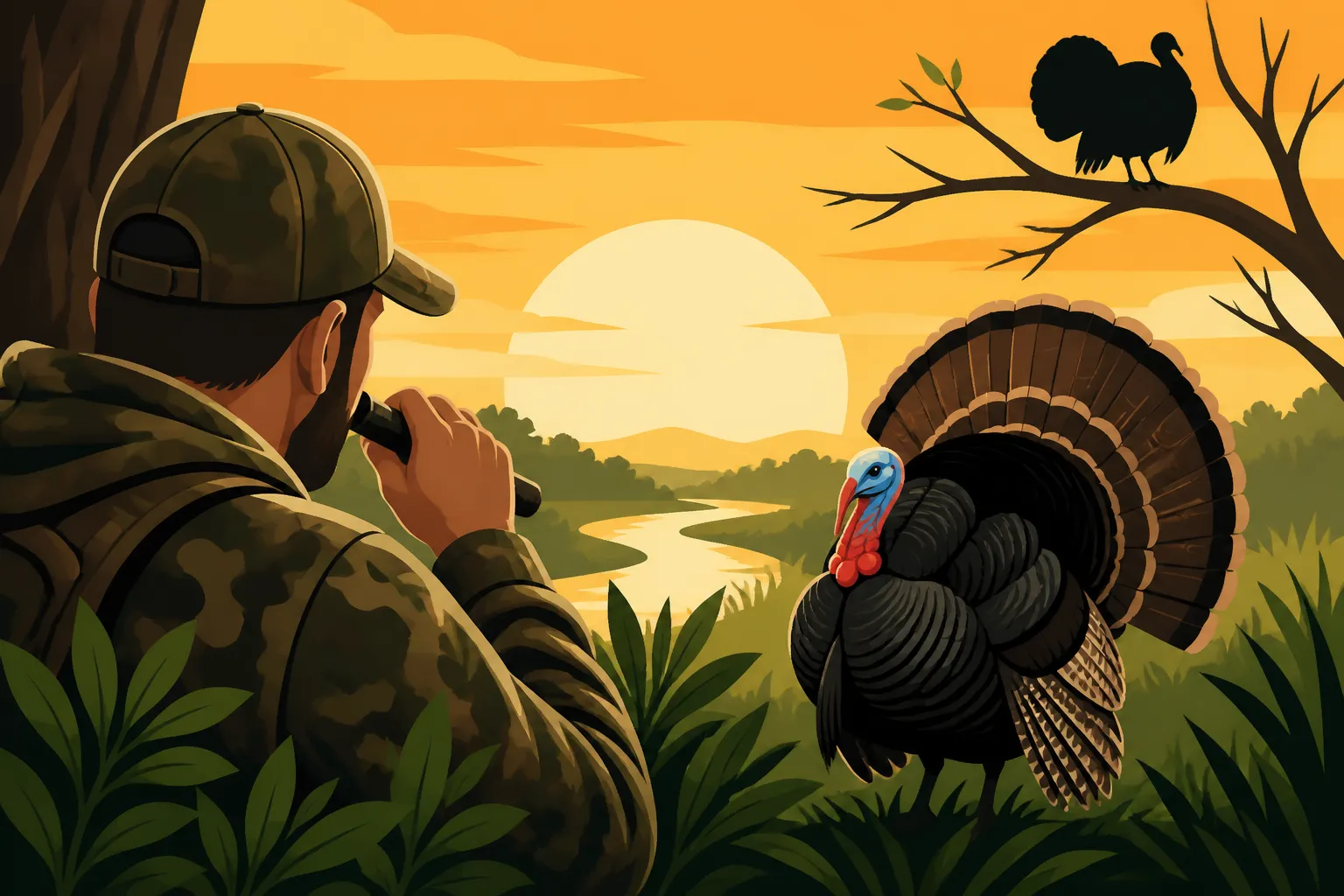
As the eastern sky begins to gray, and before the gobbler even thinks about flying down, it's time for your initial soft calls. The goal here isn't to get him to gobble his head off, but to let him know a hen is nearby and interested. Start with some very soft tree yelps and soft clucks, just enough to mimic a hen waking up on the limb herself. Remember, you’re trying to sound like a real hen, not an Olympic caller. These sounds should be subtle, almost whispered, and only offered sparingly.
Listen intently for his response. A soft gobble, even a spit and drum, tells you he’s heard you and acknowledges your presence. This is often all you need. Resist the urge to overcall. Many hunters make the mistake of hammering a gobbler with calls right away, which can make him suspicious or, worse, make him think you're going to come to him. You want him to want to come to you. Pay attention to the subtle cues. Is he gobbling harder after your soft calls? Is he turning on the limb, indicated by the sound changing slightly? These are all positive signs that your strategy is working. The magic here is often in the restraint; a little bit of mystery can go a long way in getting that bird to commit.
Aggressive Calling After Flydown
Once the gobbler flies down, or you hear hens hitting the ground and making their way towards him, it's time to adjust your calling strategy. If the gobbler is on the ground and still gobbling, you can become a bit more aggressive. This is where those cutts, yelps, and clucks take on a more urgent, demanding tone. You're now trying to convince him that the most desirable hen in the woods is right here, and she's not waiting around all day.
If he has hens with him, this can get tricky. They'll often pull him away. In this scenario, mimic the boss hen. Hit him with loud, confident yelps and sharp cutts. You're essentially challenging his real hens for his attention. Sometimes, you need to go silent for a short period after a series of aggressive calls, letting him think the hen is getting away. This can often be enough to make him break from his real hens and come investigate. Remember, the goal is to sound like an eager, perhaps even slightly bossy, hen who is ready to breed. Don’t be afraid to change up your cadence and volume. Sometimes, a series of excited cackles after he gobbles loudly can be the final trigger to bring him strutting into your setup. For more general tactics, check out Mississippi Muzzleloader Tactics – while different seasons, the principle of reading the bird's mood still applies.
Troubleshooting Roosted Gobblers That Hang Up
Let's be real, even with the perfect setup and calling, turkeys are still turkeys, and they don't always do what you expect. The frustrating hang-up is a classic scenario that every Mississippi turkey hunter faces.
Adapting Your Calling Strategy
When a gobbler gets on the ground and starts to gobble but refuses to come any closer, it's the dreaded hang-up. He's interested, but he's also wary. This is where patience and adaptation become your best friends. First, try going silent for a while. Sometimes, the absence of your calls can make him curious enough to take those last few steps. If he gobbles again and you still don't see him, try a different call type or a different call-maker. Maybe he's heard too many slate calls, and a diaphragm or box call will pique his interest.
You can also try changing your location slightly, especially if you're in an area where Run-and-Gun Turkey Tactics on Public Land are common. If possible, make a small, quiet move parallel to his position, then hit him with a new sequence of calls. This makes him think the hen is moving away from him, which can sometimes be enough to pull him in. If he's got hens with him and they're pulling him away, try aggressively cutting and yelping, almost like you're angry. You're trying to make his hens jealous or to challenge their dominance, hoping he'll come over to investigate the commotion. Don't be afraid to experiment, but always be patient.
| Calling Phase | Timing (Relative to Flydown) | Volume | Call Type Examples | Goal |
|---|---|---|---|---|
| Initial Interest | Pre-dawn, on roost | Soft | Tree yelps, soft clucks | Announce presence, gauge interest, sound natural |
| Fly-down | Just as he hits ground | Medium | Fly-down cackle, clucks | Reassure, let him know where you are |
| Post-Flydown | On ground, still distant | Medium-Loud | Yelp sequences, cutts, clucks | Demand attention, challenge hens, draw closer |
| Hang-up/Lure | Gobbler stalled/wary | Varied | Soft purrs, aggressive cutts, silence | Provoke curiosity, challenge, or reassure |
Knowing When to Hold 'Em or Fold 'Em
There comes a point when you have to decide if that roosted gobbler is ever going to commit, or if it's time to move on. If you've tried different calling sequences, gone silent, and the bird is still hung up, gobbling in the same spot, or worse, moving away, it might be time to fold. This is particularly true if he's actively working with real hens. Sometimes, you simply can't outcompete a live hen.
However, don't give up too quickly. A gobbler might hang up for an hour or more before finally committing, especially if there are no other hens around. The key is to assess the situation. Is he slowly moving closer, even a few yards at a time? Is his gobbling getting stronger, indicating increased interest? If so, hold tight. But if he's consistently moving away, or his gobbling becomes less frequent and more distant, it might be time to slip out quietly, circle around, and try to get ahead of him. Remember, turkeys have exceptional eyesight, so any move needs to be extremely stealthy, taking advantage of terrain and cover. Sometimes, the best strategy for a hung-up bird is to leave him alone and try to call him later in the morning when he's alone and looking for company. This can also apply to Hunting the Mississippi Rut by Unit, where patience is always a virtue, even if the target is deer.
Disclaimer
Hunting is an inherently dangerous activity. Always prioritize safety, follow all local and state regulations set forth by the Mississippi Department of Wildlife, Fisheries, and Parks (MDWFP), and ensure you have the proper licenses and permits before heading afield. The information provided here is for educational purposes only and should not replace proper hunter education or professional guidance.