Turkey Tactics for Delta Field Edges
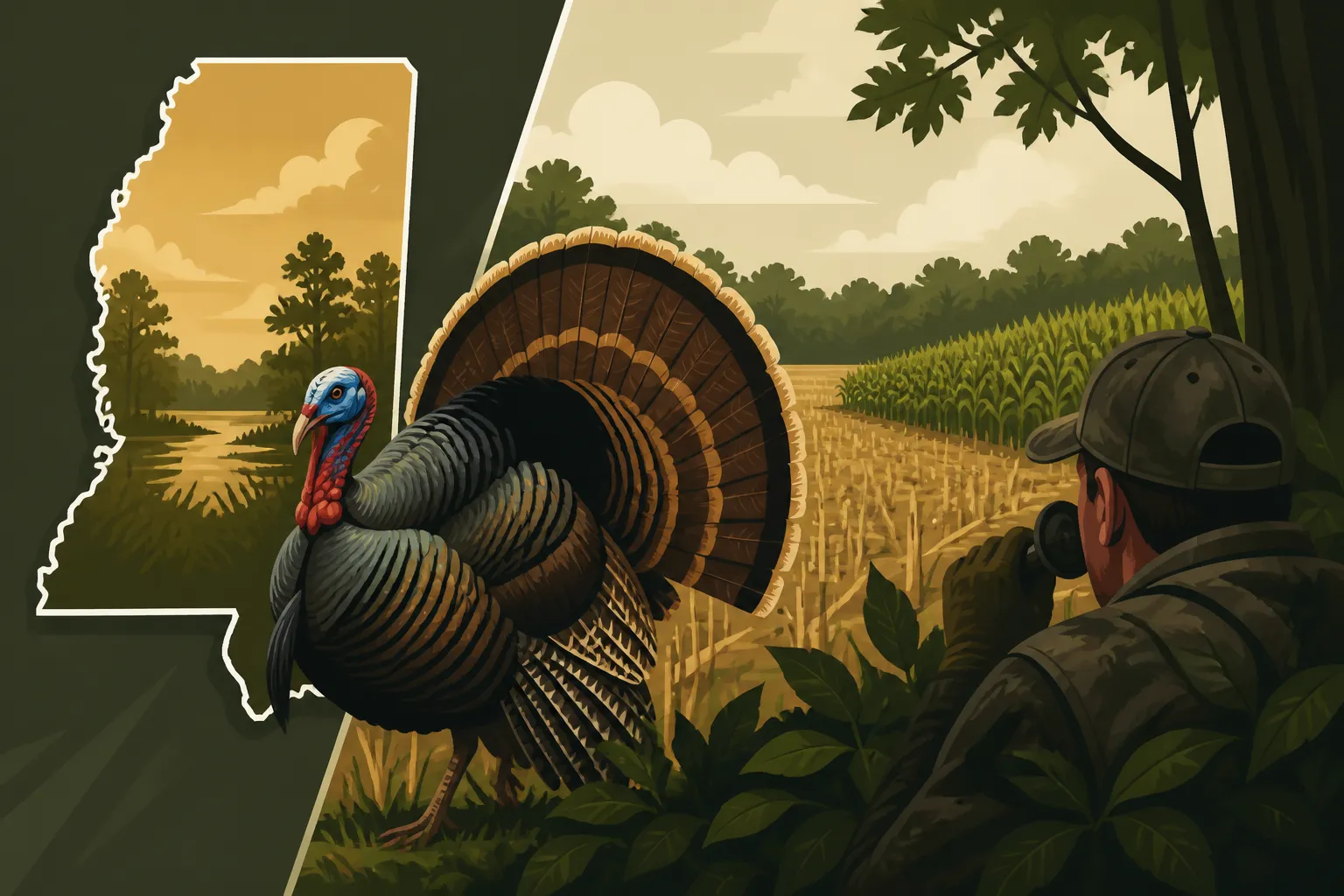
Hunting wild turkeys in Mississippi's vast Delta region can be a truly exhilarating experience, but let's be honest, those wide-open field edges present a unique set of challenges. It's frustrating when a gobbler hangs up at 100 yards, just out of range, drumming and strutting for all he's worth but refusing to close the distance. This guide is all about equipping you with the specific tactics you need to successfully hunt those wary Delta birds right on the edge of those big fields.
Understanding the Delta Field Edge Environment
The Mississippi Delta is a beast of its own, isn't it? Flat, fertile, and often covered in immense agricultural fields bordered by thick timber or sloughs. It's not your typical hilly, timber-heavy turkey country, and understanding this unique landscape is the first step to success.
Why Turkeys Love Field Edges
Field edges are like prime real estate for wild turkeys, especially in a region like the Delta. They offer a fantastic combination of safety, food, and breeding grounds. On one hand, the open field provides a clear line of sight, allowing them to spot predators from a distance, giving them a sense of security. They can watch for coyotes, bobcats, or even a hunter trying to sneak up. This openness is a huge advantage for their survival.
But it's not just about safety; it's about groceries too. These fields, whether they're planted in soybeans, corn, or even just fallow, are teeming with insects, waste grain, and tender green shoots that turkeys absolutely love to scratch and peck at. They can spend hours foraging, completely exposed but feeling secure because of that wide-open view. The edge itself, where the field meets the timber, often has a mix of weeds, berries, and acorns dropping from hardwoods, adding even more to the buffet. It’s a convenient spot for them to transition from feeding to seeking cover.
Then there's the social aspect. These field edges become natural congregating spots. Toms will come to strut and display, hoping to catch the eye of a hen out feeding. Hens know this, and they'll often venture out, or hang just inside the timber, waiting to see what magnificent gobbler might appear. It's a stage for the annual spring ritual, and recognizing this dynamic is crucial for your approach.
Reading the Landscape for Roosting and Feeding
In the Delta, those big trees bordering fields aren't just pretty; they're prime real estate for roosting. Turkeys often prefer to fly down into open areas to feed and gather, so it makes perfect sense that they'd roost in the taller timber right along a field edge. When you're scouting, look for those massive oaks, pecans, or cypress trees that tower over the field. These are the likely candidates for a gobbler's bedroom. You might even find tell-tale droppings or feathers beneath them if you're lucky enough to get in there before the birds are active. Understanding where a bird is likely to pitch down from the roost is critical to setting up correctly. If you're looking for more general information on how to find these spots, our guide on Roost Hunting Mississippi Gobblers dives deep into those specific strategies.
During the day, birds will feed extensively in the fields, but also along the edges. After a good rain, they'll often be out scratching for worms and bugs. In drier conditions, they might stick closer to the timber edge, seeking shade or water if it's available. Observing where they enter and exit the field is key. They often use the same "runways" or gaps in the brush, creating subtle trails that become visible with careful inspection. Pay attention to changes in elevation, even slight ones, which can offer a turkey a better vantage point or a hunter some much-needed concealment. A slight rise in a field can be a gobbler's favorite strutting ground because it gives him a better view and makes him more visible to hens.
Seasonal Changes and Turkey Movement
Turkey behavior isn't static; it shifts with the progression of spring. Early in the season, when the leaves are just budding, turkeys tend to be more concentrated. Gobblers are hot and heavy, actively seeking hens. This is often when you'll find them openly strutting in fields, trying to attract attention. As the season progresses into late April and May, hens start nesting, and gobblers might become a bit more solitary or "henned up." This can make them tougher to call into open fields because they're already with real hens.
The crop cycle also plays a huge role in the Delta. Early season, birds might be in winter wheat or bare fields. As spring turns to summer, corn and soybeans grow taller, providing cover that can make field edges even trickier. A field that was wide open in March might be a wall of green by May. Understanding these agricultural cycles and how they influence turkey movement is vital. Using a robust mapping app like GoHunt can help you identify current crop types if you're scouting from afar, giving you a valuable head start before you even step foot on the property.
Weather, too, is a constant factor. On clear, calm mornings, birds are more likely to spend time in the open. After a heavy rain, they might feed more actively as bugs become easier to find. Strong winds can make them reluctant to come out into open areas where their hearing and vision are compromised. You need to be adaptable and ready to adjust your strategy based on these daily and weekly changes. For a broader overview of the season, check out our piece on Spring Turkey Hunting in Mississippi.
Essential Scouting and Setup Strategies
Success on Delta field edge turkeys boils down to meticulous preparation. You can't just stumble into these situations and expect a bird to walk right up. It takes careful scouting and precise setup.
Pre-Season Reconnaissance
This is where the real work begins, long before opening day. Get out there and walk those field edges. Look for old droppings, tracks, scratch marks, and dusting bowls. These are clear signs of turkey activity. Pay particular attention to where the timber meets the field. Are there obvious travel lanes? Gaps in the fence rows? Overhanging branches that might be used as fly-down points? These are your clues.
Listen at first light and last light for roosting birds. Their gobbling will give away their location, and you can pinpoint specific trees they might be using. Don't be afraid to put some miles on your boots. A good pair of binoculars is your best friend during this phase. You want to identify consistent patterns of movement. Do they fly down into the same corner every morning? Do they feed along a particular stretch of the field before disappearing into the woods? This information is gold.
Leverage mapping tools and satellite imagery, especially for vast Delta landscapes. Tools like GoHunt allow you to zoom in and identify subtle changes in terrain, isolated clumps of trees, or hidden drainage ditches that could offer a vital approach or setup spot. Mark potential roosting areas, strut zones, and natural funnels on your map. This digital scouting can save you countless hours on the ground, helping you prioritize where to focus your physical efforts. Knowing where a bird typically roosts can help you plan your Calling a Mississippi Gobbler Off the Roost strategy.
Decoy Placement for Field Edge Scenarios
Decoys are incredibly effective on field edges, but placement is everything. The goal is to make your setup look as natural and inviting as possible. Typically, a jake and a hen decoy work wonders. Place the jake in a submissive posture, perhaps facing away from your calling position, and the hen in a feeding or breeding posture. This mimics a real scenario that an incoming gobbler can't resist. He sees an intruder (the jake) with a willing hen, and his aggressive instincts kick in.
For field edges, set your decoys relatively close to the edge—say, 15 to 25 yards out into the field. This draws the bird into the open and away from the immediate cover, giving you a clean shot. Ensure your decoys are visible from a distance but not so far out that an approaching gobbler can't see them clearly before he gets within range. Always position your decoys so that an incoming gobbler will likely approach them from your side, giving you a shot opportunity. If he comes in from the far side, he might be looking at your decoys but also at you if you're not perfectly concealed. For a deeper dive into optimal decoy tactics, refer to our article on Decoy Placement for Pressured Mississippi Birds.
Consider the time of day and sun angle. You want your decoys to catch the sunlight and appear realistic. Avoid placing them where they'll be silhouetted against a bright sky, which can make them look fake. Also, think about prevailing wind direction; a decoy that spins unnaturally in the wind can spook a wary bird. A lightweight, realistic decoy like those from Avian-X or Mojo can make all the difference.
Concealment and Approach Tactics
Concealment is non-negotiable when hunting open field edges. Turkeys have incredible eyesight, and they'll spot any unnatural movement or outline instantly. A good ground blind is often your best friend here. Pop-up blinds offer excellent camouflage and allow for more movement inside. If you're not using a blind, you absolutely must break up your outline against a solid background like a thick oak, a brush pile, or a dense fenceline. Our guide on Setting Up Against a Big Oak has some fantastic insights into utilizing natural cover.
Your approach to your setup is just as critical. Turkeys are already on high alert at first light. You need to get into your position well before dawn, using the cover of darkness. Plan your entry route carefully to avoid disturbing potential roost sites or birds already on the ground. Use natural terrain features—drainage ditches, tree lines, low spots—to hide your movement. If you're on public land, remember that other hunters might be out early too, so safety is paramount.
Once you're set up, remain absolutely motionless. Even the slightest twitch can give you away. Wear full camouflage, including a head net and gloves. Keep your shotgun or bow pointed in a direction where you expect the turkey to approach, minimizing any large movements when it's time to shoulder your weapon. In open country, patience and discipline are your greatest assets.
Here's a quick comparison of popular decoy setups for field edges:
| Decoy Type | Quantity | Placement Strategy | Ideal Scenario | Pros | Cons |
|---|---|---|---|---|---|
| Lone Hen | 1 | 20-30 yards into field, feeding/breeding posture | Early season, active gobblers, minimalist approach | Simple, lightweight, less gear to carry | May not entice wary, hen-up birds as strongly |
| Jake & Hen | 2 | Jake 5-10 yards behind hen, facing away. Hen feeding/breeding. | Aggressive gobblers, territorial birds | High visual appeal, triggers aggression | More to carry, setup takes slightly longer |
| Breeder Flock | 3-4 (1 jake, 2-3 hens) | Spread out, varied postures, 20-40 yards into field | High pressure areas, dominant gobblers | Mimics large flock, very enticing | Bulky, time-consuming setup, more expensive |
Calling Techniques for Open Country
Calling a turkey in thick woods is one thing, but getting one to commit across a wide-open field is an art form. It requires a different approach and a keen understanding of when to be vocal and when to be silent.
Adapting Calls for Long Distances
In the Delta, where fields can stretch for hundreds of yards, your calling needs to carry. Pot calls and box calls are excellent choices because they produce loud, sharp yelps and cutts that can reach distant birds. Friction calls, when used correctly, can really project. A good slate or glass call with a consistent strike can make all the difference. When you're making those long-distance calls, think about adding a little more volume and emphasis to each note.
However, "loud" doesn't mean "constant." You don't want to overcall. The trick is to get the bird's attention, gauge his response, and then give him something to work towards. Start with a series of loud yelps or cutts. Listen intently for a response. If he gobbles, you know he heard you. Then, depending on his enthusiasm, you might scale back to more subtle purrs and clucks as he gets closer, mimicking a calm hen. Remember, you're trying to convince him there's a real hen waiting, not a human blasting a call.
Diaphragm calls also have their place. While they might not be as loud as friction calls for initial contact, they allow for hands-free operation, which is critical when a gobbler is approaching your decoys. You can make soft purrs, clucks, and even light yelps without moving a muscle, keeping your gun mounted and ready. Practice projecting these calls across distances in different weather conditions so you're confident when it matters most.
Patience and Aggression: A Delicate Balance
This is perhaps the toughest lesson to learn when hunting field edge turkeys. It's so easy to get excited and overcall, or to get impatient and move too soon. A gobbler in an open field can be a master of the "hang-up," strutting just out of range, waiting for the hen to come to him. Your patience is truly tested here. You might hear him gobble his head off, but if he's not moving, it means he expects you to close the distance.
Sometimes, you need to match his aggression. If he's gobbling hard and consistent, a little more excited cutting or yelping might convince him you're a hot hen. But if he's tentative, a softer approach with subtle clucks and purrs can sometimes seal the deal. The key is to listen and observe. Is he strutting? Is he fanning? Is he slowly closing the distance, even if it's just a few yards at a time?
One effective tactic for a hung-up bird is to go silent. Make your initial series of calls, get a response, and then shut up. Let him wonder where you went. His curiosity and desire to find that hen might just be enough to push him over the edge. If he starts moving, even slightly, resist the urge to call again until he completely hangs up or seems to lose interest. When hunting on public land, especially during peak times, turkeys can be very "call shy" due to pressure. Sometimes less is more. For tactics specific to challenging birds, consider techniques outlined in Rattling and Grunting in Mississippi (though for deer, the principle of drawing curiosity applies).
Situational Calling: When to Push and When to Wait
Every turkey situation is unique, and calling needs to be adaptive.
Early Morning Fly-Down: This is often your best chance. Get in position before first light, preferably within 100-150 yards of a known roost. As light breaks, offer a soft tree yelp or two. When he gobbles on the limb, give him a few excited yelps and clucks as if you're a hen flying down to meet him. This can sometimes pull him off the roost directly into your setup. Check out our guidance on Hunting the Late-March Turkey Opener for more early season tips.
Mid-Morning Lull: If the birds go quiet after the initial morning activity, this is a great time to implement "run-and-gun" tactics, moving and calling every 15-20 minutes. However, if you're set up on an active field edge, patience is your best bet. Turkeys often come out to feed in fields during mid-morning. Stick to soft calls, just enough to let any cruising gobbler know you're there.
Late Morning/Early Afternoon: Hens are typically on nests by this time, leaving gobblers lonely and more receptive to calls. This can be an excellent time to use more aggressive calling to try and pull a bird off a field edge. Long series of cutts and yelps can work, but again, be prepared for him to hang up if he doesn't see a visible hen. This is where those decoys become even more crucial.
Remember, in open country, a gobbler can see a long way. If he's looking for a hen and doesn't see one after your calls, he'll often just stand there and gobble, waiting for her to materialize. That's why your decoys are your best friend here. They complete the illusion and give him a visual to commit to. Without them, you're fighting an uphill battle.
Overcoming Common Delta Field Edge Challenges
Hunting the Delta isn't without its unique hurdles. Those wide-open spaces and the sheer scale of the landscape can throw curveballs you might not encounter elsewhere.
Dealing with Pressure and Educated Birds
Mississippi's public lands and even some private tracts, especially during opening weekend, can see a fair bit of hunting pressure. This is particularly true in easily accessible areas near field edges. Turkeys quickly learn the difference between natural hen sounds and hunter calls. An educated gobbler that's been called to repeatedly will often "gobble at nothing" or come in silently, circling wide to try and spot the "hen" that's calling him.
To counter this, think about playing hard to get. Instead of constant, aggressive calling, try a soft "lost hen" series. Use very subtle clucks and purrs, or even just scratch in the leaves with a stick to imitate a feeding hen. Sometimes, completely shutting up after getting an initial gobble is the most effective strategy. Let him wonder, let him search. He might just get curious enough to break and come looking.
Another tactic is to hunt where others don't. This often means walking farther, going deeper into the timber that borders those big fields, or accessing obscure corners that require more effort. Using a GPS mapping app like GoHunt can help you identify these overlooked spots, showing you property lines, terrain changes, and access points that might deter less determined hunters. The areas around places like Malmaison Wildlife Management Area can get busy, so finding those quieter spots is key. You might also find fewer hunters during the late-season, when birds can be more responsive after being less pressured.
Handling Weather and Wind Conditions
Mississippi weather can be notoriously unpredictable in spring, especially in the Delta. Strong winds are a common enemy on field edges. Wind carries sound away, makes it harder for you to hear distant gobblers, and can make turkeys wary of being out in the open where their primary senses are compromised.
On windy days, focus your efforts on the leeward side of timber blocks bordering fields. Turkeys will often seek refuge from the wind there, and your calls will carry better. Use louder friction calls to cut through the wind, but remember that the turkey's hearing will also be hampered, so calls might need to be closer or more frequent. Decoys become even more critical in windy conditions, as they provide a visual that carries further than sound.
Rain can also be a factor. Light rain can sometimes make turkeys more active, especially as bugs become easier to find in wet soil. Heavy rain, however, usually sends them to seek cover. Thunderstorms can make birds gobble intensely before they hit, and then shut them down completely. If rain is forecast, try to hunt during those periods of light rain or immediately after a storm passes. In any adverse weather, remember that the turkeys will be more concentrated on survival, so your setup and concealment need to be impeccable.
Ethical Shot Placement in Open Terrain
With birds approaching across wide-open fields, distances can be deceptive, and the excitement can lead to rushed decisions. It is absolutely crucial to know your effective range, whether you're shooting a shotgun or a bow. For shotguns, a tight-choked 12-gauge with heavy turkey loads is typically effective out to 40-50 yards, sometimes a bit more with modern ammunition and specialized chokes. For bows, most hunters cap their ethical range at 30-40 yards.
Practice shooting at turkey targets at various distances before the season. This builds confidence and helps you accurately judge range in the field. When a gobbler steps into view, resist the urge to rush. Let him work the decoys. Wait until he offers a broadside shot, ideally with his head and neck extended. The head and neck are the most vulnerable targets, and a clean shot there is almost always instantly fatal.
Be aware of your background in open fields. Ensure your shot won't endanger any livestock, dwellings, or other hunters. With such clear sightlines, you have a responsibility to know what's beyond your target. Remember, the goal is a clean, ethical harvest every single time. Respect for the animal means waiting for the perfect shot, no matter how long it takes. And once you've made a shot, be prepared to track the bird through potentially dense cover along the field edge. Our guide on Tracking a Deer Through Mississippi Leaf Litter offers valuable insights into careful trailing, which can be adapted for turkeys.
Disclaimer
The information provided in this article is for general guidance and informational purposes only. Hunting regulations and conditions can change. Always consult the latest Mississippi Department of Wildlife, Fisheries, and Parks (MDWFP) regulations and local ordinances before engaging in any hunting activity. Safety should always be your top priority.