Hunting Standing Cotton for Late Deer
Finding those elusive whitetails in the late season when most of the natural browse is gone and the woods are thin can feel like searching for a needle in a haystack. But for hunters in Mississippi's agricultural regions, the answer often isn't in the woods at all—it's right there in the vast, often overlooked expanse of standing cotton fields. This guide will walk you through why these fields become prime deer habitat and how to effectively hunt them for late-season success.
The Late Season Deer Puzzle in Agricultural Landscapes
As the hunting season stretches into late fall and early winter in Mississippi, the landscape transforms. Hardwoods drop their leaves, exposing deer movement, and many of the early-season food sources have been depleted. This shift forces deer to adapt, and in areas dominated by agriculture, standing cotton fields often become an unexpected sanctuary and buffet for whitetails.
Why Standing Cotton is a Deer Magnet
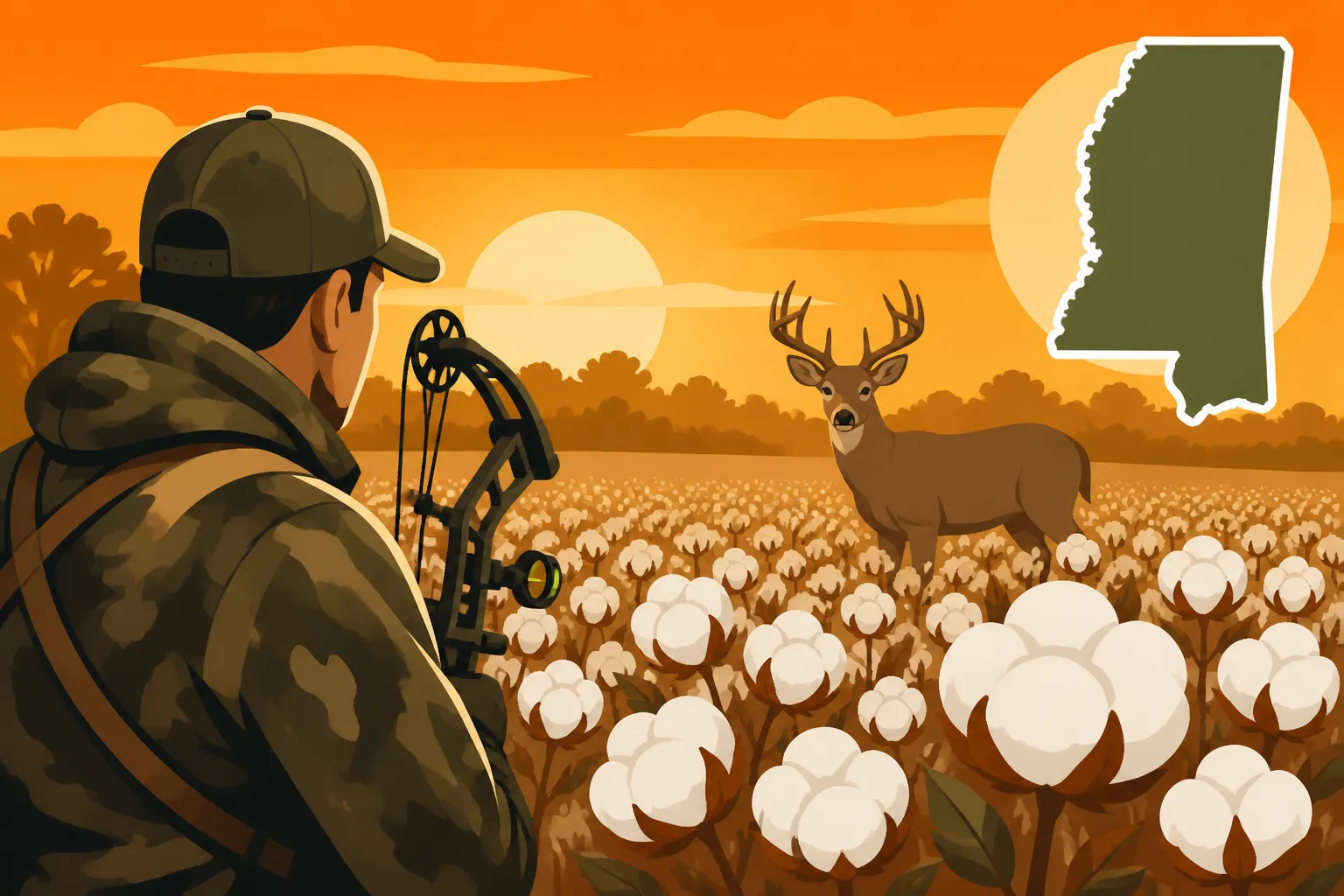
It might seem counterintuitive to hunt for deer in what looks like an open field, but standing cotton offers a unique combination of advantages that deer crave in the late season: security, food, and thermal cover. Unlike cut corn or soybean fields that offer little more than scattered leftovers and minimal concealment, mature cotton plants grow tall and dense, creating an almost impenetrable thicket from a deer's perspective. A buck can literally disappear into a few rows of cotton and feel completely safe, especially when pressured by hunters in nearby timber.
Beyond the cover, cotton fields often retain a surprising amount of food. While deer generally aren't eating the cotton bolls themselves, the fields are a haven for weeds, grasses, and dropped grains from adjacent crops that deer will readily browse. More importantly, cotton fields often border other food sources, like unharvested soybeans or winter food plots, making the standing cotton an ideal transition zone and bedding area. This ability to provide both sustenance and safety makes it a superior option compared to the sparse browse of an open timber stand or the exposed nature of a freshly harvested field. For more insights on what keeps deer fed this time of year, check out our piece on Late-Season Food Sources for Mississippi Whitetails.
Understanding Deer Behavior in Cotton Fields
Deer utilizing standing cotton aren't just passing through; they're living in it. Their behavior within these fields is primarily driven by security. They'll often bed deep inside the densest parts of the cotton, especially during daylight hours when hunting pressure is highest. Their movement patterns become highly localized, often following specific internal trails that offer the quickest escape or access to food. These trails might be faint but are critical clues for hunters.
When they do emerge, it's typically under the cover of darkness or during low-light conditions at dawn and dusk. However, cold fronts or periods of extreme weather can trigger mid-day movement as deer seek out new browse or simply adjust their bedding to find more comfortable conditions. They'll often use the cotton as a staging area before venturing out into more open areas like winter greens or cut fields. Understanding these nuances is key. A buck that is constantly pressured in the woods might feel confident enough to move earlier or later in the cotton, knowing he can quickly vanish if threatened. Deer are masters of finding the path of least resistance and the greatest security, and standing cotton provides both in abundance.
Scouting Strategies for Cotton Country Whitetails
Effective late-season hunting in standing cotton begins long before you ever step foot in the field with your weapon. It starts with meticulous scouting, both from a distance and on the ground, to unravel the secrets these unique deer havens hold. Ignoring this crucial step is a surefire way to spook deer and waste your precious hunting time.
Reading the Sign in and Around Standing Cotton
Unlike scouting a hardwood ridge where rubs and scrapes are obvious, finding deer sign within a standing cotton field requires a keen eye and often a willingness to get a little dirty. Focus your efforts on the edges and any internal breaks or ditches. Look for:
- Tracks: Fresh deer tracks entering and exiting the cotton, especially along fence lines or where the cotton meets another cover type. Pay attention to the size and direction. Larger, deeper tracks might indicate a mature buck.
- Trails: Deer will beat down subtle trails within the cotton. These often connect bedding areas to feeding grounds or escape routes. These can be hard to spot from a distance, so a slow walk along the edges or through less dense sections is often necessary.
- Rubs and Scrapes: While less common deep within the cotton, bucks will often make rubs on saplings or cotton stalks along the perimeter of the field, especially near their preferred entry/exit points. Scrapes, too, might be found on the edges, indicating a travel corridor. These perimeter signs are crucial indicators of where deer are frequently moving.
- Browse Lines: Though subtle, deer will browse on the sparse weeds and volunteer crops within the cotton field. Look for nipped vegetation, especially if it's fresh.
When you're trying to figure out how deer are moving through similar agricultural settings, think about how they utilize Entry Routes Through Standing Soybeans. The principles of finding those subtle paths are very much the same.
Utilizing Technology for Cotton Field Reconnaissance
In today's hunting world, technology is your best friend for efficient scouting, especially in vast agricultural landscapes. Don't just rely on driving by or hoping for the best.
-
Aerial Imagery and Mapping Apps: Tools like GoHunt or other detailed mapping apps are invaluable. Before you ever put boots on the ground, use satellite imagery to identify key features:
- Field Layout: Note the shape, size, and any anomalies within the cotton field.
- Adjacent Cover: Identify connecting timber blocks, fencerows, ditches, or swamps that deer might use as travel corridors to and from the cotton.
- Access Points: Pinpoint potential areas where you can discreetly enter and exit without disturbing deer.
- Topography: Even seemingly flat cotton fields can have subtle elevation changes or low spots that deer prefer for bedding or travel.
- Proximity to Other Food Sources: Are there winter plots, acorn flats, or other unharvested crops nearby? Mark these as potential destinations for deer moving out of the cotton. You can get pretty detailed with these maps, similar to how you would approach Reading Aerial Photos for Hills Unit Deer in a more rugged landscape.
-
Trail Cameras: Placement is crucial. Instead of putting them deep in the cotton where retrieval might spook deer, focus on:
- Field Edges: Position cameras looking down known entry/exit trails or along fencerows where deer are funneling.
- Choke Points: Any natural bottlenecks where deer are forced into a smaller area will yield better photos.
- Mineral Sites/Feeders (if legal and applicable): If you have access to private land and can use these, place cameras to monitor activity.
- Time Lapse Mode: Some cameras offer a time-lapse feature, which can be great for covering a wide field edge and catching deer as they emerge from the cotton at different times throughout the day. This can help confirm daylight movement patterns.
By combining on-the-ground sign reading with a thorough technological overview, you'll start to build a clear picture of how deer are utilizing the standing cotton, greatly increasing your chances of a successful late-season hunt.
Effective Tactics for Hunting Standing Cotton
Once you've done your homework and identified where the deer are likely to be, it's time to put a plan into action. Hunting standing cotton requires a slightly different mindset and approach than hunting traditional timber, but the rewards can be significant.
Stand Placement and Approach Considerations
This is where many hunts are won or lost. Your stand choice and how you get to it are paramount to success when hunting deer that are already on high alert in a secure cover.
- Wind Direction is Non-Negotiable: With deer bedding deep in the cotton, your wind direction needs to be absolutely perfect to prevent your scent from blowing into their sanctuary. Always hunt with the wind blowing away from the presumed bedding area and any travel corridors. A slight shift in wind can ruin your hunt, so have multiple stand locations ready for varying winds.
- Concealment and Cover: Traditional tree stands can work on the edges of cotton fields, especially if you can find a mature tree that offers a commanding view into or over the cotton, while also providing a good backdrop for concealment. However, ground blinds are often the unsung heroes of cotton field hunting. They offer excellent concealment, block your scent effectively, and are much easier to set up discreetly on a field edge. When using a ground blind, make sure it's brushed in thoroughly with natural vegetation to break up its outline. For tips on setting up a ground blind, check out Using a Ground Blind on Mississippi Public Land.
- Entry and Exit Routes: This is perhaps the most critical factor. Deer in standing cotton are acutely aware of disturbances. Plan your entry and exit routes to minimize noise and visual intrusion.
- Darkness is Your Friend: Approach and leave your stand well before legal shooting light and after dark.
- Use Natural Cover: Utilize ditches, fencerows, timber lines, or any topographical dips to mask your approach.
- Walk Wet: If possible, walk along a dew-soaked field edge or after a light rain to reduce noise.
- Avoid the "Hot" Zone: Never walk through the area you expect deer to be using.
A poorly executed approach can spook every deer in the field before you even settle into your stand, rendering all your scouting efforts useless.
Still-Hunting and Driving Strategies in Cotton
While static stand hunting is effective, the dense cover of standing cotton also lends itself to more active hunting methods, particularly still-hunting and small drives.
- Still-Hunting: This is an art form that requires immense patience and keen observation. The goal is to move as slowly and quietly as possible through the cotton, mimicking natural animal movement, and catching deer off guard.
- Go Slow: Take one step at a time, pausing for several minutes between steps to scan for movement, ear twitches, or horizontal lines (a deer's back) that don't belong.
- Use the Wind: Always still-hunt into the wind or with a quartering wind to keep your scent ahead of you.
- Eyes and Ears: Use your binoculars constantly to pick apart the dense cotton. Listen for subtle noises like rustling, a twig snapping, or deer blowing.
- Be Prepared: When still-hunting, you must be ready to raise your weapon and take a shot quickly and quietly.
- Small Deer Drives: In larger cotton fields, a well-planned, small-scale drive with just a few hunters can be incredibly effective, especially if you know where the deer are bedding.
- Limited Participants: This isn't about pushing deer out of a massive timber block. Two to four hunters are ideal.
- Clearly Defined Roles: Assign "drivers" and "standers." Drivers move slowly and deliberately through a section of cotton, while standers position themselves at strategic escape routes. For guidance on coordinating small groups, look into Deer Drives With Three or Four Hunters.
- Safety First: Communication is paramount. Know exactly where everyone is at all times. Use blaze orange (which is mandatory during gun seasons in Mississippi) and discuss shot angles thoroughly.
- Wind is Still Key: Drivers should move with the wind, pushing deer towards standers who are downwind.
- Escape Routes: Standers should anticipate where deer will try to escape the cotton – often towards adjacent timber, thickets, or ditches that offer immediate cover.
| Tactic | Pros | Cons | Ideal Conditions |
|---|---|---|---|
| Static Stand | Low impact on deer movement (if careful) | Limited visibility, requires perfect wind | Predictable deer movement, multiple stand options |
| Still-Hunting | Active, covers more ground | Requires extreme stealth and patience | Calm winds, fresh sign indicating internal movement |
| Small Drive | Can push deer from dense bedding | Requires multiple hunters, high safety focus | Confirmed bedding areas, clear escape routes |
Remember, deer are smart, and hunting standing cotton is a chess match. Adapt your tactics to the conditions and the deer behavior you're observing.
Gear and Preparation for Cotton Field Hunts
Successfully hunting standing cotton for late-season deer isn't just about strategy; it's also about having the right tools and knowing how to use them. Being properly equipped and prepared for the unique challenges of these fields can make all the difference.
Essential Equipment for a Successful Hunt
You'll need more than just your rifle when heading into a cotton field. Thoughtful gear selection ensures comfort, safety, and effectiveness.
- Optics: A good pair of binoculars (10×42 or 10×50) is indispensable. The dense cotton makes it hard to see movement, and you'll rely heavily on your binos to pick apart the shadows and identify deer movement. A quality rangefinder is also crucial for accurate shot placement in potentially unfamiliar distances.
- Appropriate Clothing: Dress in layers, as late-season Mississippi weather can be unpredictable, ranging from mild to surprisingly cold, especially after a Hunting Deer After a Cold Front. Wear quiet, durable clothing that can withstand snags and burrs from the cotton stalks. Camouflage is important, but prioritize quiet fabrics. Blaze orange, as mandated by Mississippi law during gun seasons, is essential for safety, especially if you're doing a drive. For specific legal requirements on firearms, refer to Mississippi Legal Firearms for Deer Hunting.
- Scent Control: Deer in agricultural areas are often highly sensitive to human scent due to constant exposure to human activity. Employ a full scent control regimen: wash clothes in scent-free detergent, shower with scent-free soap, use scent-eliminating sprays, and store hunting clothes in airtight containers. Boots, in particular, need to be sprayed down to avoid leaving a scent trail on your approach.
- Weapon Choice: While archery hunting is certainly possible in standing cotton, the dense cover often makes rifle or muzzleloader hunting a more practical choice, offering greater flexibility for shot opportunities when deer suddenly appear. If using a rifle, a shorter barrel can be easier to maneuver in tight spaces, and a scope with a wide field of view can be beneficial for quickly acquiring targets.
- Mapping Device: Whether it's a dedicated GPS unit or a smartphone app, having a reliable mapping tool (like GoHunt) with pre-marked waypoints for your stand, bedding areas, and escape routes is vital. It's easy to get disoriented in the uniform rows of a large cotton field, especially in low light.
- First-Aid Kit: Always carry a basic first-aid kit, and let someone know where you're hunting and when you expect to return.
- Game Cart/Hauling Solution: If you connect with a deer, getting it out of a dense cotton field can be a monumental task. A game cart or a plan for extracting the animal is essential.
Weather and Conditions: Timing Your Attack
The weather plays a massive role in late-season deer activity, and cotton fields are no exception. Timing your hunt with favorable conditions can dramatically increase your odds.
- Cold Fronts: A significant drop in temperature following a warm spell almost always gets deer on their feet. These are prime times to be in your stand, especially during mid-day. Deer will often move more to feed and to seek out thermal cover.
- Rain and Drizzle: Light rain can be a fantastic cover for still-hunting, masking your sound and washing away your scent. Deer also tend to move during light rain. Heavy rain, however, usually sends them to the thickest cover, making them harder to find.
- Wind: As discussed, wind direction is critical for stand placement. But strong winds can also affect deer movement. They may prefer to bed down in sheltered areas within the cotton on very windy days, moving less until the wind calms.
- Cloud Cover: Overcast days often lead to extended deer movement throughout the day, as there's no bright sun to make them feel exposed.
- Moon Phase: While not as universally agreed upon, some hunters swear by certain moon phases for increased daytime activity. While perhaps not a primary factor, it's something to consider in conjunction with other weather patterns.
Don't just hunt when you have time; hunt when the conditions are right. This might mean adjusting your schedule or enduring some less-than-ideal weather, but it significantly tips the odds in your favor when targeting late-season deer that are seeking sanctuary and sustenance in the standing cotton. For guidance on planning your hunts in varying temperatures, consider strategies outlined in Warm-Weather Sitting Strategy in Mississippi.
Disclaimer
Hunting is an inherently dangerous activity. Always prioritize safety, adhere to all local, state, and federal hunting regulations, and obtain proper licenses and permits. The information provided in this guide is for informational purposes only and should not replace professional advice or thorough personal research of current regulations. Always scout your chosen hunting area thoroughly and understand its specific challenges and rules before venturing out.