Mississippi’s Four Deer Management Units
If you’ve ever found yourself scratching your head, staring at the Mississippi Department of Wildlife, Fisheries, and Parks (MDWFP) hunting guide, trying to figure out why the deer season dates and antler restrictions seem to change every 50 miles, you're not alone. It can feel like a maze, but understanding the state’s four main deer management units is key to unlocking successful hunting experiences across our diverse landscapes. This guide is here to break down those units, explaining why they exist and how they directly impact your time in the woods.
Understanding Mississippi's Deer Management Units
Mississippi is a truly diverse state, from the sprawling, flat agricultural fields of the Delta to the rolling piney woods and hardwood bottoms of the Hills. This incredible variety in habitat and deer populations means that a one-size-fits-all approach to deer management just wouldn't work. That's where the concept of deer management units comes into play.
Why Units Exist
The MDWFP, through years of research, biological studies, and hunter feedback, has recognized that deer herds across the state face different challenges and opportunities. For instance, the deer in the fertile Mississippi Delta have access to a completely different food source and habitat structure than the deer living in the sandy, pine-dominated areas of the Southeast. These ecological differences directly influence deer health, body size, antler growth, and reproductive rates. Managing the entire state with a single set of rules would either over-regulate some areas or fail to protect and enhance the herd in others.
The MDWFP's goal is to create regulations that are biologically sound for each region, aiming to balance deer populations with available habitat, improve herd quality, and provide sustainable hunting opportunities. This involves looking at deer density, buck-to-doe ratios, fawn recruitment, and hunter pressure. If one area consistently produces younger bucks, for example, the regulations might be adjusted to encourage antlered deer to reach an older age class. It's a dynamic process, and understanding these regional differences is crucial for anyone who hunts in Mississippi.
The Four Major Units Overview
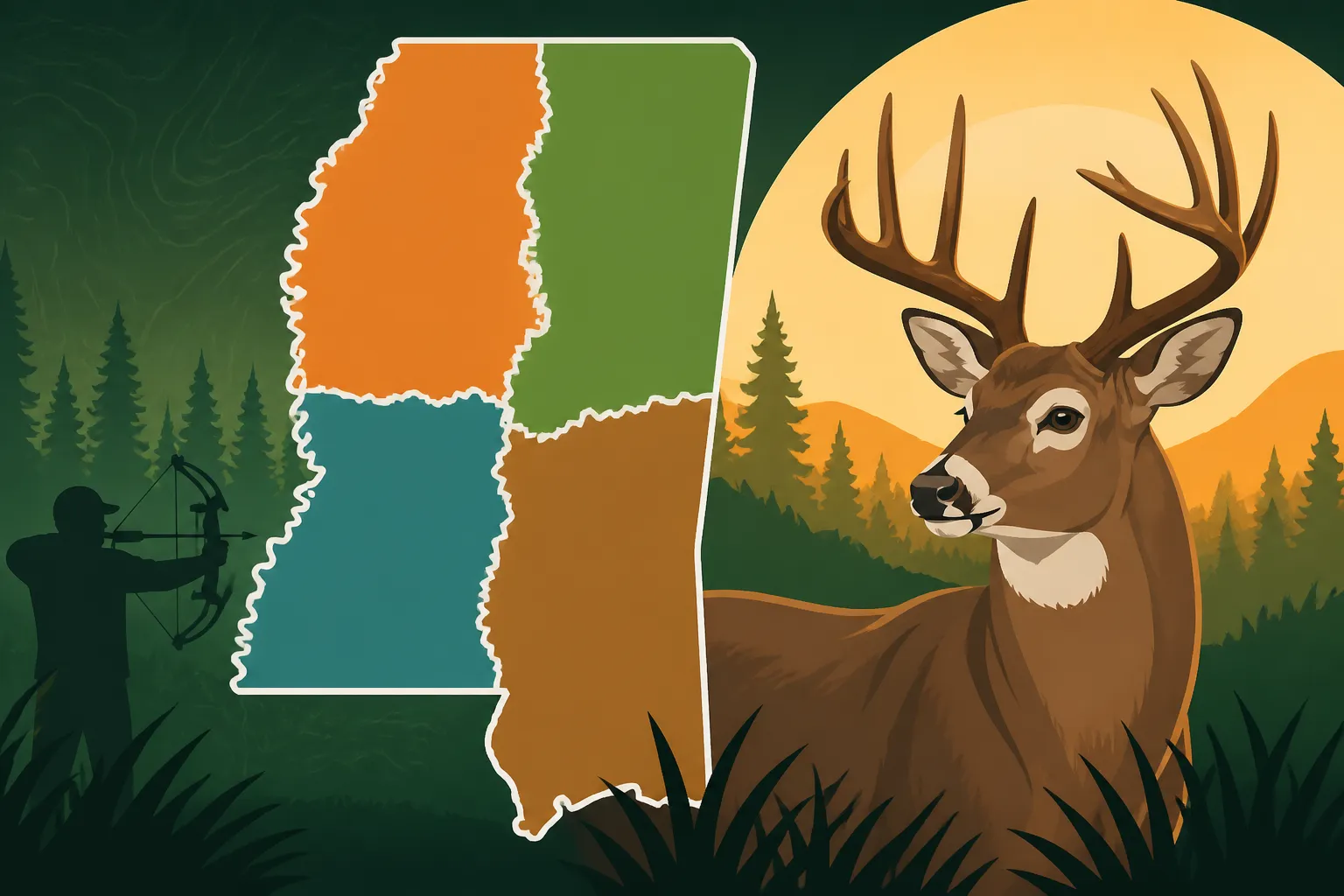
To address these varying needs, Mississippi is primarily divided into four distinct deer management units: the Delta, Hills, North Central, and Southeast. While they each have their own unique characteristics and regulations, they all share the common goal of promoting healthy deer herds. Each unit has specific season dates for archery, muzzleloader, and gun, as well as distinct antler restrictions (ARs) designed to help bucks mature. These distinctions mean that a successful strategy in one unit might not be the best approach in another. We'll delve into each of these in detail, helping you grasp the nuances that define hunting in our great state.
The Delta Unit: Bottomland Riches and Big Bucks
Ah, the Delta. For many, it conjures images of vast cotton fields, catfish farms, and legendary duck hunting. But for deer hunters, it's synonymous with big-bodied bucks and challenging, dense bottomland cover. This unit, arguably the most iconic for Mississippi deer hunting, has a unique charm and a set of rules crafted specifically for its environment.
Geography and Habitat Characteristics
Geographically, the Delta Unit occupies the flat, alluvial floodplain of the Mississippi River in the western part of the state. Think rich, black soil that stretches for miles, interrupted by winding bayous, oxbow lakes, and sprawling agricultural fields. Corn, soybeans, and cotton dominate the landscape, providing an incredibly high-protein diet for the resident deer herd for much of the year. Scattered among these fields are the remaining tracts of old-growth bottomland hardwoods – oaks, pecans, sweetgum, and cypress – which provide critical cover, bedding areas, and additional mast crops.
Hunting in the Delta often means navigating through thick, almost impenetrable cane breaks, briar patches, and dense timber that can make a 100-yard shot feel like a mile. Finding a good funnel between a bedding thicket and a cut soybean field can be gold, but it often requires serious scouting, sometimes even using aerial imagery or apps like GoHunt to pinpoint those travel corridors in the vastness. When the water levels rise from the Mississippi River or its tributaries, large areas can flood, pushing deer to higher ground and concentrating them in pockets, which can create incredible, albeit short-lived, hunting opportunities.
Deer Population and Management Focus
The Delta Unit is renowned for its high deer densities and the potential to harvest truly magnificent bucks. The rich agricultural forage and prime bottomland habitat allow bucks to express their full genetic potential, often resulting in impressive body weights and antler development. The management focus here has historically been on fostering an older age structure within the buck population and maintaining healthy buck-to-doe ratios. This ensures that bucks have the opportunity to mature and grow those impressive racks that the Delta is famous for. You’ll often find that the biggest bucks in the state, those record-book whitetails, tend to come from this very unit, largely due to the abundant nutrition and the restrictive harvest policies designed to let them grow. For more on this, check out our piece on Why the Delta Grows Big Bucks.
However, high deer densities also bring challenges, particularly with potential crop damage to the extensive agricultural operations. The MDWFP works closely with landowners to manage these populations, sometimes through special permits, while still maintaining the overall health and quality of the herd. Hunters play a crucial role in this management, especially in harvesting antlerless deer where appropriate, to keep populations in check with the carrying capacity of the land.
Antler Restrictions and Season Lengths
The Delta Unit employs the most stringent antler restrictions in the state, designed specifically to protect younger bucks and allow them to reach maturity. To harvest an antlered buck in the Delta, it must have an inside spread of at least 12 inches OR a main beam length of at least 15 inches. This rule is a major factor in why you see so many mature bucks coming out of this region. It’s a measure that requires hunters to be patient and disciplined, passing up smaller bucks in hopes of seeing a truly mature animal. If you're new to the Delta, take a moment to read our detailed explanation of the Delta Unit Twelve-Inch Spread Rule Explained.
Season dates in the Delta generally follow a pattern of a long archery season, often running from early October well into late November or early December, followed by a muzzleloader season, and then the general gun season. These dates are meticulously planned to coincide with different phases of the rut, ensuring ample opportunity for hunters. Always consult the current MDWFP regulations for precise dates, as they can shift slightly year to year.
The Hills Unit: Diverse Terrain and Traditional Hunting
Moving east from the Delta, you transition into the vast expanse of the Hills Unit. This is where many Mississippians call home, and where much of the state's hunting heritage is rooted. It’s a unit characterized by its varied landscapes, offering a more traditional Southern hunting experience across a mix of private and public lands.
Geography and Habitat Characteristics
The Hills Unit covers a significant portion of central and northern Mississippi, stretching from the eastern edge of the Delta all the way to the Alabama border. As the name suggests, the terrain here is much more rolling, featuring a mix of hardwood ridges, pine timber plantations, and agricultural fields that are generally smaller and more interspersed than those in the Delta. You'll find a lot of oak-hickory forests, which are prime producers of hard mast like acorns – a critical food source for deer, especially in the fall and winter. Creek bottoms often harbor dense cover and offer natural travel corridors for deer.
This unit also has a higher percentage of private land, with many smaller farms and timber holdings, which means securing permission or finding a good hunting club is often key. Public land opportunities, while present in national forests like the Homochitto and Bienville, tend to be more fragmented or see higher pressure. Hunters here learn to read the topography, focusing on saddles, draws, and ridge lines where deer naturally travel, especially during the rut. Still-hunting the ridges is a popular and effective method when the conditions are right, as discussed in our article on Still-Hunting Hills Unit Ridges.
Deer Population and Management Focus
Deer densities in the Hills Unit are typically moderate to high, though they can vary greatly depending on local habitat quality and hunting pressure. While you might not see the sheer numbers of "trophy-class" bucks as consistently as in the Delta, the Hills still produce excellent deer, and many hunters cherish the challenge of pursuing them in this varied landscape. The management focus in the Hills aims to provide abundant hunting opportunities while still promoting a healthy, productive herd. This often involves encouraging the harvest of antlerless deer to keep populations within ecological carrying capacity, preventing overbrowsing and improving overall herd health. For more on population trends, consider our insights on Hills Unit Deer Density.
Hunters here often have a strong connection to their specific properties, managing food plots, timber stands, and other habitat improvements to maximize deer potential. The emphasis is on overall herd health and a balanced age structure, ensuring that hunters have consistent opportunities year after year.
Antler Restrictions and Season Lengths
The antler restrictions in the Hills Unit are slightly less restrictive than the Delta, reflecting the different nutritional landscape and management goals. To harvest an antlered buck, it must have an inside spread of at least 10 inches OR a main beam length of at least 13 inches. This allows for a reasonable balance between letting younger bucks mature and providing hunters with more opportunities to take a legal buck. It’s a good compromise that supports deer quality without being overly prohibitive. If you're not sure how to eyeball that measurement in the field, our guide on Hills Unit Ten-Inch Spread Rule Explained can offer some practical tips.
Season lengths in the Hills Unit are generally robust, featuring a substantial archery season, followed by muzzleloader, and then the general gun season. The gun season often starts around mid-November, providing hunters with prime opportunities during the peak of the rut in many areas. Just like with the Delta, always double-check the latest MDWFP regulations for exact dates before heading out, as minor adjustments can occur annually.
The North Central Unit: Transition Zone Dynamics
The North Central Unit acts as a fascinating ecological bridge, transitioning between the rich bottomlands to its west and the rolling uplands to its east. This unit’s characteristics can feel like a blend of both worlds, making it a unique challenge and opportunity for deer hunters.
Geography and Habitat Characteristics
Stretching across several counties in the north-central part of the state, this unit displays a mosaic of habitats. In its western reaches, particularly counties adjacent to the Delta, you might find more flat agricultural land and river bottoms, reminiscent of the Delta. As you move eastward, the landscape gradually shifts to more rolling hills, mixed pine-hardwood forests, and smaller, more scattered farming operations, similar to the main Hills Unit. This diverse geography means that within a relatively small area, you can encounter dramatically different hunting conditions.
Hunters in the North Central Unit might find themselves scouting vast soybean fields one day and navigating steep timbered creek draws the next. This requires a versatile hunting approach and a keen understanding of local topography and land use patterns. Public lands, like the Holly Springs National Forest or certain WMAs, offer access, but private land remains a significant component, often requiring careful planning to secure hunting rights.
Deer Population and Management Focus
Deer populations in the North Central Unit are typically healthy, with densities that can vary from moderate to high. The management strategies here are often tailored to address specific local conditions, sometimes incorporating elements from both the Delta and Hills units. Given its location, this unit has also been on the forefront of managing Mississippi's battle against Chronic Wasting Disease (CWD). The discovery of CWD in Benton County in 2018, and subsequent cases in neighboring counties, has significantly influenced management practices in this region. This means that hunters in the North Central Unit might encounter additional regulations, such as mandatory testing, carcass movement restrictions, and slightly different bag limits or season structures, all designed to monitor and slow the spread of CWD. If you hunt here, understanding these specific CWD rules is non-negotiable. Our guide on North Central Unit Season Rules provides a great overview of these unique regulations.
The focus here is dual: maintaining a robust deer herd for hunting while aggressively managing the CWD situation to protect the long-term health of Mississippi's deer. This means a lot of ongoing research and adaptive management by the MDWFP.
Antler Restrictions and Season Lengths
The antler restrictions in the North Central Unit generally align with those of the Hills Unit: a 10-inch inside spread or 13-inch main beam length. However, it's absolutely critical to be aware of any CWD-related rule modifications. For example, some areas within the CWD management zones may have special carcass transport rules or mandatory harvest reporting requirements that differ from other parts of the unit. These rules are put in place for a very good reason – to help control the spread of the disease – and every hunter has a responsibility to adhere to them.
Season lengths typically mirror the traditional Mississippi pattern, with archery, muzzleloader, and gun seasons. However, always be vigilant for localized changes or specific county-by-county dates, especially in areas designated as CWD Management Zones. Staying updated on the MDWFP website or through the official regulations guide is paramount. Knowing Which Eleven Counties Sit in the North CWD Zone is a must for any hunter planning to pursue deer in this region.
The Southeast Unit: Piney Woods and Coastal Influences
Rounding out our tour of Mississippi's deer units is the Southeast, a distinct region shaped by its proximity to the Gulf Coast and its extensive pine forests. This unit offers a different flavor of hunting, characterized by its long archery season and the unique challenges of the "Piney Woods."
Geography and Habitat Characteristics
The Southeast Unit covers the lower third of Mississippi, characterized by its sandy soils, extensive managed pine timber plantations (often longleaf pine), and numerous creek and river bottoms that lead down to the Gulf Coast. While agriculture is present, it's generally less widespread than in the Delta or even parts of the Hills, meaning deer often rely more heavily on natural browse, mast crops from scattered hardwoods, and habitat provided by timber management practices. Swamps and marshy areas become more prevalent as you approach the coastal regions, offering dense, often wet, cover for deer.
Hunting here can involve navigating thick pine plantations, clear-cuts with dense new growth, or deep bottomland swamps. It often requires a different approach than other units, focusing on transition zones between pine stands and hardwoods, old logging roads, or the edges of dense clear-cuts. Understanding how deer use these specific habitats is key, especially when considering tactics like still-hunting through a pine flat. Our article on Hunting Southeast Unit Pine Flats can provide more detail on this unique habitat.
Deer Population and Management Focus
Deer densities in the Southeast Unit tend to be moderate, sometimes lower than other units, largely due to the less fertile soils and different forage base compared to the Delta or even the prime hardwood areas of the Hills. However, don't let that deter you; the Southeast can still produce quality bucks, and the challenge of hunting its unique terrain is a reward in itself. The management focus here is often on maintaining a healthy deer herd within the carrying capacity of the pine-dominated habitat, while also providing ample hunting opportunity.
A distinguishing feature of the Southeast Unit is its extended archery season. This longer window offers bowhunters a fantastic opportunity to pursue deer for a greater portion of the year, including during early season patterns and well into the late season. This extended archery period is a major draw for hunters across the state and beyond, allowing for more time in the woods and more flexibility in scheduling hunts.
Antler Restrictions and Season Lengths
The antler restrictions in the Southeast Unit are consistent with the Hills Unit: a 10-inch inside spread or a 13-inch main beam length is required for an antlered buck. This standard helps ensure that bucks have a chance to mature while still offering plenty of opportunity.
The true highlight of the Southeast Unit's regulations is its incredibly long archery season. This unit often boasts an archery season that begins in early October and can extend all the way through January, giving bowhunters an unparalleled opportunity to hunt a wide variety of conditions and deer behaviors. This extended archery run is a game-changer for many archers in the state. If you’re a bowhunter, you definitely want to understand Why the Southeast Unit Gets an Extra Archery Month as it could greatly extend your time in the field. General gun and muzzleloader seasons follow this extended archery period, providing a full calendar of opportunities for all types of hunters.
Navigating Unit-Specific Regulations and Planning Your Hunt
Understanding the existence of Mississippi's four deer management units is the first step, but truly mastering them means knowing how to interpret their specific regulations and apply them to your hunting plans. This isn't just about knowing where you can hunt, but how to hunt effectively and legally within each unit's framework.
How to Determine Your Unit and Stay Informed
The single most important tool in your arsenal, outside of your hunting gear, is the official Mississippi Department of Wildlife, Fisheries, and Parks (MDWFP) Outdoor Regulations Digest. This annual publication, available both online and in print at license vendors, is the definitive guide to all season dates, bag limits, and specific rules for each unit and county. Don't rely on old guides or hearsay; always consult the current year's digest.
Beyond the official guide, modern mapping applications can be incredibly helpful. Platforms like GoHunt, or the MDWFP's own mobile app, often have layers that show county boundaries and even deer unit lines, helping you pinpoint exactly which regulations apply to your chosen hunting spot. This is especially useful if you hunt near a unit boundary, where crossing a road or a creek could mean a different set of rules. We have a detailed guide on Finding Which Deer Unit Your County Sits In that walks you through how to use these tools effectively. Never assume; always verify your location's specific unit.
Impact on Season Dates and Bag Limits
The variations between units aren't just about antler restrictions; they profoundly impact when you can hunt and how many deer you can harvest. This is where careful planning comes in. A gun hunter in the Delta might have different opening and closing dates than a gun hunter in the Hills, and the number of antlerless deer tags might also differ.
Let's look at a simplified comparison of general season dates (always check current year's digest for exact, up-to-date information):
| Unit | Archery Season (Approx.) | Muzzleloader Season (Approx.) | Gun Season (Approx.) | Antlered Buck AR | Antlerless Bag Limit (Statewide) |
|---|---|---|---|---|---|
| Delta | Oct 1 – Dec 1 | Dec 2 – Dec 15 | Dec 16 – Jan 31 | 12" spread OR 15" beam | 3 per season |
| Hills | Oct 1 – Nov 15 | Nov 16 – Nov 25 | Nov 26 – Jan 31 | 10" spread OR 13" beam | 3 per season |
| North Central | Oct 1 – Nov 15 | Nov 16 – Nov 25 | Nov 26 – Jan 31 | 10" spread OR 13" beam | 3 per season (may have CWD specifics) |
| Southeast | Oct 1 – Jan 31 (Extended) | Feb 1 – Feb 7 | Nov 20 – Feb 15 | 10" spread OR 13" beam | 3 per season |
Note: These dates are approximations for illustrative purposes. Always consult the official MDWFP Outdoor Regulations Digest for current, precise dates, which can shift annually.
As you can see, the Southeast Unit's extended archery season is a standout feature for bowhunters, while gun season dates can vary by several weeks. Also, while the statewide bag limit for antlerless deer is generally three per season, local conditions or CWD zones might introduce further nuances. For a deeper dive into the overall structure, refer to our comprehensive article on Mississippi Deer Season Structure Explained.
Strategizing Your Hunt Based on Unit Rules
Knowing the rules isn't just about staying legal; it's about optimizing your hunting strategy.
- Antler Restrictions (ARs): In the Delta with its 12/15-inch rule, you might pass on many bucks you'd gladly shoot elsewhere. This encourages focusing on mature buck sign, larger food sources, and patiently waiting for that truly big animal. Conversely, in the Hills or Southeast with 10/13-inch ARs, you have more opportunities for legal bucks, which might influence your stand placement or calling strategies during the rut.
- Season Lengths: The extended archery season in the Southeast means you can hunt later into the winter, taking advantage of late-season food sources or post-rut buck movement. This allows for more flexibility and less pressure to "get it done" quickly. Conversely, a shorter gun season in some units might mean more concentrated hunter pressure on opening day, requiring you to find less-pressured areas.
- Bag Limits: While the statewide antlerless limit is three, individual land managers or WMA rules can sometimes be more restrictive or, in the case of CWD zones, encourage more antlerless harvest. This impacts your herd management decisions, especially on private land. Being familiar with Mississippi Deer Bag Limit Rules ensures you're hunting responsibly.
Ultimately, Mississippi's deer management units are a testament to the state's commitment to biologically sound conservation and providing diverse hunting experiences. By understanding these divisions and their specific rules, you empower yourself to become a more effective, ethical, and successful hunter, no matter which corner of our great state you choose to pursue whitetails.
Disclaimer
The information provided in this guide is for general informational purposes only and is not intended as legal advice. Hunting regulations, season dates, and unit boundaries are subject to change by the Mississippi Department of Wildlife, Fisheries, and Parks (MDWFP). Hunters are solely responsible for understanding and complying with all current federal, state, and local hunting laws and regulations. Always consult the most recent official MDWFP Outdoor Regulations Digest and any applicable local advisories before engaging in any hunting activities.