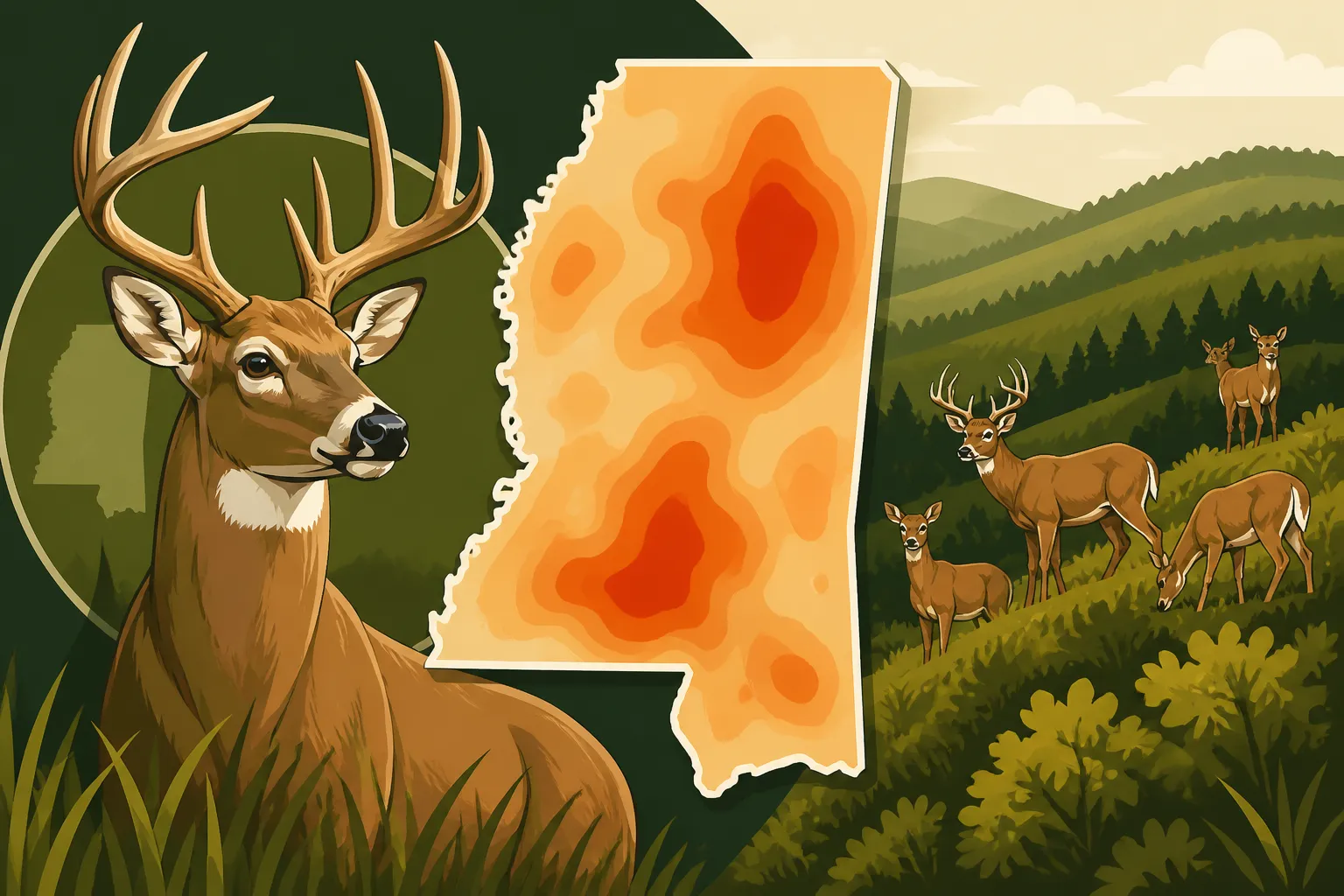
Hills Unit Deer Density
It can be incredibly frustrating to spend hours scouting and setting up a stand in Mississippi's beautiful, rugged Hills Unit, only to wonder if there are even enough deer in the vicinity to justify your efforts. The feeling of hunting unproductive ground is something every hunter dreads. This guide will take a deep dive into the fascinating world of deer density within the Hills Unit, helping you understand where and why deer populations fluctuate, and how you can use this knowledge to make more informed decisions in the woods.
Understanding Mississippi's Deer Management Units
Mississippi is a state with incredibly diverse landscapes, and the wildlife management approach reflects that variety. The Mississippi Department of Wildlife, Fisheries, and Parks (MDWFP) divides the state into distinct deer management units, each with its own unique characteristics and regulations. This regionalized approach is crucial because what works for deer in the Delta flatlands might be entirely different from what sustains them in the rolling hills. Understanding these distinctions is the first step to truly grasping deer density in your hunting area. To get a full picture of these different regions, you can check out guides like Mississippi's Four Deer Management Units.
The Hills Unit's Unique Landscape and Challenges
The Hills Unit encompasses a massive portion of central and north Mississippi, characterized by its rolling terrain, mixed pine and hardwood forests, and a scattering of agricultural fields. Unlike the fertile, flat bottomlands of the Delta Unit, the Hills Unit presents a more varied topography, with steep creek drains, winding ridges, and less consistent food sources. This undulating landscape naturally influences how deer utilize the habitat. They often concentrate in draws, along creek bottoms, or in transitional zones between different timber types, seeking shelter, water, and food. The challenges here include navigating dense undergrowth, understanding subtle elevation changes, and recognizing how deer travel these broken corridors. The sheer vastness and varied public land access can also make finding consistent deer sign a real puzzle for hunters.
The soil types in the Hills Unit also play a significant role. While not as rich as the Delta, these soils can still produce decent mast crops like acorns from oaks and pecans, which are critical food sources for deer, especially in the fall. However, these mast crops can be highly localized and vary year-to-year. Hunters often find themselves chasing the acorn crop, moving their hunting efforts based on what's dropping. Furthermore, timber practices, such as clear-cutting and pine plantations, create a mosaic of habitat ages. Young clear-cuts provide dense browse and cover, attracting deer, while mature pine stands can be less productive for forage but offer excellent bedding and travel corridors.
How Deer Density is Measured and Estimated
The Mississippi Department of Wildlife, Fisheries, and Parks (MDWFP) doesn't just guess at deer numbers; they employ a variety of scientific methods to estimate deer density across the state, including in the Hills Unit. These methods are essential for setting appropriate season lengths, bag limits, and antler restrictions. One common approach involves deer harvest data. Hunters are required to report their deer, providing a wealth of information on harvest success, buck-to-doe ratios, and the age structure of the herd. When you report your deer, you're directly contributing to this vital data collection. For more on this, look into Mississippi Deer Harvest Records.
Beyond harvest data, biologists conduct spotlight surveys at night, driving established routes and counting deer seen. This provides a snapshot of the population and helps determine population trends over time. Camera surveys, using strategically placed trail cameras, also contribute to density estimates by identifying individual deer, estimating buck-to-doe ratios, and assessing fawn recruitment (how many fawns survive to join the herd). These scientific efforts, combined with habitat assessments and reports from landowners and hunters, paint a picture of deer density. It's never an exact count, but rather a robust estimate that helps manage the resource effectively. Understanding the general Mississippi Deer Herd Size is crucial for effective management.
Factors Influencing Deer Density in the Hills Unit
Deer density isn't a static number; it's a dynamic figure constantly influenced by a complex interplay of environmental factors and human activity. In the Hills Unit, these factors can create significant pockets of high and low deer populations, even within relatively small areas. Knowing what influences these numbers can help you predict where deer might be more prevalent and adjust your hunting strategy accordingly.
Habitat Quality and Food Availability
The quality and availability of food and cover are arguably the most critical determinants of deer density. In the Hills Unit, deer thrive where they can find a consistent supply of nutritious forage and secure bedding areas. Hardwood bottoms rich in mast-producing trees like oaks, hickories, and persimmons are natural magnets for deer, especially during the fall and early winter. Areas with diverse plant life, including native browse, forbs, and legumes, provide the year-round nutrition necessary for a healthy and abundant herd. Agricultural fields, particularly those bordering timber, also act as major food sources, drawing deer from surrounding woods, especially soybeans, corn, and winter wheat.
Conversely, vast expanses of uniform, mature pine plantations that lack understory browse will typically support lower deer densities. While they offer cover, the lack of diverse forage means deer have to travel farther to find food, spreading them out. Deer managers often use prescribed burns and timber stand improvement practices to enhance habitat quality, encouraging new growth that deer can browse. When you're scouting, pay close attention to the diversity of plant life and the presence of preferred food sources. Many hunters rely on tools like GoHunt to analyze satellite imagery, identifying diverse habitat types, potential food sources, and bedding areas before ever setting foot in the woods.
Hunting Pressure and Harvest Strategies
Human hunting pressure is another significant factor shaping deer density, particularly on public lands within the Hills Unit. Areas that are easily accessible or well-known tend to see higher hunter numbers, which can lead to localized reductions in deer density, especially for older, mature bucks. Deer adapt to pressure by becoming more nocturnal or by moving to areas with denser cover and fewer hunters. This doesn't necessarily mean fewer deer overall in the unit, but rather that they are more challenging to locate and harvest in heavily hunted spots.
The MDWFP's harvest strategies, including bag limits and antler restrictions like the Hills and Southeast Unit Antler Restriction Rules, are designed to manage the deer population sustainably. These rules help maintain a healthy buck-to-doe ratio and allow more bucks to reach older age classes. For instance, if hunters primarily focus on antlered bucks, it can lead to a skewed sex ratio. The MDWFP monitors harvest data closely to make adjustments that help balance the herd and promote quality hunting opportunities. Understanding these regulations, and how they influence the deer you're targeting, is vital for any responsible hunter.
Predator Populations and Disease Impact
While often less visible, predator populations and the prevalence of diseases can also significantly impact deer density. In Mississippi, coyotes are widespread, and while they rarely take down healthy adult deer, they can be a significant factor in fawn mortality. A high coyote population can reduce the number of fawns that survive to adulthood, thus impacting the overall recruitment into the deer herd. Learning about Coyotes and Predators in Mississippi can provide a broader context for their role.
Diseases such as Chronic Wasting Disease (CWD) and epizootic hemorrhagic disease (EHD) also play a role. EHD, often referred to as "blue tongue," is a viral disease transmitted by biting midges, and it can cause localized deer die-offs, especially during hot, dry summers. While often not widespread enough to impact an entire unit, intense EHD outbreaks can temporarily reduce deer density in specific areas. CWD, on the other hand, is a neurological disease that is always fatal and is a significant concern for deer managers. It's a slow-spreading disease, but its presence can lead to long-term population declines if not managed effectively. The MDWFP has designated Mississippi's Chronic Wasting Disease Zones and implemented testing requirements to monitor and mitigate its spread, particularly in the northern parts of the Hills Unit.
Navigating the Hills Unit for Optimal Deer Encounters
Knowing the general deer density of the Hills Unit is one thing, but pinpointing where those deer actually are on any given day is the hunter's ultimate challenge. The Hills Unit's diverse topography means that density can vary dramatically from one ridge to the next, or from a creek bottom to an adjacent pine stand. Successful hunting often comes down to effectively scouting and adapting your tactics to these localized deer concentrations.
Identifying High-Density Pockets
Finding those elusive high-density pockets requires a combination of pre-season scouting, map analysis, and understanding deer behavior. Start by looking for areas that offer the "three essentials": food, water, and cover, all in close proximity. On a topographic map or using a mapping tool like GoHunt, identify creek drainages, natural funnels between ridges, saddles, and transition zones where different timber types meet. These areas often serve as natural travel corridors or feeding/bedding hubs. Look for south-facing slopes in winter, which offer thermal cover, or north-facing slopes in early archery season that stay cooler.
In the field, scouting for fresh sign is paramount. Look for heavily used deer trails, fresh rubs and scrapes (especially during the rut, which you can learn more about in Hunting the Rut in the Hills Unit), droppings, and obvious browse lines on vegetation. Pay attention to bedding areas—thickets, briar patches, or areas of dense pine regeneration—that offer security. A concentrated amount of fresh sign in a relatively small area is a strong indicator of a localized high deer density. It takes time and boots on the ground, but it's the most reliable way to find where the deer are truly living. Using aerial photos and topo maps to identify natural funnels and pinch points before you ever leave the house is an excellent starting point, saving you valuable time in the woods.
Adapting Hunting Tactics to Density
Once you have an idea of the deer density in your target area, you can adapt your hunting tactics for better success. In areas with lower deer density, a more patient, methodical approach is often best. This might involve still-hunting slowly and quietly through likely areas, covering more ground, or sitting for longer periods in a proven stand location. Focusing on pinch points, saddles, or creek crossings that naturally funnel deer movement can be especially effective when deer are spread out. When still-hunting, remember that in the Hills Unit, deer often utilize ridgelines for travel, making it crucial to understand Reading a Ridge for Hills Unit Deer.
Conversely, in areas with higher deer density, you might consider more aggressive tactics. This could include using rattling antlers or grunt calls more frequently, as there's a higher chance of a deer hearing and responding. Setting up ambush points along heavily used trails leading to food sources or bedding areas can be highly productive. Drives, when permissible and safely executed with a small group, can also be effective in pushing deer from thick cover to waiting standers in high-density pockets. Regardless of density, always prioritize wind direction and scent control, as deer in the Hills Unit are notoriously wary.
The Role of Public vs. Private Land
The distinction between public and private land plays a significant role in deer density and hunting experience in the Hills Unit. Generally speaking, private lands that are managed specifically for deer—with food plots, supplemental feeding (where legal), and strict harvest management—tend to have higher deer densities and often produce larger, older-aged bucks. Access to these lands is typically through ownership, leases, or hunting clubs, where management goals are clearly defined and often geared toward quality deer.
Public lands, such as national forests and Wildlife Management Areas (WMAs) in the Hills Unit, often experience greater hunting pressure. While still home to healthy deer populations, the deer on public land can be more dispersed and wary due to constant human activity. This doesn't mean public land hunting isn't fruitful, but it often requires more effort, deeper penetration into remote areas, and a willingness to walk farther than other hunters. Hunters often find success by identifying overlooked pockets, focusing on transition areas, or scouting less accessible terrain that deters other hunters. Detailed Scouting Mississippi Public Land Before Season is absolutely essential if you plan to hunt public ground in the Hills Unit.
| Factor Influencing Hills Unit Deer Density | Impact on Deer Numbers |
|---|---|
| Habitat Diversity & Quality | Higher numbers in areas with diverse forage (hardwoods, ag fields, young clear-cuts) and ample cover. |
| Food Availability (Mast/Crops) | Higher numbers when acorns are abundant or agricultural fields are present; lower numbers during poor mast years. |
| Water Sources (Creeks/Ponds) | Concentrates deer near reliable water sources, especially during dry periods. |
| Hunting Pressure | Lower numbers in easily accessible, heavily hunted areas; higher numbers in remote, less pressured spots. |
| Predator Abundance (Coyotes) | Can reduce fawn recruitment, slightly impacting overall density over time. |
| Disease Outbreaks (EHD/CWD) | Localized, temporary declines (EHD); potential long-term, broader declines (CWD) in affected zones. |
| Weather Patterns | Extreme conditions (droughts, severe winters) can stress populations and impact fawn survival. |
| Timber Management Practices | Creates varied habitat; young clear-cuts increase browse, mature pines can reduce it unless managed. |
Long-Term Trends and Future Outlook for Hills Unit Deer
The story of white-tailed deer in Mississippi, including the Hills Unit, is one of remarkable recovery and ongoing management. From historical lows due to unregulated hunting, deer populations have rebounded dramatically thanks to conservation efforts. However, this progress doesn't mean the future is without its challenges. Understanding the broader trends helps us appreciate the health of the herd and what goes into maintaining it.
Historical Changes in Deer Populations
Not so long ago, deer were a rare sight in many parts of Mississippi, including the Hills Unit. Overhunting, coupled with habitat destruction in the late 19th and early 20th centuries, decimated populations. Thankfully, concerted conservation efforts, including regulated hunting seasons, habitat restoration, and aggressive restocking programs by the MDWFP and its predecessors, led to an incredible comeback. By the latter half of the 20th century, deer populations boomed, sometimes even exceeding carrying capacity in certain areas. This success story is a testament to the power of sound wildlife management and the commitment of hunters who helped fund these efforts.
Today, deer populations in the Hills Unit are generally robust, though localized fluctuations are common due to the factors we've discussed, like habitat changes, localized disease outbreaks, and hunting pressure. The challenge now is to maintain a healthy, balanced herd that provides ample hunting opportunities while also being sustainable for the ecosystem. It's a continuous balancing act, ensuring that we don't return to the lows of the past, but also manage for quality over sheer quantity. The general Mississippi Deer Population Estimate helps guide these efforts year after year.
MDWFP Management Efforts
The MDWFP plays a critical role in shaping the future of deer hunting in the Hills Unit. Their biologists and conservation officers are constantly monitoring deer populations, assessing habitat conditions, and enforcing regulations. Through annual surveys, harvest data analysis, and research, they make informed decisions about season dates, bag limits, and antler restrictions. For example, the specific Mississippi Deer Season Structure Explained reflects careful consideration of reproductive cycles, harvest goals, and regional differences.
Beyond regulations, the MDWFP actively manages public lands, including WMAs within the Hills Unit, to enhance deer habitat. This can involve timber stand improvement, prescribed burning to promote new growth, and planting food plots. They also conduct outreach and education programs to inform landowners and hunters about best practices for deer management on private lands. Dealing with emerging threats like CWD is another significant aspect of their work, with ongoing surveillance and testing programs designed to monitor and contain the disease. These comprehensive efforts aim to ensure that deer populations in the Hills Unit remain healthy and abundant for generations of hunters to come. If you're looking to acquire the necessary permits and education, remember that Mississippi Hunter Education Requirements are in place to ensure safe and ethical hunting.
Disclaimer
This article is for general informational purposes only and does not constitute professional advice. Laws, prices and regulations vary by location and change over time. Consult a qualified professional for guidance on your specific situation.