Mississippi Deer Tag Transfer Rules
It’s easy to get tangled up in the rules and regulations surrounding deer hunting, especially when it comes to something as specific as tag transfers. Many folks wonder if they can hand off an unused tag to a buddy or let a family member report a deer on their license. This guide is here to clear up all that confusion and lay out exactly how Mississippi handles deer harvest reporting, so you can stay on the right side of the law and enjoy your time in the woods without a worry.
Understanding Mississippi's Deer Harvest Reporting System
First things first, let's talk about how Mississippi actually manages deer harvest. Unlike some states where you might have a physical tag that you attach to the deer immediately after the shot, Mississippi primarily operates on a harvest reporting system. This means your "tag" isn't really a physical piece of paper you stick on an antler when you're out in the woods. Instead, it's tied to your hunting license and your individual privilege to harvest an animal.
When you purchase a Mississippi hunting license, whether it's the Mississippi Resident Sportsman's License Cost or a non-resident option, you're granted the legal right to pursue and harvest specific game animals, including deer, within the established seasons and bag limits. The act of "tagging" in Mississippi is completed by reporting your harvest to the Mississippi Department of Wildlife, Fisheries, and Parks (MDWFP) within a specific timeframe. This critical distinction is the bedrock of understanding why "tag transfer" in the traditional sense doesn't really exist.
Your Personal Responsibility for Reporting
Every hunter who pulls the trigger or releases an arrow in Mississippi is personally responsible for reporting their own harvested deer. It's not a shared responsibility, and it's certainly not something you can pass off to someone else. This is a fundamental principle of wildlife management: accountability. The MDWFP uses this harvest data to monitor deer populations, track trends, and make informed decisions about future hunting seasons and bag limits. When a hunter reports their deer, they're essentially stating, "I, [Hunter's Name], harvested this deer under my license on this date, in this county, using this method."
Imagine you're out hunting with a friend on some private land near Yazoo City. You both have valid licenses, but only you manage to bag a nice buck. It's your responsibility, and yours alone, to report that specific deer. It wouldn't be legal for your friend to report it under their license, even if they had an unused "tag" capacity. The system is designed around the individual hunter's actions and license privileges. You can learn more about specific regulations in our comprehensive guide to Mississippi Deer Season Structure Explained.
The Role of the MDWFP App and Website
Most deer reporting in Mississippi happens electronically these days, primarily through the MDWFP's official mobile app or their website. This digital system makes it incredibly convenient for hunters, allowing you to report your harvest right from the field, or at least before you begin processing your deer. When you download the app, you link it to your personal hunting license. Once you’ve taken a deer, you simply open the app, navigate to the harvest reporting section, and input the required information: date of kill, county, deer management unit (like the Delta, Hills, or Southeast), sex of the deer, method of harvest, and any antler characteristics if it's a buck.
This digital process reinforces the idea of individual accountability. Your unique hunter ID is linked to your license, and that ID is what's used to record your harvest. There's no physical "tag number" to transfer because the system automatically associates the reported deer with your account. It's a streamlined approach that helps the MDWFP get real-time data on Mississippi Deer Harvest Records. Make sure you understand the rules for Reporting a Deer Through Mississippi's App to ensure you stay compliant.
Why "Transferring" a Deer Tag Isn't a Thing in Mississippi
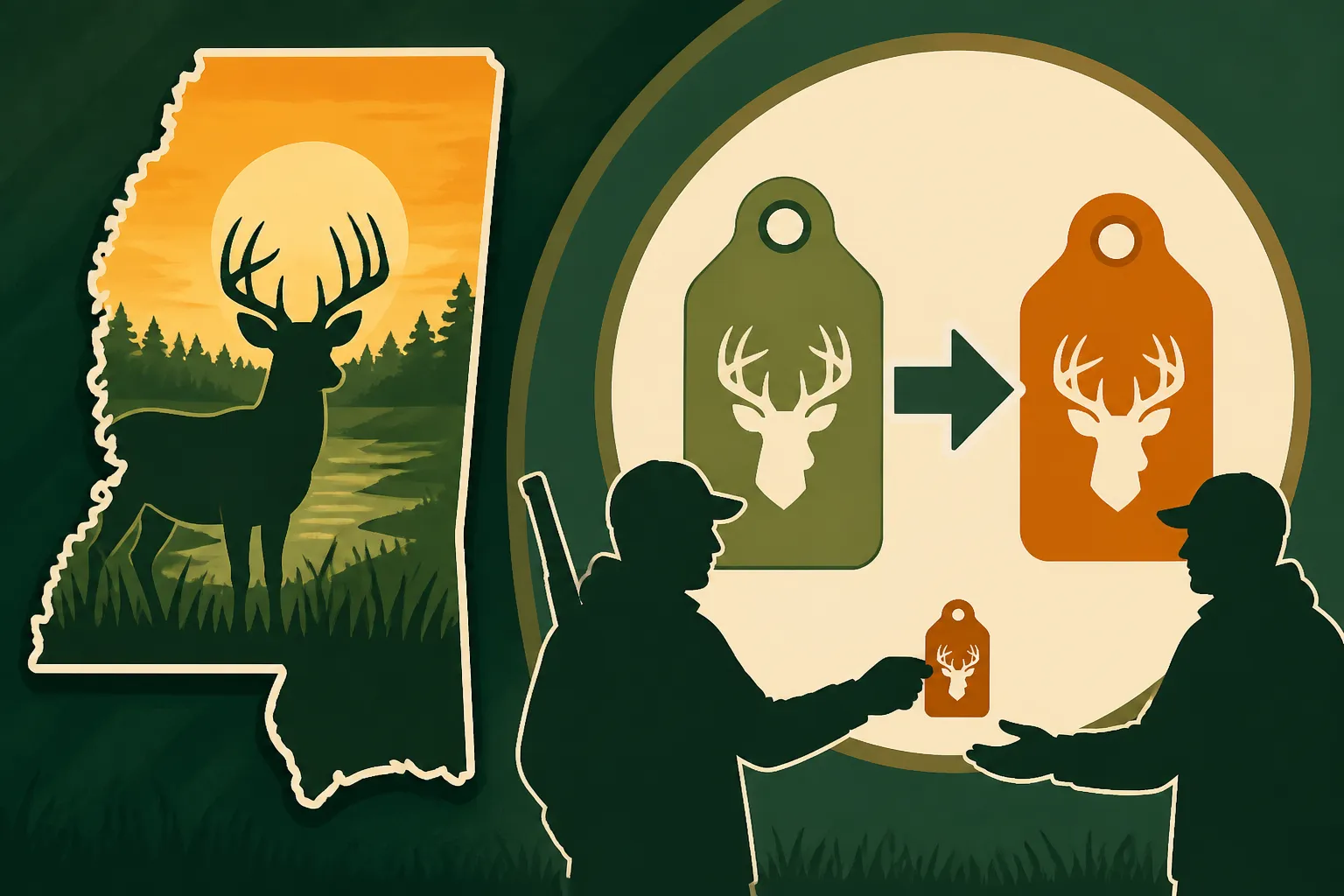
This brings us to the core of the matter: you generally cannot "transfer" a deer tag in Mississippi because the concept of a transferable physical tag doesn't really align with the state's harvest reporting system. If you hear someone talking about "transferring a tag," they're likely either misinformed or confusing it with another state's regulations, or perhaps a very specific, rare situation that isn't a true tag transfer.
The state's regulations are quite clear on this. Your license grants you the privilege to hunt and report. It's not a commodity that can be bought, sold, or given away. The number of deer you can harvest (your "bag limit") is tied directly to your valid license, and each reported deer counts against your personal limit for the season.
Each Harvest Tied to an Individual Hunter
Think of it this way: your hunting license is like your driver's license. It’s issued to you and allows you to perform a specific activity. You can't transfer your driver's license to someone else to let them drive your car when they don't have their own. The same principle applies to hunting. The MDWFP wants to know who harvested what, where, and when. This data is crucial for wildlife biologists to effectively manage the state’s deer herd, especially with challenges like Chronic Wasting Disease Risk in Mississippi becoming more prevalent in certain areas.
If you harvested a deer, it must be reported by you, under your license number. If your spouse or child harvested a deer, they must report it under their license number, assuming they are of legal age or hunting under the appropriate youth license guidelines. There’s no mechanism for one hunter to report a deer harvested by another, nor for one hunter to legally transfer their unused harvest opportunities to someone else.
Legal Ramifications of Improper Tagging
Attempting to "transfer" a tag, or having someone else report a deer you harvested, or vice-versa, is considered a violation of Mississippi's wildlife regulations. This isn't just a slap on the wrist; it can lead to serious consequences. Depending on the specifics of the violation, you could face hefty fines, confiscation of your equipment (including firearms and vehicles), and the suspension or revocation of your hunting privileges. These penalties serve as a strong deterrent to ensure the integrity of the harvest reporting system.
Imagine being caught in a situation where you let your buddy report your buck because you’d already filled your own tags, or you’re short on time to report. A conservation officer checking the records might find discrepancies, leading to an investigation. The legal system doesn't take kindly to attempts to circumvent wildlife laws. It's much simpler and safer to just follow the rules. Familiarize yourself with the Mississippi Wildlife Violation Penalties to understand the potential risks involved in cutting corners.
Common Scenarios and How to Handle Them Legally
While direct tag transfers aren't a thing, there are common scenarios where people might wonder about moving a deer or how permits work, which can sometimes be confused with "transferring" a tag. Let's clarify these to ensure you're always acting legally and ethically.
Taking Your Harvest to a Processor or Taxidermist
This is probably the most common situation where hunters think about "transferring" something related to their deer. Once you've harvested and reported your deer, you'll likely want to get it processed for meat or taken to a taxidermist for a mount. When you drop off your deer, you're not transferring your tag; you're transferring custody of the carcass. The key here is that the deer has already been legally harvested and reported under your license.
Many processors and taxidermists will require documentation, such as your hunting license number or the confirmation number from your harvest report. This is simply to ensure they are handling legally harvested game. For example, if you take your deer to a processor in Raymond, they'll ask for your details, not because they're taking over your "tag," but to keep their own records straight and verify that the deer was acquired legally. Always carry proof of your license, whether it's a paper copy or easily accessible on your phone as discussed in Carrying Proof of License on Your Phone.
Here’s a simple table outlining the difference:
| Action | Legal? | Explanation |
|---|---|---|
| Reporting your own harvested deer | Yes | Mandatory; fulfills legal obligation. |
| Letting someone else report your deer | No | Illegal; fraud against wildlife regulations, severe penalties. |
| Reporting a deer harvested by someone else | No | Illegal; fraud against wildlife regulations, severe penalties. |
| Taking a reported deer to a processor/taxidermist | Yes | You retain ownership; they provide a service. Documentation may be required. |
| Giving an unreported deer carcass to another hunter | No | Illegal; the deer must be reported by the hunter who killed it. Cannot be "gifted" before reporting. |
| Designating a hunter on a valid nuisance permit | Yes | Specific permits (e.g., Mississippi Landowner Deer Permit Rules) allow assignment, but it's not a "tag transfer." |
Landowner Permits and Designated Hunters
Sometimes, landowners might obtain special permits, such as nuisance deer permits, to address specific issues on their property. These permits are issued to the landowner by the MDWFP and allow for the harvest of deer outside of regular season limits or methods, usually for crop damage or property protection. In some cases, these permits might allow the landowner to designate another individual to harvest a deer under that specific permit.
This isn't a "transfer" of a regular hunting tag. It's the execution of a specific, limited permit that has different rules than a general hunting license. The designated hunter would still need a valid hunting license to participate, and they would be harvesting under the authority of that specific permit, not under a "transferred" personal tag. This is an important distinction and applies only to these very specific, MDWFP-issued permits. It's crucial to understand the detailed Mississippi Landowner Deer Permit Rules before acting on such an arrangement.
Best Practices for Ethical and Legal Deer Hunting
Navigating hunting regulations can feel like a labyrinth at times, but by sticking to some core principles and best practices, you can ensure a smooth, legal, and enjoyable hunting season year after year. It really comes down to diligence and respect for the resource.
Verifying Regulations Before You Hunt
The regulations for deer hunting in Mississippi, including bag limits, season dates, and specific rules for different Mississippi's Four Deer Management Units, can change from year to year. What was legal last season might have been updated this season. Relying on old information or hearsay is a recipe for trouble. Before you even step foot in the woods, take the time to review the current MDWFP Outdoor Digest or check their official website. Programs like GoHunt can be helpful resources for mapping and scouting, but for official regulations, always refer directly to the MDWFP's published guide or website.
It’s your responsibility as a hunter to know the law. This includes understanding the specific antler restrictions for your unit, whether you're in the Delta with its 12-inch spread rule or the Hills Unit. Knowing when Mississippi's Archery Season Opens or what specific dates apply to Mississippi Gun Season Opening Day in your chosen unit is paramount. A quick check can save you a lot of headaches and potential fines down the road.
Record Keeping for Your Harvests
Even with digital reporting, it's a smart habit to keep your own personal records of your harvests. This might include screenshots of your harvest confirmation number from the MDWFP app, a small hunting journal where you note details like date, time, location, and conditions, or even just saving the email confirmation you receive after reporting. This personal record-keeping is not just for nostalgia; it serves as your backup proof that you've complied with the law.
If, for some reason, there's a technical glitch with the MDWFP system or a question arises about your reported deer, having your own records can be incredibly helpful. It demonstrates due diligence on your part and provides a paper trail (or digital trail) of your compliance. This kind of responsible behavior is what truly defines an ethical hunter, someone who not only participates in the hunt but also respects the process that ensures healthy wildlife populations for generations to come.
Disclaimer
The information provided in this guide is for general informational purposes only and does not constitute legal advice. Hunting regulations are subject to change, and it is the hunter's sole responsibility to consult the most current Mississippi Department of Wildlife, Fisheries, and Parks (MDWFP) regulations before engaging in any hunting activities. Always refer to the official MDWFP Outdoor Digest or website for the most accurate and up-to-date rules.