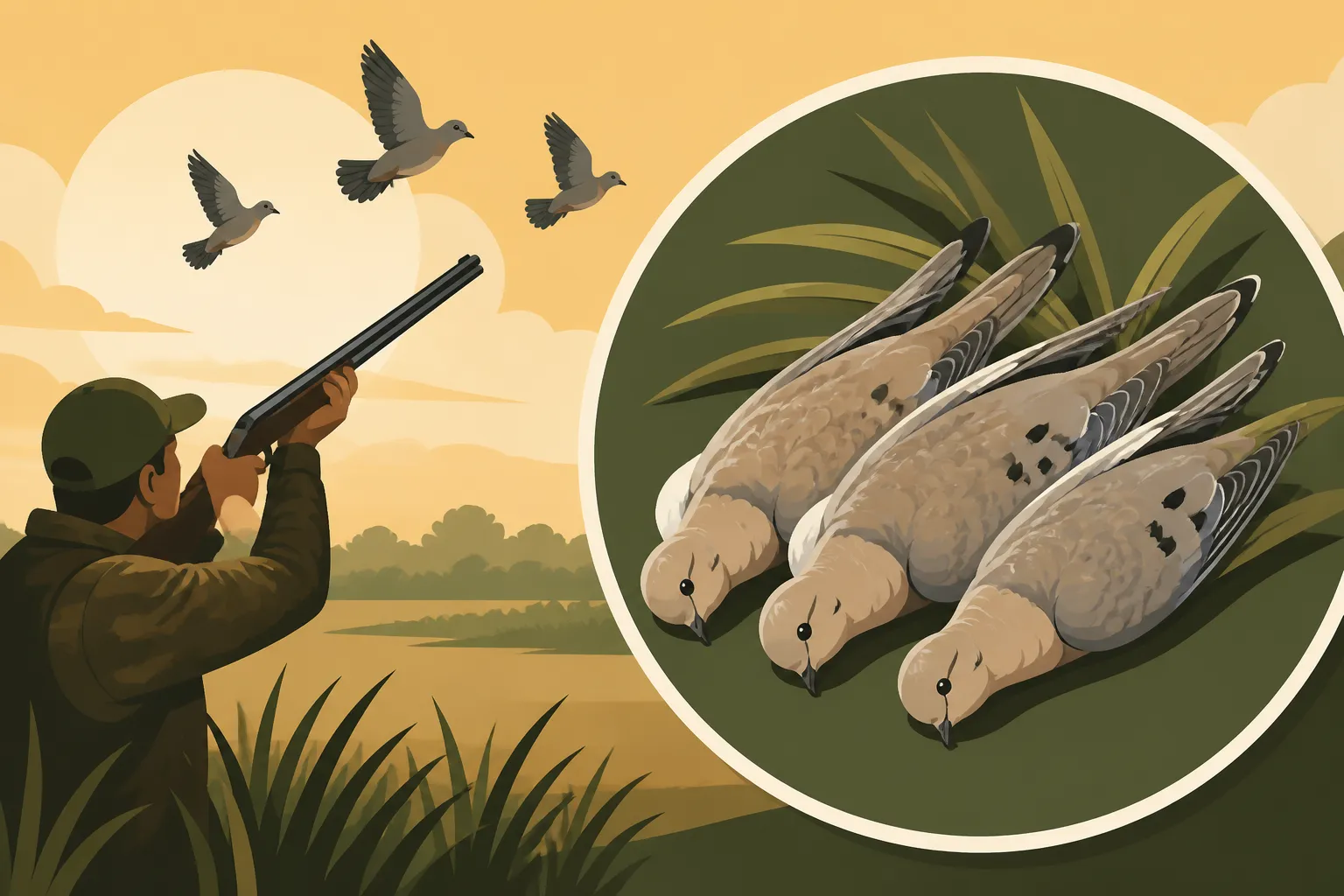
Mississippi Dove Season Bag Limit
Trying to keep up with Mississippi's dove season regulations, especially the bag limits, can feel like navigating a maze blindfolded. You've got different splits, federal rules, state rules, and then the ever-present worry about accidentally breaking a law you didn't even know existed. This guide is here to untangle all that confusion, breaking down Mississippi's dove season bag limits, possession limits, and the crucial details you need to hunt legally and successfully.
Understanding Mississippi's Dove Season Structure
Mississippi's dove season isn't just one long, continuous stretch. It’s a carefully structured affair, divided into distinct periods designed to maximize hunting opportunities while also managing the dove population sustainably. For hunters, this means you can't just assume the season runs for weeks on end; you've got to know when each segment opens and closes.
The Three-Split Season Explained
The Mississippi Department of Wildlife, Fisheries, and Parks (MDWFP), in conjunction with federal guidelines, typically divides the mourning dove season into three separate splits. These splits are primarily driven by the migration patterns of doves. The first split, usually kicking off around Labor Day weekend, capitalizes on the early season resident birds and the first wave of migrants moving through the state. It's often the most anticipated part of the season, drawing the largest crowds to fields across Mississippi. Folks are eager to get out, dust off their shotguns, and enjoy the social aspect of dove hunting.
After the initial burst, there's a break in the season. This allows for dispersal, reduces pressure on the local populations, and prepares for the arrival of more migratory birds. The second split usually comes in around October or November, coinciding with cooler weather and potentially more doves pushing south. This can be a fantastic time to hunt, often with fewer crowds than opening weekend, and the birds might be more concentrated around specific food sources. Finally, a third split, usually in December or January, wraps up the season, often catching the last major push of wintering doves before they settle into their winter grounds. Each split has its unique character, challenges, and opportunities, making it vital to check the exact dates every single year. These dates are set annually and can shift, so always verify them on the MDWFP website or in their official hunting guide before planning your trips.
General Statewide Season Dates and Zones
For mourning doves in Mississippi, the season structure is generally statewide, meaning the same split dates apply across all counties. Unlike deer or turkey hunting, which often have different unit-specific regulations, dove hunting tends to be more uniform throughout the state. However, "statewide" doesn't mean "unlimited." It simply means the calendar dates for those three splits are consistent, whether you're hunting near the Delta National Forest or down near the Gulf Coast.
While the dates are statewide, hunting conditions and bird availability can vary wildly by region. Early in the season, you might find an abundance of local doves in cut agricultural fields like corn, sunflowers, or wheat, particularly in the fertile Delta region. As the season progresses into the later splits, hunter success often hinges on migratory patterns and localized food sources like winter wheat or harvested soybean fields. Always remember that while the state sets the general framework, responsible hunters will do their homework on specific local conditions. For instance, knowing what fields are being harvested and where doves are concentrating can be the difference between a limit and an empty cooler. You can often find crucial information about specific areas by checking the MDWFP's WMA webpages or by talking to local landowners and hunting clubs.
Deciphering the Daily and Possession Limits for Doves
Beyond knowing when you can hunt, understanding how many doves you can legally take is paramount. Mississippi's regulations, like federal migratory bird laws, clearly distinguish between daily bag limits and possession limits, and mixing these up can lead to serious trouble.
The Standard Daily Bag Limit
For mourning doves in Mississippi, the standard daily bag limit is 15 birds. This means that within any single calendar day, you are legally allowed to harvest no more than 15 mourning doves. It doesn't matter if you hunt from sunrise to sunset, or just for a couple of hours in the evening; once you reach that 15-bird mark, your dove hunting for that day is officially over.
Let's make this crystal clear with an example. Imagine you're out for the Mississippi Dove Season Opening Weekend in a prime sunflower field. You have a fantastic morning, and by 10 AM, you've already downed 15 doves. You might be tempted to stay out with your buddies for the afternoon shoot, but legally, your gun should be cased, and you should be headed home. Even if you see a hundred more doves, taking another shot would put you over the daily limit, and that's a federal violation, not just a state one.
This limit is in place to ensure that the dove population remains robust and provides hunting opportunities for years to come. It’s also about fair chase and ensuring that everyone gets a reasonable chance at a successful hunt. Keeping track of your birds can be tricky, especially in fast-paced action. Many hunters use simple clickers or keep a mental count. Some even use hunting apps like GoHunt, which can help track harvests and provide quick access to regulations right from your phone, ensuring you stay within the legal daily limit. This helps remove any guesswork, particularly when the doves are flying thick and fast.
Understanding the Possession Limit
The possession limit is often where hunters get tripped up. While the daily bag limit dictates how many doves you can shoot in one day, the possession limit dictates the total number of doves you can have at any given time, whether in the field, in your cooler, in your vehicle, or back at your home. For mourning doves in Mississippi, the possession limit is typically three times the daily bag limit, which works out to 45 birds.
This means that if you've had a few successful hunts over the course of the season, you can accumulate up to 45 doves in your freezer or at your camp. However, this is a total limit. Let's say you shot 15 doves on Friday and another 15 on Saturday, bringing your total to 30. If you go out on Sunday, you can still shoot up to 15 more doves, bringing your total to the 45-bird possession limit. But if you already had 40 doves from previous hunts at your cabin, and you shoot 10 more on your current hunt, you would be over the 45-bird possession limit, even though you only shot 10 that day. The possession limit is cumulative across hunts until you consume or dispose of the birds.
It's critical to understand that the possession limit applies to any doves you have, regardless of when or where they were harvested, as long as they are within your possession. This includes birds that are field-dressed, frozen, or even processed and packaged. The intent behind the possession limit is to prevent commercialization of migratory birds and ensure that hunters are taking birds for personal consumption, not for stockpiling or selling. Using tools like GoHunt can be incredibly helpful for keeping a running tally, especially if you're hunting multiple days or storing birds at different locations, ensuring you don't inadvertently exceed the 45-bird maximum.
Here’s a quick glance at the typical limits:
| Limit Type | Description | Quantity (Mourning Doves) |
|---|---|---|
| Daily Bag Limit | Maximum number of birds you can harvest in one calendar day. | 15 birds |
| Possession Limit | Maximum total number of birds you can have at any given time (cumulative). | 45 birds |
Common Misconceptions and Legal Considerations
Hunting doves in Mississippi isn't just about limits; there are several other critical regulations, particularly concerning migratory birds, that every hunter needs to be aware of. Ignorance of the law is never an excuse, and violations can carry hefty fines and even jail time.
Baiting and Manipulation of Dove Fields
One of the most common and severely penalized violations in dove hunting revolves around baiting. Federal law strictly prohibits hunting migratory birds over a "baited area." This isn't just about intentionally scattering grain the day before a hunt. The definition of baiting is much broader and often misunderstood, leading to accidental violations.
A baited area is generally defined as any area where salt, grain, or other feed has been placed to attract birds. This includes fields where grain has been scattered or placed in a way that is abnormal for a standard agricultural practice. For example, if a farmer plants millet, lets it mature, and then mows it to expose the seed for doves, that's generally legal because it's considered a normal agricultural operation. However, if that same farmer then piles up a truckload of corn in a specific spot within that field, that's baiting. The distinction can be subtle, and it often hinges on what is considered a "normal agricultural planting, harvesting, or post-harvest manipulation."
The tricky part is that you don't have to be the one who baited the field to be in violation. If you are hunting over a baited field, even if someone else put the bait there, you can still be cited. This puts a significant burden on hunters to inspect their hunting area thoroughly. Always ask questions, look for unnatural concentrations of grain, and be suspicious of anything that looks "too good to be true." When Setting Up a Dove Field Before Opening Day, it's crucial to understand Mississippi Dove Field Baiting Rules fully. If you're ever in doubt, err on the side of caution and find another spot. A good rule of thumb is that if the grain isn't still standing or wasn't knocked down as part of a normal harvest (like mowing), it's probably bait.
Other Important Regulations Beyond Limits
Beyond bag and possession limits and baiting rules, there are other essential regulations specific to migratory bird hunting that every Mississippi dove hunter must adhere to:
- Unplugged Shotguns: Federal law dictates that shotguns used for migratory bird hunting must be "plugged" or otherwise incapable of holding more than three shells (one in the chamber, two in the magazine). This is a common requirement for waterfowl and dove hunting across the country. Failure to have a properly plugged shotgun is a quick way to get a ticket.
- Lead Shot Restrictions: While lead shot is generally permissible for dove hunting in Mississippi, it's absolutely forbidden for waterfowl hunting. If you happen to be hunting doves near a wetland or an area that could be considered waterfowl habitat, it's wise to double-check local regulations and consider using non-toxic shot to avoid any ambiguity. Always verify if any specific WMAs or public lands have additional restrictions.
- Harvest Information Program (HIP) Certification: Any hunter pursuing migratory birds in Mississippi, including doves, must register annually with the federal Harvest Information Program (HIP). This is a simple, free process usually done when you purchase your hunting license. It helps wildlife agencies collect data on migratory bird harvests. Without Mississippi HIP Certification for Bird Hunters, your migratory bird stamp is invalid.
- Federal Duck Stamp: While not directly related to dove hunting, if you're planning to hunt waterfowl alongside doves, you'll also need a valid federal duck stamp. Even for doves, ensuring you have all your necessary state licenses, like the Mississippi Migratory Bird Stamp Cost and a general hunting license, is vital.
- Hunter Education: In Mississippi, anyone born on or after January 1, 1972, must complete a hunter education course to hunt without supervision. There are exceptions for apprentice hunters, but generally, this is a requirement. Make sure you meet the Mississippi Hunter Education Requirements before heading afield. A tool like GoHunt can often provide quick references to these regulations, helping you ensure all your ducks (or doves!) are in a row before you hit the field. This can save a lot of headaches and keep you on the right side of the law.
Maximizing Your Dove Season Within the Rules
Dove hunting is one of the most accessible and enjoyable forms of hunting, offering plenty of action and social opportunities. To make the most of Mississippi's split season, while always staying within the legal framework, requires a bit of planning and strategic thinking.
Strategies for Consistent Success
Consistent success in dove hunting, especially when aiming for your daily bag limit, comes down to a few key strategies:
- Scouting is King: Doves are creatures of habit, often flying consistent patterns between roosting areas, water sources, and feeding grounds. Pre-season scouting is invaluable. Look for cut agricultural fields (corn, wheat, sunflowers, millet) and open ground with scattered seeds. Pay attention to power lines or dead trees where doves like to perch. Observing flight paths in the evenings will show you exactly where to set up. You'll learn a lot by simply watching for 30 minutes before the season starts.
- Decoys and Calls: Don't underestimate the power of a good decoy spread. Spinning-wing decoys are incredibly effective at drawing doves closer, especially on slower days. Place them in open areas where they can be easily seen. Simple dove calls can also help to get the attention of passing birds, although they are generally less critical than visual aids.
- Pass Shooting vs. Field Hunting: Depending on the setup, you might be pass shooting birds as they fly overhead (often near tree lines, power lines, or water holes) or field hunting, where birds are working a specific food source. For pass shooting, anticipate their flight path. For field hunting, setting up on the edge of the field, or near a natural funnel, can be highly productive. Knowing where to set up for Working a Dove Field on Opening Day can make all the difference.
- Shot Selection and Choke: Doves are small, fast, and agile. A modified or improved cylinder choke with 7.5 or 8 shot is a common and effective combination. You want a good pattern that allows for some forgiveness but still delivers enough pellets for clean kills at reasonable ranges. Don't push your shots too far; it leads to wounded birds and frustration.
Planning for Multiple Hunts and Splits
With Mississippi's three-split season, you have multiple opportunities to hit the fields. Smart planning allows you to extend your enjoyment and improve your chances throughout the different phases of the season.
- Embrace All Splits: Don't just focus on the opener. While the first split is exciting, the second and third splits can offer unique advantages. Later in the season, weather patterns become more critical, and cold fronts can bring in new waves of migratory birds. Crowds are often lighter, and birds may be more concentrated on specific winter food sources. Exploring Hunting the Second Dove Split in October can provide rewarding experiences with different bird behavior.
- Vary Your Locations: Doves deplete food sources quickly, and hunting pressure can push them out of an area. Having a few different spots scouted—both private land with permission and public land like WMAs or National Forests—can give you options if your primary spot dries up. Always check the rules for public land regarding specific WMA regulations, as some might have special youth hunts or limited access.
- Respect the Pressure: Understand that heavily hunted fields will see fewer birds over time. If possible, give fields a break between hunts to allow doves to return and feel comfortable. This practice not only enhances your future success but also contributes to a more ethical hunting environment.
- Track Your Success: Keep a record of your hunts—dates, locations, number of birds harvested. This helps you stay within your possession limit and also provides valuable data for future seasons. You'll learn which fields are consistently productive and what times of year yield the best results. An app like GoHunt can serve as a handy digital hunting journal, keeping all your data organized and at your fingertips for easy reference and planning for the next trip.
Remember, Mississippi offers fantastic dove hunting opportunities. By understanding and respecting the bag limits and other regulations, you ensure not only your own legal standing but also the health of the dove population for generations of hunters to come.
Disclaimer
The information provided in this guide is for general informational purposes only and is subject to change. Hunting regulations, including bag limits and season dates, are set by the Mississippi Department of Wildlife, Fisheries, and Parks (MDWFP) and can be updated annually. It is the hunter's responsibility to consult the most current MDWFP official hunting guide or website and federal regulations before participating in any hunting activity. Failure to do so may result in legal penalties.