Why the Delta Grows Big Bucks
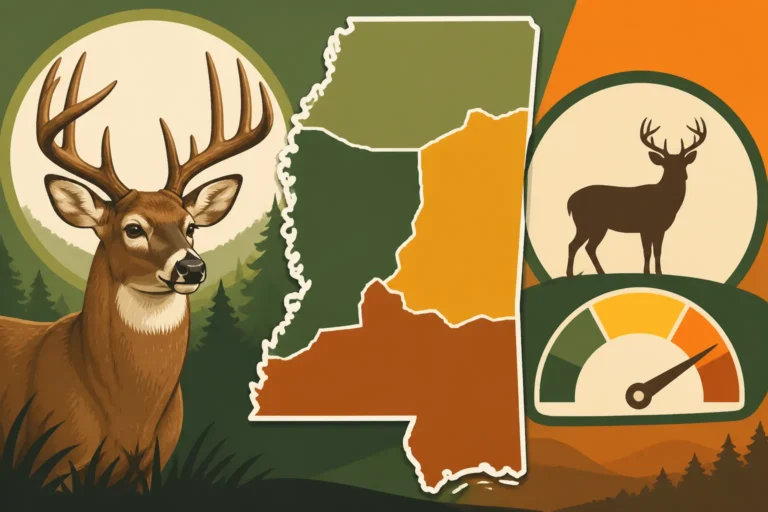
For many hunters, the quest for a truly massive whitetail buck feels like a lifelong pursuit, often fraught with frustration and countless hours spent in the stand with little to show. If you've ever dreamt of wrapping your hands around a heavy set of antlers, knowing where to focus your efforts is half the battle, and when it comes to consistently producing truly impressive deer, Mississippi's Delta region stands out as a genuine hotspot, offering a unique combination of factors that help grow some of the biggest bucks in the state. This guide will dive deep into the specific reasons why the Delta is a whitetail hunter's paradise and what makes its deer population so exceptional.
The Delta's Unmatched Landscape and Environment
The Mississippi Delta isn't just a place on a map; it's a unique ecological region, a vast, flat alluvial plain created by the Mississippi River, stretching from Memphis down to Vicksburg. This historical floodplain, once a cypress swamp and hardwood forest, was cleared for agriculture, creating the rich farmland we see today. But beneath those fields and interspersed timber stands lies the secret to its deer-growing prowess: incredibly fertile soil and abundant water.
Nutrient-Rich Alluvial Soils
The soil composition in the Delta is unlike almost anywhere else. We're talking about deep, black, nutrient-rich alluvial soil that has been deposited by the Mississippi River over thousands of years. This isn't just good dirt; it's a super-charged growing medium.
When you're trying to understand why deer thrive here, it really starts from the ground up. This incredibly fertile soil acts like a natural fertilizer for everything that grows in it. Crops like soybeans, corn, and cotton flourish, but so does the native browse and forage that whitetails depend on. Unlike areas with sandy or rocky soils that struggle to retain nutrients, the Delta's soil provides a steady, rich supply of minerals and protein to the plants. This means that the deer in the Delta are essentially eating "premium" quality food throughout their lives, translating directly into better body condition and, crucially, superior antler development. It's a foundational element, making every bite a deer takes more valuable than a bite from lesser ground.
Abundant Water Resources
Water is life, and in the Delta, it's not just plentiful; it's everywhere, year-round. From the mighty Mississippi River itself to its countless tributaries, oxbow lakes, sloughs, and drainage ditches, water is a defining feature of the landscape.
This constant availability of water is critical for deer health and antler growth. Deer need water for digestion, hydration, and overall metabolic function, especially during the hot, humid Mississippi summers when they're putting on significant body mass and growing antlers. Beyond direct consumption, the water table contributes to the lushness of vegetation, even during dry spells that might stress deer herds in other regions. Flooded timber, common in many parts of the Delta, also creates unique habitat and food sources, such as acorns from submerged oaks, providing an additional layer of nutritional support that other regions simply don't have. It also creates a natural barrier to human access in many areas, providing undisturbed sanctuary for bucks to grow old.
Exceptional Forage and Agricultural Benefits
The Delta's combination of fertile soil and ample water translates into an explosion of high-quality forage, both natural and agricultural, that acts as a consistent buffet for its deer population. This isn't just about having enough to eat; it's about having the best to eat.
High-Protein Agricultural Crops
While much of the Delta was once expansive bottomland hardwood forest, today it's primarily an agricultural powerhouse. Fields of soybeans, corn, and winter wheat stretch for miles, providing an almost unlimited food source for deer.
These crops are a nutritional goldmine. Soybeans are incredibly high in protein, essential for antler growth and overall body development, particularly for young, growing bucks and lactating does. Corn provides a massive energy boost, crucial for deer to build fat reserves before the rut and throughout the winter. Unlike some regions where deer rely heavily on mast crops like acorns, which can be inconsistent year to year, the Delta's agricultural bounty offers a reliable, high-calorie, high-protein diet for much of the year. Deer learn to pattern these food sources, creating predictable movements that hunters can exploit, though it also means they have less pressure to move far to find food, which can make them elusive. This consistent nutrition contributes significantly to the Delta's reputation for growing older, larger-antlered bucks, giving them everything they need to maximize their genetic potential.
Diverse Natural Browse and Mast
Beyond the agricultural fields, the Delta still boasts significant tracts of bottomland hardwood forests, particularly within areas like Delta National Forest and surrounding private lands. These areas provide crucial natural browse and mast.
This natural habitat is loaded with species like greenbrier, honeysuckle, privet, and various woody browses that offer essential vitamins and minerals not always found in agricultural crops. More importantly, the hardwoods produce abundant acorns from various oak species – pin oaks, Nuttall oaks, water oaks, and willow oaks – which provide highly sought-after carbohydrates and fats, especially during the fall and early winter. This diversity means deer aren't reliant on a single food source. Even if a particular crop harvest is bad, or a mast crop fails, there's always something else to fall back on. This nutritional redundancy ensures a healthy, well-fed deer herd year after year, reinforcing why this region is so productive. If you're wondering how the local deer population is doing, looking at the availability of these diverse food sources can give you a clue.
Effective Management Strategies and Age Structure
It takes more than just good food and water to grow big bucks; it takes smart management. The Mississippi Department of Wildlife, Fisheries, and Parks (MDWFP) has implemented specific regulations in the Delta Unit that prioritize antler growth and allow bucks to reach older age classes.
Strict Antler Restrictions
One of the most significant factors contributing to the Delta's big buck reputation is its strict antler restrictions. Unlike other units in Mississippi, the Delta Unit has specific rules about what constitutes a legal buck. Hunters often ask, "Delta Unit Antler Restriction Rules – what exactly are they?" For a buck to be legal in the Delta, it generally must have an outside spread of at least 12 inches OR have at least one main beam that is 15 inches or longer.
These restrictions are designed to protect younger bucks, specifically 1.5-year-old and most 2.5-year-old deer, from being harvested prematurely. By allowing these younger bucks to pass, they have the opportunity to grow another year or two, increasing their body size and, most importantly, their antler size. This "earn a buck" philosophy ensures that more deer reach mature age classes (3.5, 4.5, and older), which is when bucks truly start to express their genetic potential for large antlers. Without these rules, many promising young bucks would be taken out of the population before they had a chance to become the giants hunters dream of. This commitment to growing older bucks is a core reason Why the Delta Grows Older Bucks is such a common phrase among Mississippi hunters.
Balanced Doe Harvest
While protecting young bucks is crucial, balancing the herd through adequate doe harvest is equally important for promoting overall deer health and maximizing antler growth. An overpopulated herd, even with great food, can lead to competition for resources, reduced body weights, and smaller antlers across the board.
The MDWFP carefully monitors herd health and population densities across the state, including the Delta Unit. Hunters are encouraged to harvest does to keep the buck-to-doe ratio healthy and within carrying capacity. A balanced ratio means that during the rut, bucks don't have to spend as much energy chasing an overwhelming number of does, allowing them to conserve energy for breeding and recovery, which indirectly supports better antler growth in subsequent years. It also ensures that the high-quality forage available isn't overbrowsed, maintaining the nutritional advantage that the Delta provides. This holistic approach to herd management, focusing on both buck age structure and overall population health, is what truly sets the Delta apart.
Genetic Potential and Predator Dynamics
Beyond habitat and management, the inherent genetics of the Delta deer herd and the dynamics of its predator populations play a role in producing those trophy-class whitetails.
Strong Local Genetics
While it's difficult to pinpoint exact genetic lineage without extensive DNA studies, it's widely believed that the Delta deer population possesses strong genetic potential for growing large antlers. This isn't necessarily about "super deer" genes, but rather the cumulative effect of a healthy, well-nourished population that has been allowed to mature for generations.
When bucks consistently reach older age classes, their superior genetics (for antler growth, body size, and overall vigor) are more likely to be passed on to subsequent generations. This natural selection, combined with the ideal environmental conditions, creates a feedback loop where the deer with the best potential are more likely to survive and breed. It's not uncommon to see multiple mature bucks from the same area or family line exhibiting similar impressive antler characteristics, a testament to the strong genetic base within the region. This inherent potential, unlocked by the Delta's advantages, contributes significantly to the impressive deer that grace many a Mississippi deer camp.
Predator Presence and Pressure
The Delta, like most wild areas, has its share of predators, primarily coyotes and bobcats, and increasingly, black bears in some localized areas. While predators can impact fawn survival, their overall effect on mature buck populations in the Delta is often considered beneficial for growing bigger deer.
Predators tend to target the weak, sick, or very young animals, culling the less fit individuals from the herd. This natural selection process, while sometimes hard to witness, helps to maintain a healthier, more robust deer population over time. Bucks that survive to maturity in an environment with predator pressure are generally more vigilant, robust, and often genetically superior. The dense cover and large tracts of timber in areas like the Delta National Forest also provide sanctuary, helping deer evade predators and grow to older ages. While hunters are focused on deer, it's worth noting that Predator Hunting in Mississippi is also a popular activity, which further helps to balance the ecosystem.
Navigating the Delta's Hunting Challenges
While the Delta offers incredible potential, it's not without its unique challenges. Hunting here requires specific knowledge, strategies, and a good understanding of the terrain and deer behavior.
Public Land Access and Strategies
For many hunters, public land is the primary option, and the Delta offers significant public hunting opportunities within the Delta National Forest and various Wildlife Management Areas (WMAs). However, these areas can be vast, dense, and sometimes challenging to navigate.
Hunting the Delta National Forest means contending with thick bottomland hardwoods, cypress sloughs, and often extensive water. Access can be limited to certain roads, and scouting becomes paramount. Using tools like a GPS with mapping layers (a platform like GoHunt can be incredibly useful here) to understand terrain, water features, and public/private boundaries is essential. Hunters often focus on finding funnels, pinch points between sloughs, or subtle elevation changes that deer will use to travel. Understanding the unique habitat of this area is key to Hunting Delta Unit Bottomland Deer. Patience is also a virtue, as deer in these areas are often less accustomed to open fields and more wary in the thick woods. Early season scouting, even without a weapon, can pay huge dividends in finding where the deer are moving before opening day.
Private Land Opportunities and Leases
A significant portion of the Delta is private land, primarily agricultural fields with interspersed timber blocks. Gaining access to these prime private parcels is often a game-changer for serious trophy hunters.
Private land access can be through direct landowner permission, which can be challenging to secure without existing relationships, or through hunting leases. These leases can range from small, individual setups to large hunting clubs. The advantage of private land is often less pressure and more control over management practices. Hunters on private land can implement food plots, control access, and enforce their own herd management guidelines, often going beyond state regulations to really focus on growing mature bucks. While a Mississippi hunting lease can be a significant investment, the potential for consistently encountering mature bucks makes it an attractive option for many. Knowing Finding a Mississippi Hunting Lease is a key step for many serious hunters.
The Rut and Scouting for Delta Giants
Timing your hunt with the Delta's specific rut periods and employing smart scouting techniques are critical for intercepting a mature buck.
Understanding the Delta Rut
The timing of the rut in Mississippi can vary significantly by management unit, and the Delta is no exception. Generally, the rut in the Delta Unit tends to occur later than in the Hills Unit, often peaking from late December into mid-January.
This later rut means that deer behavior changes are shifted, and hunters need to adjust their tactics accordingly. Bucks are focused on breeding, increasing their movement and making them more vulnerable during daylight hours. This is an excellent time for rattling, grunting, and doe-in-heat calls. Hunters specifically targeting mature bucks will often plan their hunts for this late-season window, capitalizing on the peak breeding activity. Understanding Hunting the Rut in the Delta Unit is essential for any serious Delta deer hunter. The cooler weather of late season also means bucks are more apt to move, and they're often seeking out the last remaining high-quality food sources to fuel their strenuous breeding activities.
Effective Scouting Techniques
Scouting is an ongoing process, not just a pre-season activity. In the Delta, understanding deer movement patterns across vast agricultural fields and dense timber is a continuous effort.
Aerial maps, accessible through platforms like GoHunt, are indispensable for identifying travel corridors, timber blocks, bedding areas, and food sources. Look for pinch points created by sloughs or ditches, thick cover adjacent to ag fields, and areas where timber transitions. Trail cameras are powerful tools for monitoring buck activity, identifying individual deer, and understanding their movement patterns. Focus on placing cameras along scrape lines, logging roads, or near rub lines, especially as the pre-rut begins. Also, pay close attention to ground sign. Reading Delta Mud for Fresh Deer Movement can tell you exactly where and when bucks are traveling. Look for tracks, rubs, and fresh droppings to confirm recent activity. Even subtle changes in topography can funnel deer movement in these flat landscapes.
Here's a quick look at why the Delta stands out:
| Factor | Description | Impact on Deer |
|---|---|---|
| Soil Fertility | Deep, nutrient-rich alluvial soils from Mississippi River deposits. | Exceptional plant growth, high-quality forage, superior antler development. |
| Water Availability | Abundant rivers, sloughs, oxbows, high water table. | Constant hydration, lush vegetation, natural sanctuary, stable food sources. |
| Agricultural Crops | Vast fields of corn, soybeans, wheat. | Consistent, high-protein, high-calorie food, allowing maximum growth potential. |
| Natural Browse/Mast | Diverse bottomland hardwoods, various browse plants, acorn crops. | Balanced nutrition, year-round food security, crucial vitamins and minerals. |
| Antler Restrictions | MDWFP Delta Unit: 12-inch outside spread OR 15-inch main beam. | Protects young bucks, allows more deer to reach older age classes and full potential. |
| Predator Dynamics | Presence of coyotes, bobcats, bears. | Natural selection, culls weak animals, healthier, more vigilant herd. |
| Later Rut Timing | Peaks late December into mid-January. | Increased buck movement during hunting season, strategic opportunities. |
The Payoff: Record Book Potential and Hunter Success
All these factors culminate in a deer herd with incredible potential, making the Delta a bucket-list destination for many whitetail enthusiasts.
Mississippi Deer Record Book Entries
The proof is in the numbers. Year after year, the Mississippi Deer Record Book features numerous entries from the Delta region. These aren't just big deer; they're often exceptionally wide, heavy-antlered bucks that stand out on a national level.
The consistent presence of such impressive animals in the record books is a direct result of the unparalleled combination of genetics, nutrition, age, and management that the Delta provides. When you analyze entries, you often see a pattern of older deer with substantial mass and spread, indicating that the conditions are right for them to reach their full potential. Hunters who dedicate themselves to understanding the Delta's unique challenges and opportunities are often the ones who find themselves with a truly once-in-a-lifetime trophy. Understanding Mississippi Deer Record Book categories and requirements can help you appreciate the quality of bucks coming out of this region.
The Thrill of the Delta Challenge
Hunting the Delta isn't always easy. The terrain can be challenging, the mosquitoes legendary, and the deer incredibly smart. However, it's precisely these challenges that make the reward so much sweeter.
The vastness of the public lands, the density of the cover, and the sheer elusiveness of mature Delta bucks mean that success is hard-earned. Hunters often spend countless hours scouting, hanging stands, and adapting to changing conditions, but the prospect of encountering a truly giant whitetail keeps them coming back. Whether you're tracking a buck through a flooded cypress brake or waiting patiently on a soybean field edge, the Delta offers a hunting experience unlike any other in Mississippi, where the chance of a true monster is always just around the corner. While it's tough, many hunters find great success by Scouting Mississippi Public Land Before Season to truly understand deer movements.
Ultimately, the Delta isn't just about big antlers; it's about the entire ecosystem working in harmony to produce a truly magnificent whitetail population. From the nutrient-rich soil to the rigorous management, every piece of the puzzle contributes to its well-deserved reputation as one of the premier big buck destinations in the South.
Disclaimer
Hunting is an inherently dangerous activity. Always prioritize safety, follow all local, state, and federal regulations, and obtain appropriate licenses and permits. Wildlife populations and regulations can change, so consult the latest Mississippi Department of Wildlife, Fisheries, and Parks (MDWFP) guidelines before planning any hunting trip.