Mississippi Duck Harvest Numbers
It can be incredibly frustrating trying to figure out where the ducks are going to be this season, especially when you hear all sorts of anecdotal reports flying around camp or online forums. Everyone has a theory, but getting a clear picture of the bigger trends in waterfowl populations and hunter success is tough. This guide will walk you through how Mississippi's duck harvest numbers are gathered, what those figures generally tell us, and most importantly, how you can use this information to sharpen your own hunting strategy for a more successful season.
Understanding Mississippi's Duck Harvest Data
When we talk about duck harvest numbers in Mississippi, it's not just a casual guess. There's a systematic process to collect this data, primarily spearheaded by state and federal agencies working together. This information helps wildlife managers make crucial decisions about season lengths, bag limits, and habitat management, all of which directly impact our hunting opportunities. For us as hunters, understanding where these numbers come from helps us appreciate their value and how to interpret them correctly.
How Harvest Data is Collected
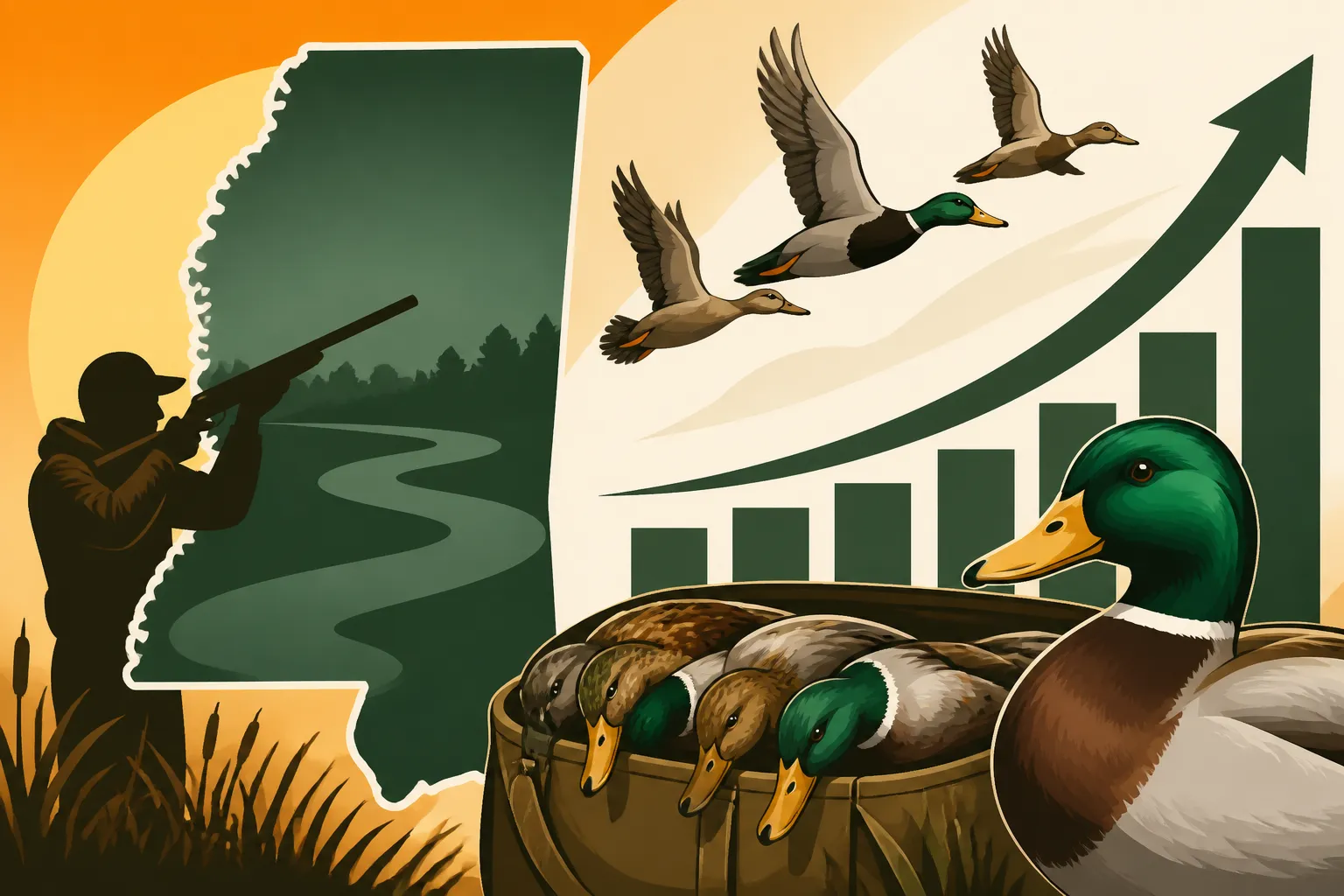
The core of duck harvest data collection in Mississippi, much like across the country, relies on two main components: hunter surveys and wing surveys. Hunters play a vital role in both. The U.S. Fish and Wildlife Service, in conjunction with state agencies like the Mississippi Department of Wildlife, Fisheries, and Parks (MDWFP), conducts these surveys annually. You might even be one of the lucky folks who gets a call or a survey in the mail, and believe me, your participation is critical.
The Harvest Information Program (HIP) is the foundation. If you hunt migratory birds in Mississippi, you're required to register with HIP. This registration creates a pool of hunters that can then be surveyed. A subset of these registered hunters receives a questionnaire asking about their hunting activity, the species they harvested, and how many. This voluntary reporting is then extrapolated to estimate the statewide harvest. Beyond that, specialized wing-collection surveys involve hunters submitting a wing from each bird harvested. Biologists can then use these wings to identify species, age, and sex, providing even more detailed insights into the population structure and success rates. It’s a meticulous process, but it gives us a much clearer picture than just campfire stories.
What the Numbers Actually Represent
So, when you see a statistic like "Mississippi's duck harvest," what does that truly mean? It's an estimate, of course, but a very well-informed one. It typically represents the total number of ducks killed and retrieved by hunters during a specific hunting season across the state. These numbers are then often broken down by species – how many mallards, wood ducks, green-winged teal, and so on. It can also be broken down by hunting unit or even by private versus public land, depending on the detail of the survey.
It’s important to remember that these numbers reflect hunter success and effort as much as they do population size. A lower harvest could mean fewer ducks migrated through, but it could also mean fewer hunters went out, or poor weather made hunting difficult. Conversely, a high harvest might indicate a strong flight, or it could be a result of favorable conditions that concentrated birds and made them more accessible to hunters. The data offers trends, not absolute truths about bird populations in isolation. For instance, sometimes you might hear about Mississippi Mallard and Wood Duck Numbers as part of these reports.
Key Trends in Mississippi's Duck Harvest
Mississippi sits squarely in the heart of the Mississippi Flyway, a superhighway for migratory birds traveling from their breeding grounds in the north to their wintering areas down south. This location makes our state incredibly important for waterfowl, and our harvest numbers often reflect broader continental trends, though local conditions always play a significant role. Over the years, we've seen various patterns emerge in these harvest figures.
Long-Term Fluctuations and Their Causes
Like any natural resource, duck populations and, consequently, our harvest numbers don't stay perfectly consistent year after year. There are always ups and downs, influenced by a complex web of factors. Think about the weather up north during nesting season: a really wet spring can mean more successful broods, leading to more birds flying south in the fall. Conversely, drought conditions can devastate nesting efforts. Then, consider the conditions here in Mississippi. A warm, dry winter might mean ducks don't push as far south, or they spread out more, making them harder to find. A severe cold snap, however, can push birds down in droves and concentrate them in the remaining open water, leading to banner hunting days.
Habitat availability, both on breeding grounds and in our wintering areas, is another huge factor. Programs that conserve and restore wetlands up north directly impact the number of birds heading our way. Down here, the availability of flooded timber, managed agricultural fields, and healthy marshes determines where those birds will stop and stay. Over time, shifts in agricultural practices or major weather events like hurricanes can alter these crucial habitats and thus, affect harvest totals. You'll often see these trends discussed when looking at Mississippi Waterfowl Migration Timing or How Many Ducks Winter in the Delta.
Species-Specific Harvest Patterns
While the overall duck harvest gives us a general idea, digging into species-specific numbers can be even more enlightening. Certain species consistently make up a larger portion of the Mississippi bag, while others are more opportunistic or tied to very specific habitats. Mallards, for instance, are often considered the king of ducks in the Delta, and their numbers are usually a significant component of the total harvest. Wood ducks are also incredibly popular, particularly in flooded timber and smaller sloughs throughout the state.
Teal, like green-winged and blue-winged, often show up strong early in the season, particularly during the early teal season. Pintails, gadwalls, and wigeon tend to be present in varying numbers throughout the season, with their harvest often depending on colder weather pushing them further south. Sometimes, one species might have a fantastic breeding year and show up in higher numbers, while another struggles. This variation is why biologists pay close attention to each species, allowing them to adjust specific bag limits or seasons if needed. For hunters, knowing which birds are typically more abundant in your hunting area can help you tailor your spread and calling.
Interpreting Harvest Data for Your Hunt
Okay, so the state collects all this data, and we know it fluctuates. But how does that help you when you're bundled up in a blind before dawn? The real trick is learning to read between the lines and use these generalized trends to inform your personal scouting and hunting decisions. It’s not about predicting the exact number of ducks you'll shoot, but about understanding probabilities and patterns.
Identifying Hot Spots and Productive Areas
One of the most valuable insights from harvest data is identifying regions or types of habitat that consistently produce birds. If statewide reports show a particular area or habitat type, like flooded timber or rice fields, is yielding high harvest numbers, it tells you that birds are using those resources. This isn't a guarantee for your specific spot, but it's a strong indicator of where you should be looking. For example, knowing that Mallards in Delta Flooded Timber are a consistent theme in harvest reports means you should be spending your scouting time looking for similar setups.
You can overlay this information with your own scouting. If you're using a mapping tool like GoHunt, you can look at public land boundaries or historical aerial imagery to identify flooded timber blocks, sloughs, or agricultural fields that match the types of areas reporting higher success. This way, you're not just guessing; you're making an educated decision based on aggregated hunter success. It's like having thousands of other hunters' experiences condensed into actionable intelligence.
Adjusting Your Tactics Based on Trends
Harvest data can also help you fine-tune your hunting tactics. If you see reports indicating that a certain species had a particularly strong year, you might consider adjusting your decoy spread to feature more of that bird. Or, if dabbling duck numbers are up but divers are down, you'd focus on shallow water strategies rather than deep open water.
Consider also the timing. If early season harvest numbers for teal are consistently high, it reinforces the idea of being out there right at the opener. If later season reports show strong mallard numbers after a cold front, it tells you to pay extra attention to those late-season opportunities, especially when conditions are tough for the birds. It’s about being adaptable. Are you hunting Layout Blind Hunting Delta Farm Fields or targeting a Reading a Delta Slough for a Morning Flight? These different scenarios might be favored by different species or at different times of the season.
Table: Common Mississippi Duck Species and Harvest Tendencies
| Species | Typical Habitat Preference | General Harvest Tendency | Notes |
|---|---|---|---|
| Mallard | Flooded timber, shallow wetlands, agricultural fields | High, consistent | Often the most sought-after and harvested duck. |
| Wood Duck | Wooded swamps, rivers, beaver ponds, small sloughs | High, consistent | Abundant resident and migratory; often in mixed bags. |
| Green-winged Teal | Shallow marshes, mudflats, moist soil units | Moderate to High | Strong early season presence, but consistent throughout. |
| Gadwall | Shallow marshes, flooded fields, open water edges | Moderate | Often common in mixed bags; feed on vegetation. |
| Northern Shoveler | Shallow, nutrient-rich water with abundant invertebrates | Moderate | Distinctive bill; often found in muddy shallow water. |
| Pintail | Shallow open water, flooded fields | Moderate | Can be feast or famine, dependent on weather and northern conditions. |
| Ring-necked Duck | Deep water, cypress swamps, open lakes | Moderate (Diver) | Common diver in deeper Delta waters and larger lakes. |
| Lesser Scaup | Open lakes, large rivers, coastal bays (deeper water) | Low to Moderate (Diver) | Often further south or on very large water bodies. |
Note: "General Harvest Tendency" reflects common patterns in Mississippi and is not a specific numerical ranking.
Beyond the Numbers: Other Factors Affecting Duck Hunting Success
While harvest data is a fantastic tool, it's just one piece of the puzzle. There are so many other variables that influence whether you'll have a successful day in the blind, many of which you can't control, but you can anticipate. Understanding these will help you manage your expectations and adjust your approach even when the numbers look great (or not so great!).
Weather and Water Levels
This is probably the most significant short-term factor influencing duck hunting success, and it’s something every Mississippi hunter talks about endlessly. A strong cold front pushing through the flyway can drive new birds down into the state, sometimes seemingly overnight. Conversely, prolonged warm spells can keep birds north or spread them out, making for tougher hunting. Think about Hunting Deer After a Cold Front – the same principles of animal movement apply to ducks, but with an aerial twist.
Water levels are equally critical. In the Delta, whether those greentree reservoirs fill up or how much rain we get to flood timber and fields makes all the difference. Too little water, and birds might not stick around. Too much, and they can spread out so much that finding concentrations becomes a real challenge. That's why folks pay so much attention to the river gauges and rainfall totals. You might be planning to hunt Hunting Greentree Reservoirs for Mallards, but if the water isn't there, neither will the birds be.
Habitat Quality and Pressure
Even if the overall duck population is healthy and migration is strong, local habitat quality plays a massive role. Are the food sources rich? Is there enough cover? Are the resting areas undisturbed? A healthy wetland ecosystem, whether it's naturally occurring or managed, will always attract and hold more ducks than a degraded one. This is where organizations like Ducks Unlimited and local landowners make such a huge impact through their conservation efforts.
Hunter pressure is another unavoidable reality, especially on public lands. If a specific spot is consistently high-performing according to harvest data, chances are a lot of other hunters know about it too. Learning to Finding Ground Others Walk Past or exploring lesser-known areas can be key to consistent success. Scouting for undisturbed spots and being willing to put in the extra legwork can pay dividends when everyone else is piled into the obvious spots. The Mississippi WMA Permit Requirement helps manage some of this, but understanding general pressure dynamics is always useful.
Hunter Skill and Equipment
Let's be honest, even if the ducks are everywhere, it takes skill to bring them down. Calling effectively, setting a realistic decoy spread, being well-hidden in your blind, and shooting accurately are all critical components. You can have the best location and perfect conditions, but without these skills, success will be limited. It’s a journey, not a destination, and every season offers new lessons.
Your equipment also plays a role, from a reliable shotgun and effective ammunition to good waders and warm clothing. While these don't directly influence duck harvest numbers, they certainly influence your personal harvest numbers and your ability to stay out there long enough to capitalize on opportunities. Don't forget, too, that you'll need to have your Mississippi Federal Duck Stamp Requirement in order and be HIP certified to legally hunt migratory birds. It's all part of being prepared for the season.
The world of duck hunting in Mississippi is a dynamic one, constantly shifting with nature's whims and the efforts of countless conservationists and hunters. By delving into Mississippi's duck harvest numbers, you're not just looking at statistics; you're gaining a deeper understanding of the waterfowl resource we cherish and how to become a more effective, and ethical, hunter.
Disclaimer
This article is for general informational purposes only and does not constitute professional advice. Laws, prices and regulations vary by location and change over time. Consult a qualified professional for guidance on your specific situation.