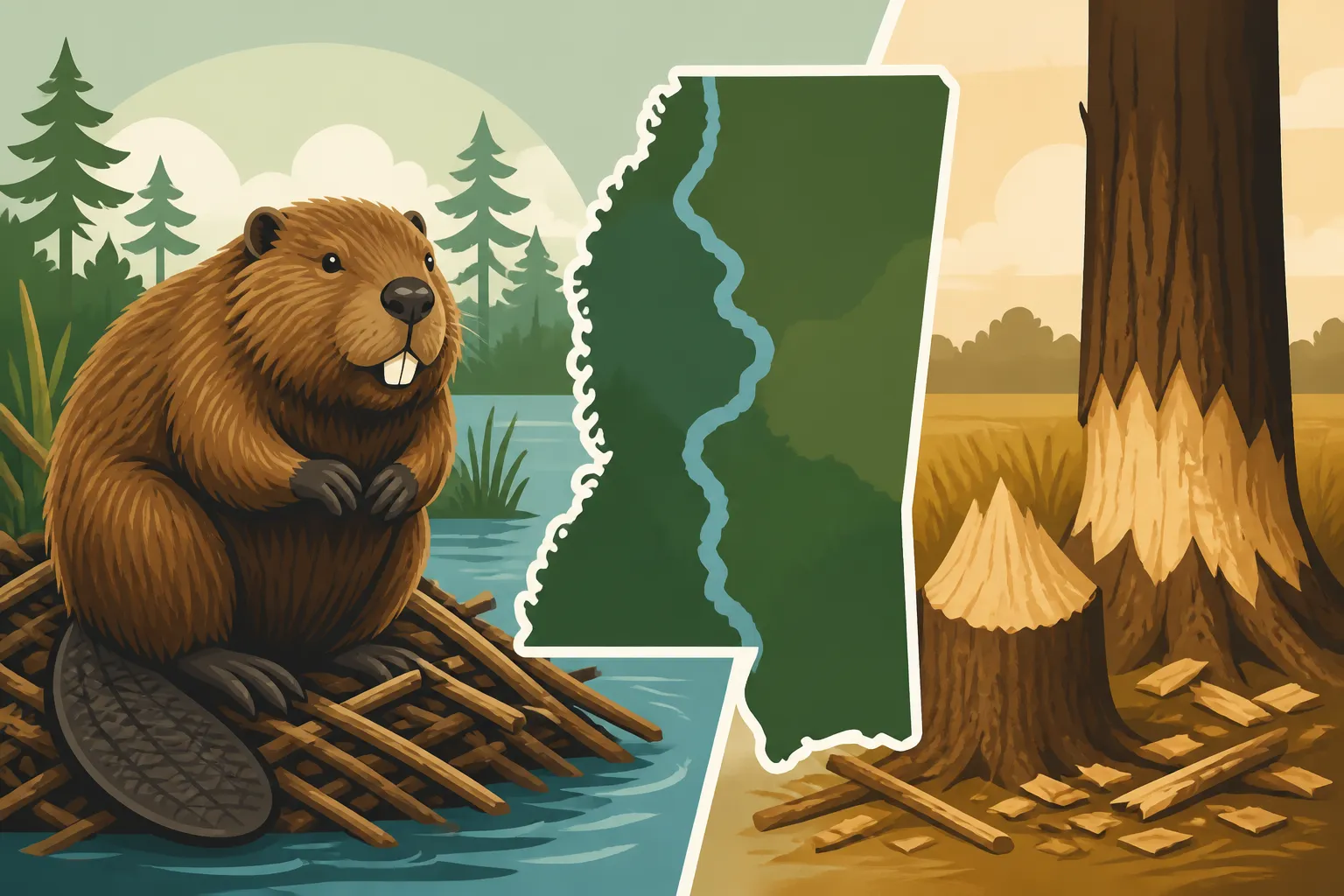
Mississippi Beaver Population and Damage
If you've ever driven through rural Mississippi and seen a flooded field or a creek bank eroded to oblivion, chances are you've witnessed the handiwork of beavers. These industrious rodents, while fascinating creatures in their own right, can cause an astonishing amount of damage to property, timber, and agricultural land, creating major headaches for landowners and wildlife managers alike. This guide is here to shed light on Mississippi's beaver population, the specific problems they cause, and, most importantly, how to effectively manage their impact.
Understanding Mississippi's Beaver Population Dynamics
Mississippi's landscape, with its abundant water sources, rich timberlands, and agricultural fields, provides an ideal habitat for beavers. They've made a remarkable comeback since historical trapping efforts dwindled, and now their numbers are healthy, perhaps even booming in many areas. Understanding where they thrive and why is the first step in managing their presence.
Where Beavers Thrive in Mississippi
Beavers are water-dependent, so you'll find them almost anywhere there's a permanent water source, from slow-moving rivers and creeks to drainage ditches, ponds, and even roadside culverts. The Delta region, with its extensive network of bayous, sloughs, and agricultural canals, is a particularly prime location for beaver activity. Here, their dam-building tendencies can quickly impact vast tracts of land. But they're certainly not confined to the Delta; the Piney Woods, the Loess Bluff Hills, and the Gulf Coast region also host healthy beaver populations wherever suitable habitat exists.
They're not picky about the water quality, as long as there's a reliable supply and readily available food sources. This means that a seemingly insignificant ditch can become a major beaver residence overnight if it offers enough woody vegetation nearby. Think of old timber cuts, regenerating clear-cuts, or areas with an abundance of sweetgum, willow, or young pines. These are all high-value real estate for a beaver looking to build a new home and gather winter food.
Factors Contributing to Beaver Proliferation
Several factors contribute to the robust beaver population we see across Mississippi. One significant aspect is their incredible reproductive capacity. A breeding pair can produce one to four kits annually, and those young often stay with the colony for up to two years, learning the ropes before dispersing to start their own families. This rapid turnover means that if an area is cleared of beavers, new ones can move in and re-establish a colony remarkably quickly if the habitat remains suitable.
Another key factor is the lack of significant natural predators. While coyotes, bobcats, and even alligators might occasionally prey on young or unwary beavers, these predators aren't abundant enough to keep the statewide population in check. Humans, through trapping and hunting, remain the primary population control mechanism. However, as trapping demand for pelts has decreased over the years, the incentive for large-scale, consistent beaver removal has lessened for many, allowing populations to grow unhindered in some regions. Additionally, mild winters mean less stress on beaver colonies, contributing to higher survival rates and continued expansion.
The Damaging Impact of Beavers: More Than Just Gnawed Trees
The stereotypical image of beaver damage is a neatly felled tree, but their impact extends far beyond just gnawing on timber. Their engineering prowess, while impressive, can lead to devastating consequences for infrastructure, agriculture, and even delicate ecosystems.
Agricultural and Timber Damage
For Mississippi's farmers and timberland owners, beavers are a constant threat. Their dams can flood hundreds, sometimes thousands, of acres of productive land. Imagine a valuable soybean or cornfield suddenly submerged for weeks, leading to total crop loss. This isn't just an inconvenience; it's a direct hit to a farmer's livelihood. Young timber plantations are also highly vulnerable. Beavers not only cut down saplings for food and building materials but the prolonged flooding can kill mature trees, turning a vibrant forest stand into a stagnant swamp. This loss isn't easily recovered; it takes decades for new trees to grow, representing a significant financial blow to timber investors.
Beyond direct flooding, beaver canals cut through fields can make equipment operation hazardous and inefficient. These underwater trenches are difficult to spot and can cause serious damage to farm machinery, requiring costly repairs and further delaying crucial fieldwork. The costs associated with repairing damage, replacing crops, and clearing downed timber can quickly add up, turning a minor nuisance into an economic crisis for landowners.
Infrastructure and Environmental Concerns
Beavers don't discriminate when it comes to what they dam. Road culverts, drainage pipes, and even small bridges are prime targets for their construction projects. A blocked culvert can quickly lead to water backing up over a road, creating dangerous driving conditions, road closures, and expensive repairs for county and state highway departments. The force of impounded water can also wash out roadbeds entirely, severing access to homes and farms.
From an environmental standpoint, while some wetlands created by beavers can be beneficial, uncontrolled flooding can drastically alter natural ecosystems. It can kill off specific plant species that are not adapted to prolonged inundation, change water chemistry, and impact other wildlife that depends on well-drained habitats. They can also degrade water quality in certain areas by creating stagnant pools that encourage the growth of specific algae or reduce oxygen levels, affecting fish populations. Moreover, the constant cutting of trees along stream banks can lead to increased erosion once the water levels drop, further destabilizing the environment.
Effective Beaver Damage Management and Control Methods
Dealing with beavers often requires a multi-pronged approach, combining lethal and non-lethal methods to protect property and mitigate damage. There's no one-size-fits-all solution, as the best strategy depends on the scale of the problem, the specific location, and the resources available.
Trapping and Hunting
Lethal removal through trapping is often the most effective and immediate solution for active beaver problems. Mississippi allows for year-round beaver trapping on private lands, and often on public lands with the appropriate permits, recognizing their status as a nuisance animal. Trappers typically use body-grip traps (like Conibear or similar styles) placed in runways, dam breaches, or at lodge entrances. Snares can also be highly effective when used correctly. The key to successful trapping is understanding beaver behavior and placement. For those less experienced, hiring a professional nuisance wildlife trapper is often the quickest way to solve a severe problem. These professionals have the gear, knowledge, and experience to efficiently remove beavers.
While less common as a primary control method, hunting beavers can also contribute to population management, particularly during legal shooting hours and with appropriate licenses. Rifles, shotguns, and even archery equipment can be used. Night hunting for beavers is also an option in some circumstances, typically requiring specific permits or being conducted under nuisance animal regulations on private lands with proper permission. Remember, checking Mississippi Legal Firearms for Deer Hunting can give you a general idea of weapon types, but always verify specific rules for beaver hunting with the MDWFP.
Exclusion and Water Level Control Devices
For situations where lethal removal isn't preferred or a longer-term solution is needed, exclusion and water level control devices offer non-lethal alternatives. Wrapping valuable trees with wire mesh or hardware cloth can prevent beavers from gnawing on them. This is especially effective for individual specimen trees or small groves. The fencing needs to be sturdy, buried slightly, and tall enough to prevent climbing or reaching over.
Beaver deceivers or "flow devices" are ingenious solutions designed to control water levels without removing the beavers themselves. These systems typically involve a large, caged culvert or pipe installed through a beaver dam, allowing water to flow continuously at a predetermined level. The cage prevents beavers from plugging the entrance, effectively bypassing their dam-building efforts. While these devices require an initial investment and careful installation, they can be highly effective for long-term management, especially in areas where beaver colonies are persistent and removal is a constant battle. Companies like GoHunt might offer resources or partner with experts who can help landowners design and implement such systems.
Dam Removal and Habitat Modification
Sometimes, the simplest solution is direct dam removal. This can involve breaching the dam with hand tools, heavy equipment, or even explosives (though the latter requires specialized permits and expertise). However, be aware that beavers are incredibly persistent and will often rebuild a breached dam overnight, sometimes stronger than before. Consistent, repeated breaching is usually necessary to discourage them.
Modifying the habitat can also make an area less appealing to beavers. Removing their preferred food sources, such as young willow and sweetgum, along stream banks can deter them. Planting less palatable tree species can also help. For timber managers, managing forest edges and water bodies to reduce the availability of preferred construction materials and food can be a long-term strategy. Remember, beavers are constantly looking for new places to settle, so making your land less attractive than your neighbor's can shift the problem, but not eliminate it entirely.
Legal Considerations and Permitting for Beaver Control
Before you grab your traps or tools, it's absolutely vital to understand the legal framework surrounding beaver control in Mississippi. While they are considered nuisance animals, there are still rules and regulations you must follow.
Licensing and Regulations
In Mississippi, beavers are generally classified as furbearers, but due to their nuisance status, they can often be managed year-round. However, if you plan to trap them, you will likely need a valid trapping license. For residents, this might be part of a comprehensive Mississippi Resident Sportsman's License or a standalone trapping license. It's crucial to consult the Mississippi Department of Wildlife, Fisheries, and Parks (MDWFP) regulations specific to trapping and nuisance wildlife before beginning any activities. Information on these requirements can often be found on the MDWFP website or by contacting them directly. Remember, ignorance of the law is no excuse, and violating regulations can lead to significant Mississippi Wildlife Violation Penalties.
| Method of Control | Typical Requirements | Considerations |
|---|---|---|
| Trapping | Valid Mississippi trapping license (or professional trapper) | Most effective for removal; requires knowledge of beaver behavior and trap setting; check specific trap types allowed. |
| Hunting/Shooting | Valid Mississippi hunting license (if applicable by season/location), legal firearm | Year-round nuisance animal status on private land (verify MDWFP rules); safety paramount, especially near residences/roads. |
| Dam Removal (Manual) | Landowner permission | Can be temporary; beavers rebuild quickly; check for protected species near the dam. |
| Dam Removal (Heavy Equipment) | Landowner permission, possibly environmental permits for altering waterways | Highly effective for large dams; greater initial cost; potential for sediment runoff. |
| Exclusion Fencing | Landowner permission | Non-lethal; protects individual trees; ongoing maintenance. |
| Flow Devices | Landowner permission, potentially MDWFP consultation | Non-lethal, long-term solution for water level control; initial setup cost and expertise needed. |
Public vs. Private Land Rules
The rules for beaver control can differ significantly between private and public lands. On your own private property, with proper landowner permission, you generally have more flexibility for year-round nuisance beaver removal. This is similar to the Mississippi's Year-Round Hog Rule on Private Land, where certain nuisance animals can be managed outside of traditional hunting or trapping seasons due to the damage they cause.
However, if you're looking to address beaver issues on public lands, such as Wildlife Management Areas (WMAs) or National Forests, the rules become much stricter. You'll almost certainly need specific permits, and beaver removal might only be allowed during designated trapping seasons, even for nuisance animals. Always check the specific WMA regulations or Forest Service rules for the area you intend to work in. For instance, you might need a Mississippi WMA Permit Requirement in addition to a trapping license. Never assume public land rules are the same as private land rules; always do your homework with the MDWFP or the managing agency before taking any action.
For detailed information on licenses, regulations, and reporting requirements, especially for trapping, make sure to check out Mississippi Trapping License Requirements and Trapping Mississippi Muskrat and Beaver. These resources will provide essential guidance to ensure you're operating within the law. Utilizing tools like GoHunt can also help you identify land ownership boundaries, which is crucial for determining whether you're on public or private land and what rules apply.
Disclaimer
This article is for general informational purposes only and does not constitute professional advice. Laws, prices and regulations vary by location and change over time. Consult a qualified professional for guidance on your specific situation.